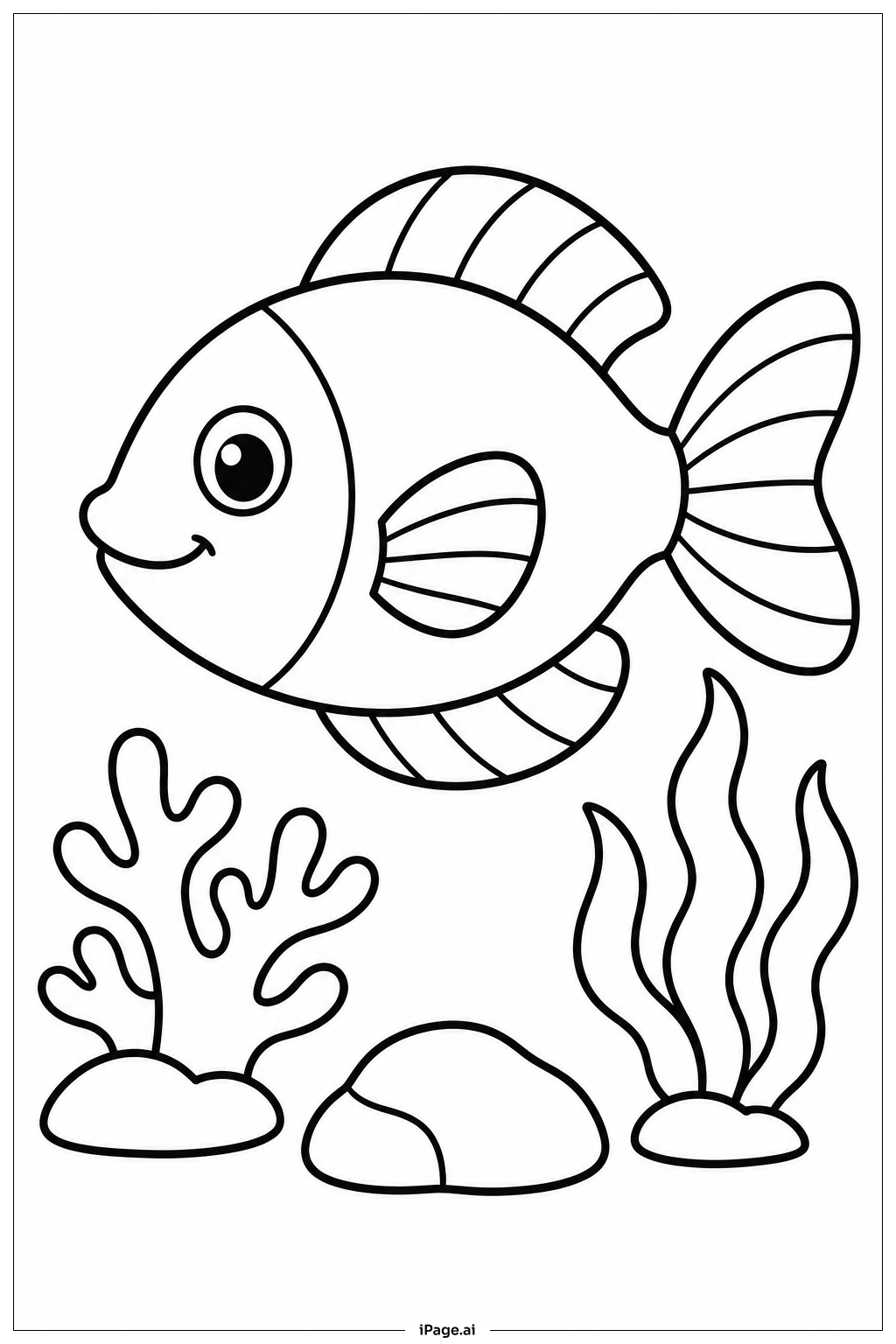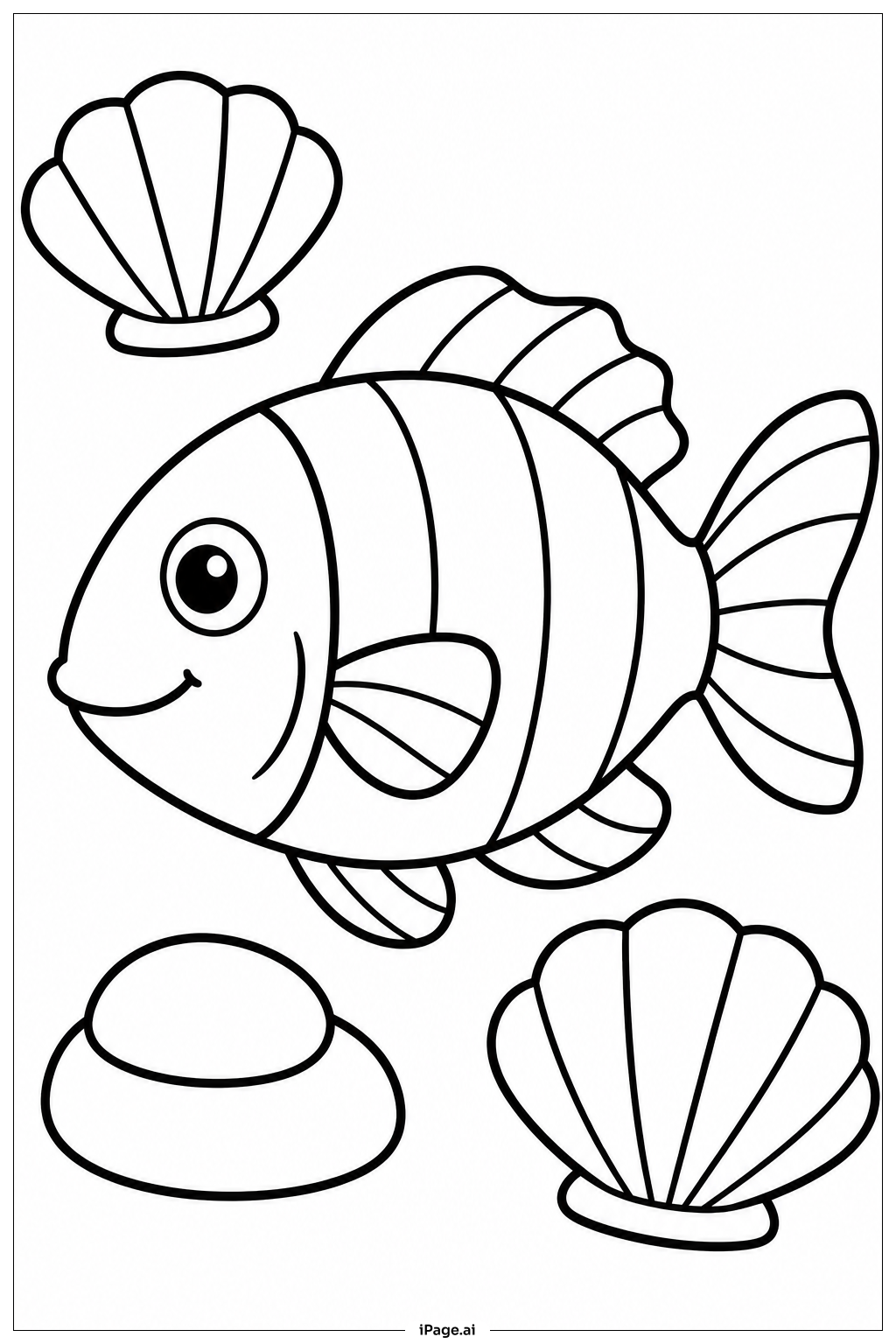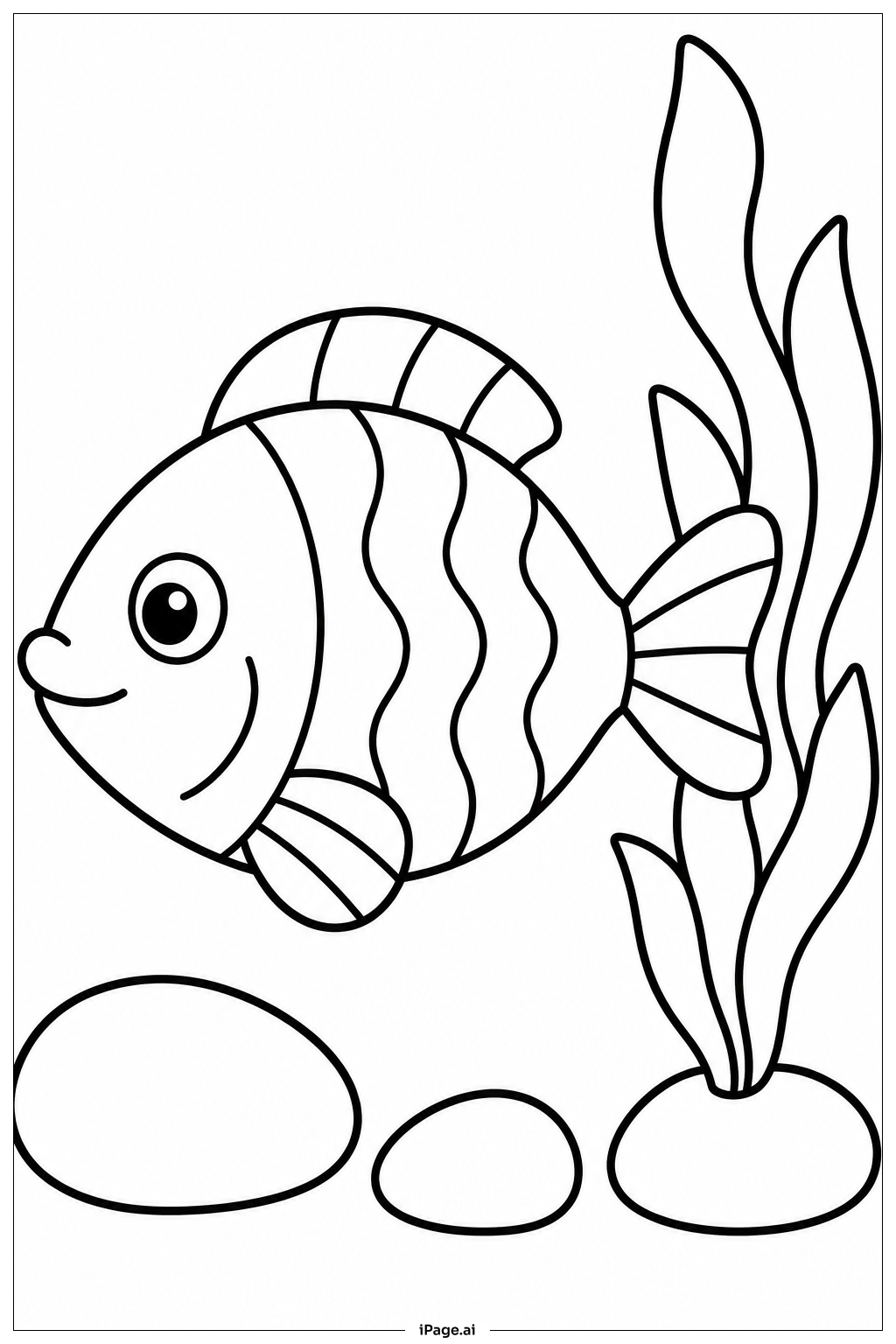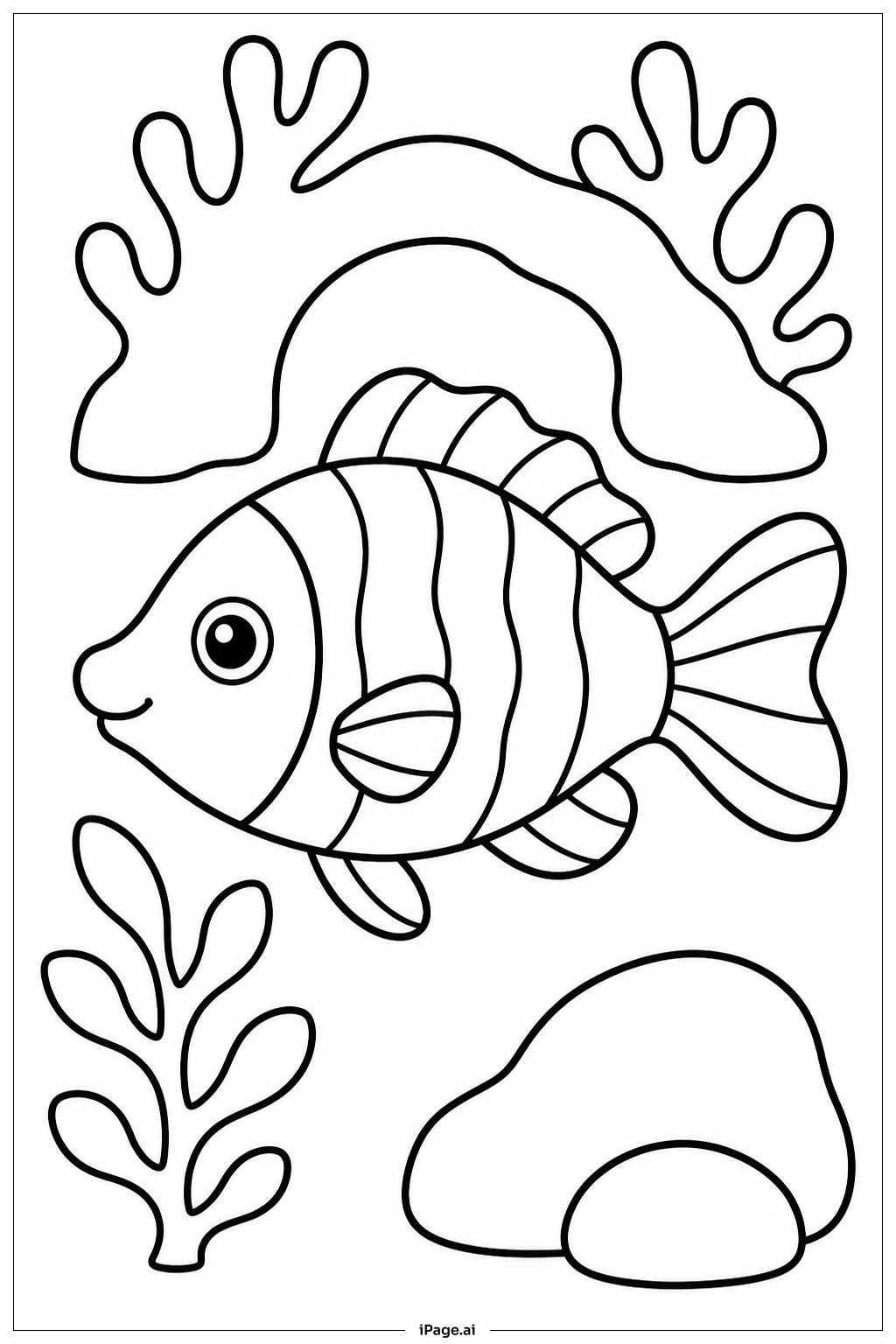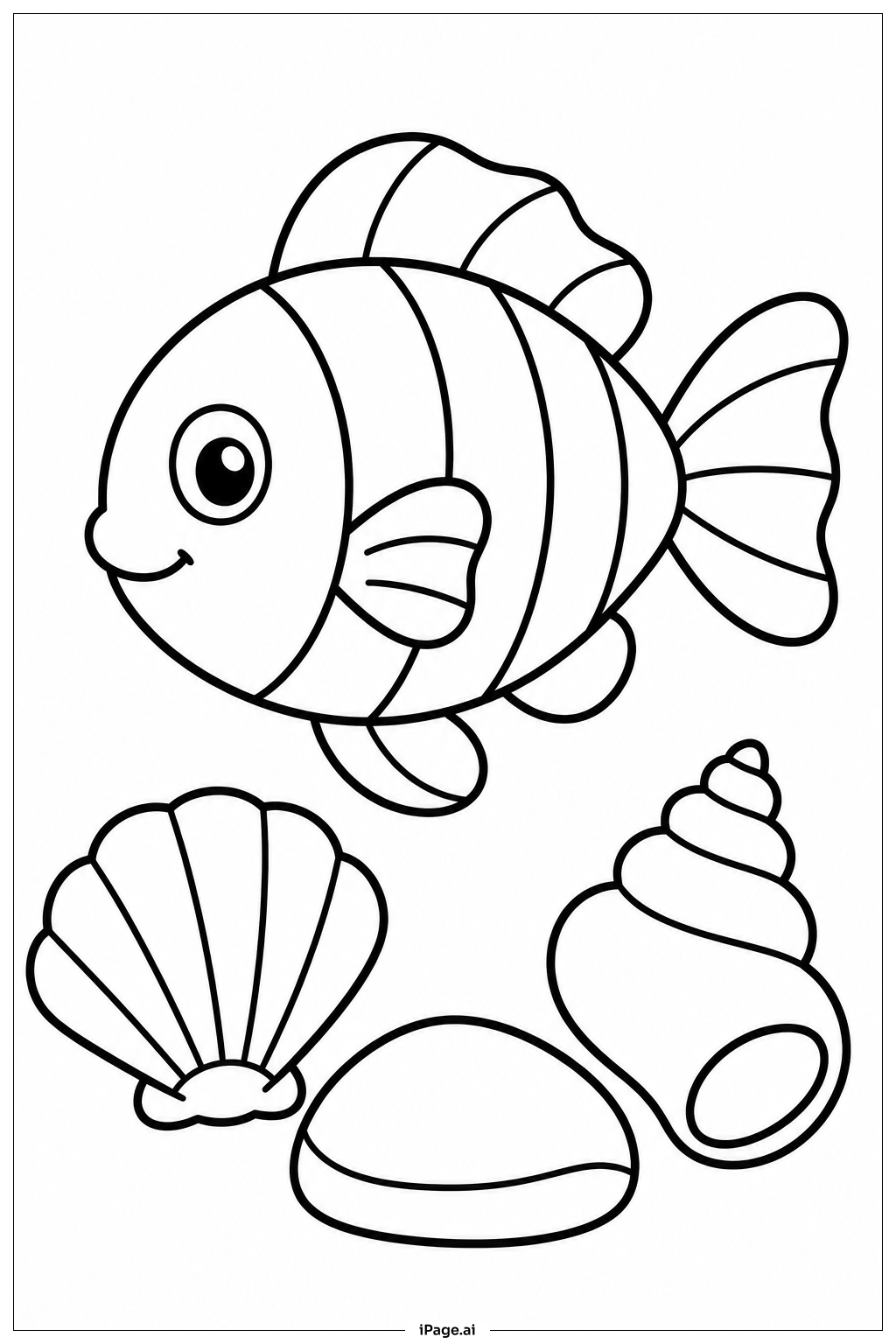
Coloring tips: How to color Fish With Shells coloring page well?
Start with the fish. Use bright, cheerful colors like orange, yellow, or blue for the body. Add a second color for the scales to give the fish more depth. Try using a lighter shade on the belly and a darker shade on the back. Color the fins with a soft, see-through look using light pink or pale purple. For the shells, use warm tones like peach, cream, tan, and soft brown. You can add stripes or spots on the shells to make them look more realistic. Color the water in shades of light blue and aqua. Use a darker blue near the edges and lighter blue toward the center to show depth. Add green and dark green to the seaweed. Leave the bubbles white or color them very lightly. Use a sandy yellow or beige for the ocean floor. Take your time with each section and enjoy making every detail your own.
Coloring challenges: Which parts are difficult to color and need attention for Fish With Shells coloring page?
• Fish Scale Details: The fish body is covered with many small, overlapping scales. Each scale is a tiny curved shape. Coloring them individually takes patience. Staying inside the lines and keeping colors consistent across all the scales can be tricky, especially for younger children. Using a fine-tip marker or a sharpened colored pencil will help a lot here.
• Shell Textures and Patterns: Each shell has its own unique shape and surface pattern. Conch shells have spiraling ridges, scallop shells have fan-like lines, and clam shells have curved grooves. Capturing these textures with color — using shading or layering — requires careful attention. It is easy to accidentally color over the fine lines that define each shell's shape.
• Small Background Elements: The tiny bubbles, pebbles, and seaweed details in the background are small and closely spaced. Coloring these small areas without smudging or going outside the lines needs a steady hand. Young children may find this part especially challenging and may need to use finer tools or simply fill these areas with a single light color.
• Creating Water Depth: The ocean water should look deep and layered. Blending two or more shades of blue to suggest depth is a skill that takes practice. Flat, single-color water can look unfinished. Beginners may find it hard to blend colors smoothly without streaks or uneven patches.
• Color Coordination: Choosing colors that look good together across the whole page is a design challenge. The fish, shells, water, and background all need to work as a balanced scene. Picking colors that clash can make the final result look busy or confusing.
Benefits of coloring books: Advantages of drawing Fish With Shells coloring page
Coloring this Fish With Shells page brings many wonderful benefits for children and beginners alike. Working on the detailed fish scales and shell patterns helps build fine motor skills and strengthens hand control. This is especially valuable for younger children who are still developing their writing and drawing abilities. Choosing colors for the fish, shells, and ocean water encourages creative thinking and artistic expression. Kids learn to mix and match colors, discovering what looks pleasing to the eye. The calming, repetitive motion of coloring also helps reduce stress and improve focus. Sitting quietly and working through each section of the page builds patience and concentration. Learning about ocean life — fish, shells, seaweed, and bubbles — can also spark curiosity about nature and the underwater world. This page is a gentle and fun way to start a conversation about sea creatures and their habitats. Completing the page gives children a sense of pride and accomplishment, boosting their confidence. Overall, this is a joyful and educational activity that supports both creative and cognitive development.