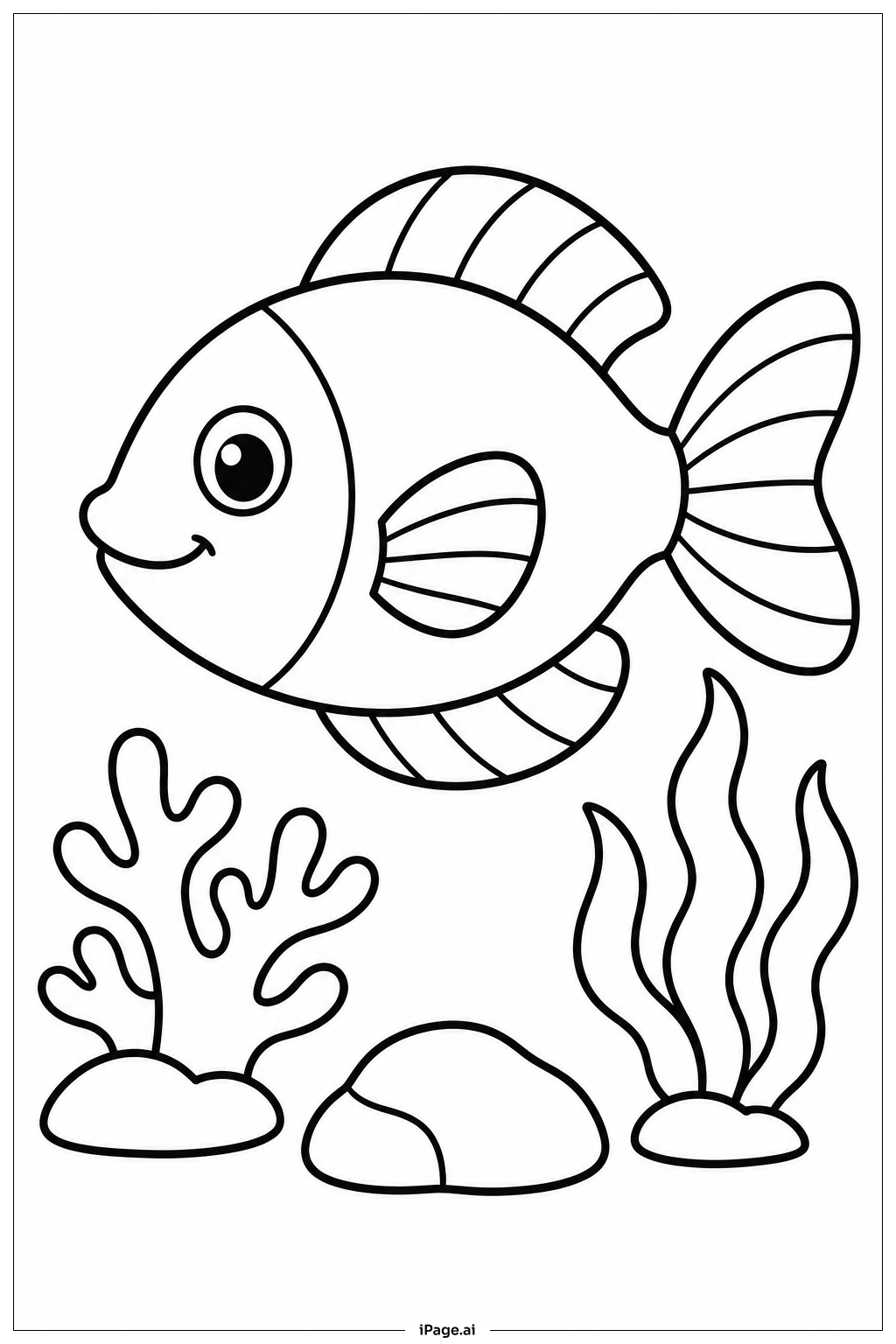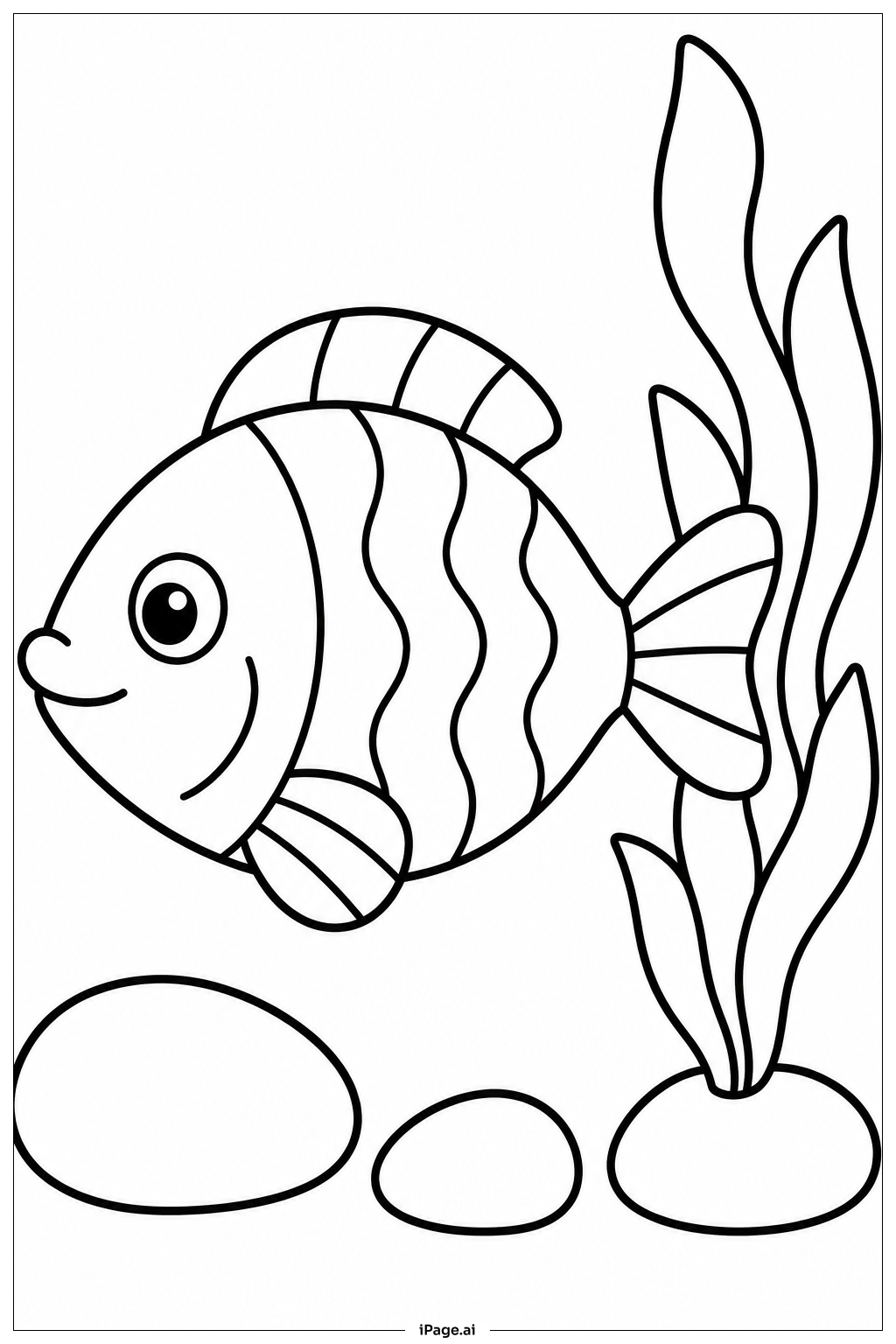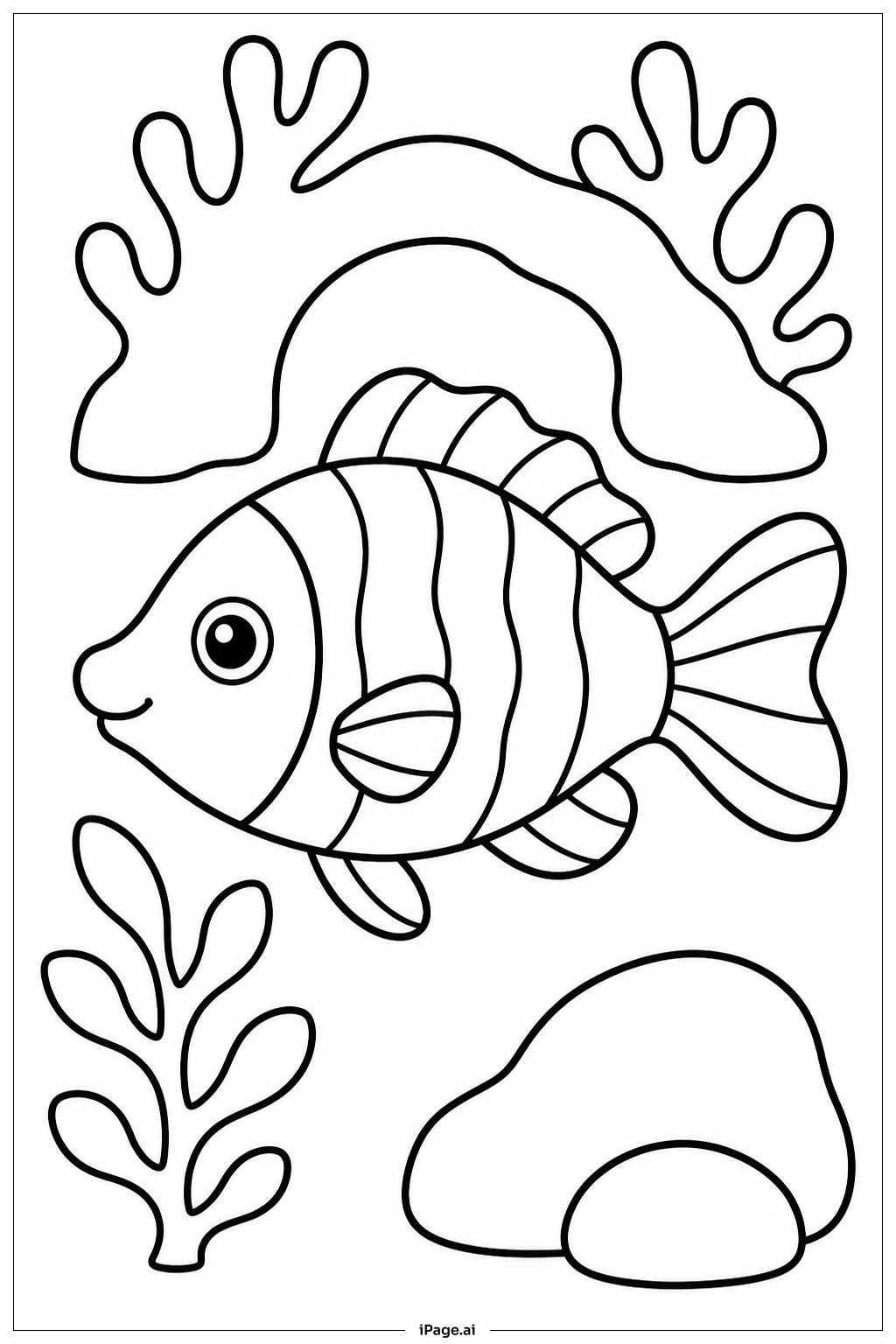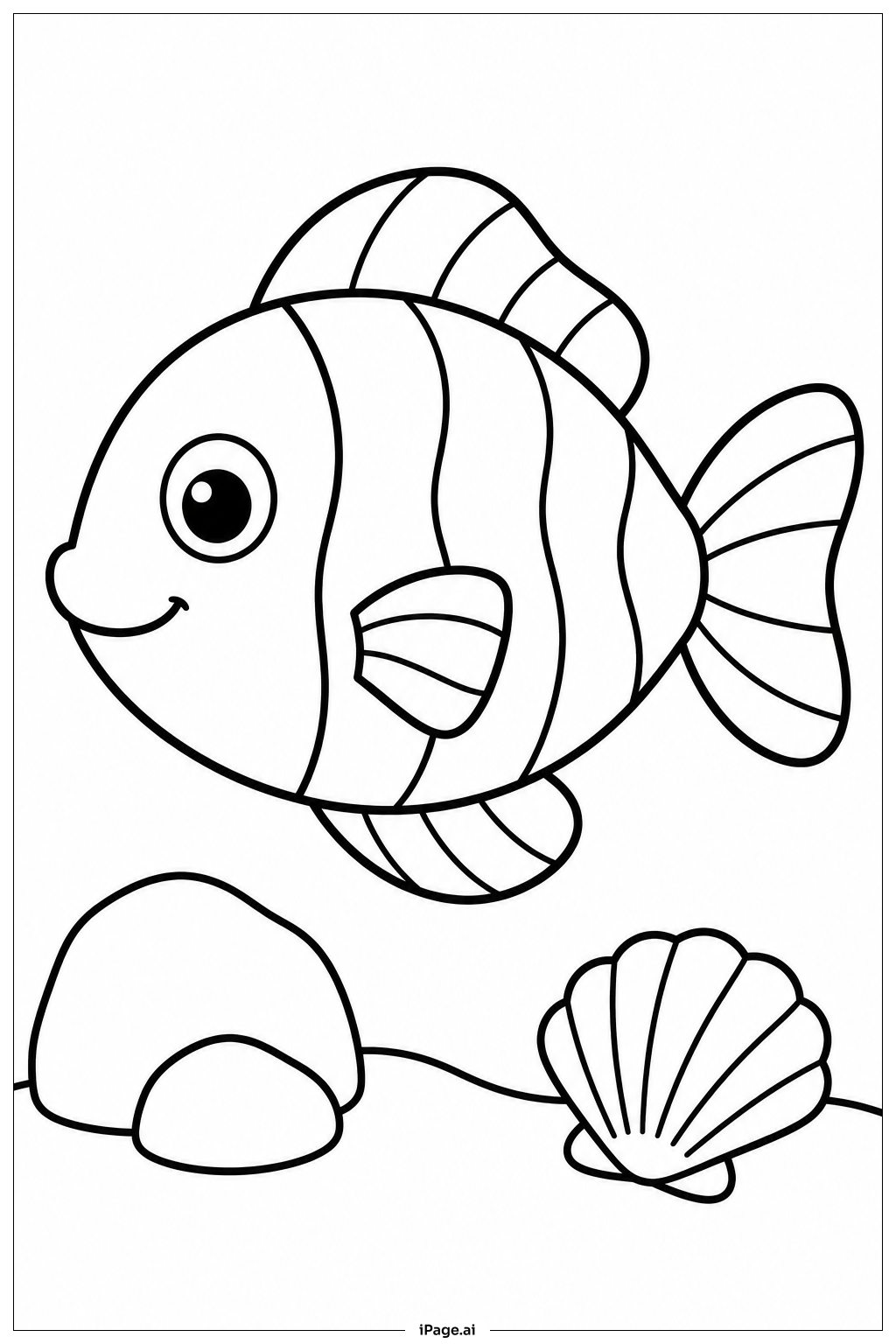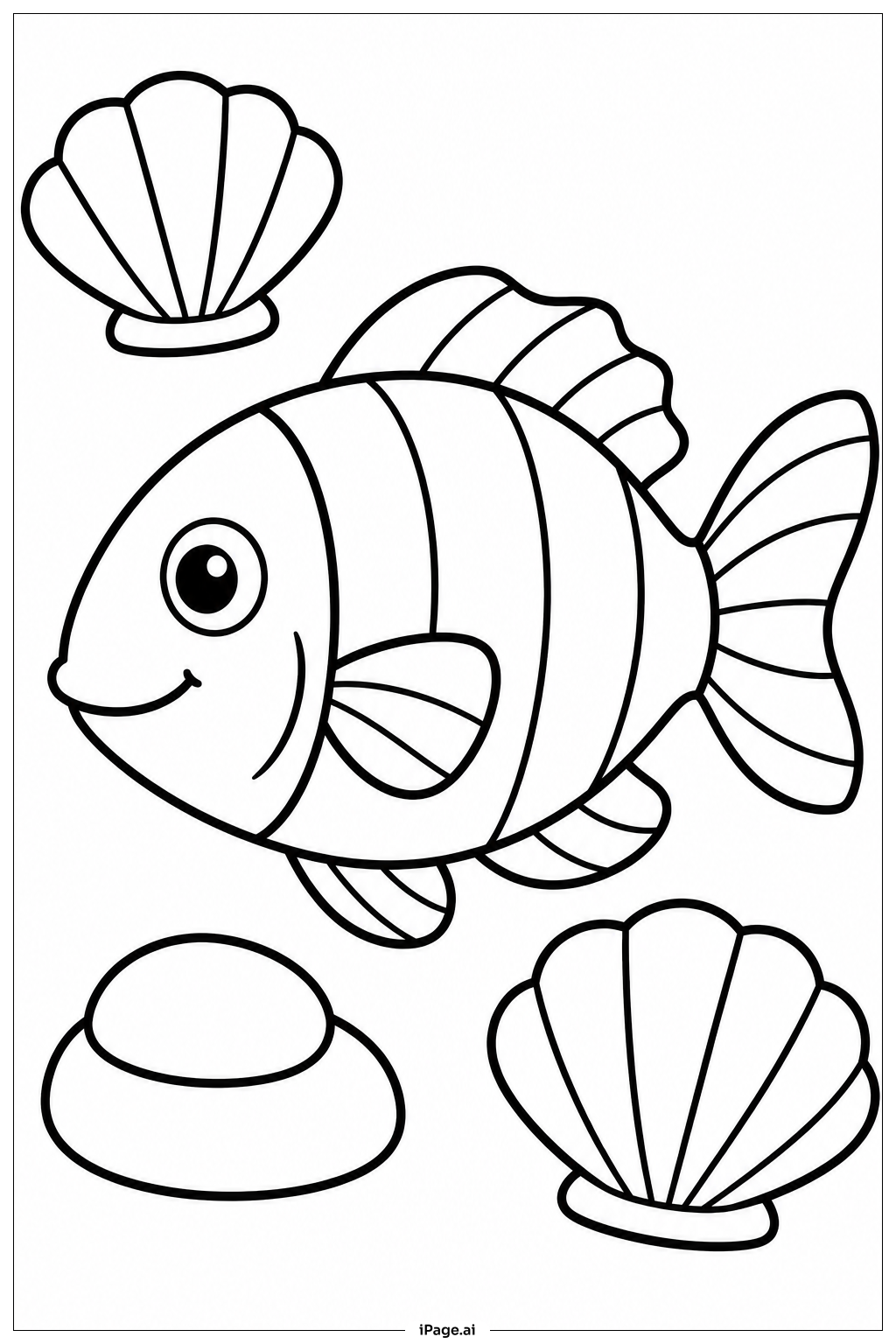
Coloring tips: How to color Fish Beside Shells coloring page well?
Start by coloring the fish in bright, cheerful colors. You could use orange and white like a clownfish, or try yellow, blue, or even rainbow stripes for a fun look. Use a darker shade along the edges of the scales to make them stand out.
For the seashells, try soft pinks, creamy whites, sandy browns, and light purples. Add gentle stripes or spots to make each shell look unique.
Color the water background in soft shades of blue or aqua. Use lighter blue near the top and a slightly deeper blue toward the bottom to show depth.
The seaweed can be colored in different shades of green. Add a little yellow-green to the tips to make them look bright and alive.
Use light gray or tan for the small pebbles on the ocean floor. The bubbles can be left white or colored very lightly in pale blue.
Take your time with each section and enjoy making your own beautiful underwater world!
Coloring challenges: Which parts are difficult to color and need attention for Fish Beside Shells coloring page?
• Fish Scale Details: The fish body is covered with many small overlapping scales. Each scale is a tiny curved shape, and coloring them neatly takes patience and a steady hand. Using a fine-tipped colored pencil or marker will help you stay within each scale. Try shading the bottom of each scale slightly darker to give the fish a round, three-dimensional look.
• Fin and Tail Edges: The fins and tail of the fish have thin, flowing lines that create a delicate, layered appearance. These narrow sections can be tricky to color without accidentally going outside the lines. Work slowly from the base of each fin outward, and consider using lighter pressure near the tips to create a natural, fading effect.
• Shell Variety and Texture: Each seashell in the image has its own unique shape and surface pattern, including spirals, ridges, and curved lines. Coloring each shell differently while keeping the textures visible requires careful color choices. Use light and dark versions of the same color to follow the shell's natural curves and highlight its three-dimensional form.
• Background Water and Depth: Filling in the water background evenly without covering the outlines of the fish and shells can be challenging. Blending two shades of blue smoothly takes practice. Try using circular strokes with a lighter blue pencil to build up color gradually, and be careful around the edges of each main object.
• Small Details Like Bubbles and Pebbles: The tiny bubbles and pebbles scattered throughout the scene are small and closely spaced. Coloring these neatly without smudging nearby areas requires focus and a sharp pencil tip.
Benefits of coloring books: Advantages of drawing Fish Beside Shells coloring page
Coloring this Fish Beside Shells page offers a wonderful range of benefits for children and beginners alike.
Working on the fish scales and shell patterns helps build fine motor skills and hand-eye coordination. Carefully staying within small, detailed lines trains the muscles in the hands and fingers, which is great for everyday tasks like writing.
Choosing colors for the fish, shells, and ocean background encourages creativity and imagination. There is no single right answer, so kids feel free to express themselves and experiment with different color combinations.
The peaceful underwater theme has a naturally calming effect. Focusing on coloring helps quiet a busy mind, reduce stress, and improve concentration. It is a great activity for winding down after a busy day.
Learning to observe the shapes and textures of fish and shells also builds visual awareness and an early appreciation for the natural world. Children may become curious about ocean life and want to learn more about the creatures they are coloring.
Finally, completing the page gives a strong sense of accomplishment and pride. Finishing a detailed artwork, no matter how simple or complex, builds confidence and motivates kids to keep creating. This coloring page is a fun, rewarding, and educational experience for everyone who picks up a crayon or colored pencil.