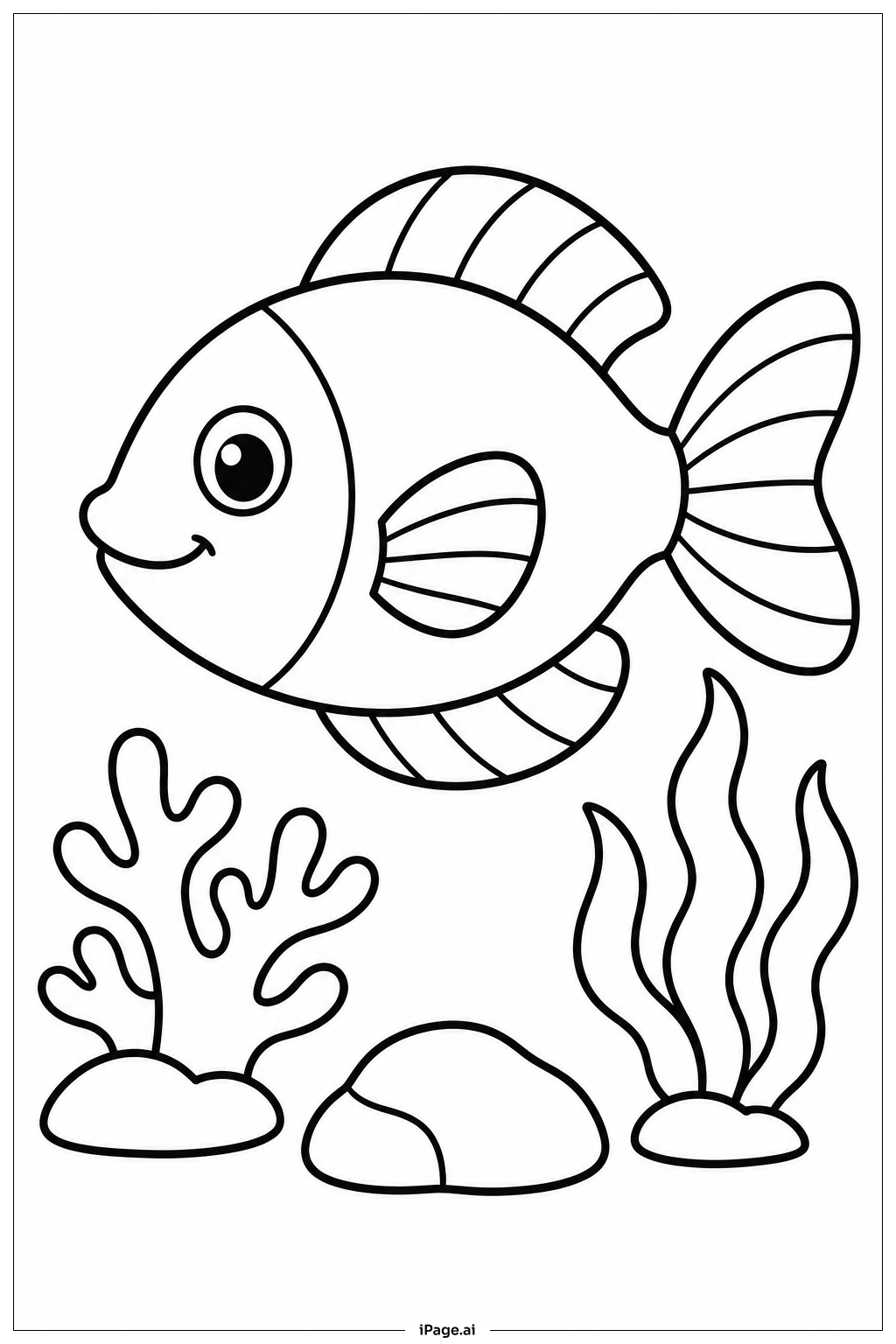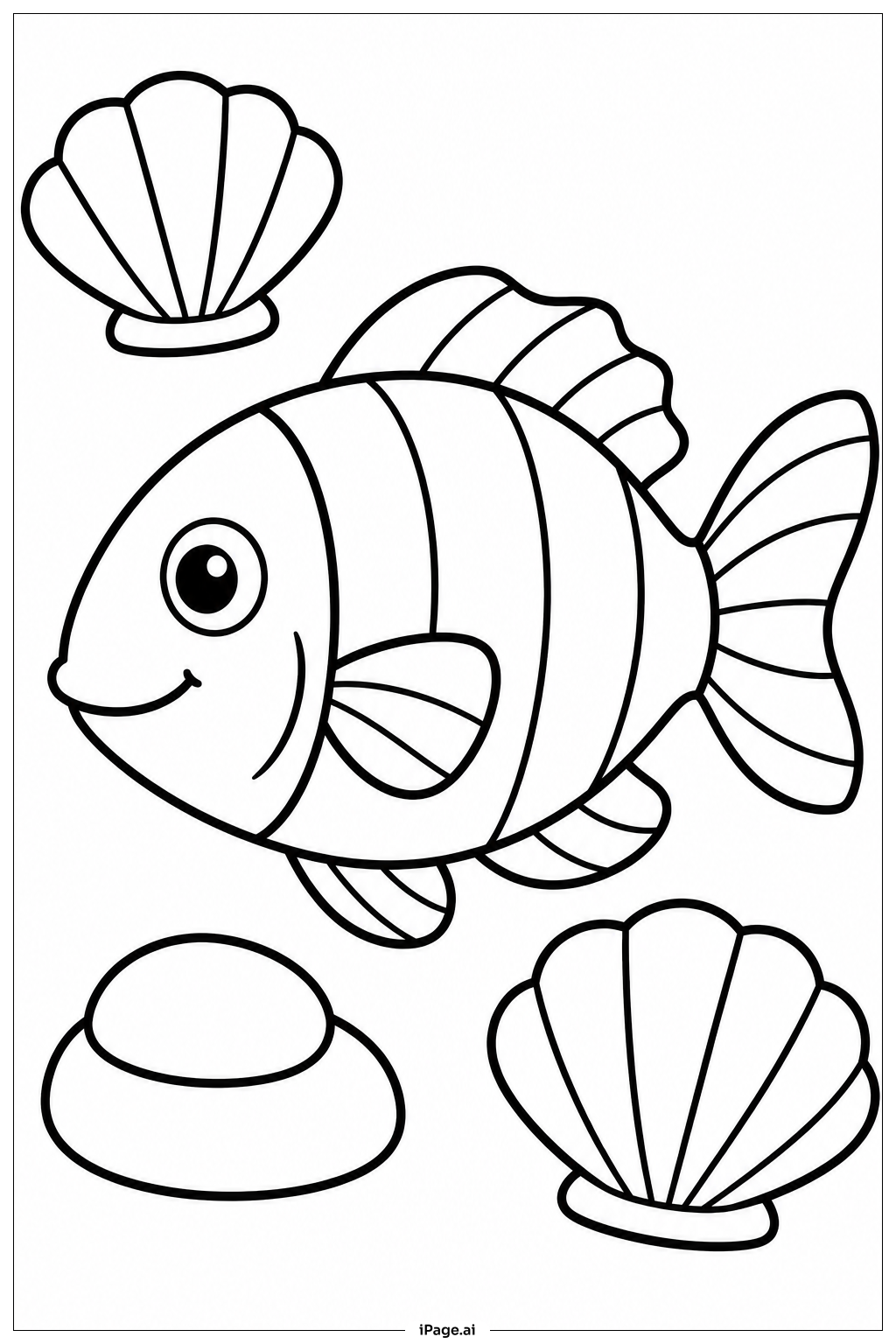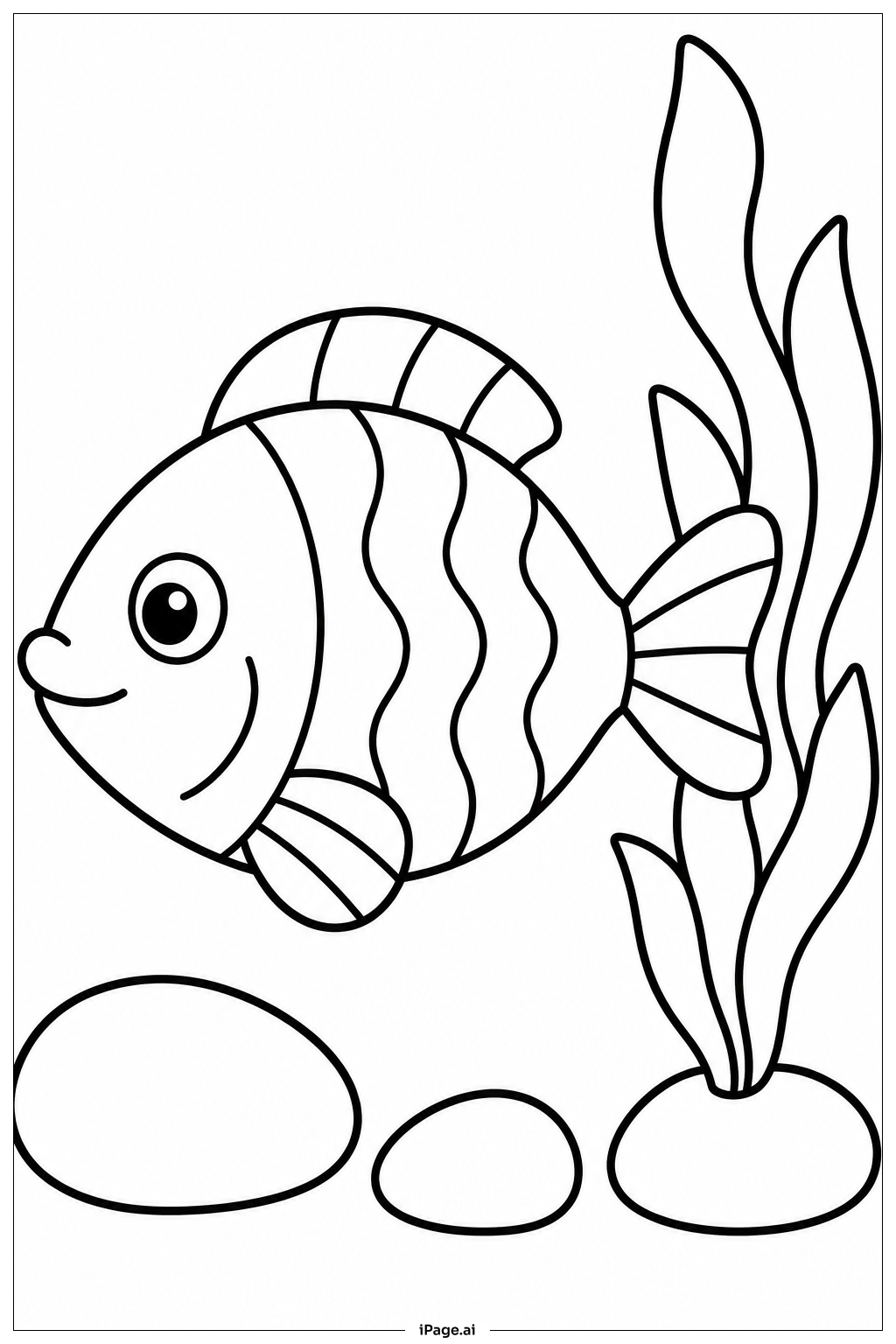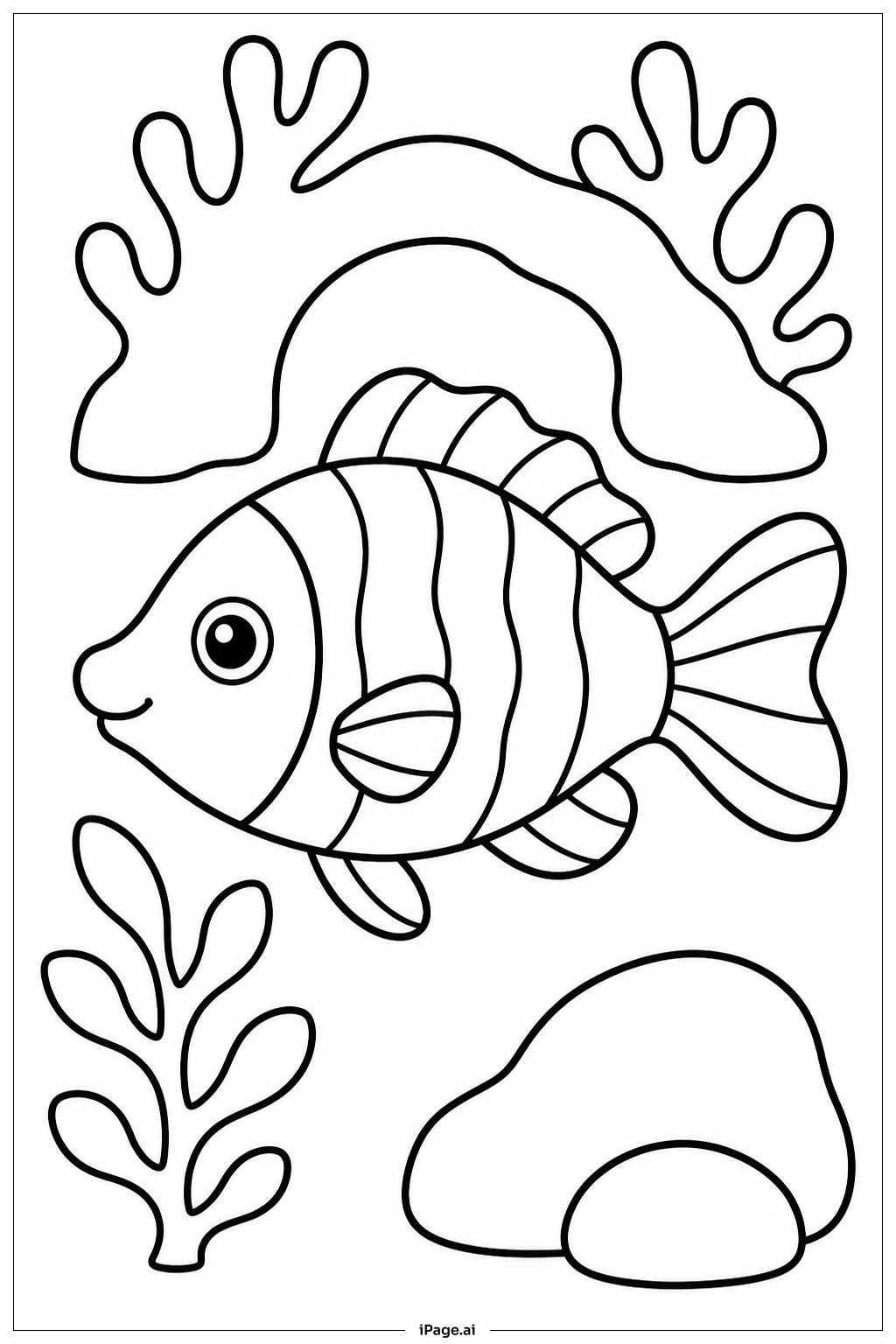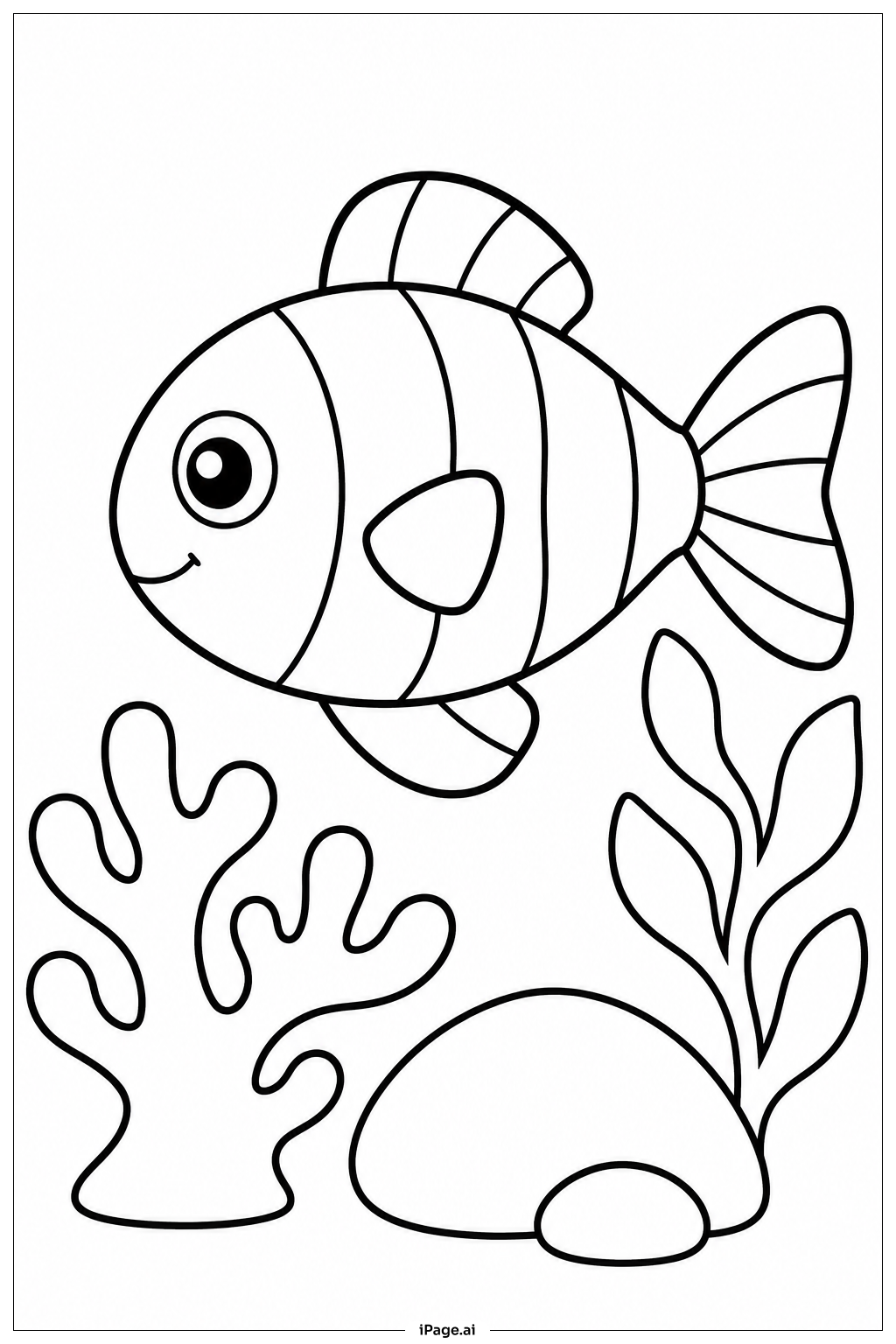
Coloring tips: How to color Fish Near Coral coloring page well?
Start with the fish itself. Use bright, cheerful colors like orange, yellow, or blue for the body. Add a contrasting color for the fins, such as red or purple, to make them stand out. Color the scales in a slightly different shade to add depth. For the coral, try shades of pink, red, orange, and purple. Mixing warm tones gives the reef a lively, tropical feel. Use light green or teal for the sea plants. Color the background a soft blue or aqua to represent the ocean water. Make the bubbles white or leave them uncolored for a light, airy effect. For the ocean floor, use sandy beige or brown tones. Starfish look great in orange or yellow. Don't be afraid to use many colors — the more colorful, the more the underwater world comes to life. Have fun and let your creativity guide you!
Coloring challenges: Which parts are difficult to color and need attention for Fish Near Coral coloring page?
• Fish Scale Details: The fish body is covered with many small, overlapping scales. Coloring each scale neatly without going over the lines requires a steady hand and patience. Using a fine-tipped colored pencil or marker works best here. Younger children may find it easier to color all the scales in one solid color, while older colorists can try shading each scale individually for a more realistic look.
• Coral Branching Shapes: The coral reef features multiple branching and layered shapes that are close together. It can be tricky to color each piece of coral a different shade without the colors bleeding into each other. Taking your time and working section by section helps keep the colors clean and distinct.
• Small Decorative Elements: Details like bubbles, tiny starfish, and pebbles on the ocean floor are small and closely spaced. These tiny areas require careful control of your coloring tool. Colored pencils with a sharp tip are recommended for these fine details, as broad markers may cover too much area at once.
• Background Water Effect: Filling in the ocean background with a smooth, even blue or aqua color can be challenging, especially when working around the fish, coral, and plants. Moving in one consistent direction with your strokes helps create a uniform look and avoids streaky patches.
• Color Blending and Transitions: Creating a natural look in an underwater scene often involves blending colors smoothly — for example, going from deep blue at the top to lighter aqua near the bottom. This technique takes practice but greatly enhances the final result.
Benefits of coloring books: Advantages of drawing Fish Near Coral coloring page
Coloring this Fish Near Coral page offers many wonderful benefits for children and beginners alike. First, it helps develop fine motor skills. Carefully coloring small scales, coral branches, and tiny bubbles trains the hand and fingers to move with greater control and precision. This directly supports handwriting and other detailed tasks in daily life. Second, it encourages creativity and self-expression. Choosing colors for the fish, reef, and ocean background allows each child to create a unique and personal piece of art. There are no wrong choices — every color combination tells its own story. Third, it teaches patience and focus. Completing a detailed scene like this one requires sitting still, concentrating, and working through each section carefully, which builds attention span over time. Fourth, it introduces children to the natural world. As they color the fish, coral, starfish, and sea plants, they become curious about real ocean life, sparking an interest in nature and science. Finally, coloring is a calming and stress-relieving activity. The rhythmic motion of coloring helps children relax, unwind, and enjoy a quiet, screen-free creative experience.