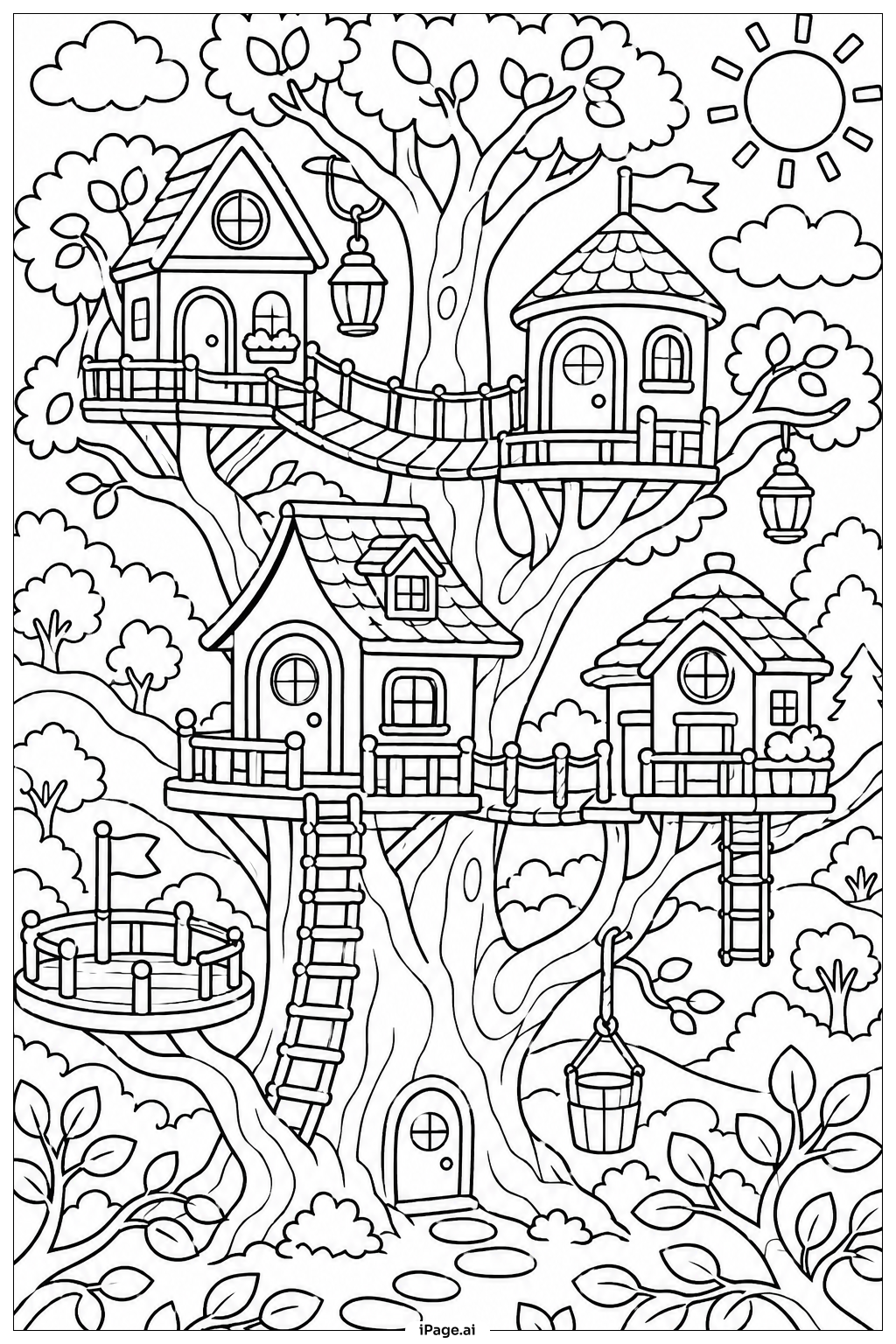
Coloring tips: How to color Treehouse Village House coloring page well?
Start with the large tree trunk and branches using shades of brown — use dark brown for shadows along the edges and lighter tan in the center to show depth. Color the leaves with multiple greens, like lime green for sunlit areas and deep forest green for shadowy spots. For the treehouse walls, warm wood tones like golden brown or honey work great. Use a bright red or deep burgundy for the roof to make it pop. Paint the windows with light blue or yellow to suggest glass catching sunlight. Small details like flower boxes can be colored red, pink, or purple for pops of color. Rope ladders look great in tan or sandy tones. Add soft grays to shadows under platforms and stairs. Younger kids can use just a few bold colors, while older kids can try blending and shading to make the village feel real and alive. Have fun making each treehouse its own unique color!
Coloring challenges: Which parts are difficult to color and need attention for Treehouse Village House coloring page?
• Tree Trunk and Branch Textures: The bark of the large tree has many lines, grooves, and rough textures that need careful attention. Coloring these realistically requires using multiple shades of brown and adding thin darker lines to mimic bark patterns. Young colorists may find it tricky to stay within these narrow textured areas without smudging or going outside the lines.
• Layered Foliage: The leaves surrounding the treehouse are clustered in overlapping groups, creating a complex layered look. Choosing which leaf clusters to make lighter or darker is challenging. Getting the depth right means switching between several greens and being thoughtful about where light would naturally hit the canopy from above.
• Wooden Plank Details on the House: The treehouse walls are made up of individual planks, each one a slightly different surface. Coloring each plank individually with subtle variation in wood tone takes patience and a steady hand. Using the same flat color across all planks can make the structure look dull, so adding light and shadow variation is important but difficult.
• Small Decorative Elements: Details like lanterns, flower boxes, window frames, and rope ladders are tiny and closely packed together. Coloring these small features neatly requires fine-tipped tools such as colored pencils or thin markers. It is easy to accidentally color outside these small shapes and into neighboring areas.
• Bridges and Connecting Platforms: The little walkways and bridges linking the treehouses involve repeated wooden slat patterns at angles. Keeping consistent color direction along these angled shapes while also adding shadow underneath them is a real challenge, especially for younger or less experienced colorists.
Benefits of coloring books: Advantages of drawing Treehouse Village House coloring page
Coloring this Treehouse Village House page offers a wonderful range of benefits for children and young artists. Working through the many textures, layers, and details of the scene helps build fine motor skills and hand-eye coordination as kids carefully navigate small shapes and intricate lines. The variety of elements — from leafy branches to tiny lanterns — keeps the activity engaging and encourages sustained focus and patience, which are valuable skills both in and out of the classroom. Choosing colors for wooden planks, lush greenery, and whimsical accessories sparks creativity and imagination, allowing each child to create their own unique version of this magical treetop world. The fantasy setting also inspires storytelling — kids may begin to imagine who lives in each treehouse and what adventures happen among the branches. For older children, the complexity of shading bark, leaves, and wooden structures introduces basic concepts of light, shadow, and color blending, nurturing early artistic thinking. Overall, this page offers a calm, screen-free creative outlet that builds confidence, reduces stress, and brings joy through the simple act of bringing a whimsical world to life with color.