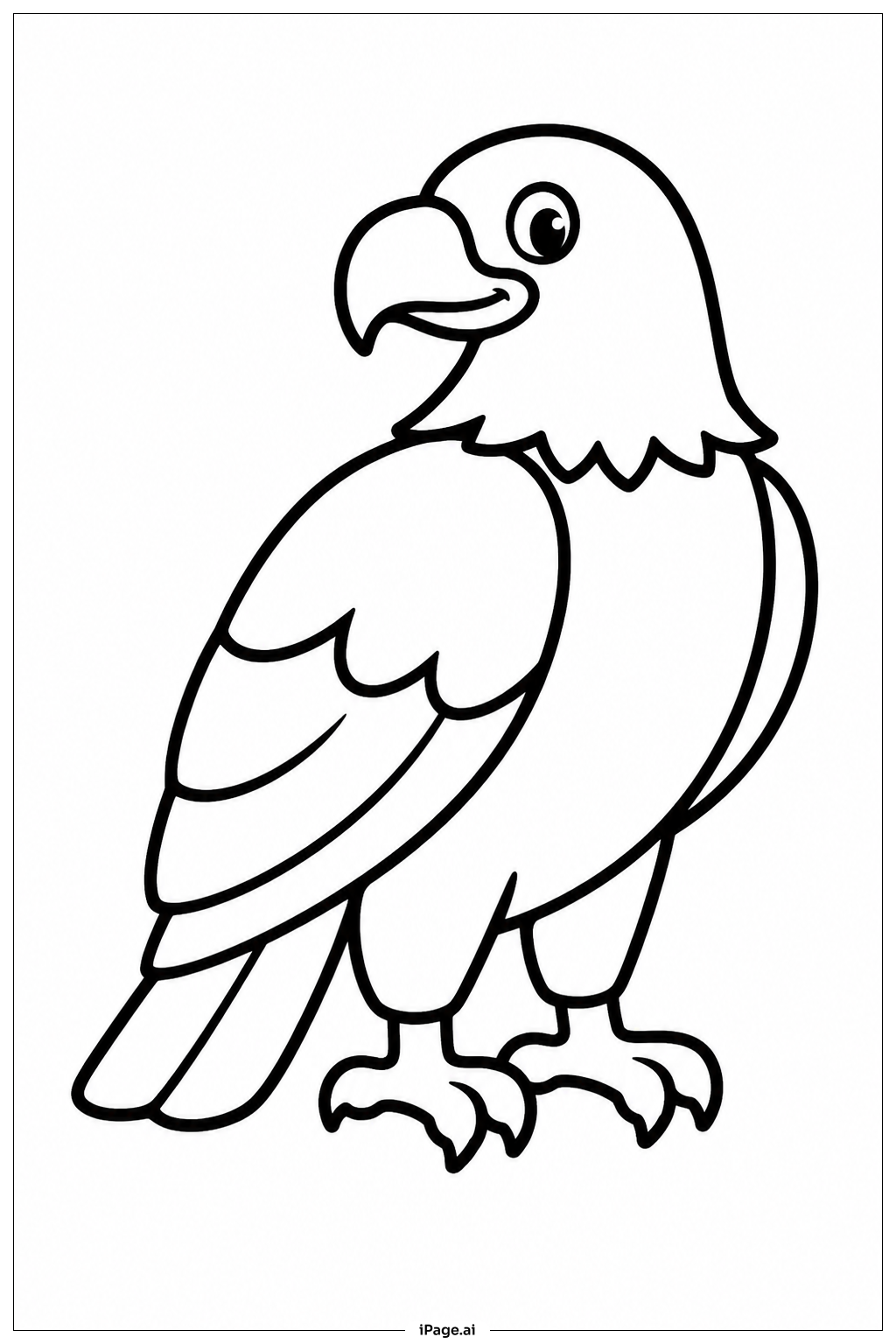
Coloring tips: How to color Eagle Side Glance coloring page well?
Start with the eagle's eye by coloring it a bright golden yellow or amber — this will make it look sharp and alive. Use dark brown or black for the pupil. For the beak, choose a warm golden yellow or orange-yellow tone, and shade the curved tip slightly darker to show depth. The head feathers can be colored white or light gray if you want a bald eagle look, or go with rich brown for other eagle species. Use medium and dark browns for the body and wing feathers, adding lighter brown or tan highlights along the edges to make each feather stand out. Layer your colors gently to create a smooth, natural look. For the background, try a soft blue sky, misty gray, or leave it plain white to keep the focus on the eagle. Don't be afraid to mix shades — nature is full of subtle color changes, and blending will make your eagle look truly majestic!
Coloring challenges: Which parts are difficult to color and need attention for Eagle Side Glance coloring page?
• Eye Detail and Realism: The eagle's eye is one of the most challenging parts to color. It requires careful layering of golden yellow, amber, and dark tones to create a realistic, glowing look. The small highlight spot must be left white or very light to give the eye a lifelike, three-dimensional appearance. Rushing this area can make the eye look flat or dull.
• Beak Shading and Depth: The curved beak has a complex shape with highlights and shadows. Coloring it with a single flat tone will make it look lifeless. You need to blend lighter yellows at the top and mid-section with darker oranges or browns along the lower edge and tip to show its hard, hooked form convincingly.
• Feather Layering and Texture: The eagle's body is covered in many overlapping feathers, each with its own shape and direction. Coloring each feather individually using multiple shades of brown, tan, and dark umber takes patience and a steady hand. Missing the layered detail can make the bird look like a flat silhouette rather than a textured, living creature.
• Head and Body Color Transition: Where the lighter head feathers meet the darker chest and wing feathers, there needs to be a smooth color transition. Abrupt color changes in this area can make the eagle look patchwork rather than natural. Gentle blending or gradual color stepping is needed here.
• Maintaining Overall Balance: With so many detailed areas competing for attention — the eye, beak, head, and wings — keeping the overall coloring balanced so no single area overwhelms the others is a real artistic challenge that requires stepping back and reviewing the whole image as you work.
Benefits of coloring books: Advantages of drawing Eagle Side Glance coloring page
Coloring this eagle image offers a wonderful range of benefits for kids and young artists. First, focusing on the eagle's fine feather details and sharp eye helps build concentration and patience — skills that are useful in school and everyday life. Carefully filling in small, intricate areas like the beak and eye also strengthens hand-eye coordination and fine motor skills, which support writing and drawing development. Choosing colors for the feathers and deciding how to shade them encourages creative thinking and builds confidence in making artistic decisions. Learning about realistic animal colors also sparks curiosity about nature and wildlife, making coloring both fun and educational. For older children and teens, the challenge of blending browns, layering feather textures, and creating depth provides a satisfying artistic workout that builds real drawing and coloring skills. On top of all that, the calm, focused activity of coloring helps reduce stress and gives a sense of accomplishment when the finished eagle comes to life on the page. It's a rewarding experience for colorists of all ages!