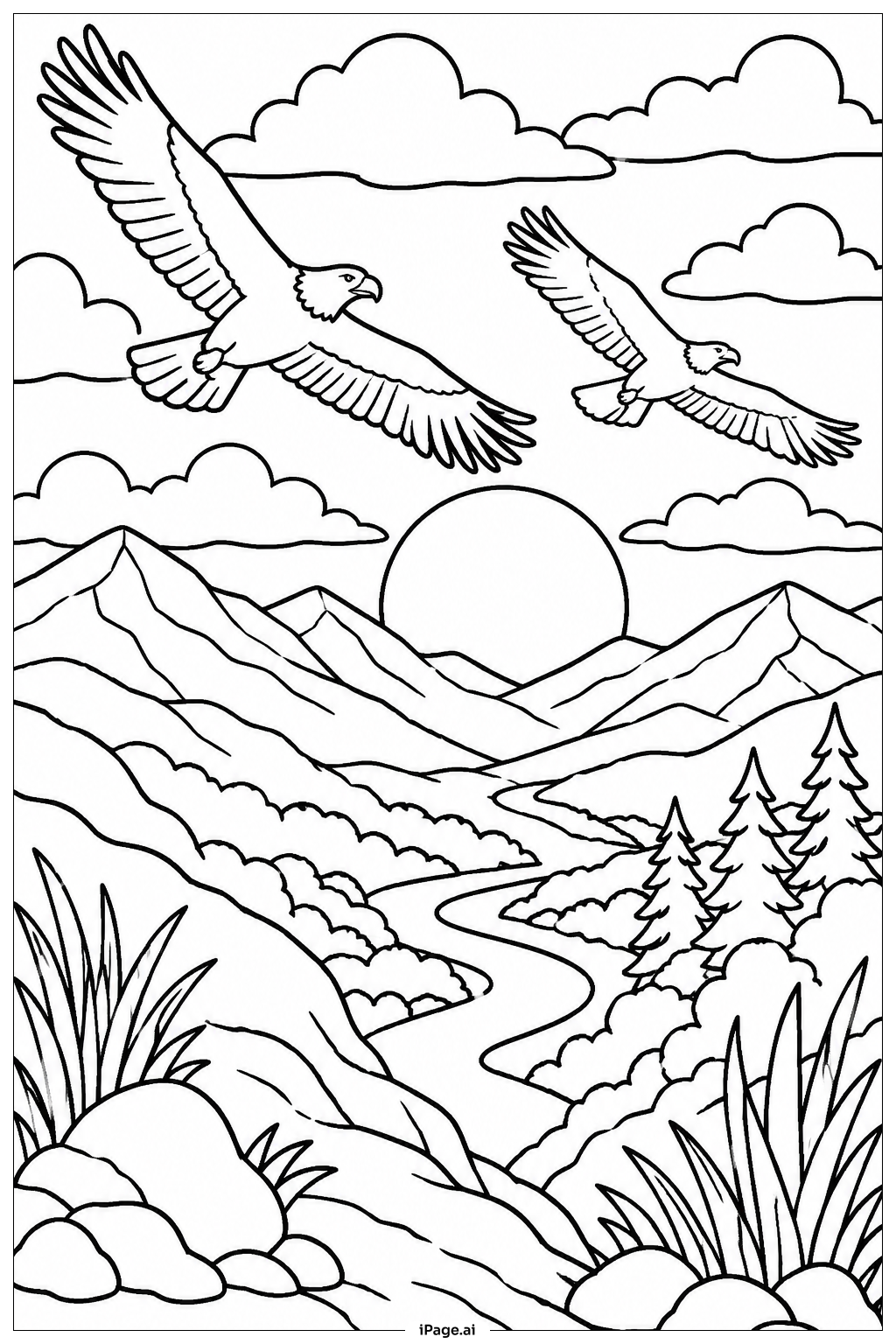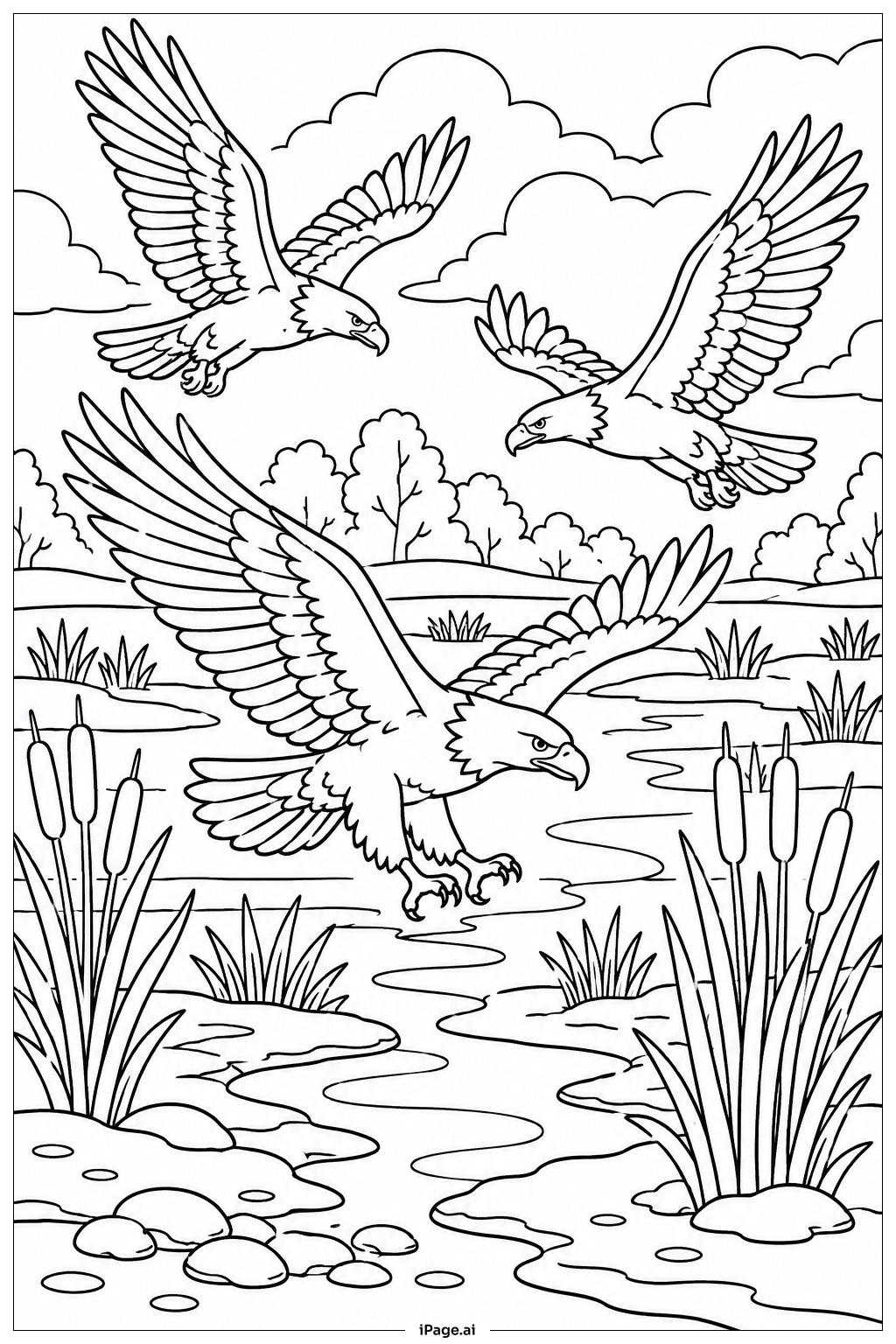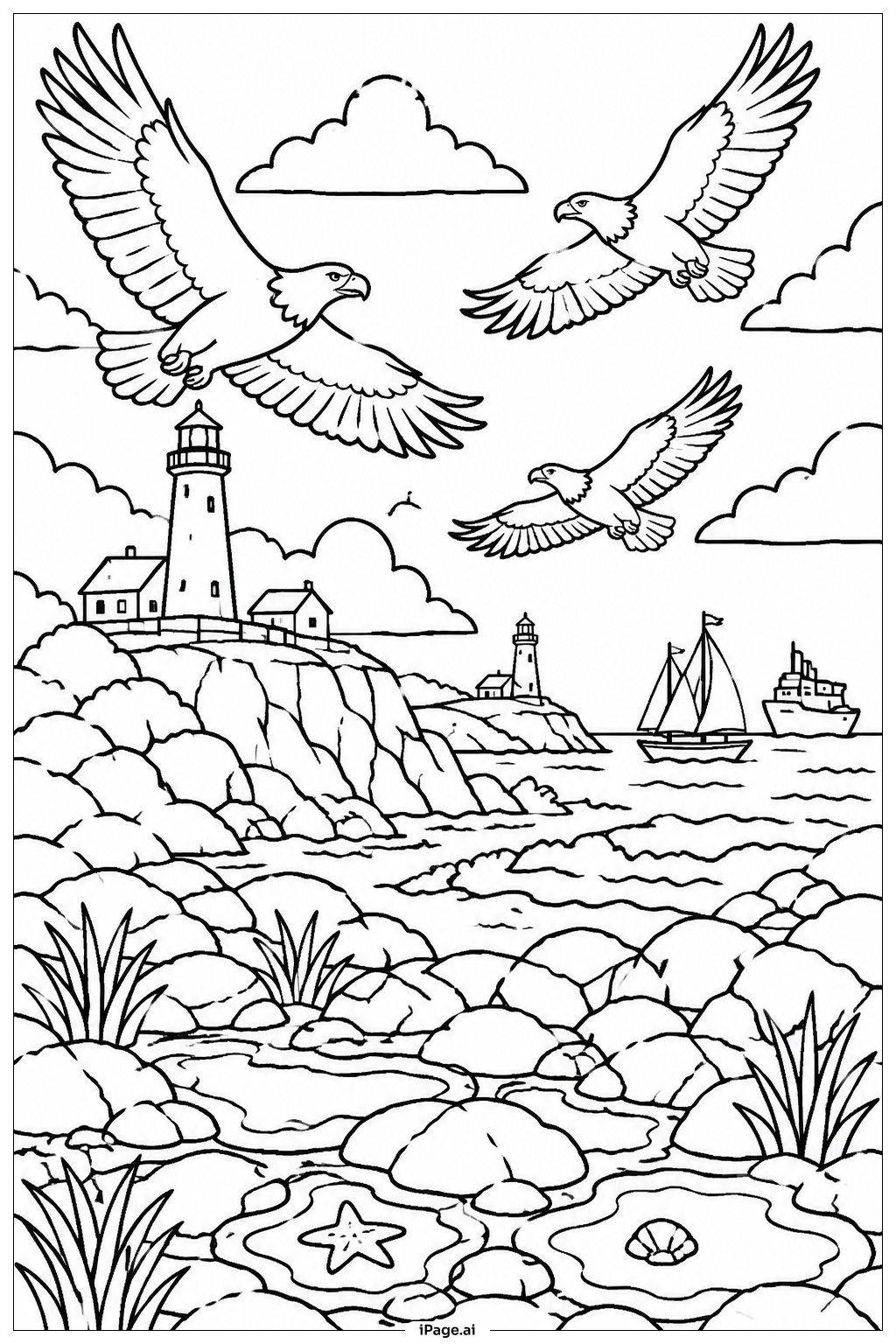
Coloring tips: How to color Eagle Nest Scene coloring page well?
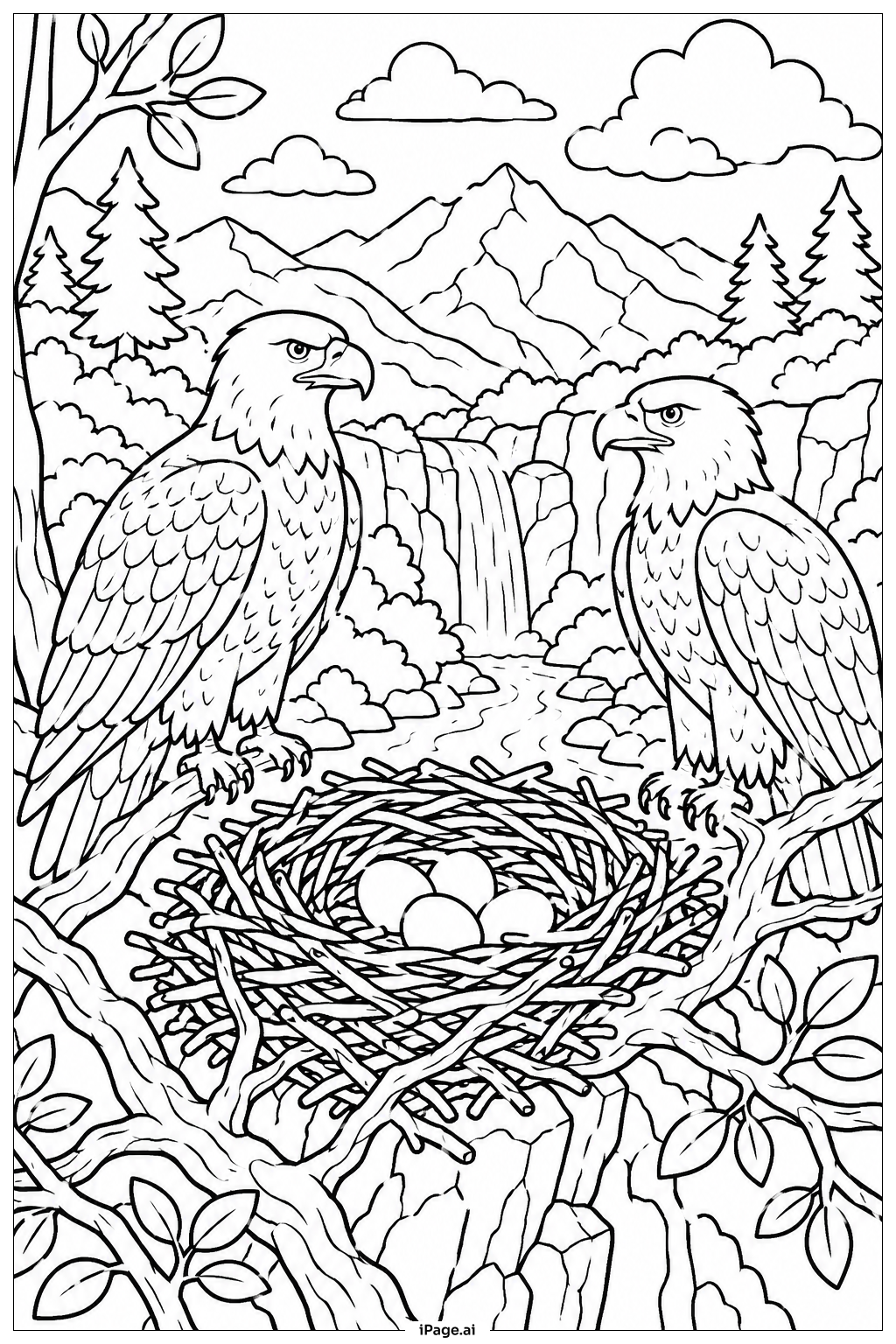
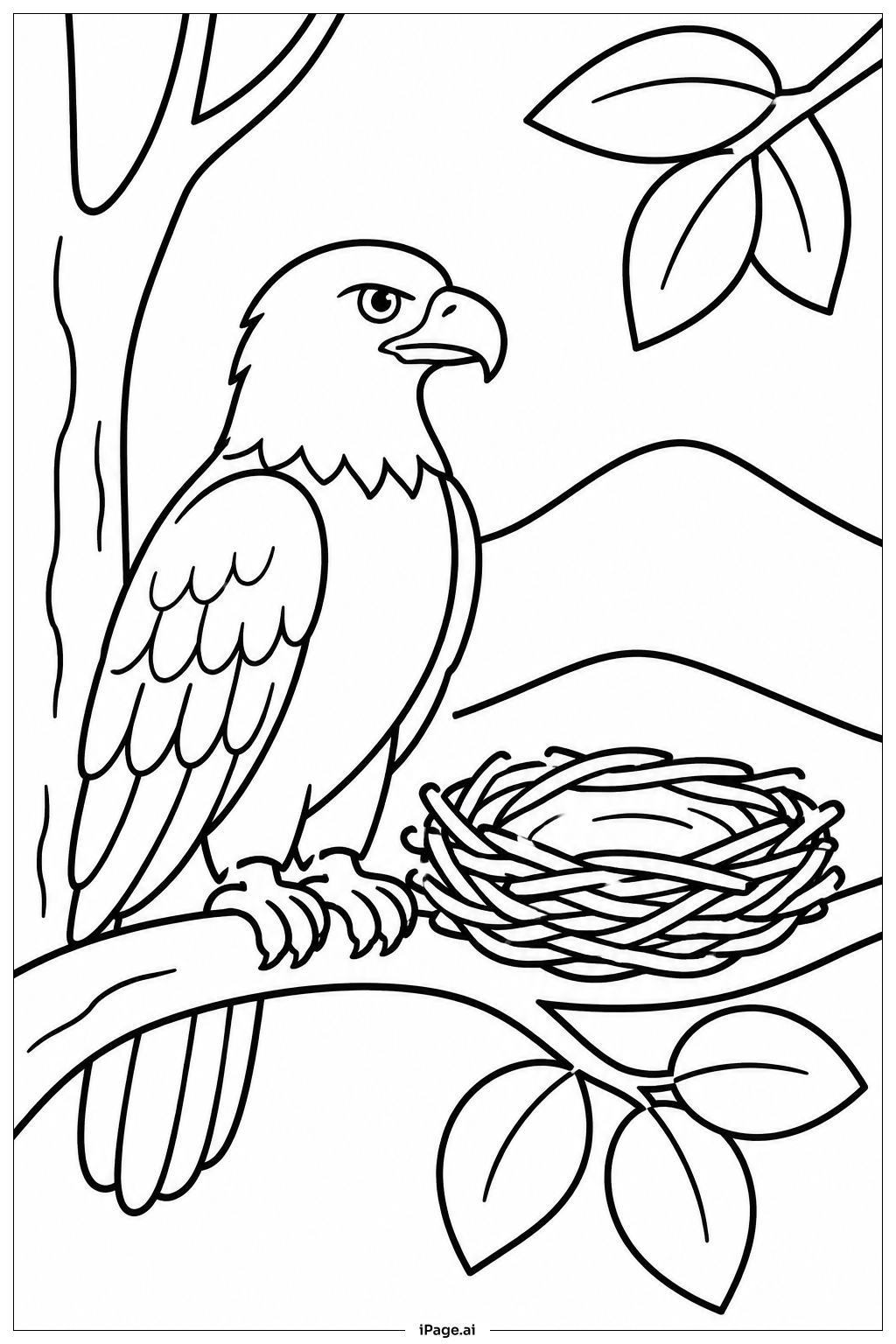
Start with the sky in the background. Use light blue and white for an open, airy feel. Add soft gray or pale purple near the horizon for depth. Color the mountains or trees in shades of green, brown, and dark gray to create a natural landscape. For the nest, use various shades of brown, tan, and dark gray to show the layered twigs and branches. The adult eagle looks best in dark brown and black for its body and wings, with a bright white head and tail if it is a bald eagle. Use a golden yellow for the sharp beak and talons. The eaglets can be colored in softer, lighter browns with fluffy-looking feathers. Add a warm cream or beige to the nest lining to show soft padding. Try using darker shades along the edges and lighter tones in the center to give the scene a three-dimensional look. Take your time and enjoy filling in each part step by step.
Coloring challenges: Which parts are difficult to color and need attention for Eagle Nest Scene coloring page?
• Eagle Feather Details: The adult eagle has many overlapping feathers across its wings, chest, and back. Each feather layer needs a slightly different shade of brown or black to look realistic. Blending colors smoothly without making the feathers look flat is tricky and requires patience and a steady hand.
• Nest Texture and Depth: The nest is made of countless twisted twigs, sticks, and branches woven together. Capturing the rough, tangled texture means using many tones of brown and gray close together. It can be hard to make each stick look separate while still showing the overall shape of the nest as one solid structure.
• Eaglet Coloring: The young eaglets have soft, fluffy down feathers that look very different from adult eagle feathers. They tend to be paler and less defined. Showing this softness through color while still making them look distinct from the nest material underneath them is a careful balancing act.
• Background Depth and Scale: The landscape behind the nest, whether mountains, trees, or sky, needs to feel far away and grand. Using lighter, cooler colors for distant elements and darker, warmer ones for the foreground helps create this sense of depth. Getting this balance right can be challenging for younger colorists.
• Eagle Eye and Beak Precision: The eagle's eye is small but very expressive, and the hooked beak is a defining feature. Coloring these tiny areas neatly with yellow, gold, and dark brown without going outside the lines takes a careful, controlled approach and may require a fine-tipped coloring tool.
Benefits of coloring books: Advantages of drawing Eagle Nest Scene coloring page
Coloring this Eagle Nest Scene offers wonderful benefits for children and adults alike. It helps build focus and concentration as you work through the many detailed parts of the image, from the eagle's feathers to the woven nest. Carefully staying within the lines and blending colors trains fine motor skills and hand-eye coordination, which are important for young children still developing their writing and drawing abilities.
This scene also sparks curiosity about nature and wildlife. As kids color the eagle, the eaglets, and the wild landscape, they naturally start thinking about where eagles live, what they eat, and how they care for their young. This makes the activity educational as well as fun.
For older children and adults, the complexity of the scene provides a calming, meditative experience. Focusing on choosing colors and filling in details helps reduce stress and quiet a busy mind. It is a healthy and screen-free way to relax after a long day.
The image also encourages creativity. There is no single right way to color it, so each person gets to make their own unique version. Trying out different color combinations builds confidence and a sense of personal expression. Completing the full scene gives a strong sense of achievement and pride, making it a rewarding activity from start to finish.