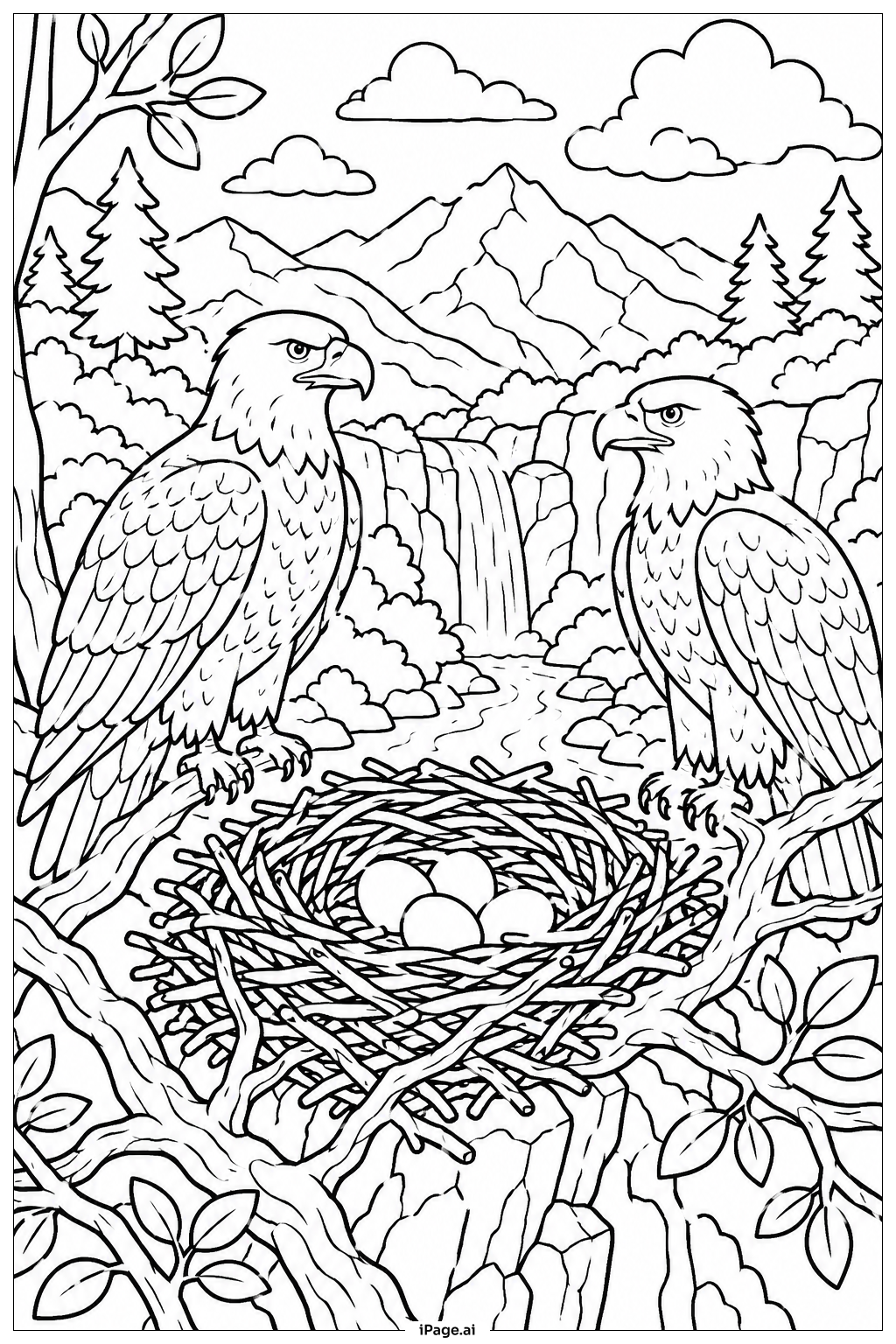
Coloring tips: How to color Eagle Nest Watch coloring page well?
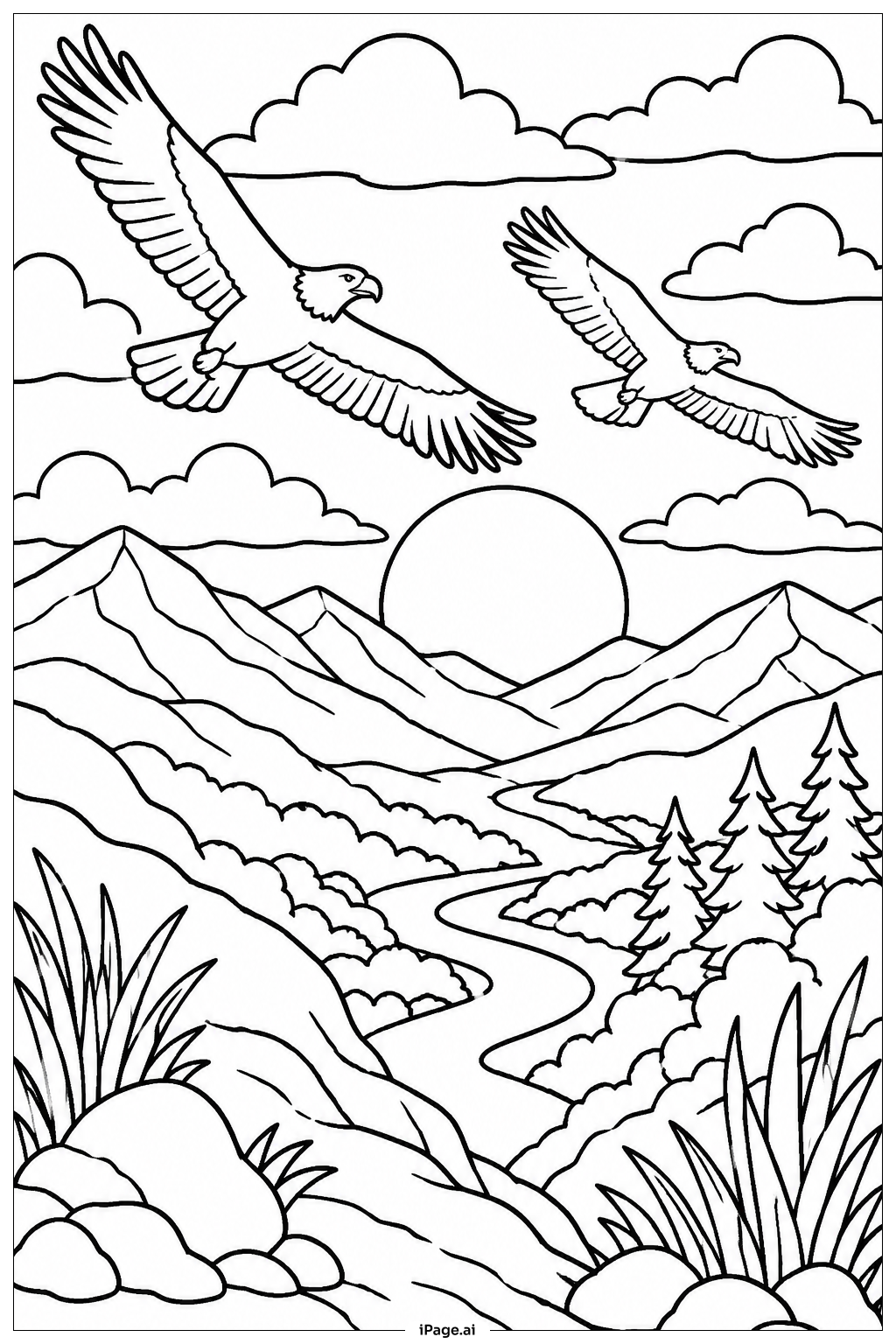
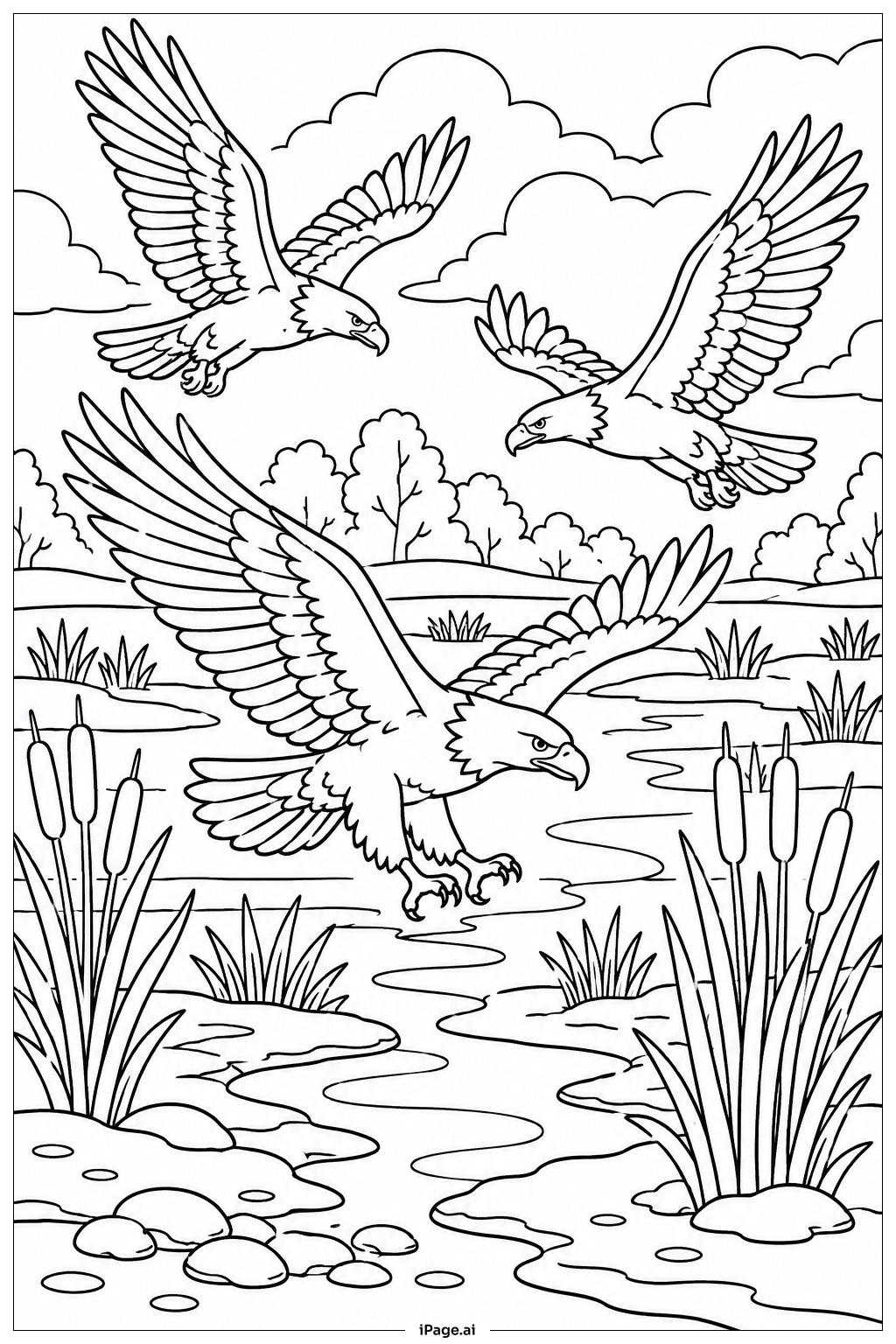
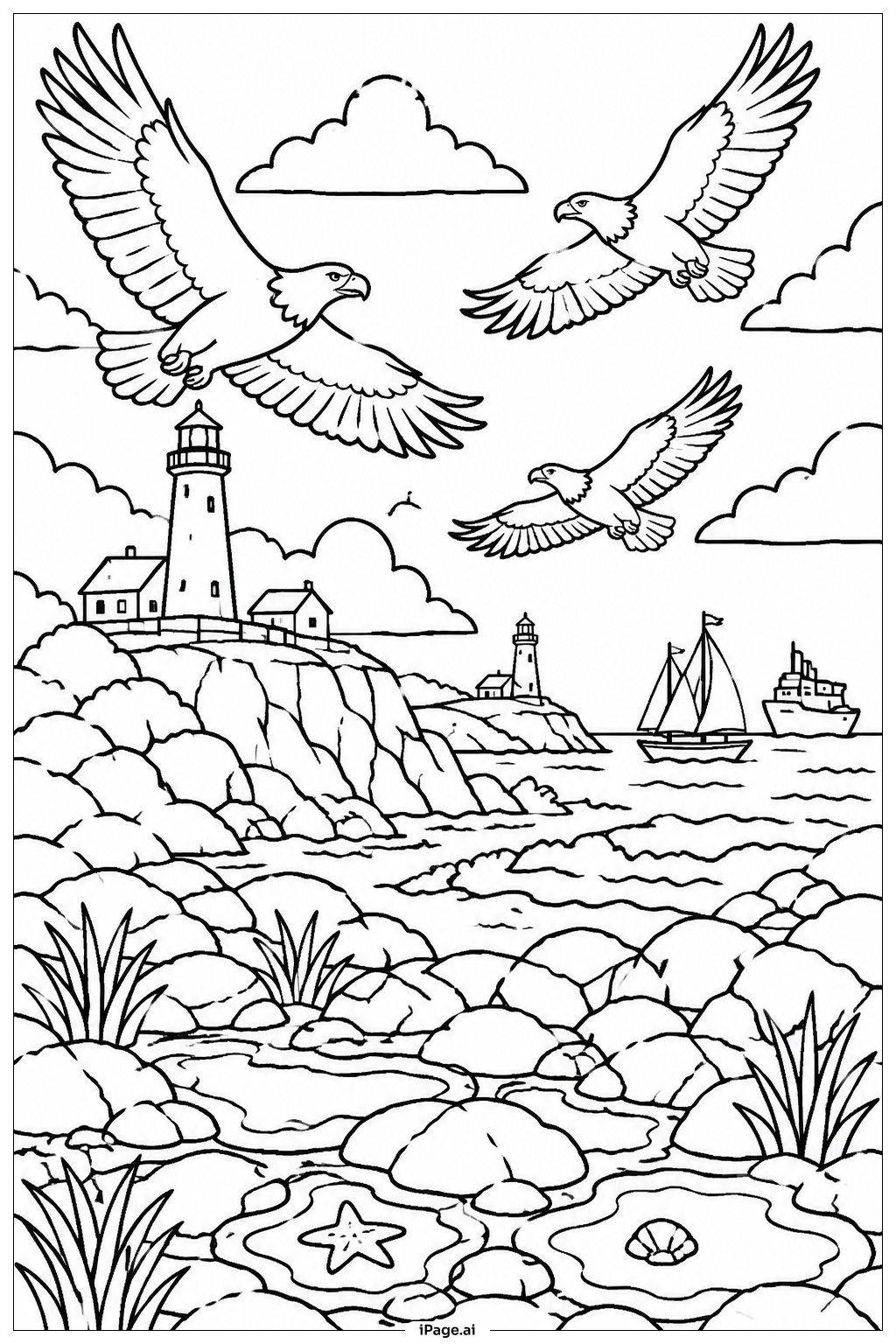
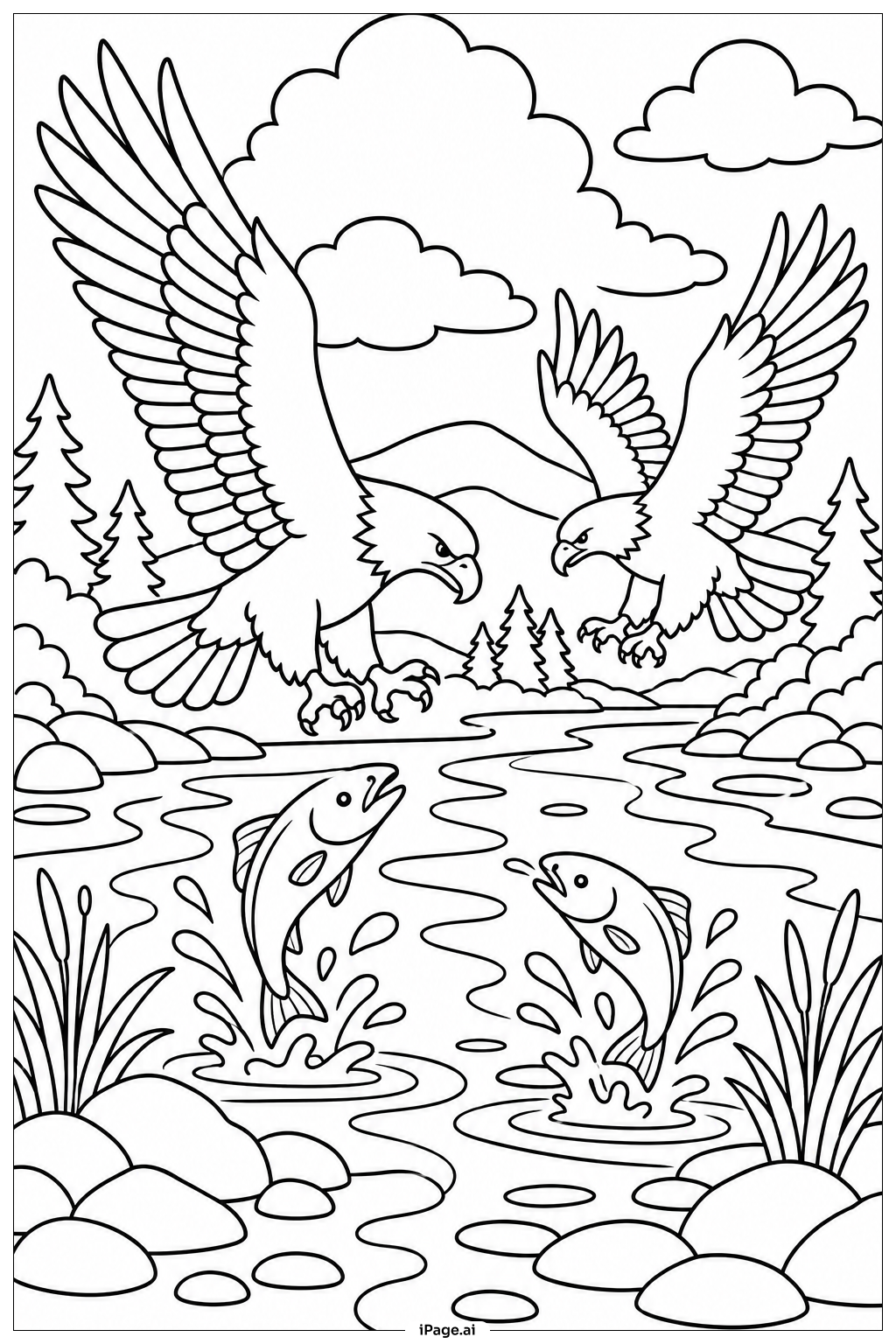
Start with the eagle's body. Use dark brown for the wings and back. The head and tail feathers should be bright white — these are the eagle's most recognizable features. Color the beak and feet a warm golden yellow. For the eyes, use pale yellow with a dark center to make them look sharp and alert. The nest is made of sticks and branches, so use shades of tan, brown, and gray to bring it to life. Add darker tones in the gaps between the twigs to show depth. For the tree, use rich greens and deep browns. The background landscape can use soft blues for the sky and river, and light greens for the distant hills. Using darker shades around the edges of the image helps the eagle stand out. Try blending two or three shades of brown on the wings to give the feathers a natural, layered look. Take your time with small details — they make the whole picture come alive.
Coloring challenges: Which parts are difficult to color and need attention for Eagle Nest Watch coloring page?
• Eagle Feather Layers: The eagle's wings and body are covered in overlapping feathers of different sizes. Each feather has its own shape and shading. Coloring them individually takes patience. Using two or three shades of brown and blending them carefully will make the feathers look real and textured rather than flat.
• White Head and Tail Contrast: The bald eagle's white head and tail feathers sit right next to very dark brown body feathers. Keeping that contrast clean and sharp can be tricky. If your white areas pick up dark color by accident, the eagle loses its iconic look. Work slowly near the edges where white meets brown.
• Nest Complexity: The nest is built from dozens of tangled sticks, twigs, and branches layered on top of each other. Coloring each stick a slightly different shade of brown, tan, or gray helps show depth and makes the nest look three-dimensional. Filling the whole nest with one flat color will make it look unnatural.
• Sharp Facial Details: The eagle's eye and hooked beak are small but very important. A steady hand is needed to color the beak in golden yellow without going outside the lines. The eye needs a bright yellow ring around a dark pupil. Getting these tiny details right gives the eagle its fierce, watchful expression.
• Background Depth and Distance: The landscape behind the eagle includes sky, a river, and distant hills. Using lighter, cooler colors for far-away objects and stronger colors for the tree and nest in the foreground creates a sense of distance and makes the eagle the clear center of attention.
Benefits of coloring books: Advantages of drawing Eagle Nest Watch coloring page
Coloring this Eagle Nest Watch image offers many wonderful benefits for children and beginners alike. The scene is full of detail, which encourages focus and concentration. Sitting quietly and working through each section of the image helps build patience — a skill that is useful in school and everyday life.
Working on the eagle's feathers, the tangled nest, and the open landscape gives young colorists a chance to practice color blending and shading. These are real art skills that develop hand-eye coordination and fine motor control, which are important for writing and drawing.
The image also sparks curiosity about nature. Children may want to learn more about bald eagles, how they build nests, and why they are symbols of strength and freedom. This kind of natural curiosity encourages reading and exploration beyond the coloring page.
Choosing colors for the sky, river, and hills lets children make creative decisions. There is no single right answer, so they feel free to express themselves. This builds confidence in their own artistic choices.
Finally, completing a detailed image like this gives a real sense of achievement. Finishing something beautiful that took time and care is deeply satisfying. It reminds young artists that effort and patience always lead to rewarding results. Coloring Pages like this one make learning feel like play.