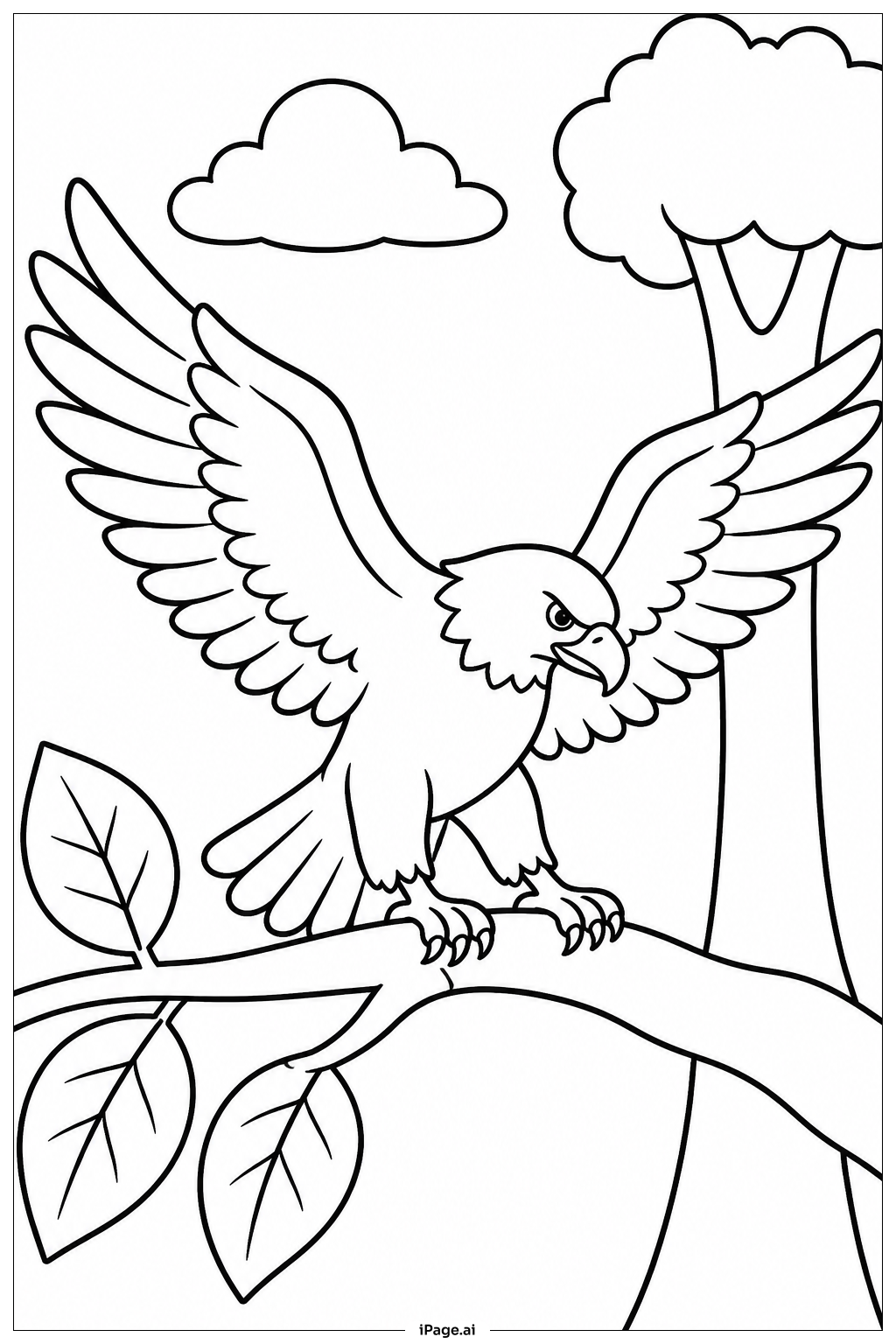
Coloring tips: How to color Eagle Landing Branch coloring page well?
Start with the eagle's head and tail feathers using bright white to highlight its bold markings. Use medium to dark brown for the body feathers, adding lighter browns or tans on the chest for depth and dimension. The beak and talons look great in golden yellow or amber. For the branch, use earthy tones like dark brown and gray to show the rough bark texture. Try adding streaks of lighter brown to suggest wood grain. Color the background sky in soft shades of light blue or pale orange to suggest either a clear day or a warm sunset. Use gentle strokes for feathers to make them look soft and layered. Kids can keep colors simple, while older colorists can try blending and shading to create a more realistic, dramatic look.
Coloring challenges: Which parts are difficult to color and need attention for Eagle Landing Branch coloring page?
• Feather Layering: The eagle's wings and body are covered in many overlapping feathers, each with its own shape and texture. Coloring each feather individually while keeping the overall look consistent is tricky. You need to switch between shades of brown carefully so the feathers look natural and not flat.\n\n• Small Facial Details: The eagle's eye, brow ridge, and hooked beak are small but very important. These areas require a steady hand and a fine-tipped tool. Getting the eye to look sharp and lifelike takes patience, and the beak needs smooth, even color to stand out from the head feathers.\n\n• Talon and Branch Contrast: The talons gripping the branch are close in tone to the bark, which can make them hard to distinguish. Choosing the right color difference between the golden talons and the earthy brown branch is a real challenge. Too similar, and the grip looks muddy; too different, and it looks unnatural.\n\n• Wing Spread Shading: Because the wings are partially open, there are natural shadows and highlights along the feather edges. Recreating this sense of depth and movement with flat color tools requires blending skills. Without shading, the wings can look stiff instead of dynamic.\n\n• Background Balance: The open sky background needs to complement the eagle without overpowering it. Choosing colors that are light enough to keep the focus on the eagle, while still adding atmosphere to the scene, requires a good eye for color harmony.
Benefits of coloring books: Advantages of drawing Eagle Landing Branch coloring page
Coloring this eagle on a branch is a wonderful activity for kids and nature lovers alike. It helps build focus and patience, especially when working through the fine feather details and small facial features. Staying inside the lines and choosing colors thoughtfully trains hand-eye coordination and fine motor skills, which are important for young learners. This image also sparks curiosity about birds and wildlife. Children may want to learn more about eagles after coloring one, turning a creative activity into a chance for real-world discovery. For older kids and teens, the shading challenges encourage artistic thinking and color theory skills. Choosing how to blend browns, whites, and yellows to create a realistic bird builds confidence in creative decision-making. The calming, repetitive motion of coloring also helps reduce stress and anxiety. Spending quiet time with this page encourages mindfulness in a simple, screen-free way. Whether completed quickly with bold colors or carefully with detailed shading, this coloring page offers a rewarding sense of accomplishment for colorists of all skill levels.