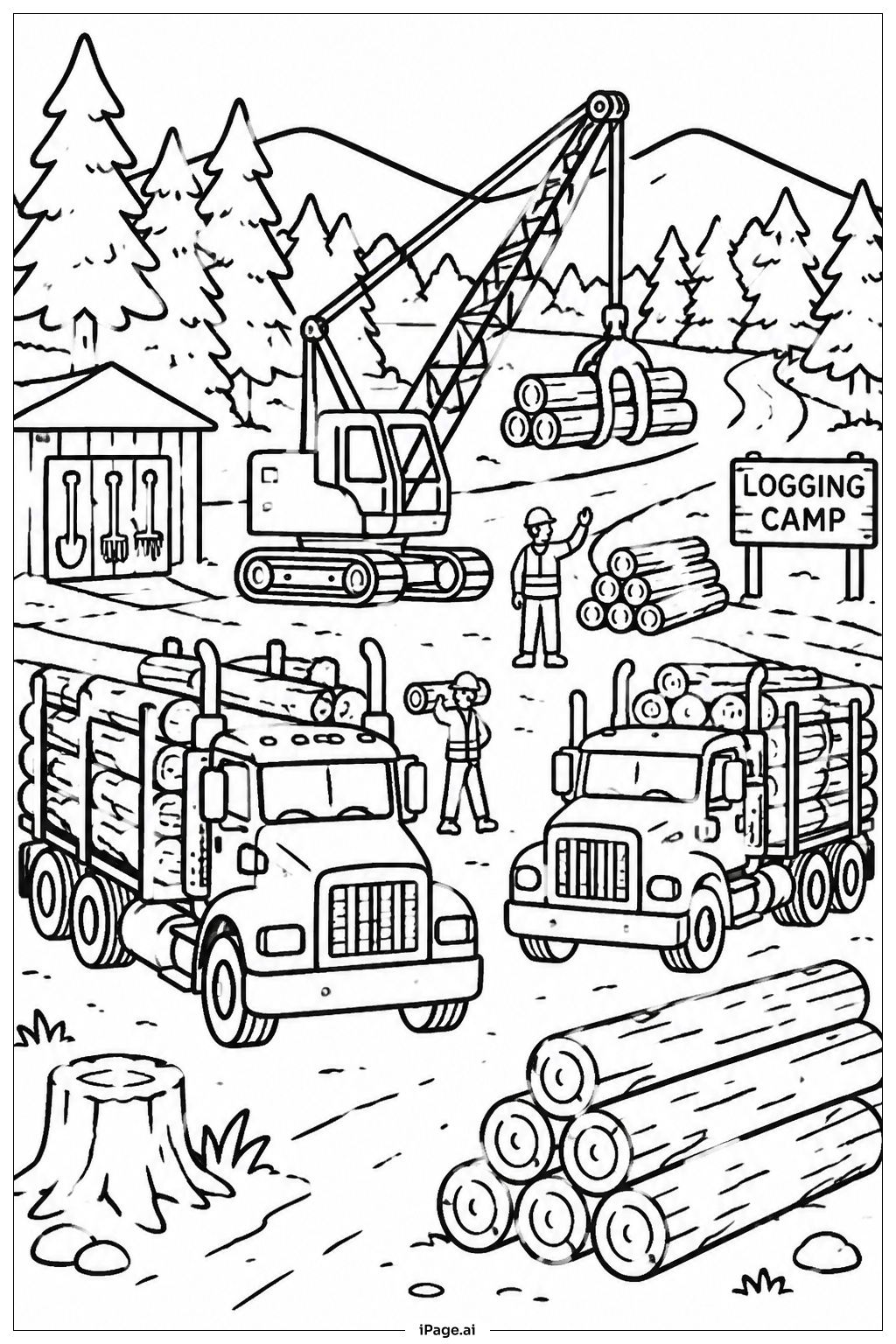
Coloring tips: How to color Logging Trucks In Forest Camp coloring page well?
Start with the trucks. Use deep red, dark green, or bright yellow for the truck cabs — these are classic logging truck colors that look bold and strong. Paint the tires dark gray or black, and add some brown mud splashes to make them look well-used. Color the log loads in warm shades of tan, brown, and orange to show freshly cut wood. For the tree trunks, mix light and dark browns. Use many shades of green for the forest — light green for young leaves, dark green for pine needles, and olive green for shadows. The forest floor can be colored in earthy tones like brown, tan, and rust. Try adding a blue or pale gray sky peeking through the treetops. Use darker shades to add shadows under the trucks and between the trees. This will make the whole scene feel deep and alive. Take your time with each section and enjoy bringing this forest camp to life!
Coloring challenges: Which parts are difficult to color and need attention for Logging Trucks In Forest Camp coloring page?
• Truck Cab Details: The logging truck cabs have many small parts — mirrors, door handles, grilles, and headlights. These tiny areas are tricky to color neatly, especially for younger artists. Use a fine-tipped marker or a sharpened colored pencil to stay inside the lines and add crisp detail to each part.
• Log Stack Shading: The pile of logs on the truck trailer looks round and cylindrical. Getting the shading right on each log can be difficult. To make them look three-dimensional, use a lighter brown in the center of each log and a darker brown along the edges and ends. This technique takes patience but creates a realistic result.
• Dense Forest Background: The trees behind the trucks are packed closely together, creating a layered background with many overlapping branches and trunks. Choosing the right range of greens and browns without the image looking muddy or flat is a real challenge. Work from the back of the forest to the front, using lighter tones in the distance and darker tones up close.
• Muddy Ground Texture: The forest floor is covered in tire tracks, roots, and uneven ground. Blending multiple earthy tones — brown, tan, and dark gray — to create a realistic muddy texture requires a steady hand and careful color layering.
• Worker Figures and Gear: Any human figures in the scene are small and have fine clothing details like hard hats, vests, and boots. Coloring these tiny figures without losing the detail of their gear can be frustrating. Take it slowly and use a light touch with smaller tools for best results.
Benefits of coloring books: Advantages of drawing Logging Trucks In Forest Camp coloring page
Coloring this logging trucks scene offers a wonderful range of benefits for kids and beginners alike. Working through the many detailed parts of the trucks — the cab, the trailer, the logs, and the tires — helps build fine motor skills and hand-eye coordination. Staying within the lines of small, complex shapes takes focus and steady control, which improves over time with practice.
The forest setting encourages creativity in color choice. Kids get to explore a wide palette of greens, browns, and earth tones, learning how different shades can work together to create depth and atmosphere. Mixing light and dark tones to show shadows and texture is a great introduction to basic art concepts.
This scene also sparks curiosity about the natural world and how logging work happens in real life. It can be a great starting point for conversations about forests, trees, and the environment, making it both an artistic and educational activity.
For older kids and adults, the complexity of the scene — with multiple trucks, layered trees, and ground textures — provides a satisfying challenge that builds patience and attention to detail. Completing a scene this rich gives a strong sense of accomplishment. Overall, this page is a fun, engaging, and rewarding coloring experience for all ages.