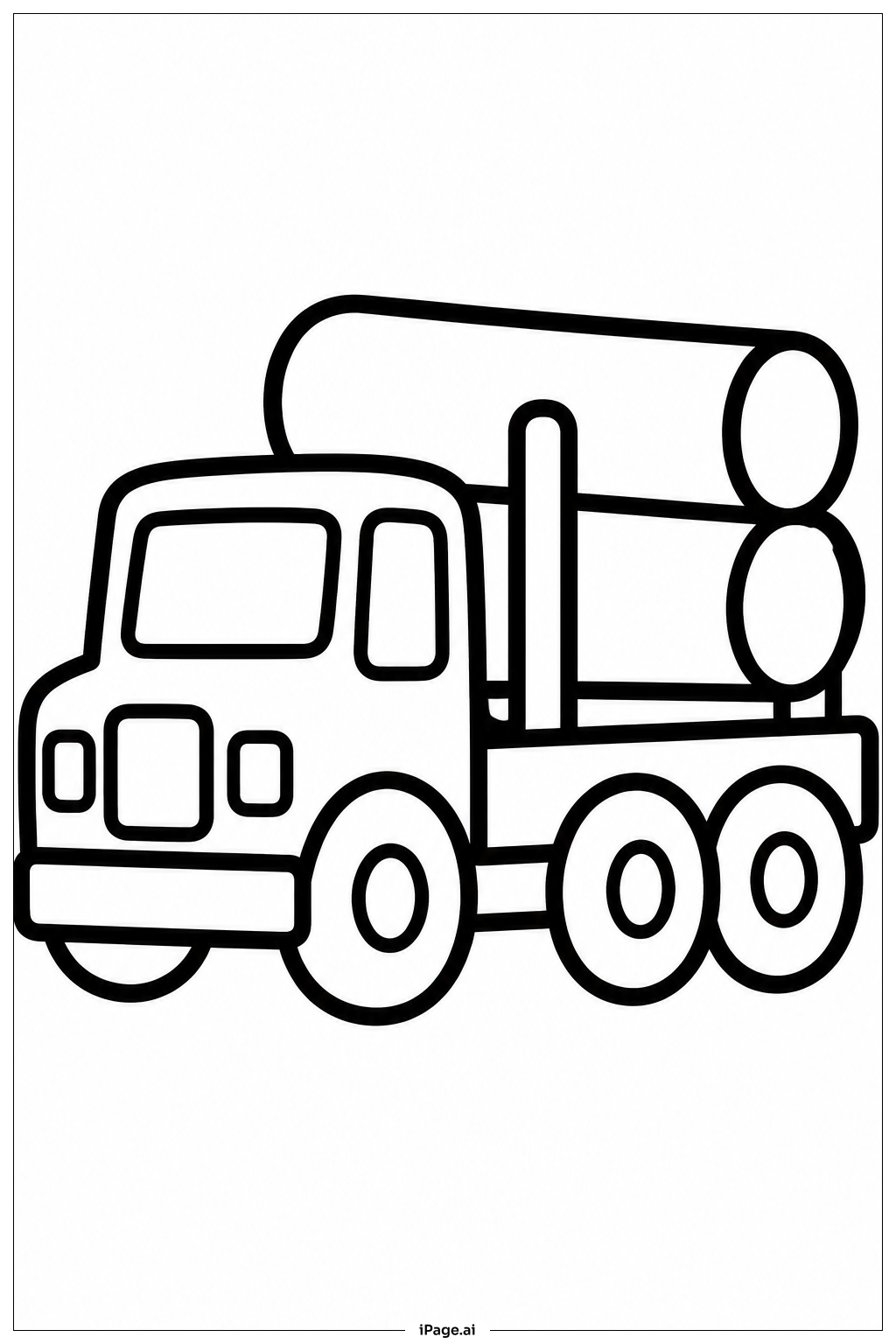
Coloring tips: How to color Logging Truck coloring page well?
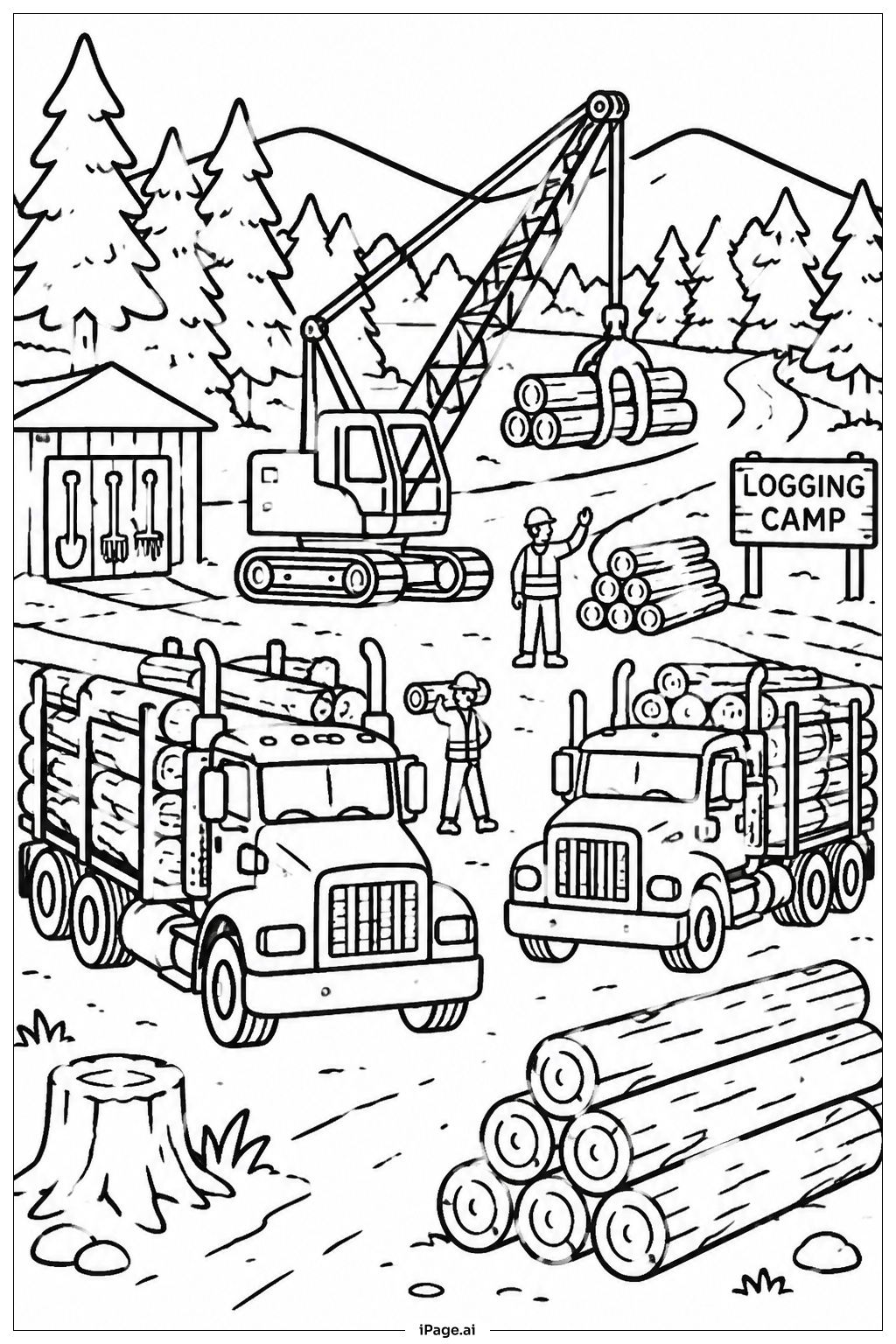
Start with the truck cab. Use a bold color like red, blue, or yellow to make it stand out. Add a darker shade of the same color to show shadows on the doors and hood. Color the tires dark gray or black, and use light gray for the metal rims. For the logs, use shades of brown — light tan for the cut ends to show wood rings, and darker brown for the rough bark on the sides. Use gray or silver for the metal chains, support beams, and exhaust pipes. The headlights and windows can be light blue or white to look like glass. Try adding a sky blue background with some green trees in the distance to set the scene in a forest. Use darker greens for shadows under the truck and logs to give the image depth and a three-dimensional feel.
Coloring challenges: Which parts are difficult to color and need attention for Logging Truck coloring page?
• Log Texture Details: The logs stacked on the trailer have both bark texture along the sides and visible wood grain rings on the cut ends. Coloring these realistically requires blending multiple shades of brown and tan. Staying within the fine lines that represent bark grooves and growth rings can be tricky, especially for younger colorists.
• Chained Cargo Area: The metal chains securing the logs cross over each other and overlap in multiple places. This creates a complex pattern of links and angles that are difficult to color neatly. Each chain section needs careful attention to avoid smearing colors onto the logs or the trailer bed beneath.
• Truck Cab Mechanical Details: The cab includes many small features such as headlights, side mirrors, door handles, grille lines, and exhaust pipes. These small elements sit very close together, making it challenging to apply color precisely without going outside the lines or mixing up different parts of the truck.
• Tire and Wheel Section: The large tires have deep tread patterns with many ridged grooves. The wheel rims inside each tire add another layer of detail. Coloring the tread lines in dark gray while keeping the rims a separate lighter tone requires a steady hand and fine-tipped coloring tools.
• Depth and Shadow Effects: The image has multiple layers — the cab in front, the trailer behind, and the logs stacked on top. Creating a sense of depth means using lighter colors on surfaces facing upward and darker shades on areas in shadow. Understanding where light falls and applying gradients correctly is an advanced skill that adds greatly to the finished look.
Benefits of coloring books: Advantages of drawing Logging Truck coloring page
Coloring this Logging Truck page offers a wide range of benefits for kids and beginners alike. Working through the many detailed sections of the truck helps build fine motor skills and strengthens hand-eye coordination. Staying within the lines of small parts like the chains, tires, and cab details takes focus and practice, which naturally improves concentration over time.
This image also sparks curiosity about the real world. Kids learn what logging trucks do, how logs are transported, and what makes heavy-duty vehicles different from everyday cars. That connection between art and real-life topics makes learning feel fun and natural.
Choosing colors for the truck cab, the wood logs, and the metal parts encourages creative thinking and decision-making. There is no single right answer, so children feel free to express themselves. Experimenting with shading and texture on the log surfaces can even introduce basic artistic techniques in a relaxed and enjoyable way.
Completing a detailed page like this also gives a real sense of accomplishment. Finishing something that took patience and effort builds confidence and motivates kids to take on more complex creative challenges. Overall, this page is a great mix of fun, learning, and skill-building.