Coloring tips: How to color Titanic Hull Block coloring page well?
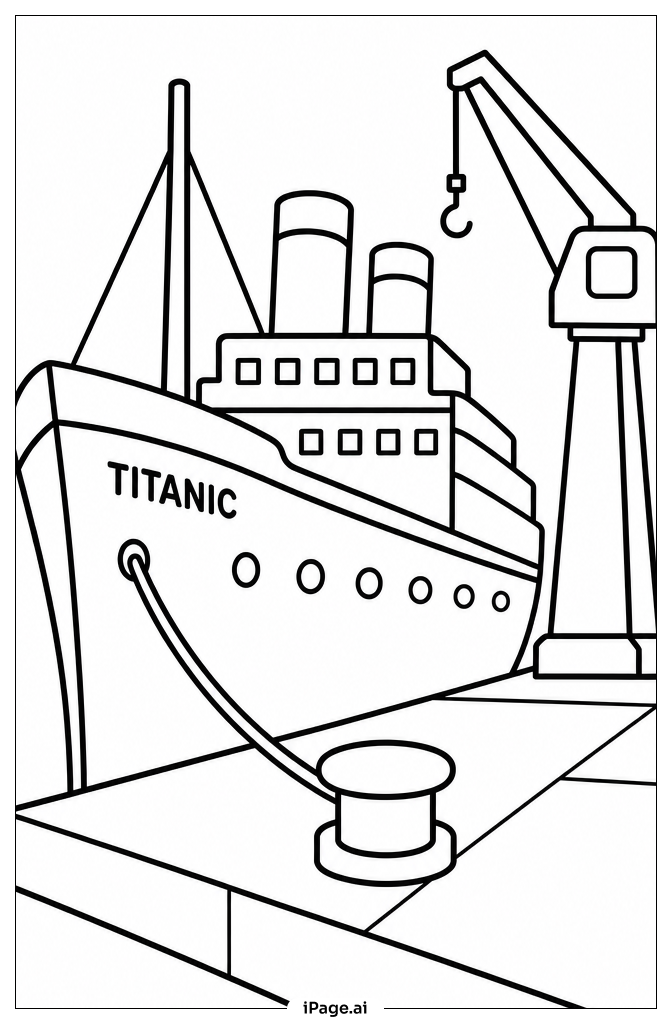
Start with the large hull sections using dark navy blue or charcoal gray to reflect the steel construction of the Titanic. Use lighter shades of gray or silver to highlight the riveted panels and give them a metallic look. For the portholes, try a warm golden yellow or pale white to suggest light glowing from inside. The waterline area can be colored in deep ocean blue or teal, blending into darker shades below. Add rust-orange tones along the lower hull to show weathering and age. Use black for the deepest shadows between beams and structural supports to create depth. If you want a dramatic effect, try a dark stormy sky in the background using deep blue and purple tones. Take your time with the small details like rivets and bolts — a fine-tipped marker or colored pencil works best for those tiny areas.
Coloring challenges: Which parts are difficult to color and need attention for Titanic Hull Block coloring page?
Coloring this Titanic Hull Block image comes with several challenges that require patience and attention to detail:
• **Complex Structural Details:** The hull is covered in riveted steel panels, beams, and support frames. Each rivet and seam is a small, precise area that requires a fine-tipped tool to color accurately. Rushing through these sections can make the image look messy or unfinished.
• **Creating a Metallic Effect:** Steel doesn't have a single flat color. To make the hull look realistic, you need to layer multiple shades of gray, silver, and blue, and carefully blend them together. This shading technique can be tricky, especially for younger colorists who are still learning how to blend.
• **Consistent Porthole Coloring:** The rows of portholes repeat across the hull and need to be colored consistently. Keeping each one the same size and shade while staying inside the lines takes steady hands and focus.
• **Depth and Shadow Work:** The hull has many overlapping layers — outer plates, inner frames, and deep recesses. Showing this three-dimensional depth through shading requires understanding where light falls and where shadows form, which is a more advanced coloring skill.
• **Large Surface Areas vs. Fine Details:** The image combines very large open hull sections with extremely small detail work. Switching between broad strokes for big areas and precise strokes for tiny details without smudging or going outside the lines is one of the biggest challenges of this page.
Benefits of coloring books: Advantages of drawing Titanic Hull Block coloring page
Coloring this Titanic Hull Block page offers a wonderful mix of fun and learning for kids and adults alike.
For younger colorists, it builds fine motor skills and hand-eye coordination as they carefully fill in rivets, portholes, and steel panels. Staying within the detailed lines takes focus and patience, which helps develop concentration over time.
For older kids and adults, this page is a great introduction to shading and creating metallic textures. Experimenting with layers of gray, silver, and blue teaches color theory in a hands-on way.
Beyond the art skills, this image sparks curiosity about history and engineering. As you color the massive hull structure, you naturally start to wonder how such a giant ship was built, what life was like on board, and why the Titanic became one of the most famous ships in history. It's a creative way to connect with a real historical event.
The repetitive, focused nature of coloring also has a calming effect. It can reduce stress and anxiety, making it a great quiet-time activity after a busy day. Whether you're a history fan, a ship enthusiast, or just love a detailed coloring challenge, this page delivers a deeply satisfying and educational experience from start to finish.