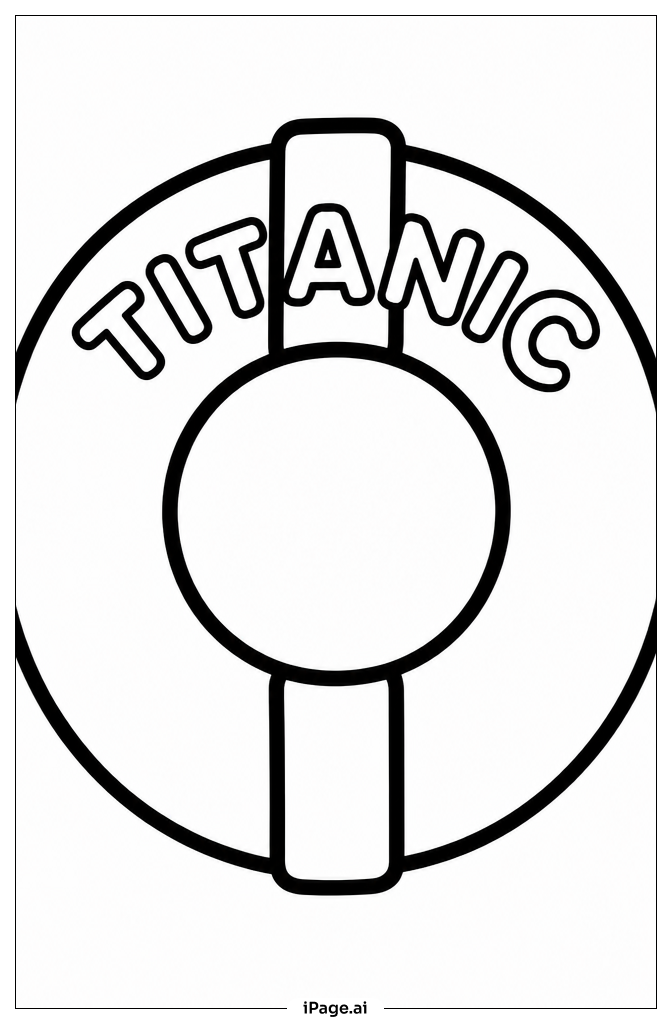
Coloring tips: How to color Titanic Single Lifebuoy coloring page well?
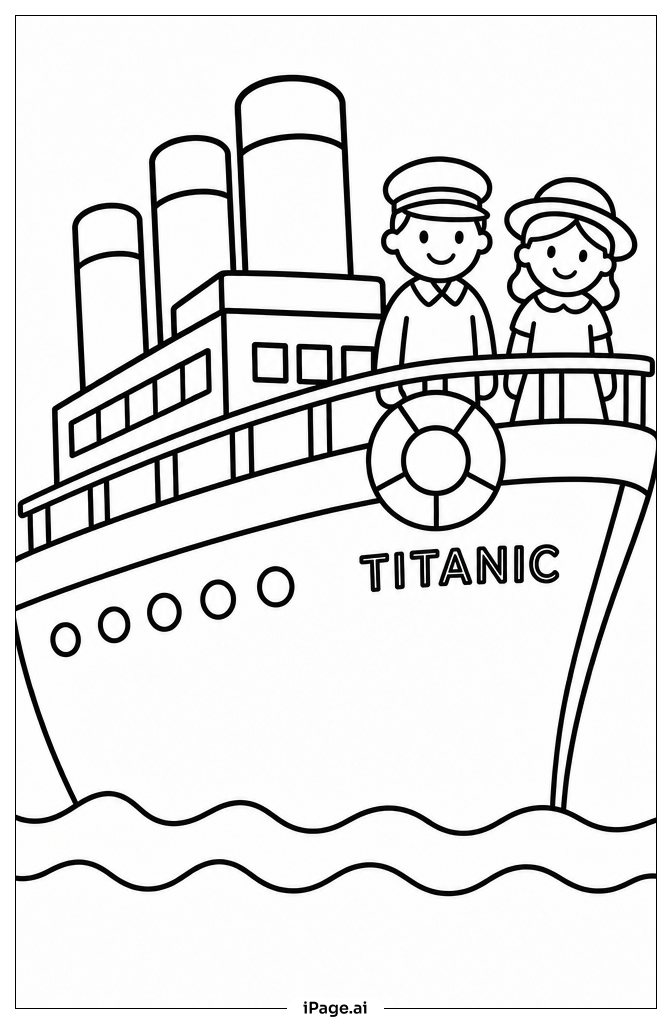
Start with the lifebuoy's alternating segments. Use red and white — the classic colors seen on real Titanic lifebuoys. Paint every other segment red and leave the rest white or a very light cream. This gives the ring its iconic look.
For the rope or cord wrapped around the ring, try a warm tan or golden yellow. This mimics the look of real nautical rope.
If there is a background, consider a deep ocean blue or a stormy gray to set the mood of the open sea. This makes the lifebuoy stand out beautifully.
Use a darker shade of red to add shadows on the curved edges of the red segments. This gives the ring a rounded, three-dimensional feel.
Keep your strokes smooth and steady inside each segment. Take your time with the curved edges — going slowly helps you stay inside the lines. This is a great image for practicing neat, careful coloring!
Coloring challenges: Which parts are difficult to color and need attention for Titanic Single Lifebuoy coloring page?
Coloring this Titanic lifebuoy image looks simple at first, but it comes with a few interesting challenges worth knowing before you start:
• **Curved segment boundaries:** The lifebuoy is a circle, and its alternating segments follow that curve. Staying neatly inside each curved section without crossing into the next one requires a steady hand and careful attention. Using a fine-tipped colored pencil or marker for the edges first, then filling in the center, can help a lot.
• **Consistent alternating colors:** The classic red-and-white pattern must alternate evenly all the way around the ring. It is easy to lose track of which segment should be which color, especially where the ring curves around the back. Lightly numbering or marking segments with a pencil before coloring can prevent mistakes.
• **Rope or cord details:** If the image includes rope wrapped around the lifebuoy, these thin, winding lines are tricky to color without smudging into the main ring. A very fine-tipped tool works best here. Patience is key — rushing this part often leads to messy overlaps.
• **Creating a round, three-dimensional look:** A flat lifebuoy can look dull. Adding subtle shading — slightly darker tones on the inner and outer edges of each segment — helps the ring look curved and realistic. Blending two shades of the same color smoothly takes practice but makes a big difference.
• **Background contrast:** Choosing a background color that makes the lifebuoy pop without overwhelming it is a creative challenge. Too dark and the details get lost; too light and the image lacks drama. Finding that balance is part of the fun.
Benefits of coloring books: Advantages of drawing Titanic Single Lifebuoy coloring page
Coloring this Titanic lifebuoy page offers a wonderful mix of fun and learning for kids and history lovers alike.
**Builds fine motor skills.** Carefully coloring inside the curved segments and small rope details strengthens hand control and pencil grip — skills that help with writing and drawing too.
**Sparks curiosity about history.** The lifebuoy is a powerful symbol of the Titanic story. As children color it, they naturally become curious about the ship, ocean travel, and maritime history. It is a gentle, engaging way to connect art with learning.
**Teaches color patterns.** The alternating red-and-white design introduces the concept of repeating patterns in a hands-on, visual way. Recognizing and continuing a pattern is an important early math and design skill.
**Encourages focus and patience.** Staying inside curved lines and keeping the alternating colors consistent requires concentration. This kind of mindful activity helps children practice sitting with a task and seeing it through to the end.
**Boosts creativity.** While the classic colors are red and white, there are no rules here. Kids can experiment with their own color combinations and background choices, building confidence in their creative decisions.
It is a simple image with a rich story behind it — perfect for a calm, meaningful coloring session.