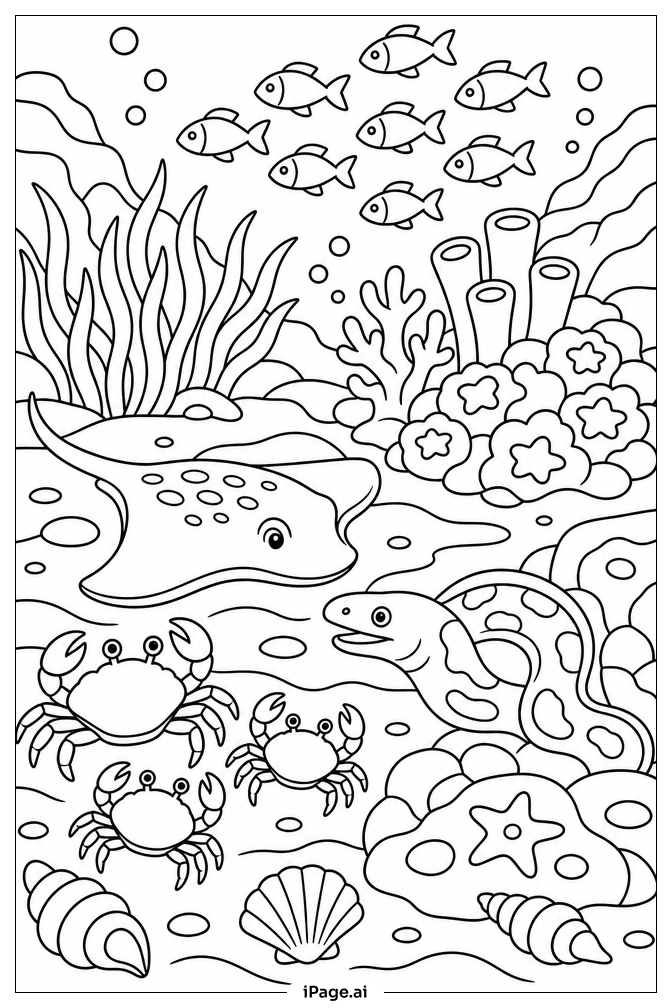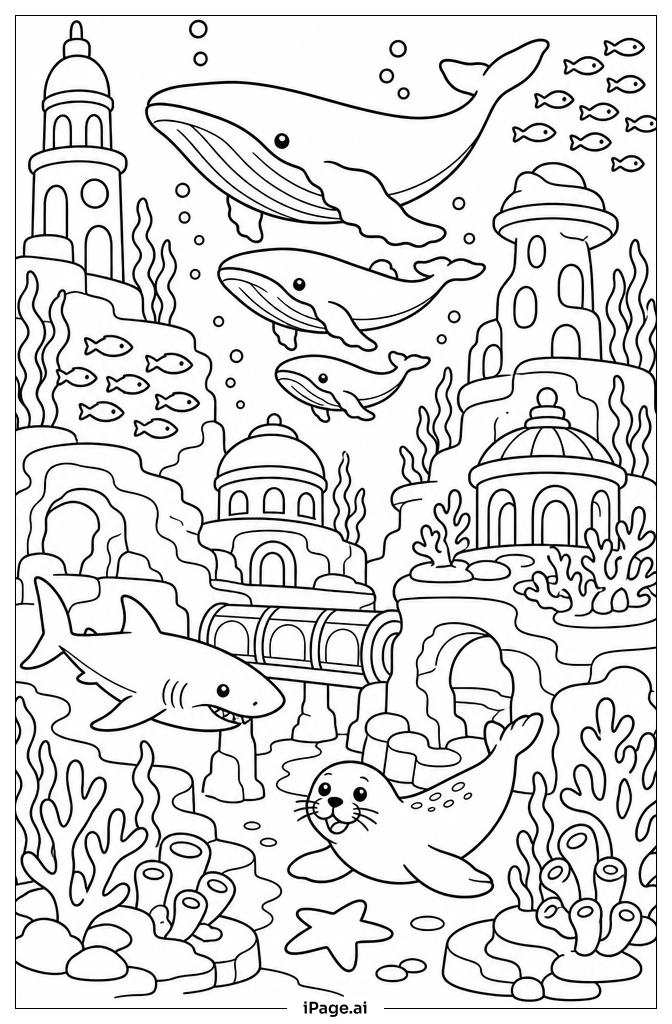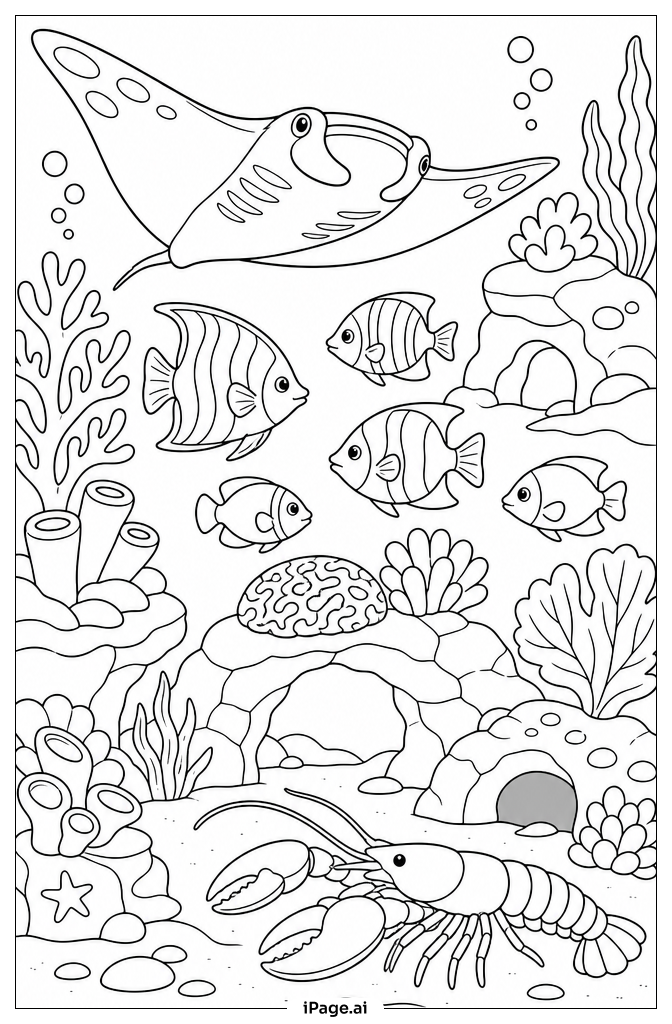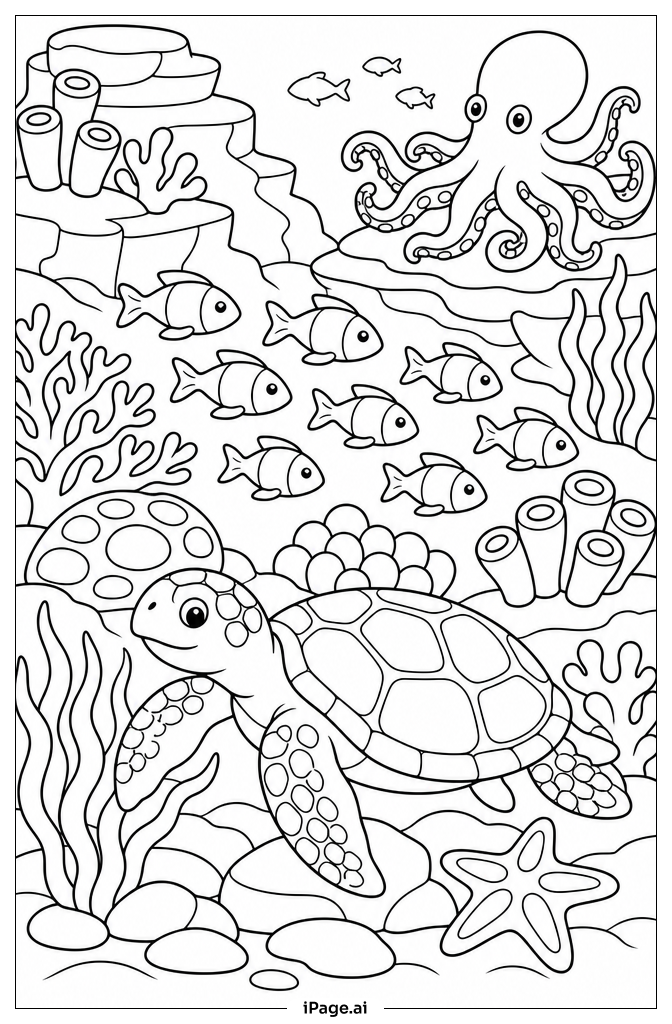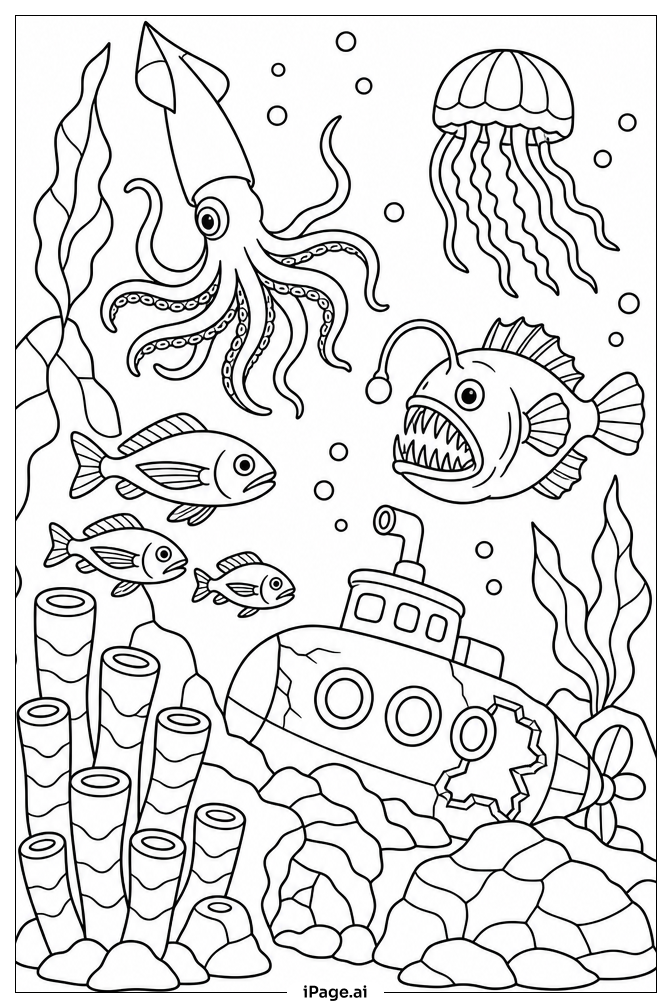
Coloring tips: How to color Sea Animals Deep Sea Expedition coloring page well?
Start with the background. Use deep navy blue or dark purple to fill the ocean depths. This makes the sea creatures stand out nicely.
For the anglerfish, try dark gray or dark green on its body. Use bright yellow or orange for its glowing lure to make it pop.
Color the giant squid in shades of red, orange, or purple — these are realistic deep-sea colors. Add lighter tones on the belly for a 3D effect.
Use pale blue or white for the rising bubbles. For coral and sea plants, go bold — bright red, orange, and pink look great against a dark background.
Give each fish its own unique color. Try mixing blues, greens, and yellows. Don't be afraid to experiment! Deep-sea creatures often have surprising, vivid colors.
Use a darker shade of the same color along the edges of each creature to add shadows and depth. This gives your artwork a more realistic feel.
Coloring challenges: Which parts are difficult to color and need attention for Sea Animals Deep Sea Expedition coloring page?
• **Complex creature details:** The deep-sea animals in this image feature intricate textures — scales, spines, tentacles, and ridged skin. Staying within the fine lines of these details requires patience and a sharp colored pencil or fine-tipped marker. Young colorists may find it challenging to fill small areas neatly without going outside the outlines.
• **Dark background vs. bright creatures:** One of the biggest challenges is creating a dark ocean background while keeping the sea creatures vibrant and visible. Blending dark blues and purples smoothly without muddying the creature colors takes practice. Using different tools — such as crayons for the background and colored pencils for the animals — can help manage this contrast.
• **Layering and shading:** To make the deep-sea scene look realistic and three-dimensional, colorists need to apply multiple layers of color. Adding highlights and shadows on curved surfaces like the squid's body or the fish's belly is a technique that requires some skill and understanding of light direction.
• **Small and overlapping elements:** Bubbles, coral branches, and overlapping fins create tight spaces that are tricky to color separately. Keeping each element distinct while filling small gaps cleanly is a common challenge, especially for younger children who are still developing fine motor control.
• **Color consistency across the scene:** Maintaining a unified color palette throughout a large, detailed scene like this one takes planning. Choosing colors that work together — and not running out of a specific shade midway — requires a bit of preparation before starting.
Benefits of coloring books: Advantages of drawing Sea Animals Deep Sea Expedition coloring page
Coloring this deep-sea expedition page offers a wonderful mix of fun and learning.
**Builds focus and patience.** The detailed creatures and intricate lines encourage kids to slow down, concentrate, and work carefully — great practice for building attention span.
**Sparks curiosity about ocean life.** As children color anglerfish, giant squids, and other deep-sea animals, they naturally become curious about these real creatures. It's a fun gateway to science and nature exploration.
**Develops fine motor skills.** Filling in small spaces, following curved lines, and controlling color pressure all help strengthen hand-eye coordination and pencil grip — skills that support writing and drawing.
**Encourages creative thinking.** Deep-sea animals are often colorful and unusual in real life. This gives kids the freedom to experiment with bold and imaginative color choices, boosting their creativity and confidence.
**Provides calming, screen-free time.** Coloring is a relaxing activity that helps children unwind. It offers a healthy break from screens while still keeping the mind engaged.
**Great for all ages.** Whether you're a young child trying simple areas or an older kid tackling shading and blending, this page grows with the colorist's skill level. Everyone can enjoy it at their own pace.