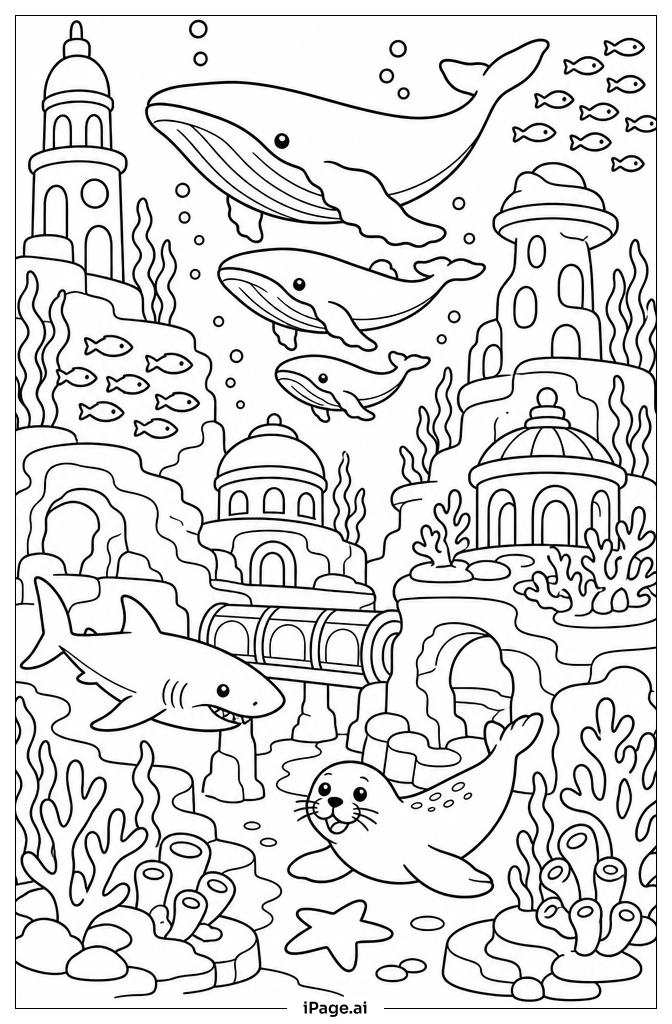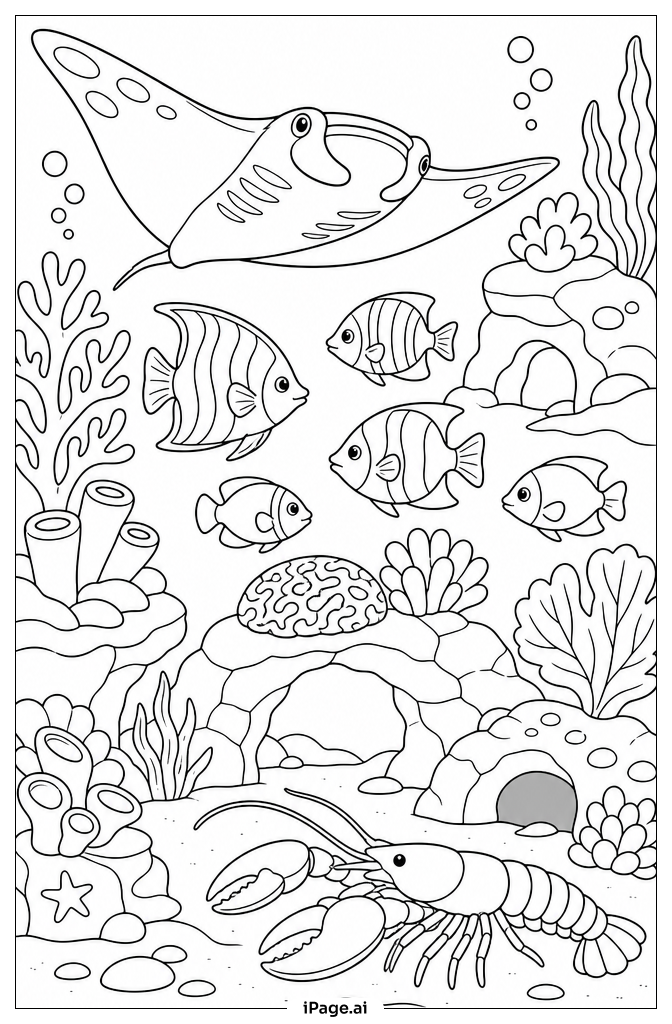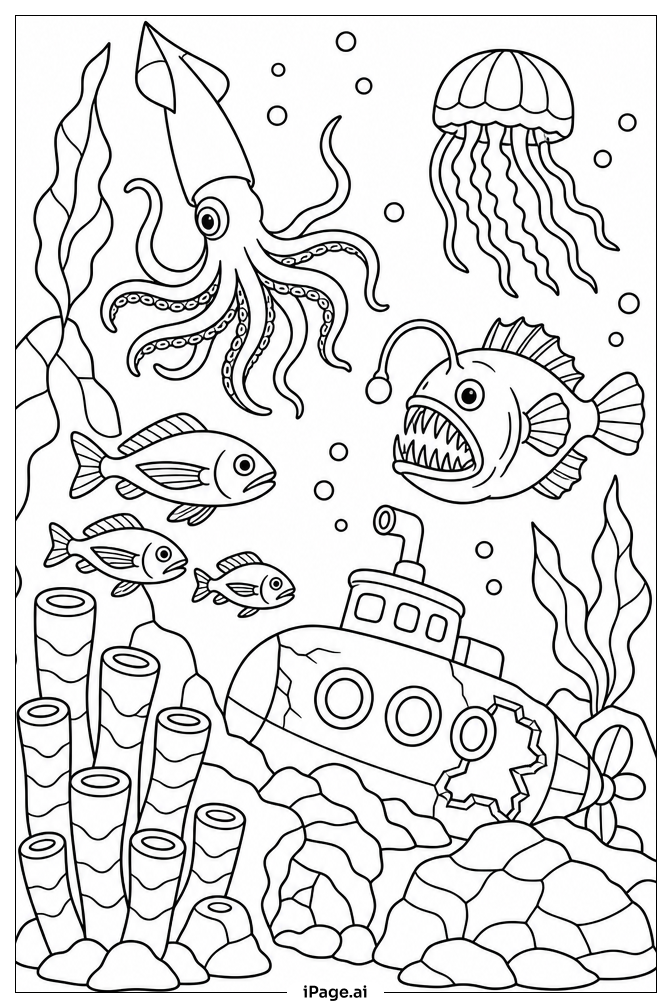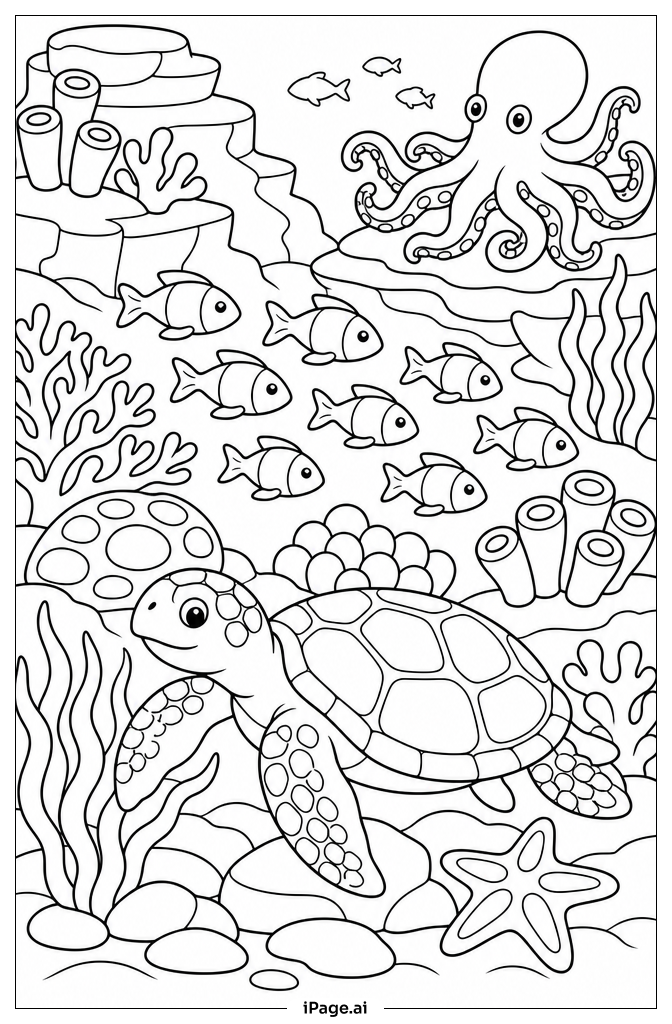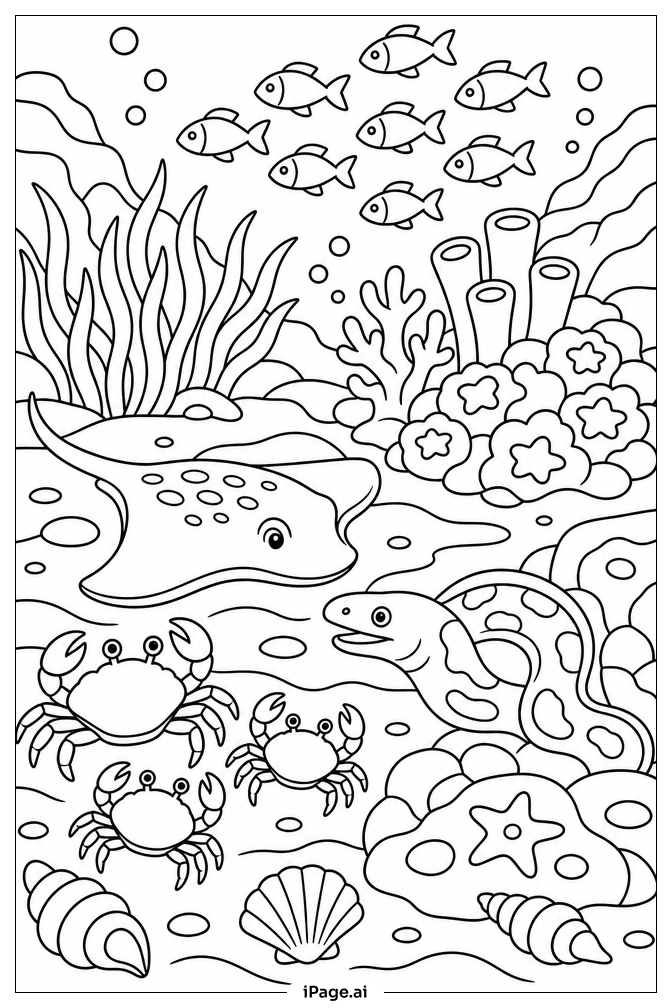
Coloring tips: How to color Sea Animals Ocean Floor Ecosystem coloring page well?
Start with the background — use deep blues and blue-greens to fill the water. Then move to the coral reefs. Try warm colors like orange, pink, red, and purple to make them pop. For fish, get creative! Real ocean fish come in almost every color, so feel free to mix bright yellows, neons, and stripes. Color the octopus in orange or reddish-brown, and add purple or blue spots for fun. Use brown and green tones for the sea turtle's shell, keeping the skin a soft olive green. Starfish look great in orange or sandy yellow. For sea anemones, try hot pink or violet tips. Use dark green and light green for the seaweed. Don't forget the bubbles — leave them white or give them a light blue outline. Layer your colors from light to dark to add depth and make the scene feel like a real underwater world.
Coloring challenges: Which parts are difficult to color and need attention for Sea Animals Ocean Floor Ecosystem coloring page?
Coloring this ocean floor ecosystem scene comes with several fun but tricky challenges:
• **Intricate coral and reef details:** The coral structures are made up of tiny branches, bumps, and layered shapes packed closely together. Staying within these fine lines requires a sharp pencil or a thin-tipped marker. Using the wrong tool can cause colors to bleed across sections and blur the detail.
• **Color variety and balance:** With so many different sea creatures and plants in one scene, choosing colors that work well together without making the image look too busy or clashing is a real challenge. Kids and adults alike need to think about which colors to place next to each other so the final result looks balanced and visually pleasing.
• **Creating a sense of depth:** The ocean has layers — things in the background should look farther away. Achieving this means using lighter, cooler shades for background elements and deeper, richer tones for foreground creatures. This technique, called shading, can be tricky for younger colorists.
• **Small, detailed areas:** Elements like sea urchin spines, fish scales, and the textured skin of the octopus involve very small areas that are hard to color neatly. Rushing through these sections can make the image look messy, so patience and a steady hand are needed.
• **Smooth water background:** Filling in the large water areas evenly without streaks or uneven patches — especially with crayons or colored pencils — takes practice and consistent pressure to achieve a clean, smooth result.
Benefits of coloring books: Advantages of drawing Sea Animals Ocean Floor Ecosystem coloring page
Coloring this ocean floor ecosystem page offers a wonderful range of benefits for children and adults alike.
For kids, it sparks curiosity about marine life. As they color each creature, they naturally learn the names, shapes, and features of real ocean animals like octopuses, sea turtles, and starfish. This makes the activity both creative and educational.
Focusing on the fine details of the coral, fish scales, and seaweed helps improve hand-eye coordination and fine motor skills. These skills are important for writing, drawing, and everyday tasks.
Choosing colors for each element encourages creative thinking and artistic decision-making. Kids learn to experiment with color combinations and develop their own sense of style and expression.
For older children and adults, the detailed nature of the scene provides a calming, meditative experience. Concentrating on coloring reduces stress and anxiety, helping the mind unwind after a busy day.
Completing the full scene also builds focus, patience, and a sense of accomplishment. When the finished page is full of color and life, it gives colorists a real sense of pride in their work. This boost in confidence carries over into other areas of learning and creativity. Overall, this page is a perfect mix of fun, learning, and relaxation for all ages.