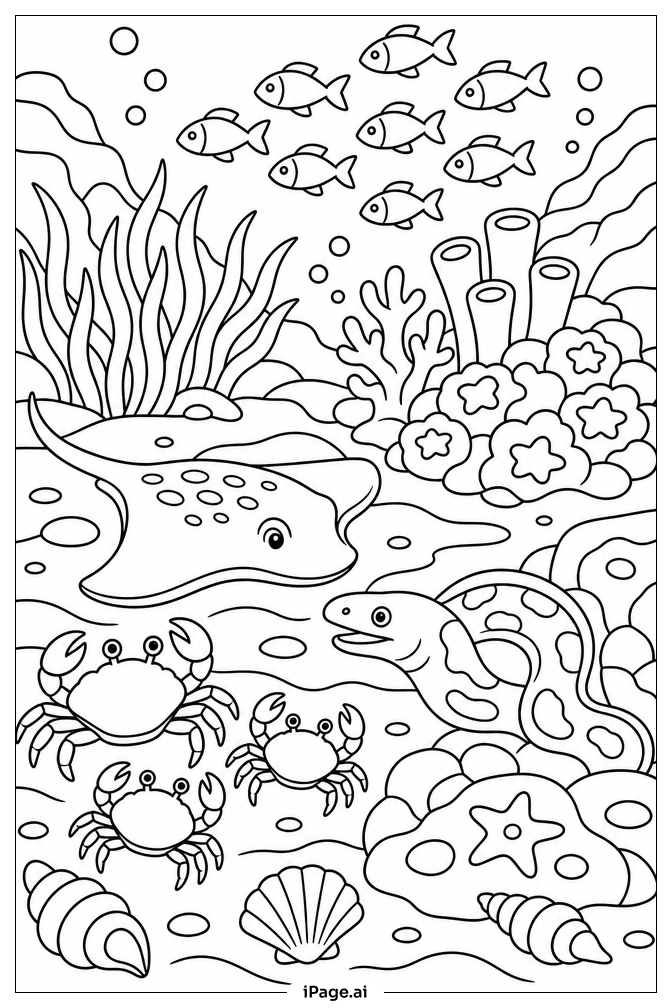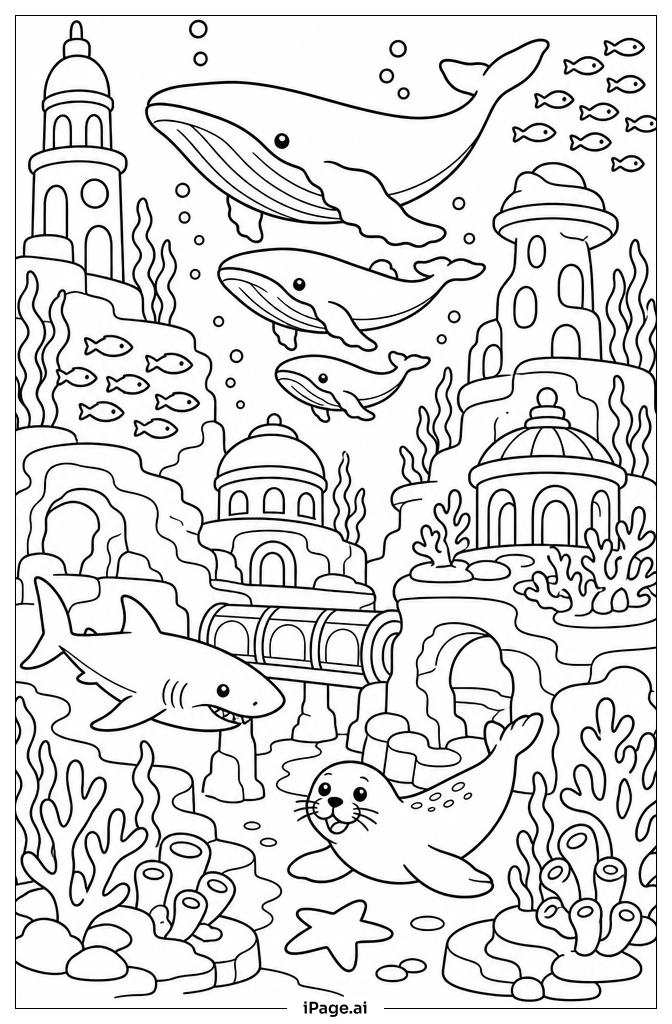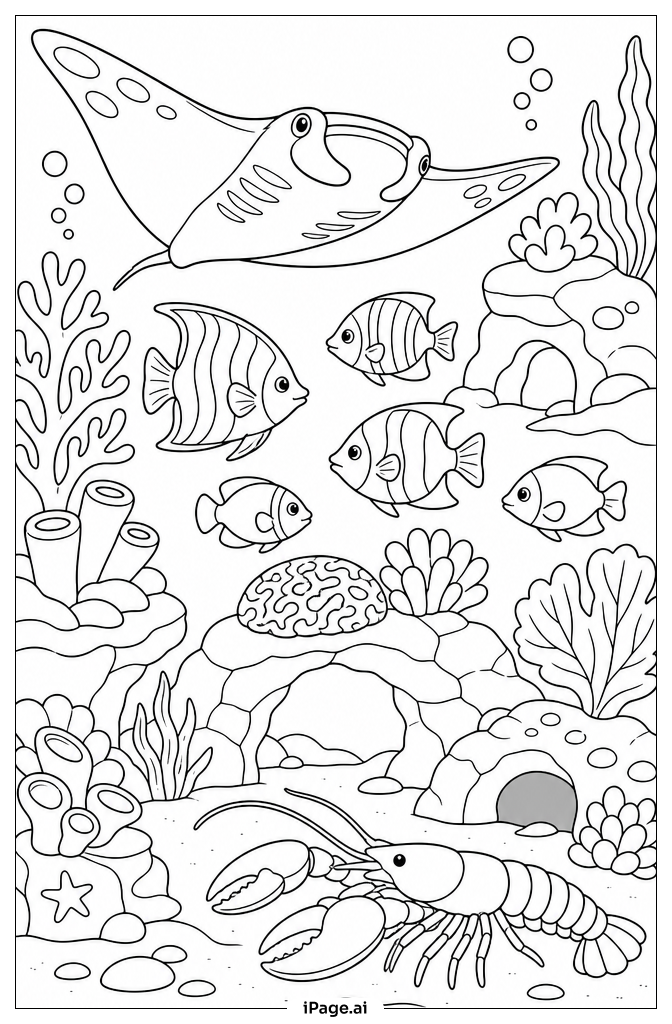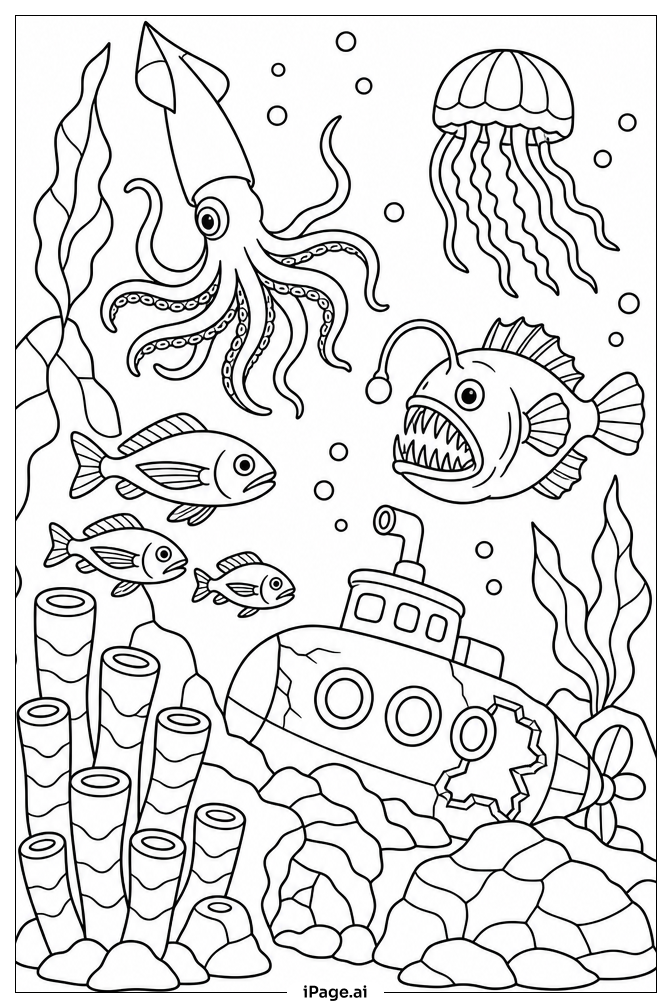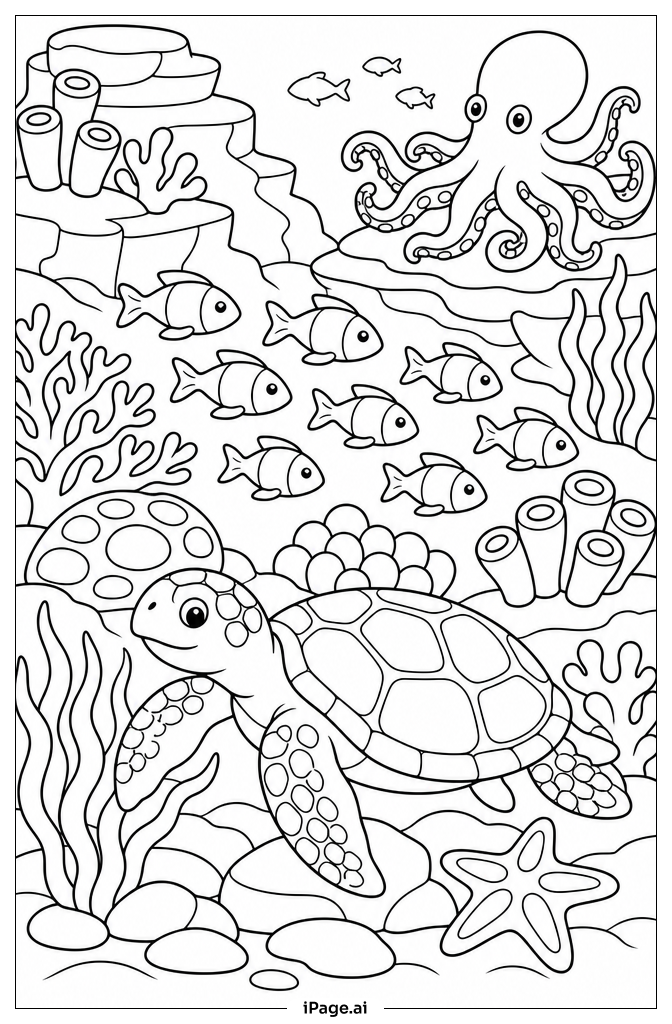
Coloring tips: How to color Sea Animals Coral Reef Community coloring page well?
Start with the background — use deep blues and teals for the open water to set an ocean mood. Then color the coral reef using warm shades like orange, pink, red, and purple to make it pop. For the fish, go bold and bright! Clownfish look great in orange and white with black stripes. Give the sea turtle a rich green and brown shell. Try yellow, blue, or striped patterns for the tropical fish. Use soft pink or peach for the sea anemones. Color the octopus in purple or reddish-brown. The starfish can be orange or yellow, and the seahorse looks lovely in golden or lime green. Don't forget the sandy ocean floor — use tan and beige tones. Feel free to mix colors and add your own creative touches to make this reef truly unique and alive!
Coloring challenges: Which parts are difficult to color and need attention for Sea Animals Coral Reef Community coloring page?
Coloring this coral reef scene is a rewarding but detailed challenge. Here are the key difficulties to watch for:
• **Complex coral structures:** The reef is filled with branching, layered, and intricately shaped corals. Staying within the fine outlines requires a sharp colored pencil or a fine-tipped marker. Blending multiple shades of pink, orange, and purple within small coral segments adds depth but demands patience and a steady hand.
• **Many overlapping elements:** Fish, plants, corals, and sea creatures overlap throughout the scene. Deciding which color goes where — and making each element visually distinct without clashing — requires careful planning. Coloring one section at a time and letting each area dry before moving to adjacent ones helps avoid smearing.
• **Small details and tiny creatures:** Elements like the seahorse, starfish, and crab contain very small features — tiny fins, textured shells, and delicate legs. Filling these precisely without going outside the lines is tricky, especially for younger colorists. Using fine-tip tools and working slowly in these areas makes a big difference.
• **Creating depth and dimension:** A flat coloring approach can make the scene look two-dimensional. To bring the reef to life, try adding light and shadow — use a lighter shade at the center of each fish and a darker tone toward the edges. This technique gives animals a rounded, three-dimensional appearance.
• **Balancing colors across the whole scene:** With so many animals and plants, it's easy for the image to look too busy or color-clashing. Planning a color scheme in advance — such as warm corals against cool blue water — helps keep the entire scene harmonious and visually pleasing.
Benefits of coloring books: Advantages of drawing Sea Animals Coral Reef Community coloring page
Coloring this coral reef scene offers a wonderful range of benefits for children and young learners:
**Builds focus and patience:** The detailed reef design encourages kids to slow down, concentrate, and work carefully — skills that are valuable in school and everyday life.
**Sparks creativity:** Choosing colors for dozens of different sea creatures lets children express themselves freely. There are no wrong answers — every colorist creates a unique ocean world.
**Teaches about nature:** As children color clownfish, sea turtles, octopuses, and corals, they naturally learn about marine life and ocean ecosystems. It's a fun, hands-on way to explore biology and the natural world.
**Improves fine motor skills:** Staying within detailed outlines, shading small areas, and blending colors all strengthen hand-eye coordination and pencil control — great preparation for writing and drawing.
**Encourages emotional well-being:** Coloring is calming and meditative. Focusing on a peaceful underwater scene helps reduce stress and anxiety, giving kids a healthy creative outlet.
**Fosters a love for the ocean:** Engaging with sea creatures through art can inspire curiosity and care for marine environments, planting early seeds of environmental awareness in young minds.