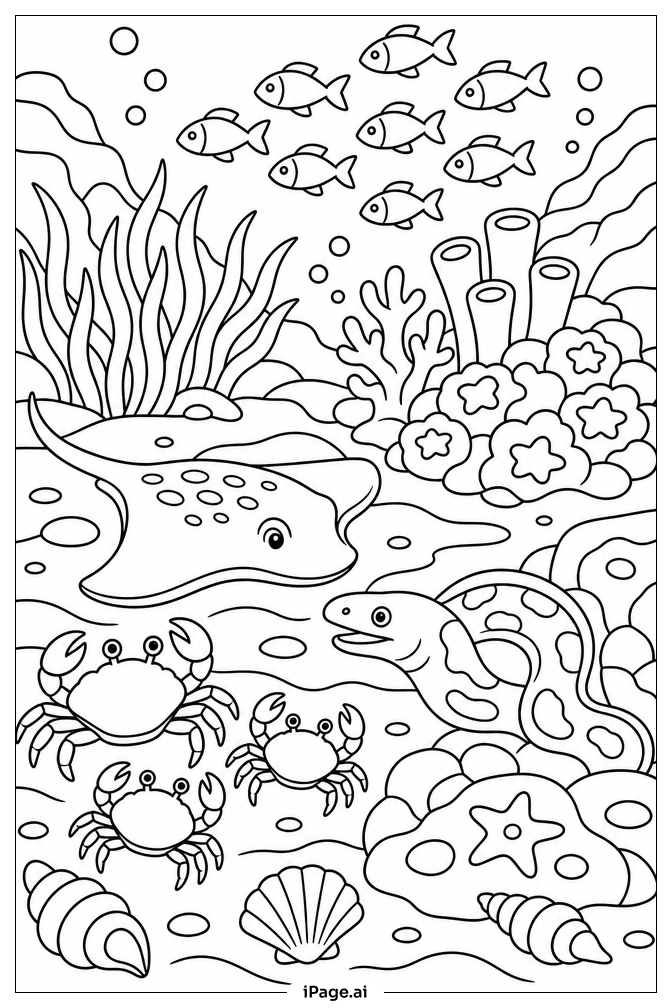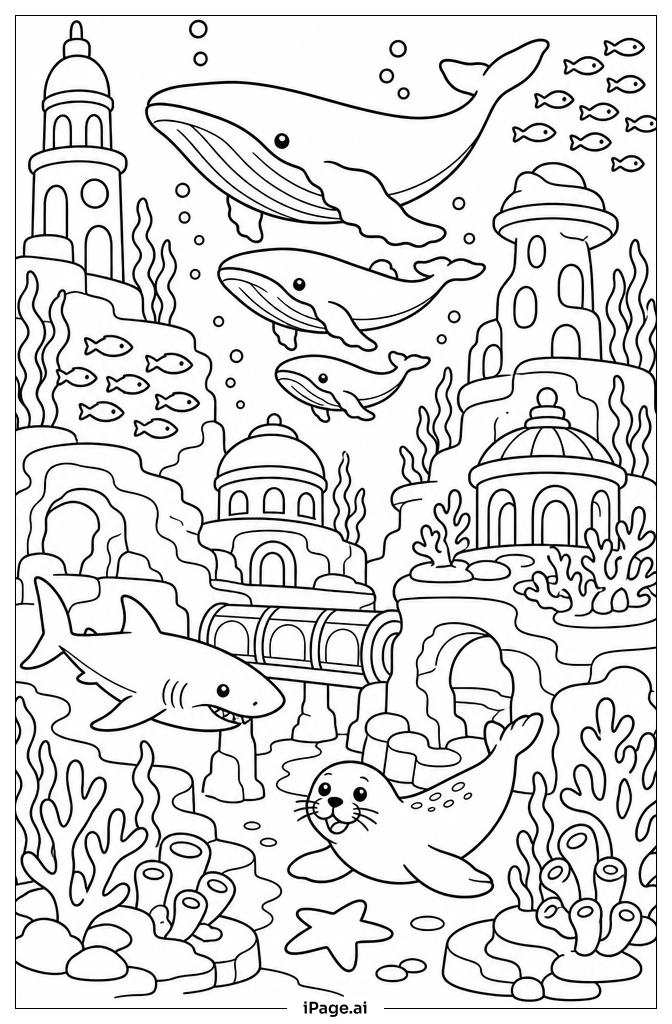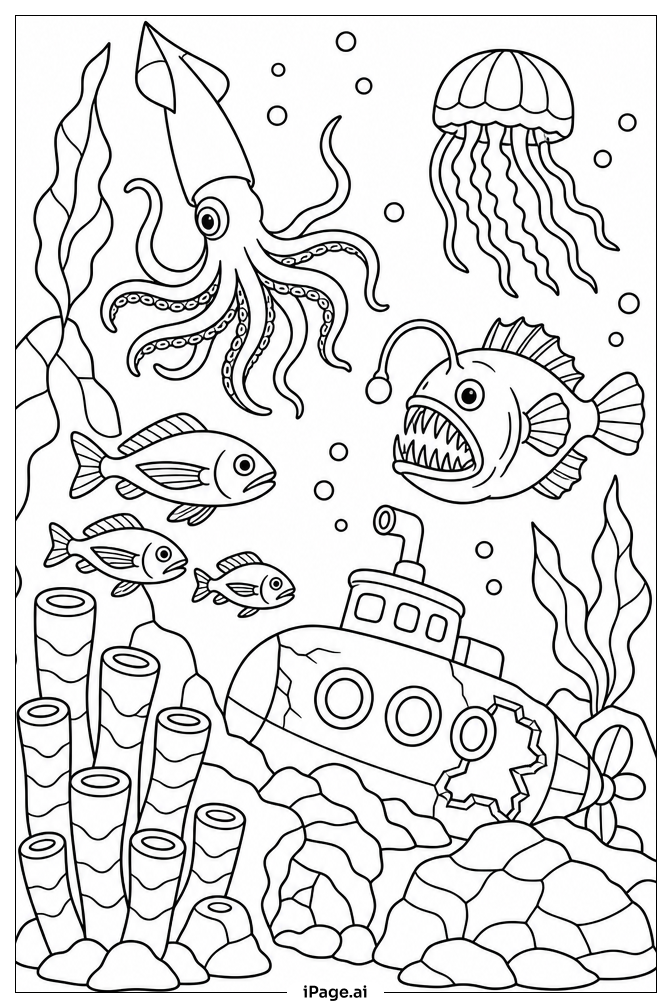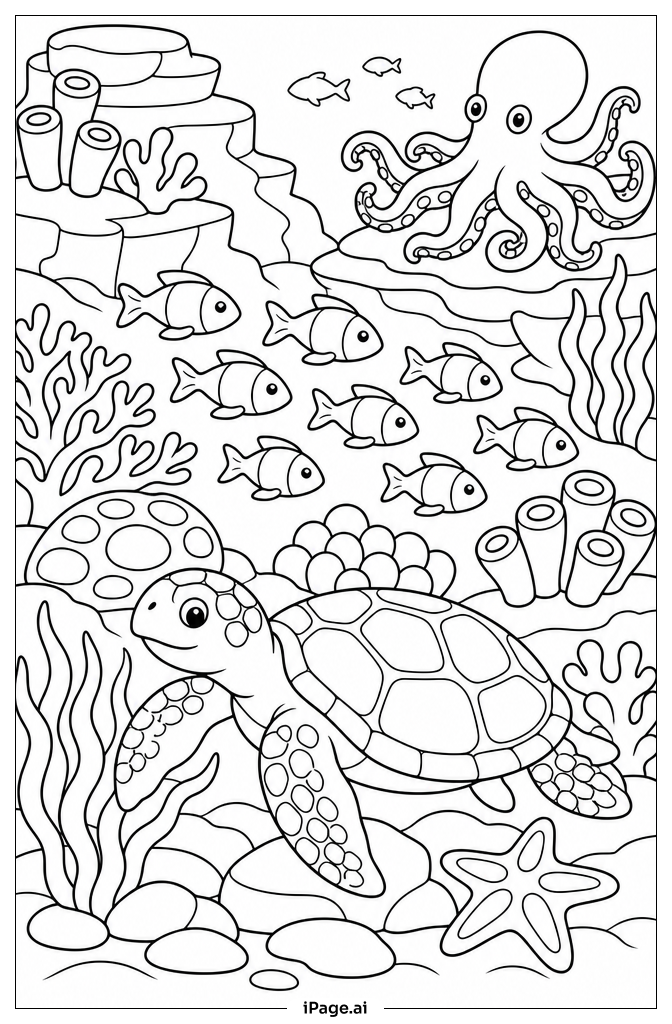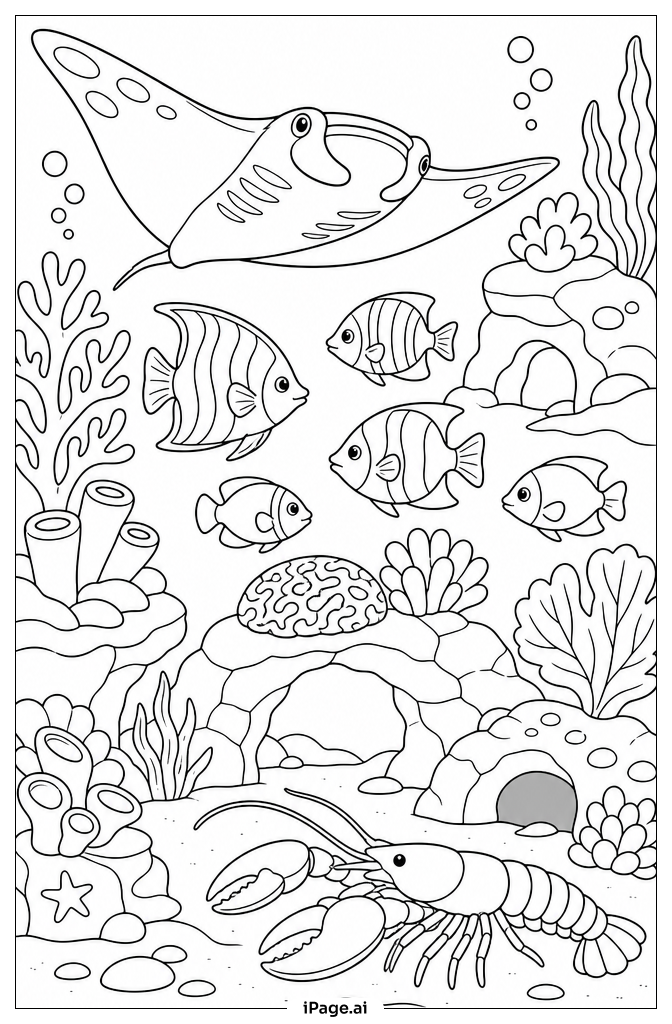
Coloring tips: How to color Sea Animals Tropical Reef Parade coloring page well?
Start with the largest animals first, like the sea turtle and dolphin, using shades of green, teal, and blue-gray. Give the clownfish bold orange and white stripes to make it pop. Use bright pink, purple, and red for the coral and anemones in the background. The octopus looks great in purple or magenta with lighter-toned suckers. Color the seahorse in golden yellow or warm orange. Use different shades of blue for the water background to create a sense of depth. Add sandy yellow tones to shells and starfish. Don't be afraid to mix colors — tropical reefs are full of surprises! Use lighter colors first, then layer darker shades for a richer look. Let your imagination lead the way!
Coloring challenges: Which parts are difficult to color and need attention for Sea Animals Tropical Reef Parade coloring page?
• **Dense Background Details:** The coral reef backdrop is packed with overlapping corals, anemones, seaweed, and shells. Keeping each element visually distinct without colors bleeding into one another requires careful attention and patience. Young colorists may find it helpful to use a fine-tipped tool to outline sections before filling them in.
• **Small and Intricate Features:** Many characters have tiny decorative details — such as the scales on the sea turtle's shell, the textured skin of the octopus, and the delicate fins of smaller fish. These small areas can be tricky to color neatly, especially for younger children who are still developing fine motor control.
• **Color Variety and Planning:** With so many different sea creatures and reef elements packed into one scene, deciding which colors to assign to each part can feel overwhelming. Without a plan, similar colors placed next to each other may cause the image to look flat or confusing. It helps to sketch out a rough color map before starting.
• **Layering and Depth:** Creating a sense of underwater depth — where background elements appear slightly muted and foreground creatures appear vivid — is a challenge that tests more advanced coloring skills. Blending lighter and darker tones smoothly takes practice and the right tools.
• **Maintaining Consistency:** With so many characters in a parade formation, keeping a consistent color theme across the whole scene while still making each animal stand out individually requires thoughtful color coordination throughout the entire page.
Benefits of coloring books: Advantages of drawing Sea Animals Tropical Reef Parade coloring page
Coloring this Sea Animals Tropical Reef Parade page offers a wonderful range of benefits for kids and adults alike. For children, filling in the many sea creatures and reef details helps strengthen fine motor skills and hand-eye coordination. Choosing colors for each animal sparks creative thinking and encourages personal expression — there are no wrong answers in a tropical reef!
The underwater parade setting introduces young colorists to a variety of real ocean animals, gently building nature awareness and curiosity about marine life. Naming and learning about each creature — the sea turtle, clownfish, octopus, and more — turns coloring into a fun, educational experience.
For older kids and adults, the detailed reef background offers a calming, meditative focus. Concentrating on small patterns and layering colors helps reduce stress and improve mindfulness. Completing such a complex and colorful scene also gives a strong sense of accomplishment.
Working through the full page builds patience and perseverance — valuable life skills developed through a joyful, screen-free activity. Whether shared with friends or enjoyed solo, this page makes for a rewarding creative experience at any age.