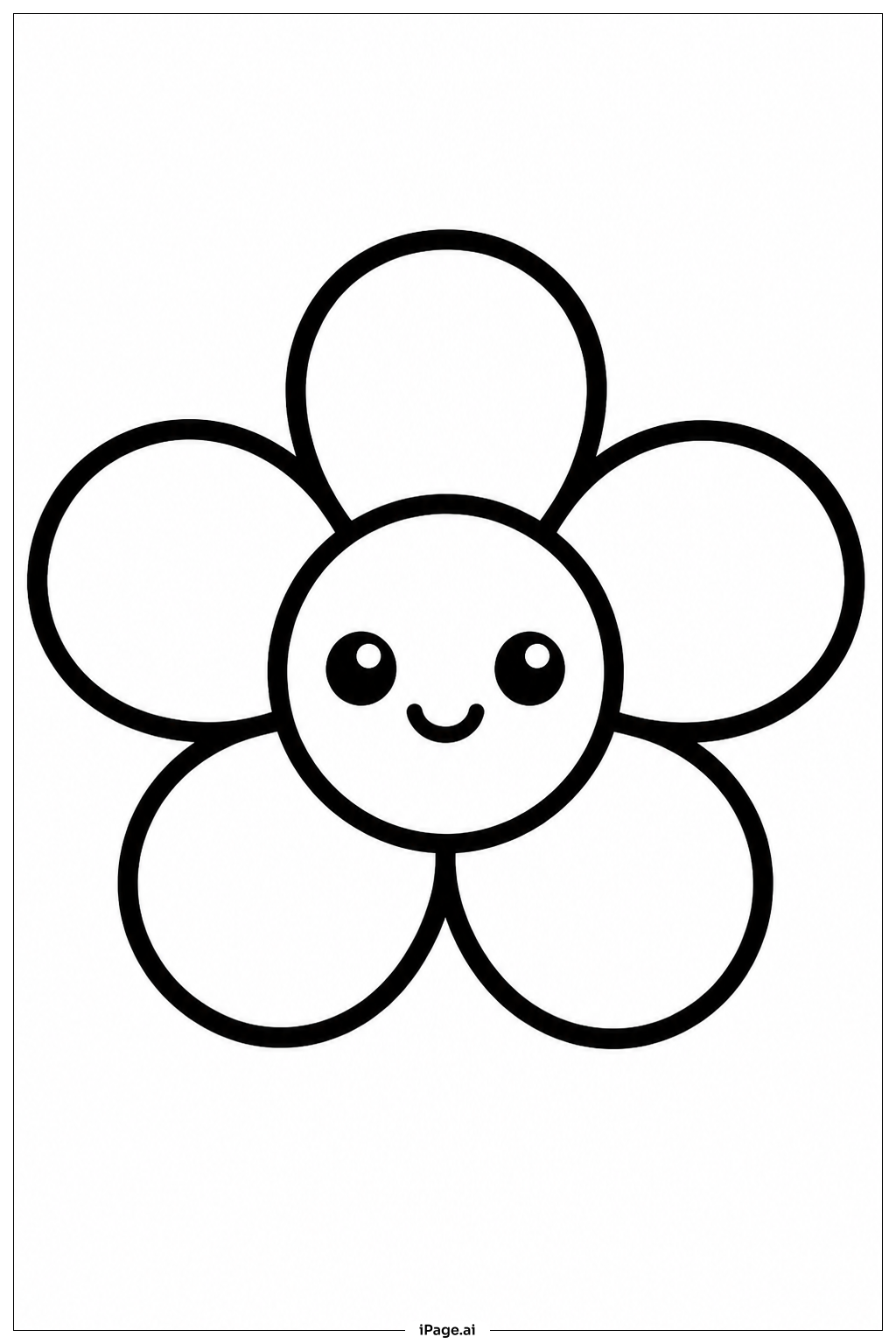
Coloring tips: How to color Kawaii Flower coloring page well?
Start with the petals and choose a soft, cheerful color like light pink, lavender, yellow, or peach. You can make each petal a different color for a rainbow look, or keep them all the same for a classic style. For the center face, use a warm yellow or cream tone as the base. Color the rosy cheeks with a light pink or coral shade to make them look cute and glowing. The eyes can be filled with dark brown or black, and add a tiny white dot to show the sparkle. Use a medium green for the stem and leaves to contrast nicely with the bright petals. Try coloring the leaves in two slightly different shades of green to add depth. Feel free to add soft patterns or polka dots on the petals for extra fun. Younger kids can use crayons or markers for bold, bright results, while older colorists can try colored pencils to blend shades and create smooth gradients.
Coloring challenges: Which parts are difficult to color and need attention for Kawaii Flower coloring page?
• Petal Consistency: The flower has multiple rounded petals that surround the central face. Keeping each petal colored evenly and consistently can be tricky, especially if you want smooth, clean fills without streaks. Younger colorists may find it challenging to stay inside the curved outlines of each petal without accidentally crossing into the face area or neighboring petals.
• Facial Details: The Kawaii face in the center includes small, expressive features like sparkling eyes, tiny rosy cheeks, and a curved smile. These areas are quite small and require careful, precise coloring. Using a fine-tipped tool is important here. Filling in the eyes without smudging or going outside the lines takes patience and a steady hand.
• Color Blending on Cheeks: Achieving the soft, blushing look on the cheeks is one of the more advanced challenges. A simple flat color may look fine, but getting that gentle gradient or airbrushed effect requires blending skills. Colored pencils work best here, using light circular strokes to build up color gradually.
• Stem and Leaf Shading: The stem and two leaves appear simple, but adding dimension through light and shadow makes them stand out. Choosing the right green tones and knowing where to apply a darker shade along the edges versus a lighter center can be difficult for beginners.
• Overall Color Harmony: Choosing colors that work well together across the whole image — petals, face, leaves, and stem — requires some planning. Clashing colors can make the image look busy or unbalanced, so thinking about a color palette before starting is a real challenge for younger colorists.
Benefits of coloring books: Advantages of drawing Kawaii Flower coloring page
Coloring this Kawaii Flower page offers a wide range of benefits for children and beginners alike. The friendly, smiling design immediately puts colorists at ease and makes the activity feel fun and joyful rather than stressful.
For young children, filling in the large, open petals helps develop fine motor skills and hand-eye coordination. Learning to stay within curved outlines builds pencil control in a playful, low-pressure way.
The small facial details in the center encourage focus and patience. Children learn to slow down, select the right tool, and work carefully — skills that carry over into reading, writing, and everyday tasks.
Choosing colors for the petals, face, and leaves sparks creative thinking. Kids get to make their own color decisions, which boosts confidence and encourages self-expression. There is no wrong answer, so every colorist can feel proud of their finished page.
The Kawaii style, with its round shapes and happy face, has a naturally calming effect. Spending time coloring this image can reduce stress and anxiety, making it a great quiet-time activity after school or before bed.
Completing the page from start to finish also gives a sense of accomplishment. Younger colorists especially benefit from that moment of holding up a finished work and feeling proud. This builds positive habits around creativity and persistence that last well beyond the coloring page itself.