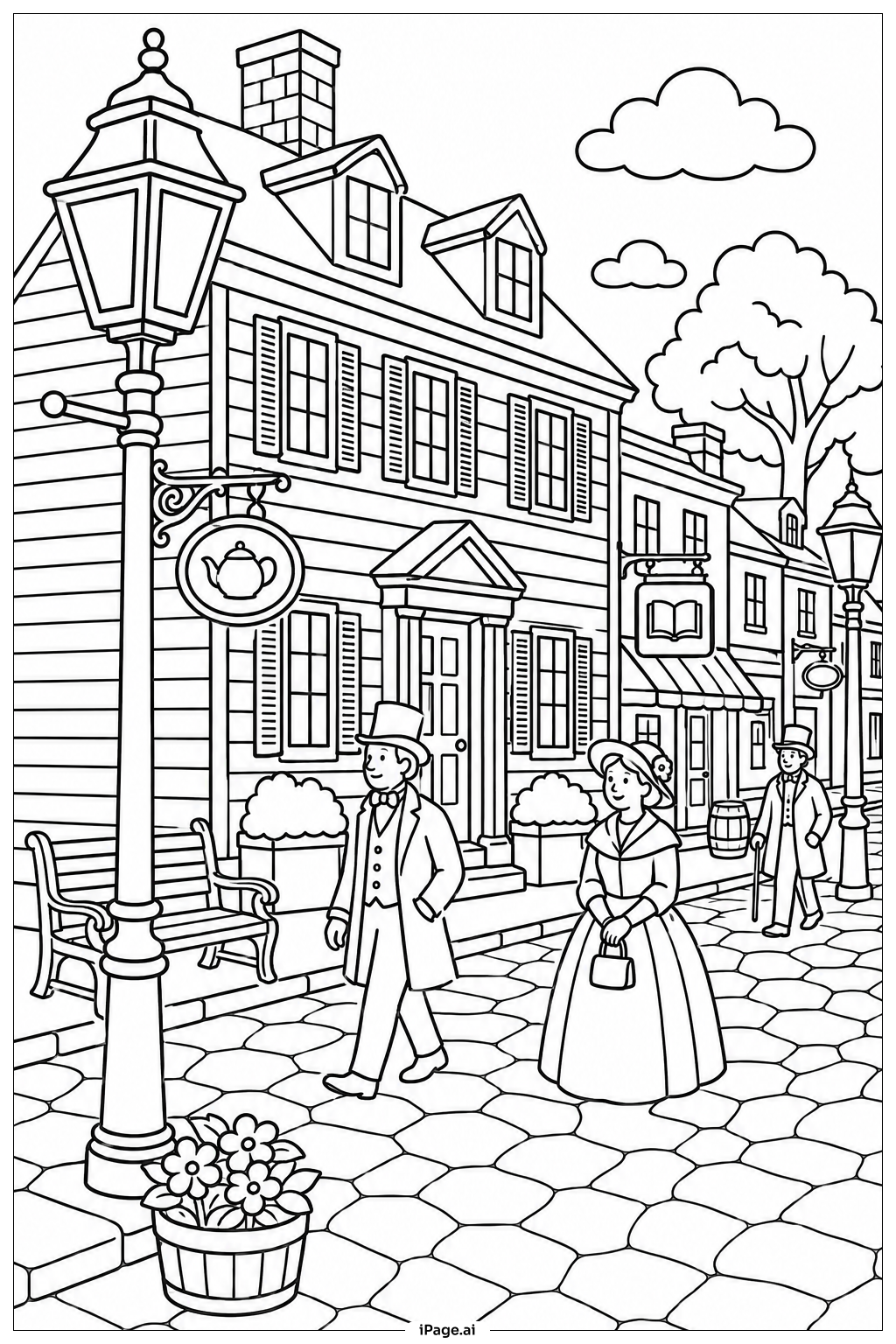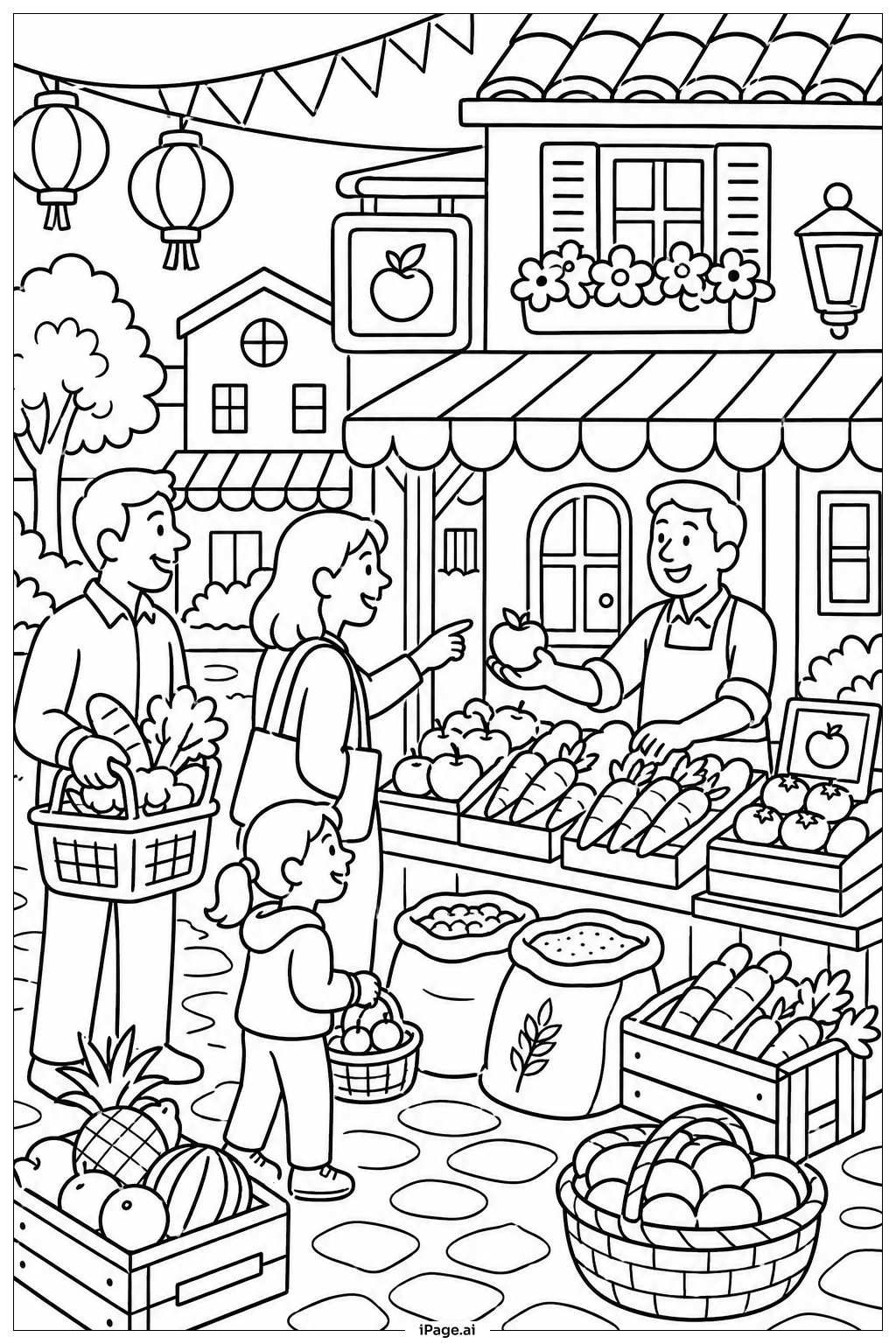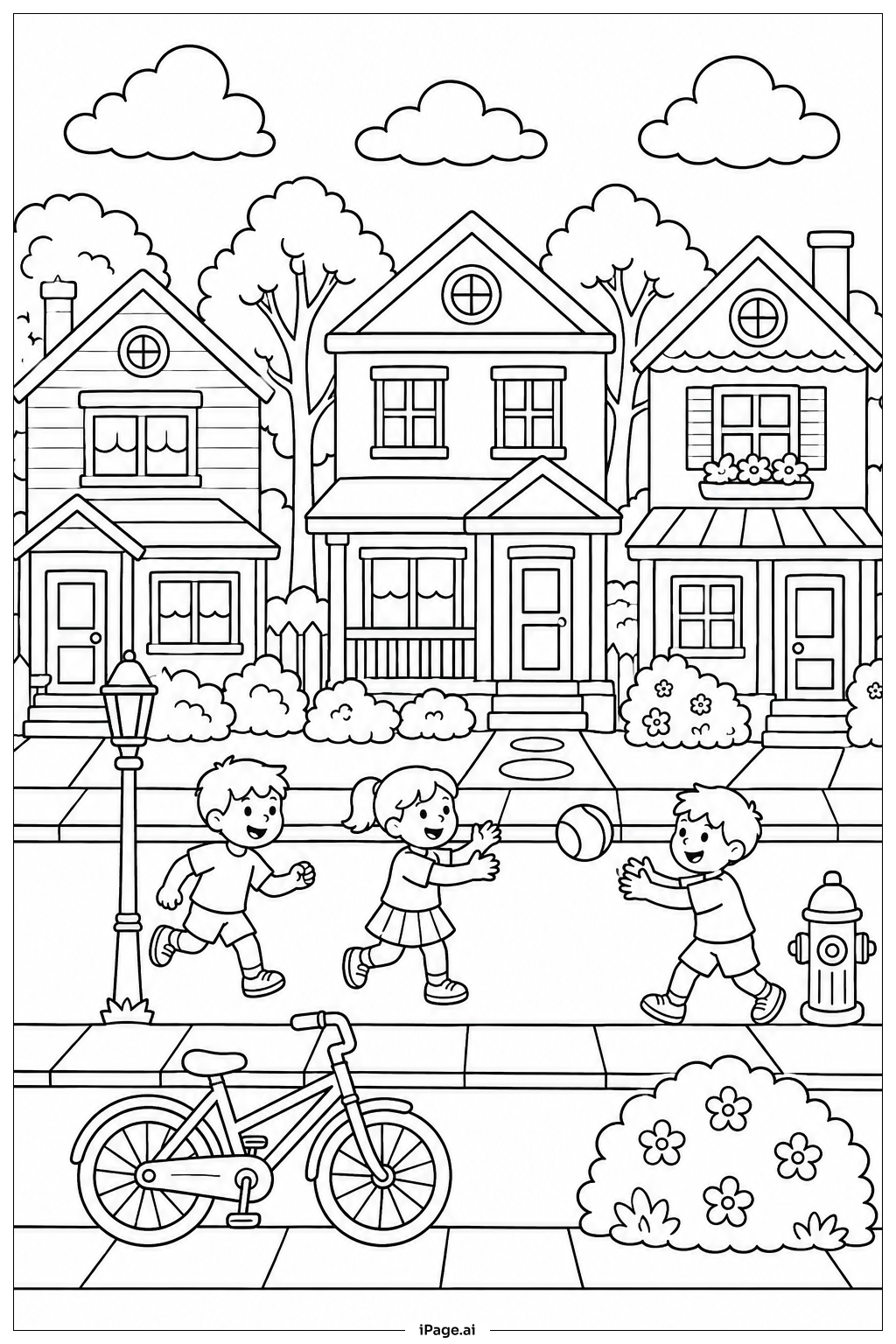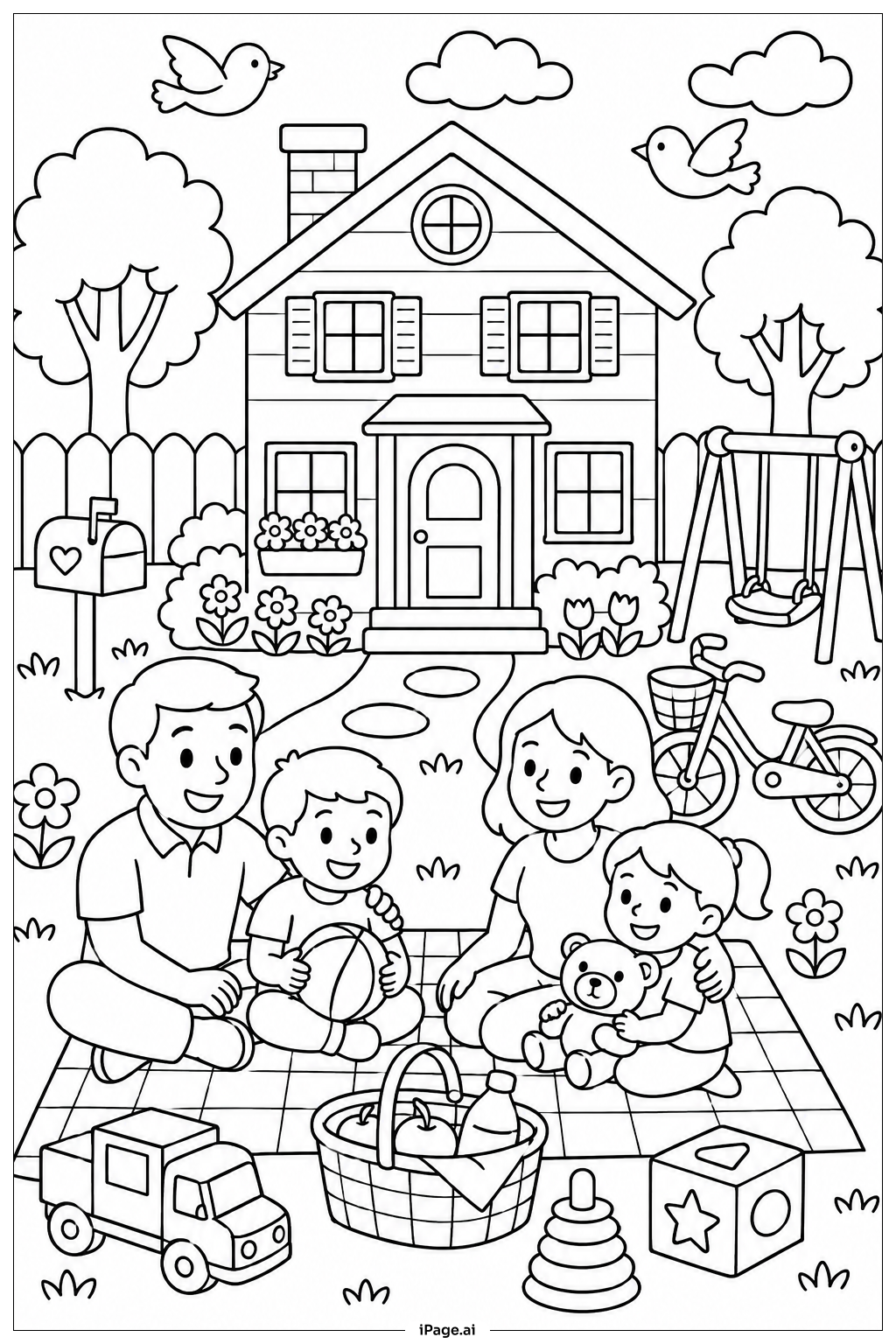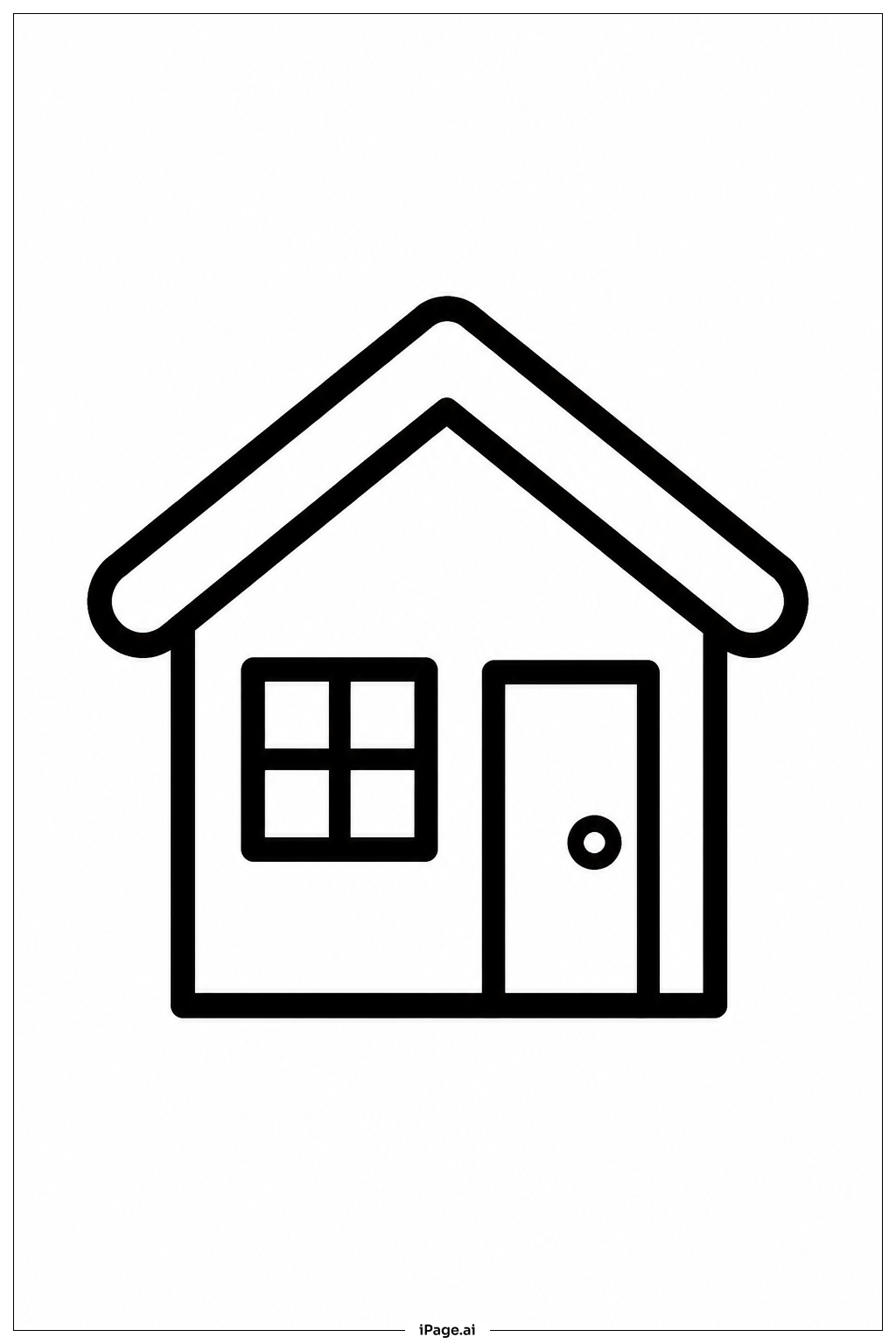
Coloring tips: How to color Tiny House coloring page well?
Start with the largest areas first. Color the walls of the tiny house a warm beige, cream, or soft yellow. Use a rich brown or dark gray for the roof to give it a sturdy look. Paint the front door a bright, cheerful color like red or blue to make it stand out. The shutters and fence can be white or light gray for a clean contrast. For the garden, use many shades of green for the bushes and trees, and add pops of color with flowers in pink, purple, or yellow. The stone path looks great in soft gray and tan tones. Use a light blue for the sky if there is one in the background. Try blending two close shades of the same color to add depth. Remember, there are no rules — use any colors you love to make this tiny house your very own!
Coloring challenges: Which parts are difficult to color and need attention for Tiny House coloring page?
• Roof Texture and Shading: The sloped roof often has shingle or tile details that require careful, repeated strokes. Keeping the lines neat and consistent while shading from light to dark can be tricky, especially for younger colorists. Take your time and work in small sections to avoid going outside the lines.
• Small Architectural Details: The tiny house includes windows, shutters, a chimney, and a front door — all packed into a compact space. These small elements sit very close together, making it challenging to color each one separately without the colors bleeding into each other. A fine-tipped pencil or marker works best for these tight areas.
• Garden and Foliage Variety: The bushes, trees, and flower details in the garden require multiple shades of green and other colors to look natural and lively. Blending different greens — such as olive, forest green, and lime — adds realism, but achieving smooth transitions between shades takes patience and practice.
• Stone Path Details: The winding path made of individual stones needs careful attention. Each stone can be a slightly different shade of gray, tan, or brown to look realistic. Coloring so many small, irregular shapes without smudging nearby areas requires a steady hand and a well-sharpened tool.
• Fence and Border Lines: The small fence surrounding the yard has repeated narrow posts and rails. Keeping each post evenly colored and maintaining clean edges along the borders of the fence is a fine motor challenge, particularly for younger children working with thicker crayons or markers.
Benefits of coloring books: Advantages of drawing Tiny House coloring page
Coloring this tiny house scene offers a wide range of benefits for children and adults alike. For kids, it helps develop fine motor skills as they carefully fill in small details like windows, shutters, and the stone path. Staying within the lines builds hand-eye coordination and concentration, skills that are useful in school and daily life.
Choosing colors for the walls, roof, garden, and flowers encourages creative thinking and self-expression. Kids get to imagine their dream tiny home and bring it to life with color. This kind of imaginative play supports cognitive development and problem-solving.
The peaceful, cozy subject matter also makes this a calming activity. Focusing on a simple, happy scene like a tiny house in a garden helps reduce stress and anxiety, promoting a sense of relaxation and mindfulness for both children and adults.
For older colorists, the detailed elements — such as the foliage, stone path, and architectural features — provide a satisfying challenge that builds patience and attention to detail. Completing the page gives a real sense of accomplishment.
Overall, this Tiny House Coloring Pages page is a wonderful way to combine fun, creativity, and learning in one enjoyable activity suitable for all ages.