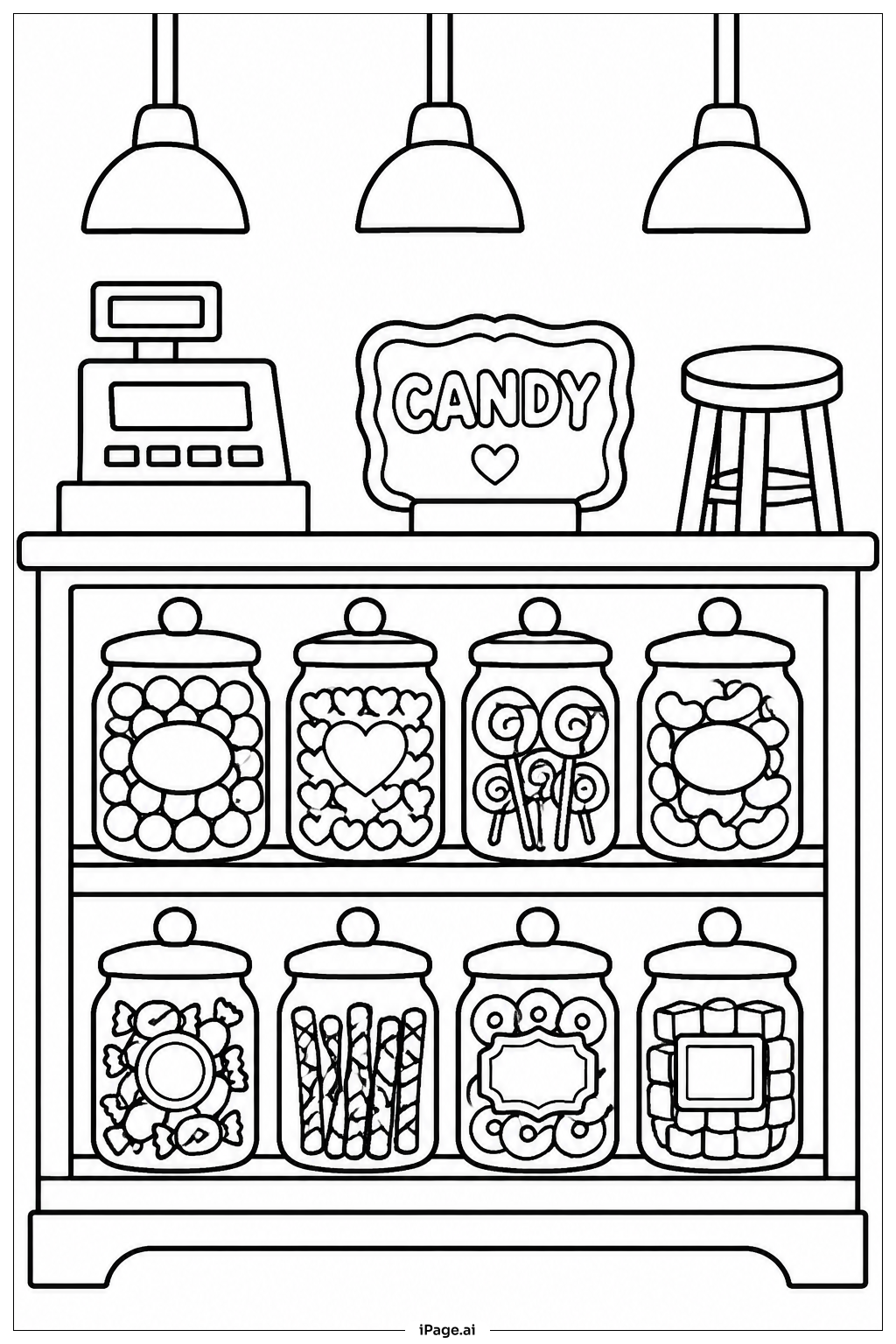
Coloring tips: How to color Candy Shop Food Shelf coloring page well?
Start with the background shelves using warm wood tones like brown or tan to set a cozy shop atmosphere. Then move on to the candy jars — use clear or light blue for the glass, and fill them with bright, cheerful colors like red, yellow, orange, and green for the candies inside. Color the lollipops in bold, contrasting hues such as pink and purple, or red and white stripes. Give the cupcakes pastel frosting in lavender, mint, or peach, and add bright sprinkles on top. Use rich chocolatey browns for the cakes and donuts, and add a glossy glaze effect with light yellow or pink. Ice cream scoops look great in soft pinks, creams, and light browns. Try using shading to make the jars and sweets look three-dimensional. Don't be afraid to mix unexpected color combinations — candy is all about fun and imagination! This image is perfect for experimenting with patterns on wrappers and labels too.
Coloring challenges: Which parts are difficult to color and need attention for Candy Shop Food Shelf coloring page?
• Small Candy Details: The candy jars and shelves are packed with tiny individual candies, sprinkles, and decorations. Coloring each small piece separately requires a fine-tipped colored pencil or marker. Rushing through these areas may cause colors to bleed into one another, so take your time and use a light hand.
• Glass Jar Effects: Giving the candy jars a realistic glass appearance is tricky. You need to leave small white highlight areas untouched or use a very light blue-gray shading on one side to suggest transparency. This technique can be challenging for younger colorists who are still developing control.
• Layered Cake Sections: Cakes with multiple layers need each section colored slightly differently to show depth and separation. Using the same color throughout can make the layers blend together and lose their definition. Try alternating shades of the same color family to distinguish each tier.
• Frosting Textures: Swirled frosting on cupcakes and cakes has a curved, flowing shape. Following the swirl lines with your coloring strokes helps suggest the three-dimensional texture. Coloring against the lines can flatten the look and make the frosting appear less realistic.
• Avoiding Color Overflow Between Items: With so many items placed closely together on the shelves, it is easy to accidentally color outside the borders of one item into another. Use a sharp pencil tip for edges and outlines first, then fill in the center areas. Patience and steady hands are key to keeping each sweet treat looking neat and distinct.
Benefits of coloring books: Advantages of drawing Candy Shop Food Shelf coloring page
Coloring this Candy Shop Food Shelf page offers a wide range of wonderful benefits for kids and young artists. First, it builds fine motor skills. Carefully filling in the small candies, jars, and frosting details strengthens hand muscles and improves pencil control, which directly supports handwriting development. Second, it sparks creativity. With so many different treats to color, children are free to invent their own color combinations and patterns, encouraging imaginative thinking without any rules. Third, it teaches color recognition and mixing. Deciding which colors look best together on cakes, lollipops, and candy wrappers helps children understand color relationships in a playful, hands-on way. Fourth, it promotes focus and patience. A busy, detailed scene like this requires concentration to complete, gently training the ability to stay on task — a skill that carries over into school and daily life. Fifth, it provides a calming, screen-free activity. Coloring is a relaxing creative outlet that reduces stress and helps children unwind after a busy day. Finally, completing the page gives a real sense of accomplishment, boosting confidence and encouraging kids to take on new creative challenges with enthusiasm.