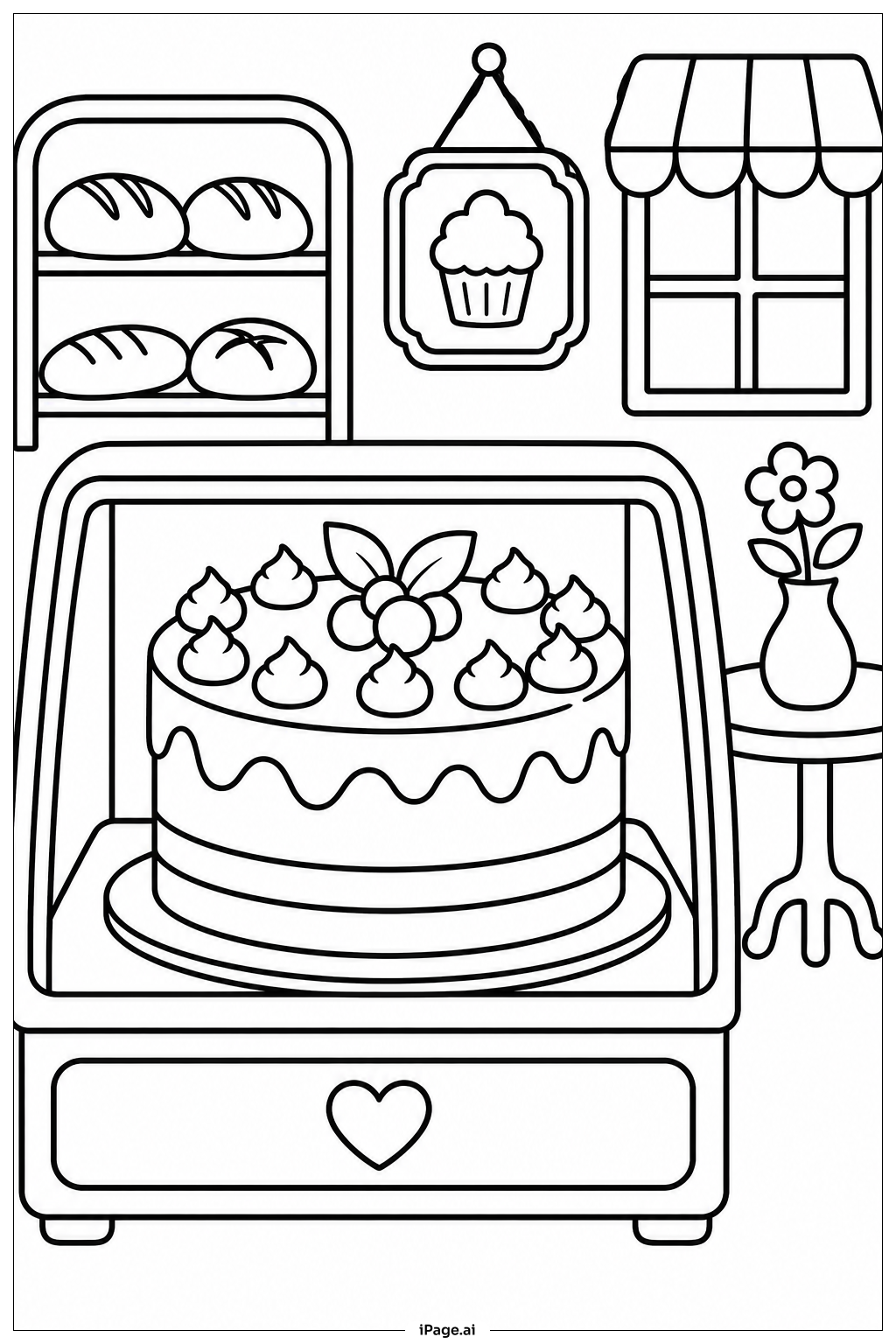
Coloring tips: How to color Bakery Window Food Display coloring page well?
Start with the background and window frame using warm neutral tones like cream or tan to set a cozy bakery atmosphere. Use golden browns and warm yellows for breads, croissants, and baked crusts to make them look fresh and tasty. Decorate cakes and cupcakes with bright, cheerful colors — think pink, purple, sky blue, and mint green for the frosting and decorations. Glazed donuts can be colored in soft beige with colorful sprinkles in red, yellow, and blue. Use rich reds and oranges for fruit tarts, and soft chocolate browns for cookies. Try shading the sides of baked goods slightly darker than the tops to give them a round, 3D look. Have fun mixing colors for the frosting swirls — no two cupcakes have to match! Keep the window frame and shelves in simple, solid tones so the food items really stand out and become the stars of the picture.
Coloring challenges: Which parts are difficult to color and need attention for Bakery Window Food Display coloring page?
• Tiny Decorative Details: Many of the baked goods — especially cakes, cupcakes, and tarts — feature very small decorative elements like sprinkles, piping patterns, and fruit toppings. Staying within these tiny areas requires a sharp pencil or fine-tipped marker, and younger children may find it tricky to keep colors neat and precise in such small spaces.
• Layered Textures and Surfaces: The image contains a wide variety of textures — the rough crust of a bread loaf, the smooth glaze of a donut, the fluffy swirl of frosting. Representing each texture convincingly using color and shading requires careful thought and technique. Switching between smooth, even coloring and rougher, layered strokes for different items can be challenging.
• Color Variety and Organization: With so many different food items packed into one scene, choosing a color palette that looks harmonious without being repetitive is a real challenge. Colorists need to plan ahead to ensure similar items nearby do not end up looking identical, and that the overall image remains visually balanced and appealing.
• Shading and Depth: Giving the baked goods a realistic, three-dimensional appearance requires shading — applying darker tones on shadows and lighter tones on highlights. For beginners, understanding where light falls and how to blend colors smoothly takes practice and patience.
• Window Frame and Background: The window frame and shelves must be colored in a way that supports but does not overpower the food display. Choosing the right neutral or complementary tones, and keeping those larger areas tidy and even, can be harder than it looks — especially for younger colorists working with broad spaces.
Benefits of coloring books: Advantages of drawing Bakery Window Food Display coloring page
Coloring this bakery window scene offers a wonderful range of benefits for children and beginners alike. First, it sharpens fine motor skills. Carefully filling in the small details of cupcake frosting, donut sprinkles, and pastry textures trains hand control and pencil grip in a fun and rewarding way. Second, it encourages creativity. With so many different baked goods to color, there is no single right answer — children are free to invent their own color combinations and make each treat uniquely their own. This builds confidence and imagination. Third, it helps with focus and patience. Completing a detailed, multi-item scene like a bakery display requires sustained attention, which gently trains concentration in a stress-free setting. Fourth, it introduces children to color theory in a practical way. Choosing warm tones for bread, bright colors for frosting, and complementary shades for the background teaches color relationships without any formal instruction. Finally, coloring a food-themed image like this one can spark curiosity about baking and cooking, making it a great starting point for conversations about food, culture, and creativity. It is a joyful, screen-free activity the whole family can enjoy together.