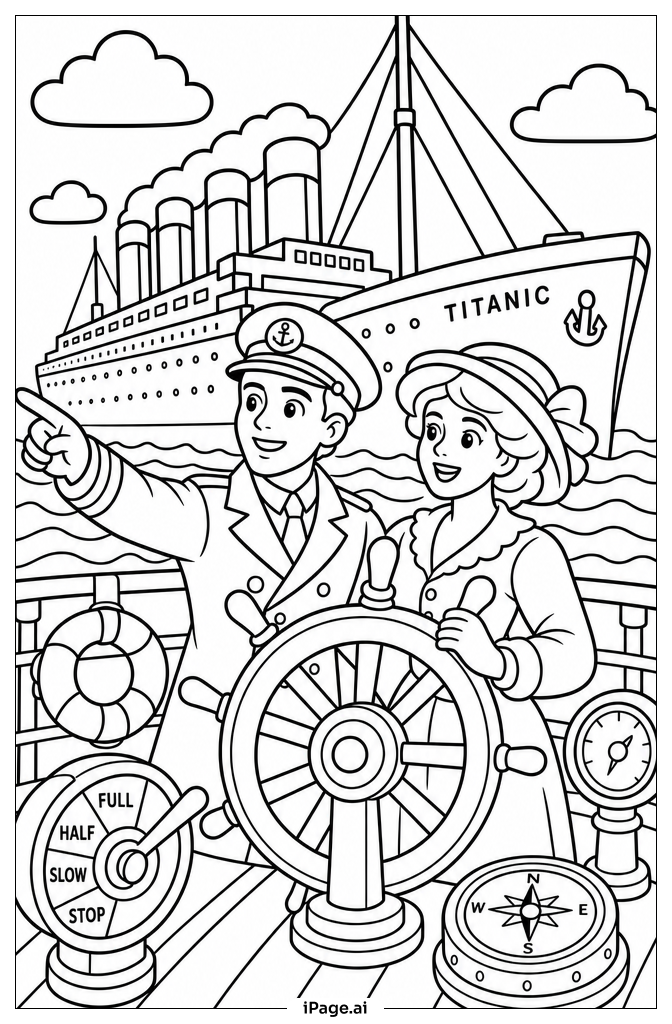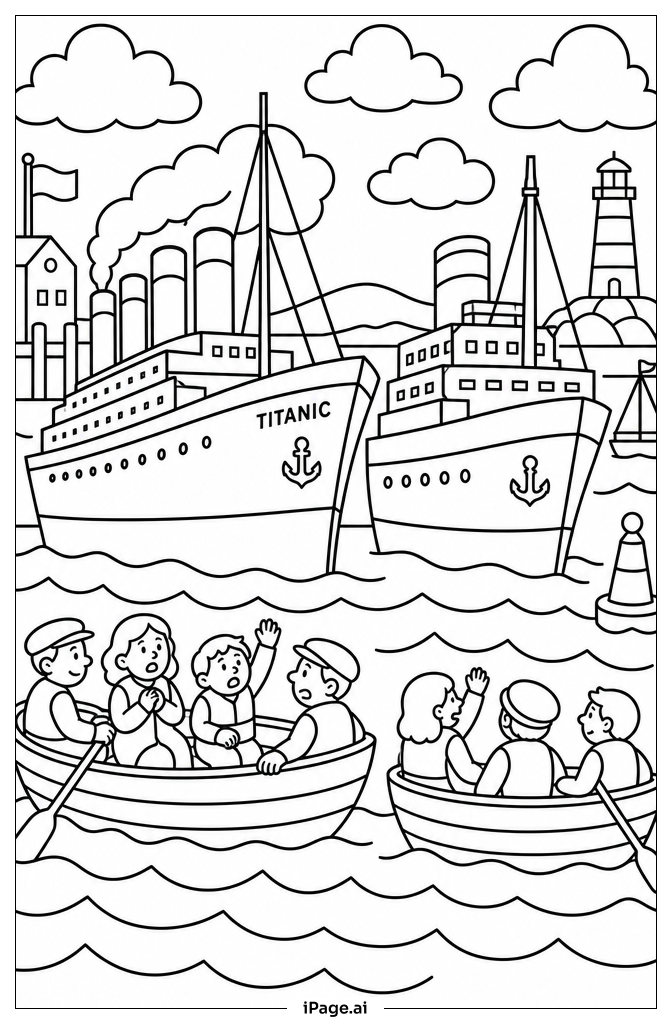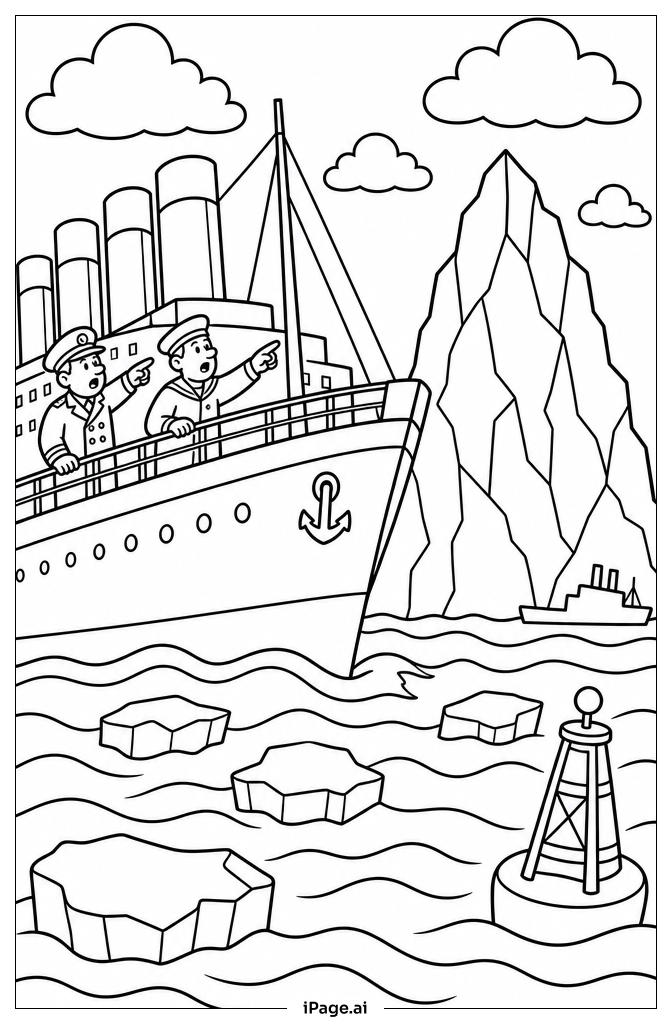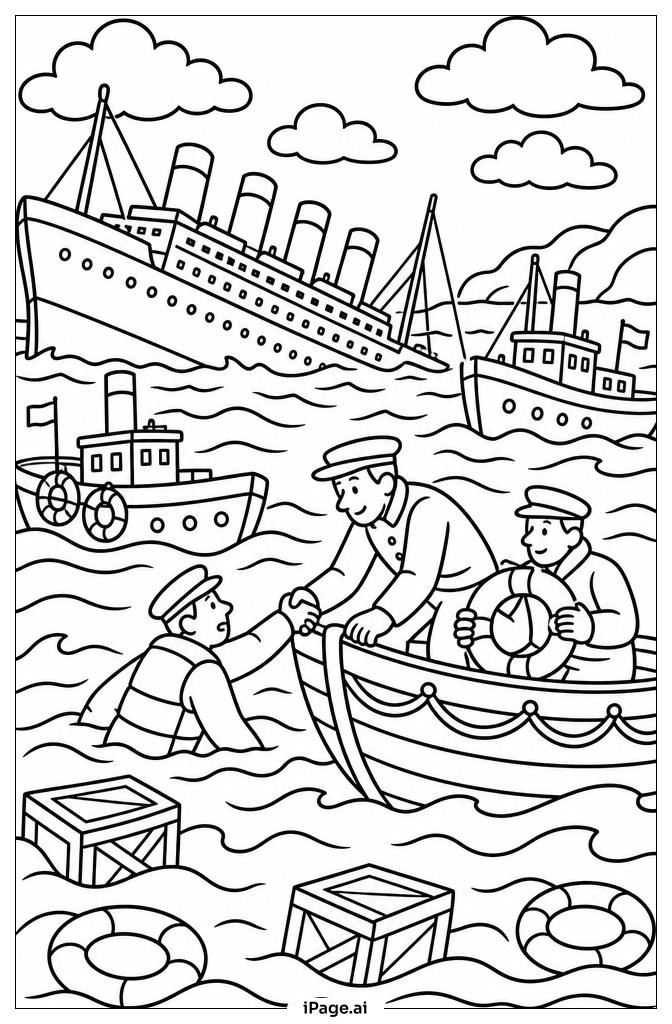
Coloring tips: How to color Titanic Rescue at Sea coloring page well?
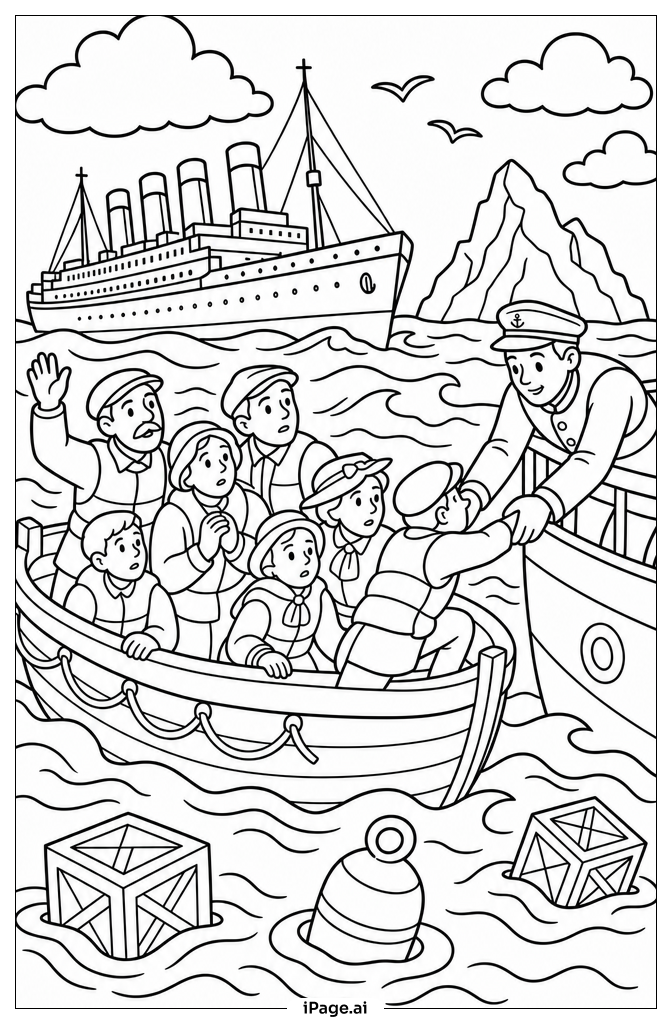
Start with the sky and sea to set the mood. Use deep navy blue and dark gray for the night sky, adding hints of pale yellow near the horizon where the rescue ship's lights glow. Color the ocean in shades of dark blue and teal, with lighter blue-white tips on the waves to show movement. For the lifeboat, use warm brown and tan tones on the wooden planks. The passengers' clothing can be colored in dark navy, black, gray, and deep burgundy to reflect the cold, somber night. Add pale skin tones to the faces and hands to show the survivors' exhaustion. Use soft white or cream for any blankets or life preservers. The rescue ship in the background can be a dark silhouette with warm golden dots for its lights. Keep the overall palette cool and muted to capture the tense, emotional atmosphere of this historic moment.
Coloring challenges: Which parts are difficult to color and need attention for Titanic Rescue at Sea coloring page?
• **Crowded figures in the lifeboat:** The lifeboat contains many overlapping passengers, each with their own clothing, posture, and expression. Carefully coloring each figure without the colors bleeding into one another requires patience and a fine-tipped tool. Children may find it helpful to outline each figure lightly before filling in the colors.
• **Capturing the nighttime ocean:** Depicting a dark, stormy sea at night is tricky. The water needs multiple shades of blue, gray, and black blended together to look realistic and deep. Showing the difference between the flat water surface and the cresting waves adds another layer of difficulty, especially for younger colorists.
• **Lighting and atmosphere:** The faint glow of the rescue ship on the horizon creates a subtle light source. Blending pale yellow and white near the ship while keeping the rest of the scene dark requires careful shading. This kind of gradient effect can be challenging without practice.
• **Fine details on the lifeboat:** The wooden planks, oars, ropes, and life rings all have small, intricate lines. Staying within these narrow spaces demands a sharp pencil or fine marker. Rushing through these details can make the boat look flat and less realistic.
• **Emotional facial expressions:** The survivors' faces carry fear, exhaustion, and hope. Coloring skin tones accurately and leaving enough contrast to show facial features takes care. Using a light base tone with slightly darker shading around the eyes and cheeks helps bring the faces to life without overcomplicating them.
Benefits of coloring books: Advantages of drawing Titanic Rescue at Sea coloring page
Coloring this Titanic rescue scene offers a wonderful mix of creativity and learning. As kids and Adults bring this historical moment to life with color, they naturally become curious about the real story of the Titanic, sparking an interest in history and storytelling.
The detailed scene encourages focus and concentration. Carefully coloring the crowded lifeboat, the dark ocean, and the distant rescue ship helps build patience and fine motor skills, especially for Boys and Girls who are still developing hand control.
Choosing colors for a nighttime sea scene also develops artistic thinking. Kids learn how to use cool tones, create contrast, and suggest light and shadow — skills that carry over into drawing and painting.
For older colorists, this page offers a meditative, calming activity. Focusing on the details of the scene can reduce stress and provide a quiet moment of reflection.
Sharing the finished page with family can open up meaningful conversations about bravery, survival, and helping others in times of crisis. It turns a simple coloring activity into a rich, educational experience that connects art, history, and empathy in one sitting.