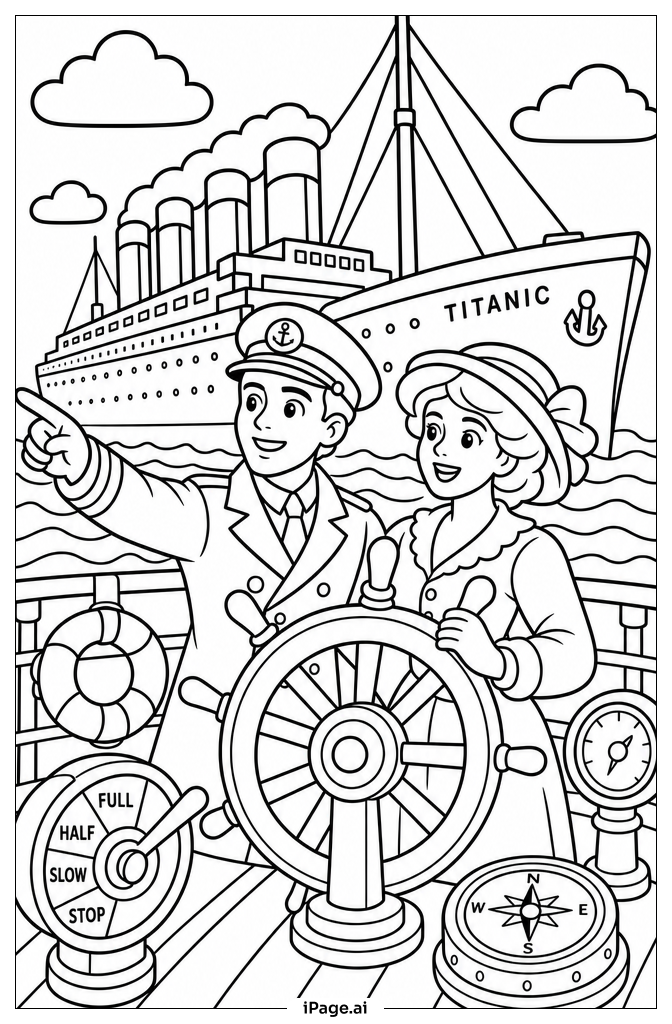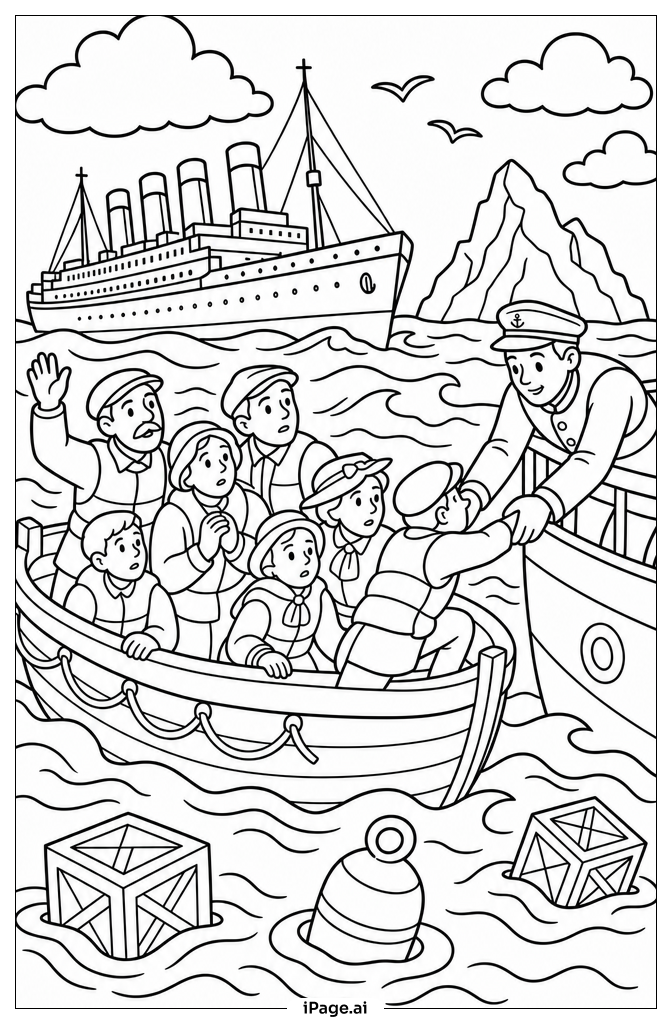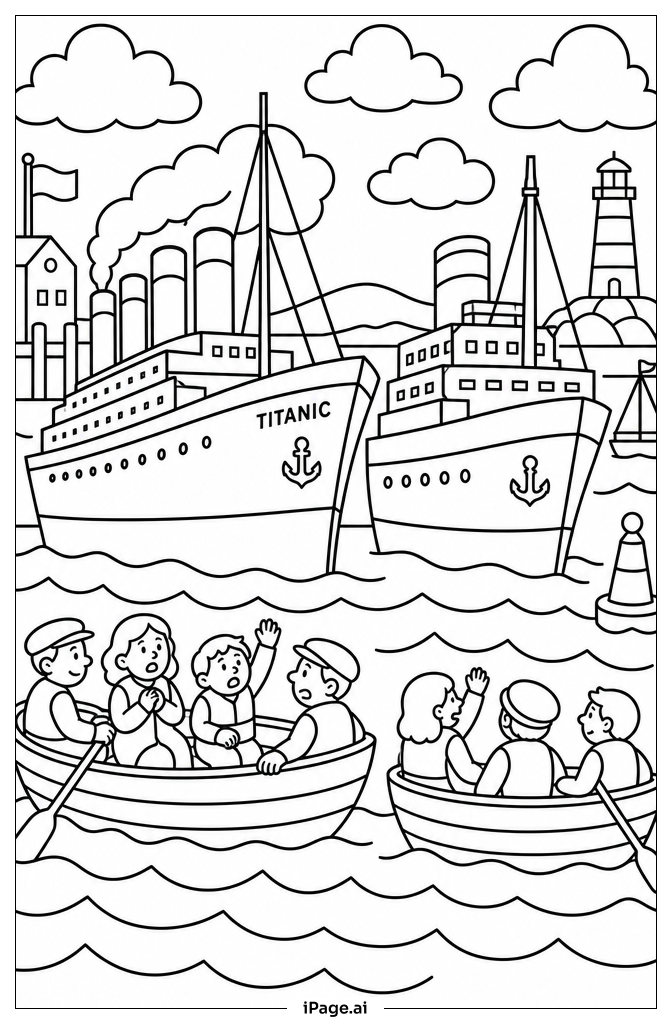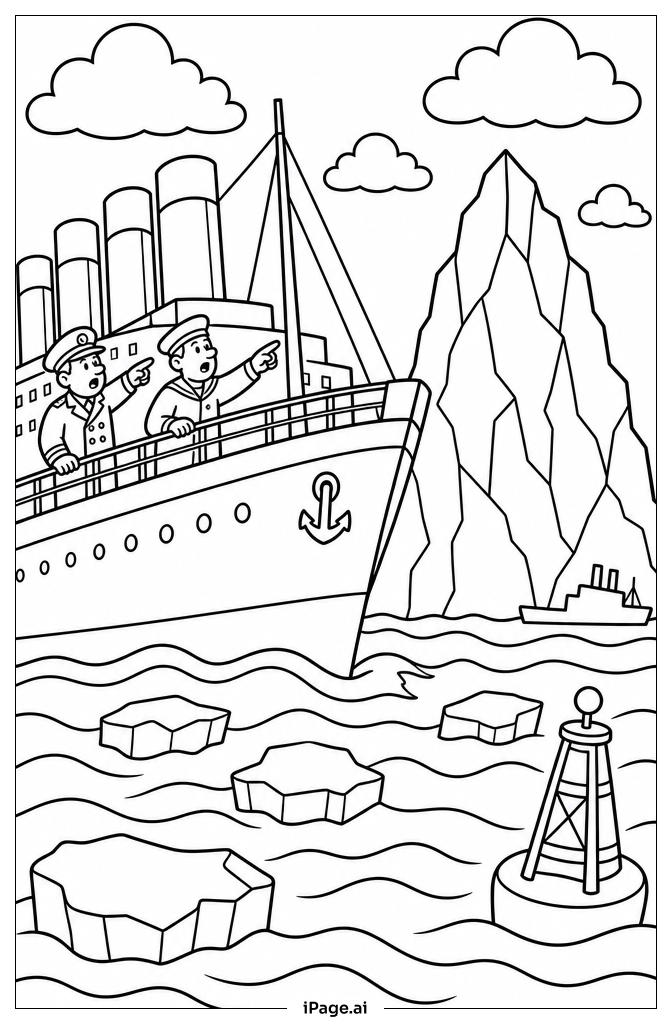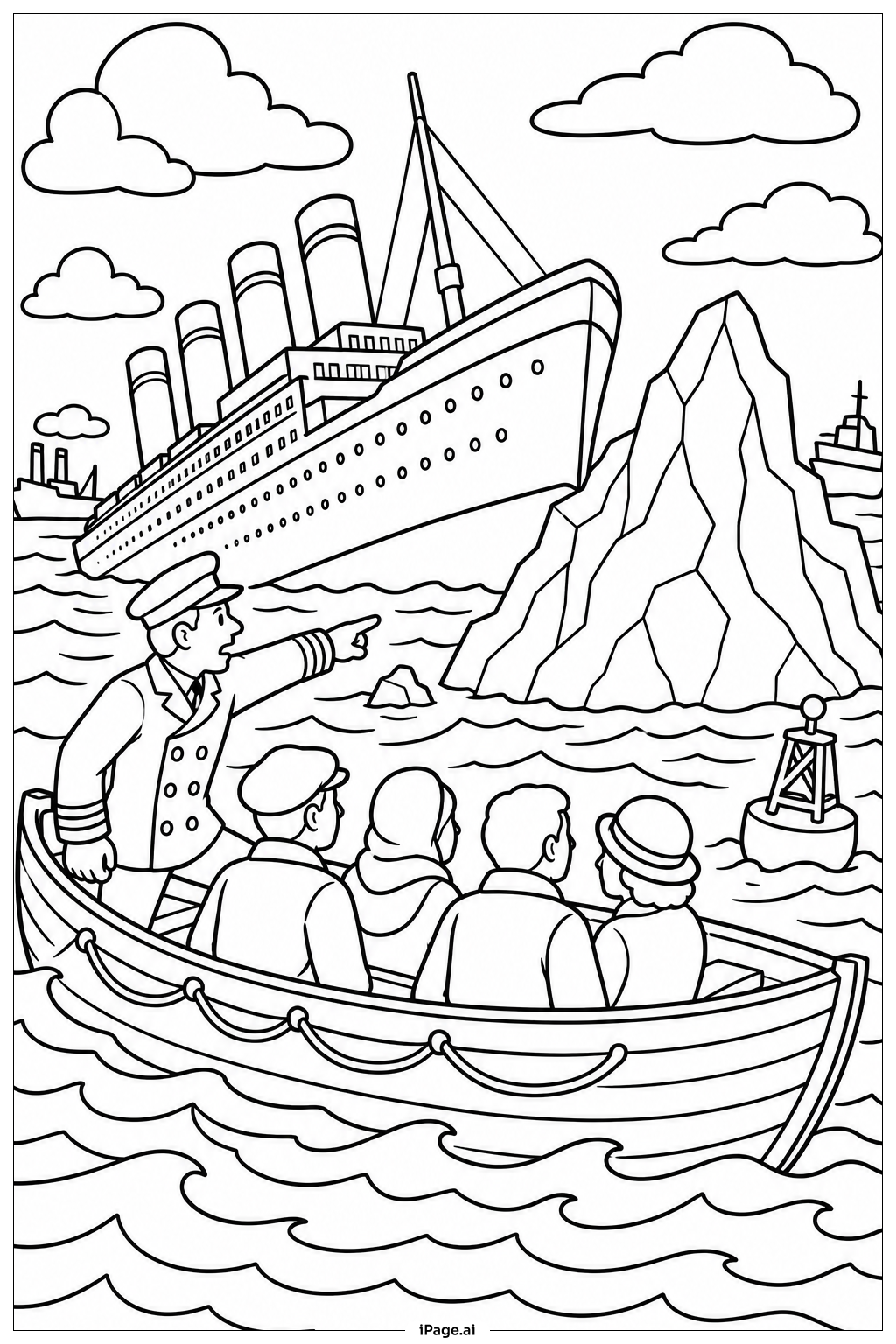
Coloring tips: How to color Titanic Collision Moment coloring page well?
Start with the sky. Use deep navy blue and dark purple to create a dramatic nighttime atmosphere. Add tiny white dots for stars to bring the scene to life. For the ocean, use layered shades of dark blue and teal, with lighter blue-white streaks to show crashing waves. The Titanic's hull looks great in classic black or very dark navy, with warm golden-yellow tones for the lit portholes and deck lights. Use light gray and white for the iceberg, adding pale blue shadows to give it a cold, icy feel. The foam and splashing water near the collision point can be colored in white and light blue. For the ship's funnels, try a bold black with a hint of red or orange at the tops. Take your time with each section and don't be afraid to blend colors for a more realistic look. This is a great image to practice shading and contrast!
Coloring challenges: Which parts are difficult to color and need attention for Titanic Collision Moment coloring page?
Coloring this image comes with several exciting challenges that will help you grow your skills:
• **Capturing the Night Sky:** The dark, starry sky requires careful layering of deep blues, purples, and blacks without making the scene look flat. Blending these colors smoothly while keeping the stars bright and visible takes patience and a steady hand.
• **Rendering the Iceberg Realistically:** Icebergs are not simply white — they have complex shadows, blue-gray tones, and translucent qualities. Showing the iceberg's jagged, three-dimensional shape using only shading and color variation is one of the trickiest parts of this image.
• **Detailing the Ship's Hull and Structure:** The Titanic is a massive, highly detailed vessel with rows of portholes, deck railings, funnels, and structural lines. Coloring each element neatly without smudging neighboring areas requires precision, especially in the smaller sections near the bow.
• **Depicting Moving Water:** The churning ocean and collision splash involve many overlapping shapes. Conveying the sense of motion and depth using different shades of blue, white, and gray — while keeping the waves looking dynamic rather than static — is a real artistic challenge.
• **Balancing Light and Shadow:** The scene is set at night, so most of the image should be dark. However, the ship's lights and the reflection on the water need to stand out. Striking the right balance between deep shadows and glowing highlights is key to making the whole composition feel dramatic and believable.
Benefits of coloring books: Advantages of drawing Titanic Collision Moment coloring page
Coloring this powerful Titanic scene offers a wonderful range of benefits for young artists and history lovers alike. Working through the complex details of the ship, iceberg, and ocean helps build fine motor skills and hand-eye coordination. Carefully filling in small areas like portholes and wave details trains focus and patience — skills that are useful far beyond art class. The dramatic nighttime setting encourages creative thinking as kids experiment with dark color palettes, shading, and contrast, developing a stronger sense of artistic composition. Choosing colors for the icy water and glowing ship lights also sparks imagination and personal expression. Beyond the artistic side, this image naturally sparks curiosity about the real story of the Titanic, making it a great starting point for learning about history, ocean science, and engineering. Completing a detailed, challenging scene like this gives children a real sense of accomplishment and builds confidence in their abilities. It's a meaningful and engaging activity that connects creativity with storytelling and discovery.