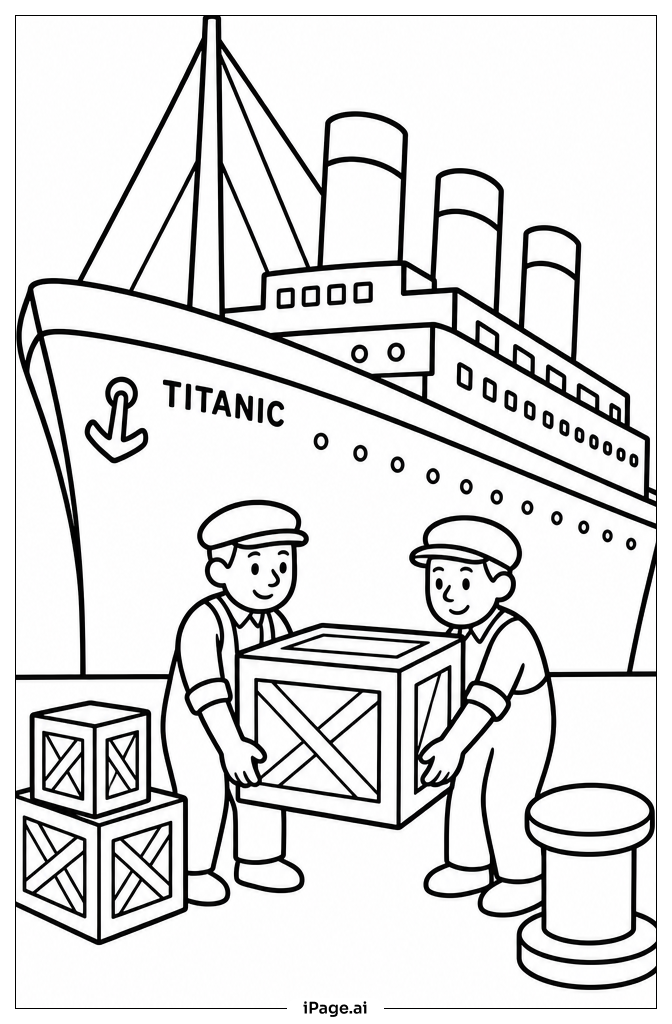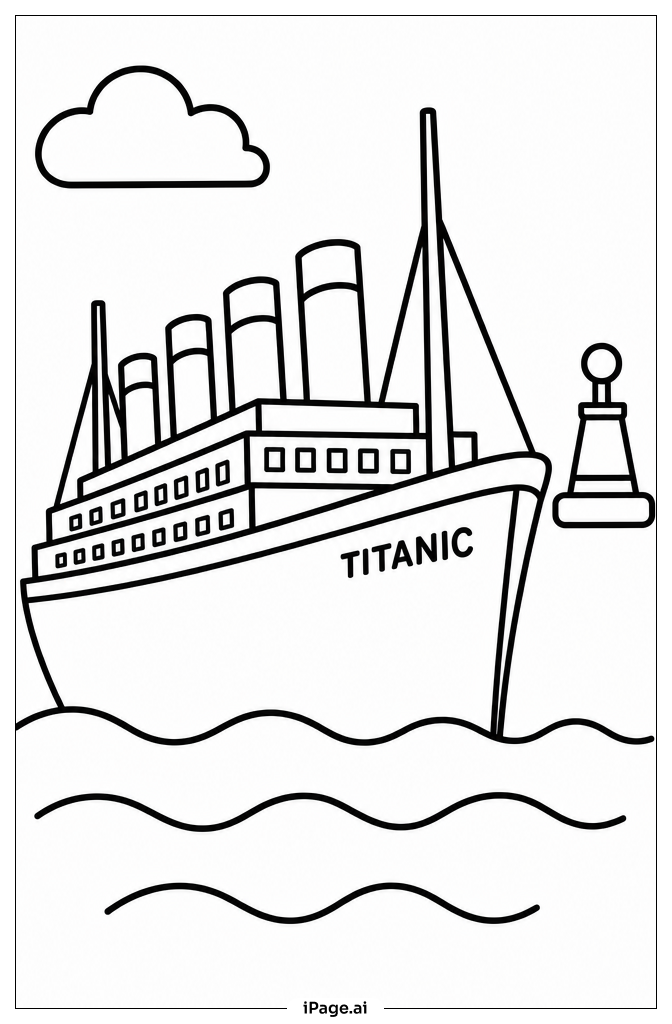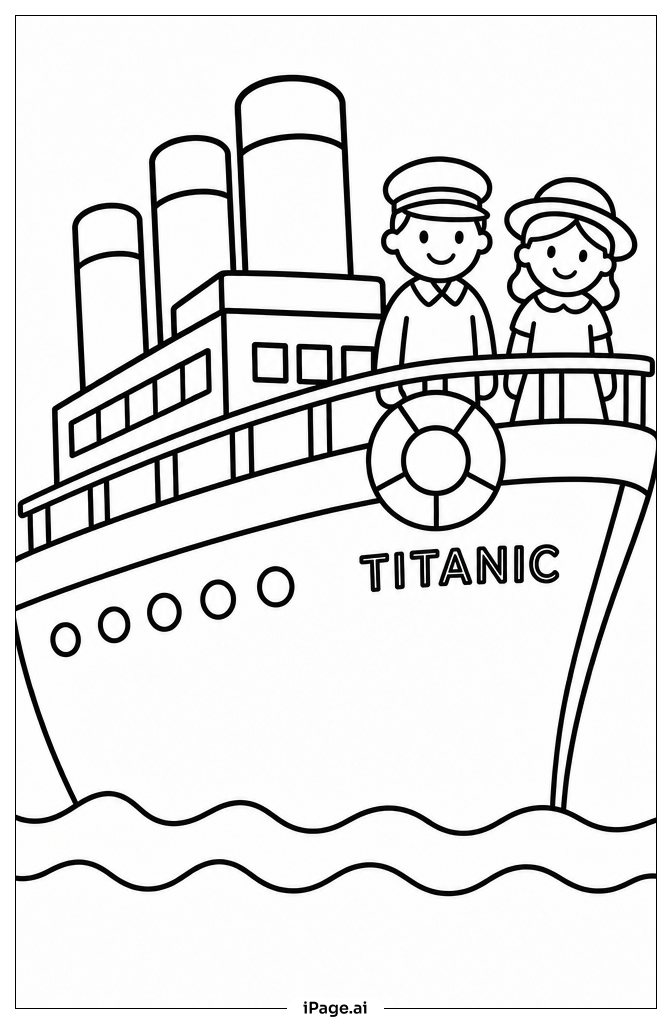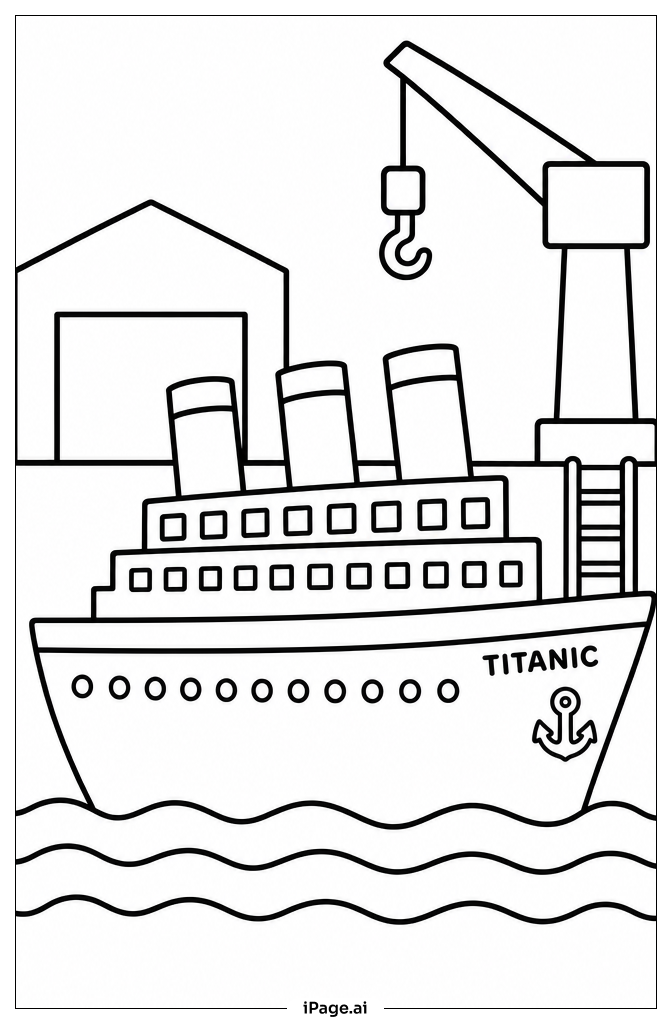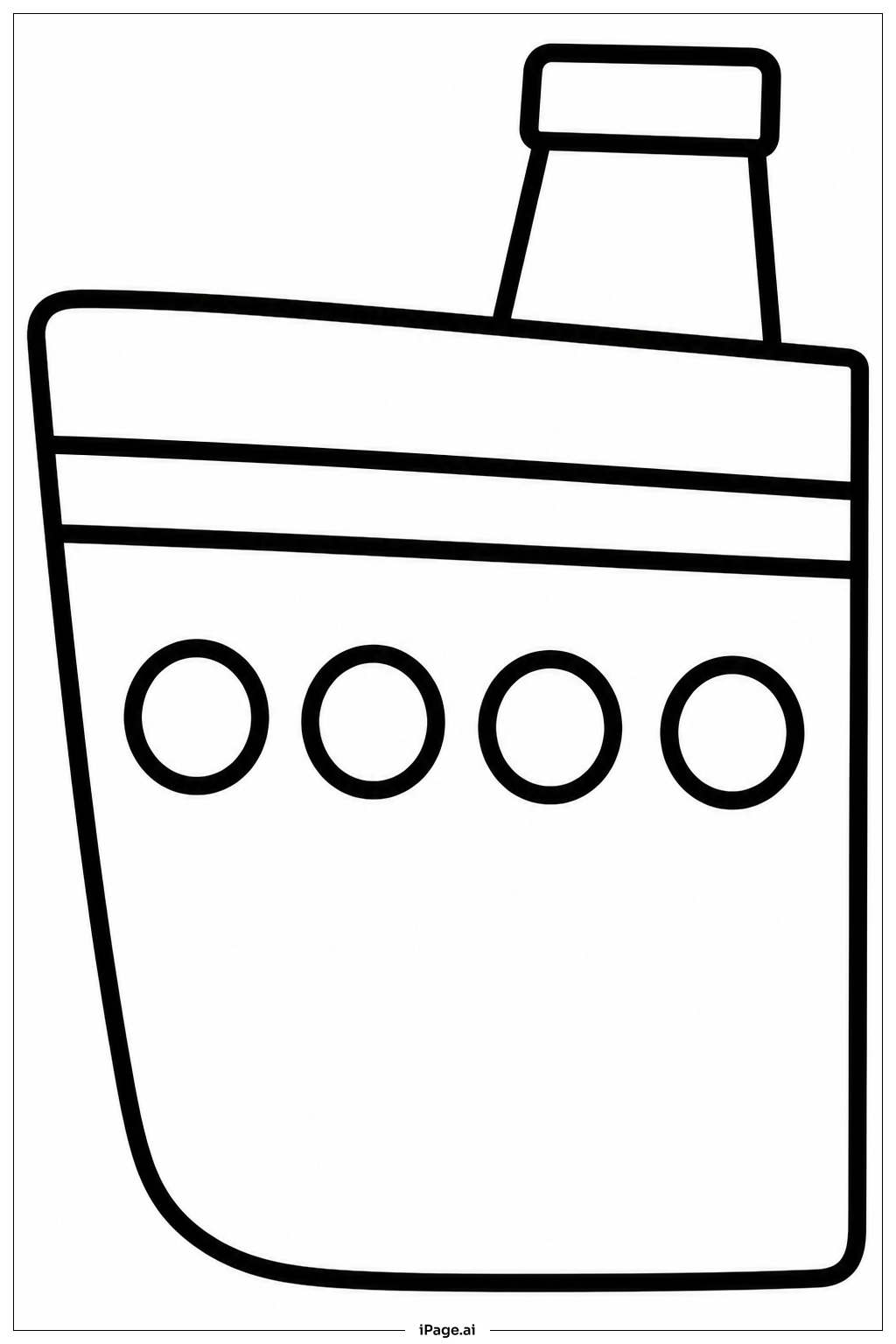
Coloring tips: How to color Titanic Simple Portholes coloring page well?
Start with the large hull of the ship. Use dark navy blue or charcoal gray for the lower hull, and black or deep gray for the upper sections. The portholes can be colored in bright yellow or warm orange to look like glowing lights from inside the ship. The smokestacks are traditionally painted in black with a yellow band near the top — try to follow that classic look! Use light blue or teal for the ocean waves beneath the ship. The sky behind the Titanic can be a deep midnight blue or a soft twilight purple to set a dramatic mood. Keep your strokes smooth and steady around the small circular portholes to stay inside the lines. Younger colorists can use bold, simple colors, while older kids can try shading and blending to add depth and realism to the scene.
Coloring challenges: Which parts are difficult to color and need attention for Titanic Simple Portholes coloring page?
Coloring this image comes with a few fun challenges to keep in mind:
• **Small circular portholes:** The rows of round portholes along the hull are small and closely spaced. Staying inside each tiny circle without going over the edges requires a sharp pencil or a fine-tipped marker. This is one of the trickiest parts of the page, especially for younger colorists.
• **Consistent repetition:** Because the portholes repeat in a pattern across the hull, keeping each one the same color and size visually can be harder than it looks. Skipping one or coloring unevenly can break the rhythm of the design, so patience and focus are key.
• **Large flat surfaces:** The wide hull of the ship is a big area to fill in evenly. Using colored pencils or crayons without leaving streaks or uneven patches takes practice. Blending or layering colors smoothly across such a large space can be a real test of technique.
• **Contrasting sections:** The ship has distinct sections — the hull, the deck, the smokestacks, and the water — each needing different colors that still look good together. Choosing a color palette that feels balanced and realistic while keeping each section clearly separate is a creative challenge.
• **Fine edge details:** The railings, deck lines, and the waterline where the ship meets the ocean all have thin, precise edges. Coloring right up to these lines without crossing them demands a steady hand and careful attention, especially when switching between two contrasting colors.
Benefits of coloring books: Advantages of drawing Titanic Simple Portholes coloring page
Coloring this Titanic page offers a wonderful mix of fun and learning. Here are some great reasons to pick up your colors and get started:
Working on the small portholes helps build fine motor skills and hand-eye coordination. Carefully filling in each tiny circle trains your hands to make precise, controlled movements — a skill that helps with writing and drawing too.
The repeating pattern of portholes is great for focus and concentration. Staying on task through a long row of details teaches patience and persistence, which are valuable habits for school and everyday life.
Choosing colors for the ship, the sea, and the sky sparks creativity and imagination. Kids get to make their own artistic choices and feel proud of the finished result.
Learning about the Titanic while coloring connects art with history. It's a gentle, engaging way to become curious about one of the most famous ships in the world.
Finally, coloring is a calming activity. It helps reduce stress and gives kids a quiet, focused moment to relax and enjoy being creative. Whether you're 4 or 16, finishing this page gives a real sense of accomplishment.