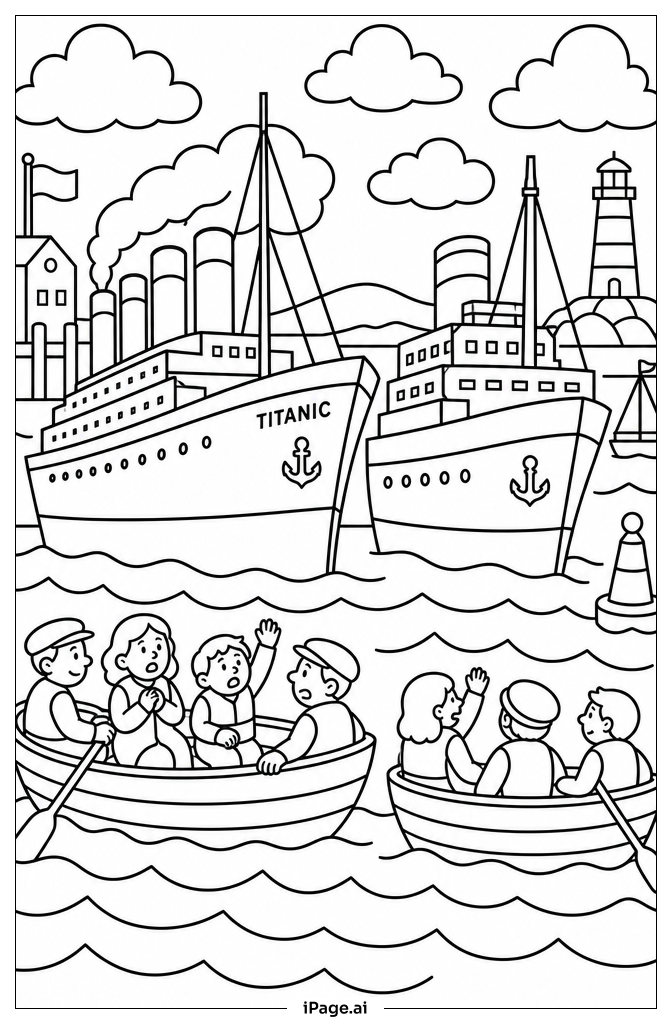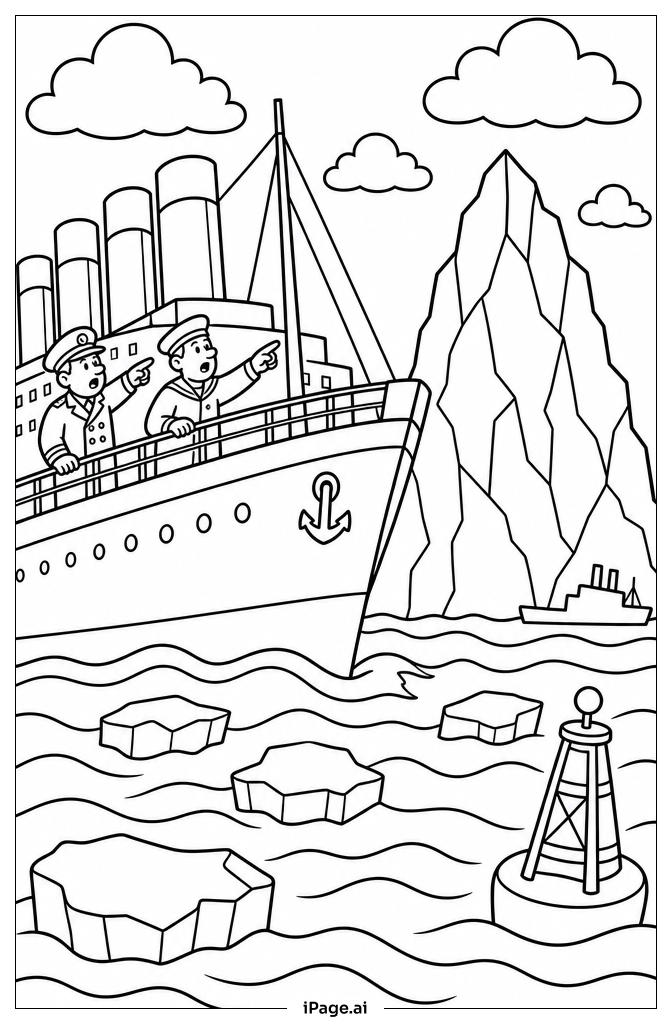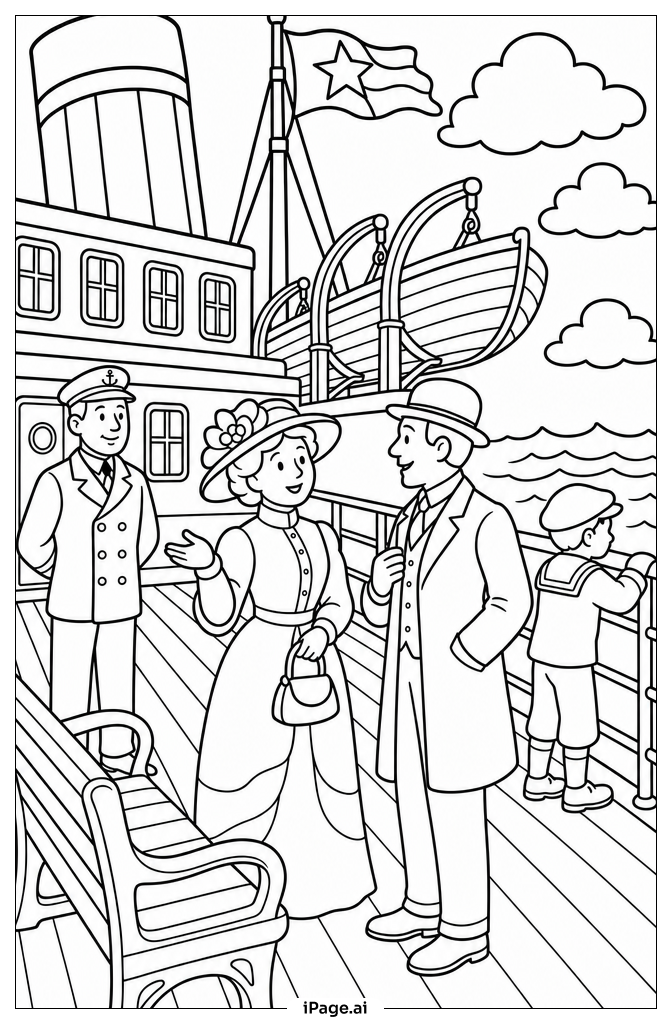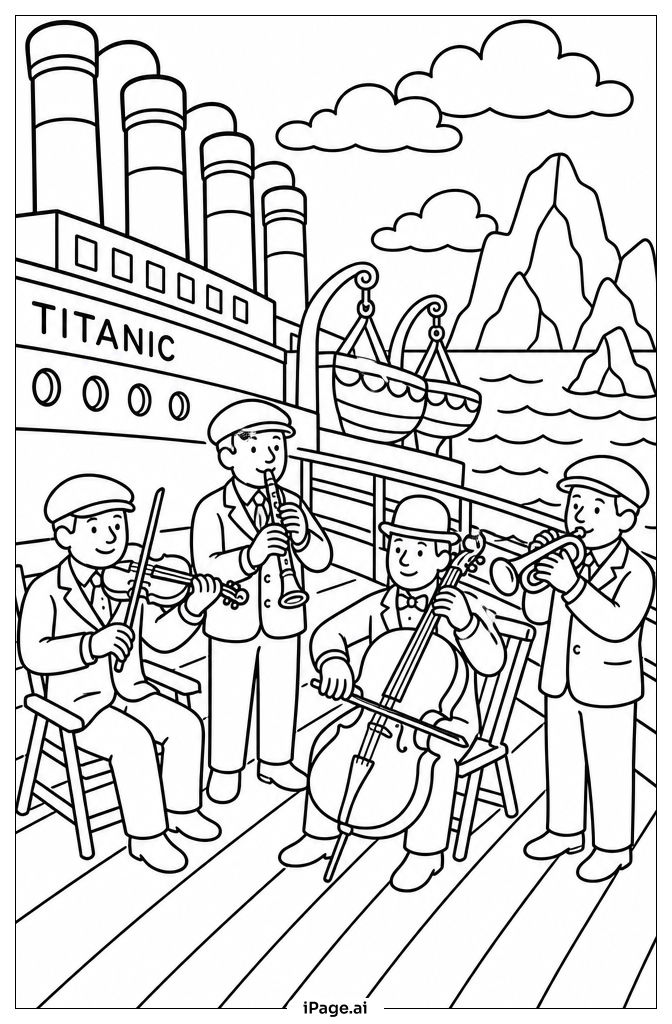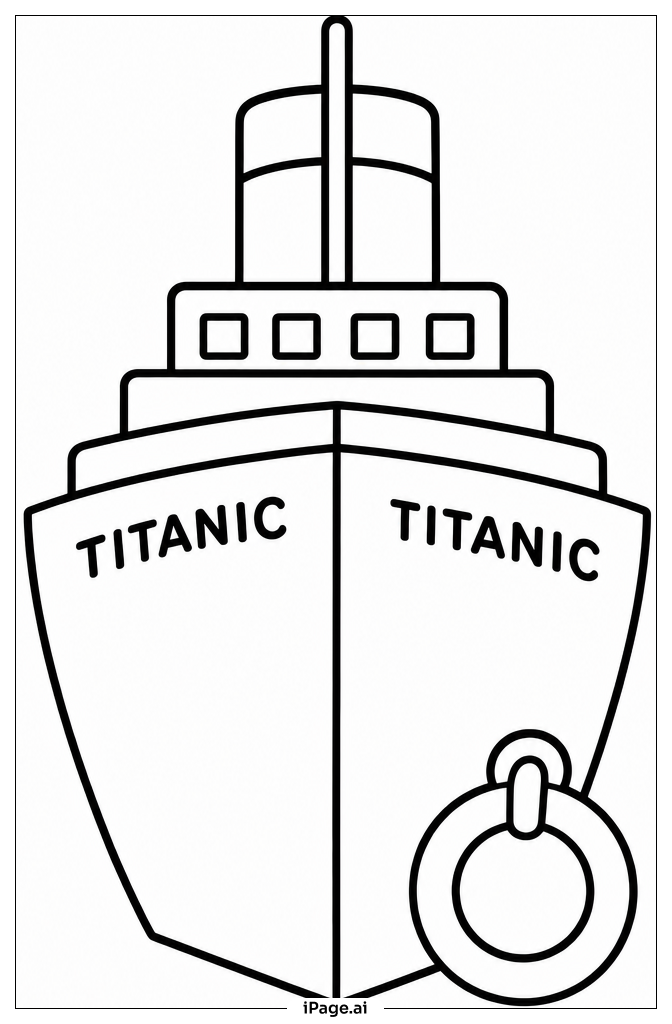
Coloring tips: How to color Titanic Simple Bow coloring page well?
Start with the large hull of the Titanic. Use a deep navy blue or dark gray for the main body of the ship. The waterline stripe is traditionally red or dark rust, so try that for the lower section of the hull. Color the anchor chains in silver or dark gray to give them a metallic look. The portholes can be filled with light yellow or white to suggest glowing lights. For the water around the bow, use shades of dark blue and teal to create a deep ocean feel. Add lighter blue highlights to show waves and movement. If you want a dramatic look, try a stormy dark sky in the background using deep purple and charcoal tones. Take your time with the large flat areas of the hull — smooth, even coloring looks great here.
Coloring challenges: Which parts are difficult to color and need attention for Titanic Simple Bow coloring page?
Coloring this image comes with a few challenges worth keeping in mind:
• **Large flat hull surfaces:** The bow of the Titanic has wide, expansive areas of hull that need to be colored evenly. Keeping the color smooth and consistent across these big sections can be tricky, especially with crayons or colored pencils. Using broad strokes and working in one direction helps avoid streaks.
• **Metallic details on chains and anchors:** The anchor chains and anchor itself require a realistic metallic appearance. Blending silver, gray, and dark charcoal tones together takes patience and a steady hand. Younger colorists may find it easier to simply use a single gray tone.
• **Small circular portholes:** The portholes are small and closely spaced along the hull. Staying inside the lines when coloring these tiny circles requires careful control, particularly for younger children. A fine-tipped marker or a sharpened colored pencil works best here.
• **Waterline color transition:** Where the dark hull meets the red or rust-colored waterline stripe, creating a clean, sharp boundary between the two colors is a real challenge. Using a ruler as a guide or coloring the lighter color first can help keep the edge neat.
• **Creating depth and dimension:** The bow is a three-dimensional structure, but the coloring page is flat. Adding shading — darker tones on one side and lighter tones on the other — helps give the hull a rounded, realistic look. This technique takes some practice but makes the final result look impressive.
Benefits of coloring books: Advantages of drawing Titanic Simple Bow coloring page
Coloring the bow of the Titanic is a wonderful activity for kids and history lovers alike. Here are some of the great benefits:
**Builds focus and patience.** The large hull sections and small details like portholes and anchor chains encourage children to slow down, concentrate, and work carefully.
**Sparks curiosity about history.** Coloring a famous ship like the Titanic naturally leads to questions about its story. It is a fun gateway to learning about real historical events in an engaging, hands-on way.
**Develops fine motor skills.** Staying within the lines, blending colors, and handling small details all help strengthen hand-eye coordination and pencil control — skills that are important for writing and drawing.
**Encourages creativity.** There is no single "right" way to color this page. Kids can experiment with different color combinations and shading techniques, building confidence in their own creative choices.
**Provides a calming experience.** The repetitive motion of coloring large, smooth areas of the hull is relaxing and meditative. It is a great screen-free activity that helps reduce stress and improve mood for both children and adults.