Coloring tips: How to color Sun Over Observatory coloring page well?
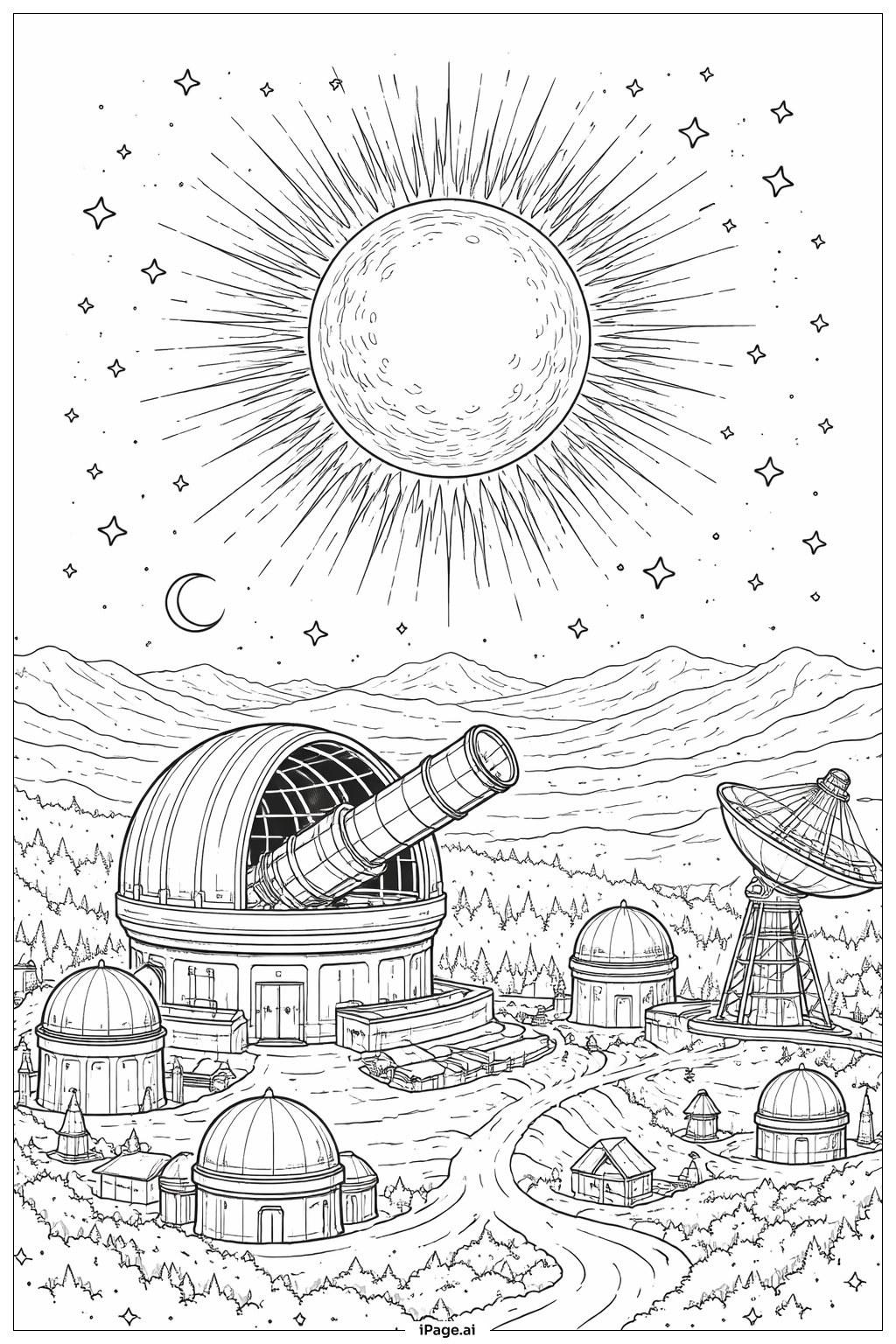
Use bright yellows and oranges for the sun to make it stand out. For the telescope and observatory buildings, try gray, silver, or light blues to show their metal and glass parts. Use dark green and brown for the trees and the ground. The mountains can be shaded with light blues and purples to create depth. The sky can be dark blue or black with white or yellow stars. You can also color the crescent moon in soft white or pale yellow. Try to blend colors gently in the sky and mountains to create a calm night scene.
Coloring challenges: Which parts are difficult to color and need attention for Sun Over Observatory coloring page?
1. The sun has many thin rays which can be tricky to color without going out of the lines. 2. The telescope and satellite dish have many small details and lines that require careful coloring. 3. The trees and forest have lots of tiny leaves and branches, which need patience to fill in. 4. The stars and small dots in the sky are tiny and need careful coloring to avoid making mistakes. 5. Shading the mountains to show depth may be challenging but important for making the picture look realistic.
Benefits of coloring books: Advantages of drawing Sun Over Observatory coloring page
Coloring this picture helps children practice fine motor skills because of the small details. It encourages focus and patience. Coloring the sun and the sky helps kids learn about different colors and how to blend them. It also sparks interest in space and science by showing an observatory and the night sky. Overall, it is a fun way to learn about space while improving artistic skills.