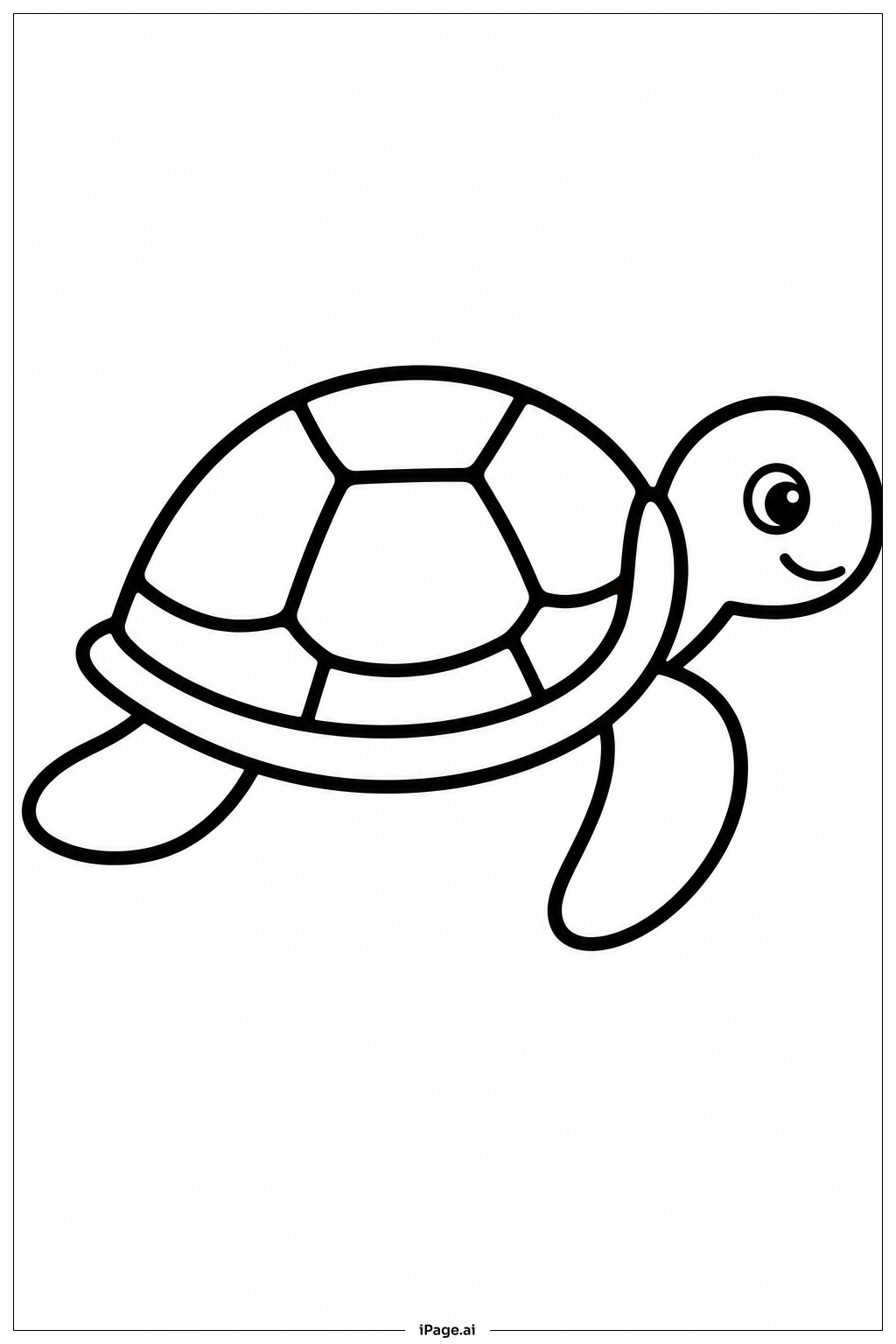
Coloring tips: How to color Sea Turtle Swimming Sideview coloring page well?
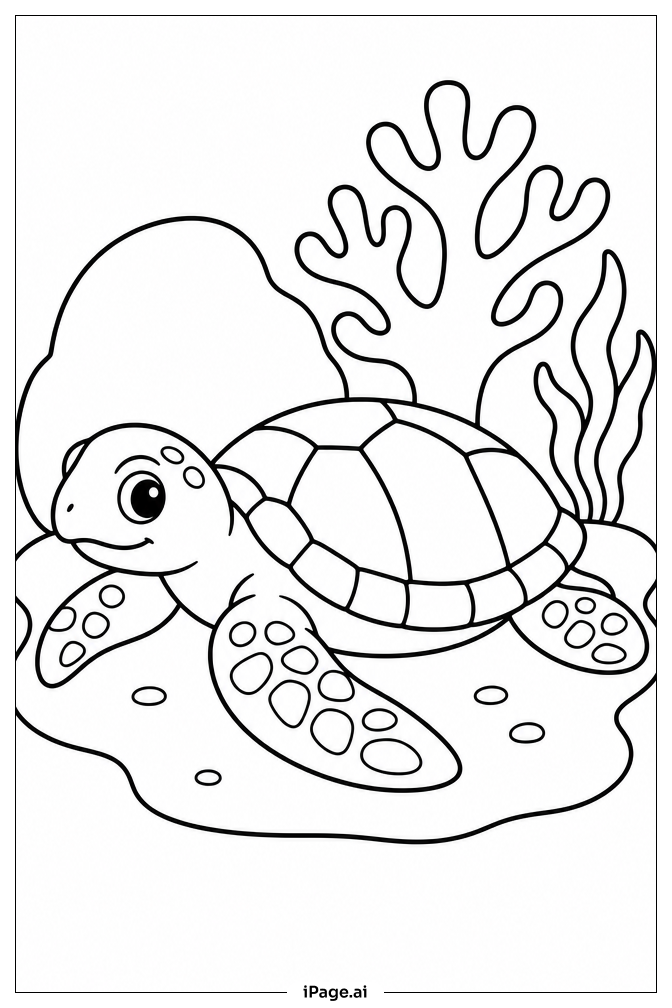
Start with the shell and use a mix of greens and browns. Try olive green for the large scutes in the center and darker brown for the edges to create depth. You can add yellow-green highlights to make the shell look shiny and alive. For the skin, use a soft green or gray-green on the flippers and head. The belly area can be a lighter cream or pale yellow. Use deep blue and turquoise for the water around the turtle. Add lighter blue swirls to show the ocean currents flowing gently. If you want to make the scene more exciting, try adding small dots or bubbles in white or light blue around the turtle. Keep your strokes smooth and flowing to match the peaceful mood of the image. This is a great page for trying color gradients and blending techniques.
Coloring challenges: Which parts are difficult to color and need attention for Sea Turtle Swimming Sideview coloring page?
• Shell Scute Patterns: The turtle's shell is made up of many individual scute sections, each with its own shape and border. Coloring each section neatly without going over the lines requires steady hand control and patience. Younger colorists may find it tricky to stay within the small, irregular shapes, while older colorists can challenge themselves by using different shades in each scute to create a realistic mosaic effect.
• Skin Texture and Gradient: The turtle's flippers, neck, and head have a bumpy, scaled texture. To make these areas look natural, colorists need to layer shades of green and brown carefully. Applying smooth gradients from dark to light across the flippers is challenging, especially in the narrow flipper tips where there is little room to blend.
• Conveying Depth in the Water: The swirling lines around the turtle represent ocean currents. Coloring water realistically requires using multiple shades of blue and teal in flowing, curved strokes. Keeping the transitions between shades smooth so the water does not look patchy is a skill that takes practice.
• Contrast Between Turtle and Background: Choosing colors that make the turtle stand out clearly from the ocean water can be difficult. If the greens of the turtle are too similar to the blues and teals of the water, the image can look flat. Colorists need to think carefully about contrast to keep the turtle as the main focus.
• Small Detail Areas: The eye and the edges around the head and flippers contain fine lines and small spaces. Filling these accurately without smudging or overlapping nearby areas benefits from using thin-tipped coloring tools.
Benefits of coloring books: Advantages of drawing Sea Turtle Swimming Sideview coloring page
Coloring this sea turtle page offers a wide range of benefits for kids and beginners alike. Working through the detailed shell patterns helps build fine motor skills and improves hand-eye coordination as colorists carefully stay within each scute's borders. The variety of shapes and sections also encourages focus and concentration, helping children practice patience in a fun and rewarding way.
Choosing colors for the shell, skin, and water invites creative thinking and sparks curiosity about the natural world. Kids may become interested in learning more about real sea turtles, their habitats, and why they are important to protect. This makes the coloring activity both educational and inspiring.
The calm, flowing nature of the ocean scene has a soothing effect. Coloring smooth water currents and gentle curves can help reduce stress and anxiety, making it a great quiet-time activity. It encourages mindfulness by keeping attention on the present moment.
For older children and Adults, the challenge of blending colors and creating gradients on the shell and water develops more advanced artistic skills. Experimenting with shading and contrast builds confidence and a deeper appreciation for color and design. Overall, this page is a wonderful mix of creativity, learning, and relaxation for all ages.