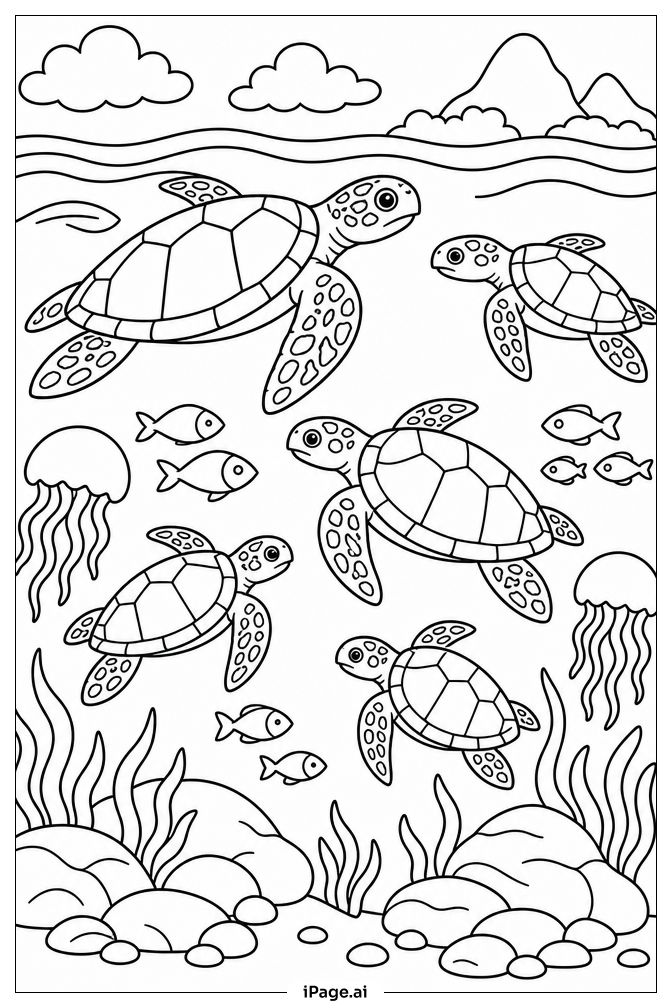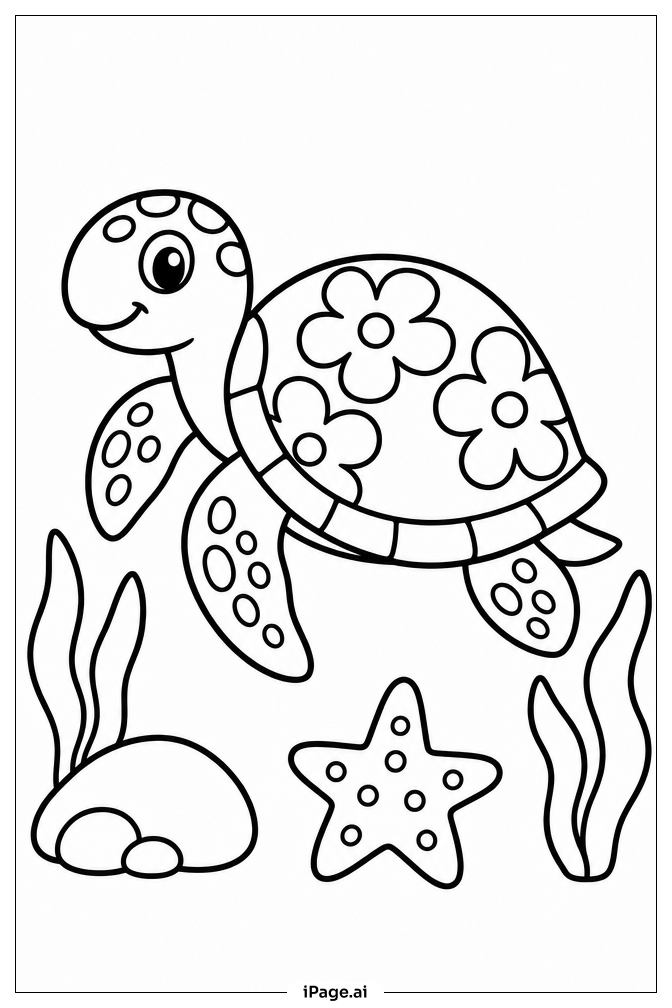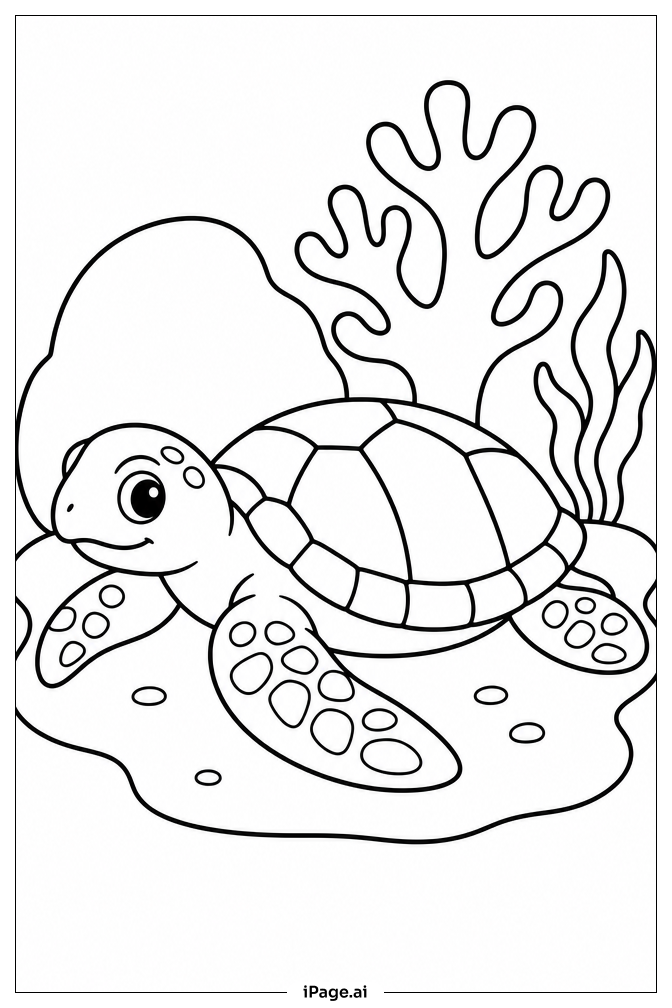
Coloring tips: How to color Sea Turtle Near Shipwreck coloring page well?
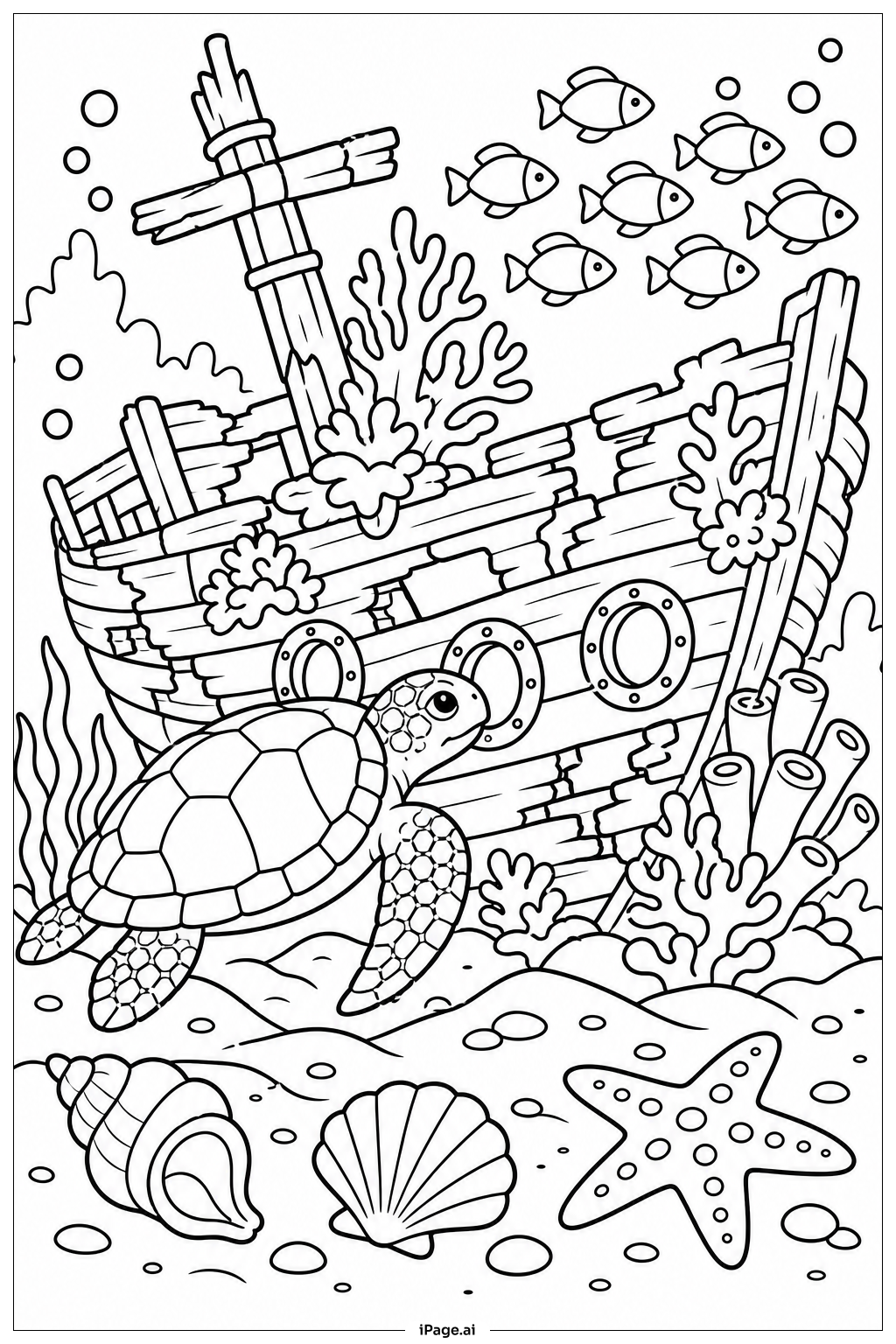
Start with the sea turtle's shell using warm shades like olive green, dark green, and golden brown. Use lighter tan or yellow for the inner scute borders to make the pattern pop. Color the turtle's skin a medium green or gray-green, with slightly darker tones on the top and lighter shades on the belly. For the shipwreck, use dark browns, grays, and blacks to show aged, waterlogged wood. Add patches of orange and red for rust on metal parts. Color the coral in bright pinks, oranges, and purples to contrast with the dark wreck. Use deep blues and teals for the ocean water, blending lighter blue near the top to create a sense of depth. Add soft white or pale yellow for bubbles and light rays filtering through the water. Small fish can be colored in bright, fun colors like yellow, red, or orange to bring life and energy to the scene.
Coloring challenges: Which parts are difficult to color and need attention for Sea Turtle Near Shipwreck coloring page?
• Sea Turtle Shell Pattern: The turtle's shell is divided into many individual scutes, each with its own bordered shape. Coloring each section neatly without going over the lines takes patience and a fine-tipped coloring tool. Keeping the colors consistent while still showing variation between sections adds another layer of difficulty, especially for younger colorists.
• Shipwreck Texture and Detail: The sunken ship contains many overlapping elements — broken planks, ropes, cannons, and encrusted surfaces. Capturing the worn, aged look of waterlogged wood requires blending darker and lighter browns together carefully. Missing fine details or using flat color can make the wreck look unfinished or flat.
• Underwater Depth and Lighting: Creating a believable underwater scene means thinking about how light travels through deep water. Colors naturally become darker and cooler the deeper they go. Blending blue and teal tones smoothly across the background to suggest depth is a challenge, especially when transitioning around detailed foreground elements like the turtle and wreck.
• Coral and Sea Plant Variety: The coral and sea plants growing over the wreck come in many different shapes and sizes. Each type may call for a different color, and placing those colors so they stand out from the dark wreck without clashing takes careful planning. Small coral details require steady hands and precise coloring within tight spaces.
• Balancing Foreground and Background: The turtle is the main focus, so it should look brighter and more detailed than the shipwreck in the background. Keeping the right balance — making the background feel distant without making it look empty — is one of the trickiest parts of this image for colorists of all ages.
Benefits of coloring books: Advantages of drawing Sea Turtle Near Shipwreck coloring page
Coloring this Sea Turtle Near Shipwreck page offers a wide range of benefits for kids and adults alike. The underwater scene sparks imagination and curiosity about ocean life, shipwrecks, and marine history, making it a great way to learn while having fun. Focusing on staying within the detailed lines of the turtle's shell and the shipwreck's textures helps build fine motor skills and hand-eye coordination, especially important for younger children. Choosing colors for the ocean, coral, and sea creatures encourages creative thinking and color awareness, helping kids develop an eye for how colors work together. The calming nature of coloring an underwater scene — with its flowing shapes and cool blue tones — can reduce stress and anxiety, making it a great relaxing activity after a busy day. For older kids and teens, the complexity of the image offers a satisfying challenge that builds focus and persistence. Completing a detailed, beautiful scene also gives a strong sense of accomplishment and pride. Whether coloring alone or together with family, this page creates a wonderful opportunity for bonding, storytelling, and imaginative play inspired by the deep sea.