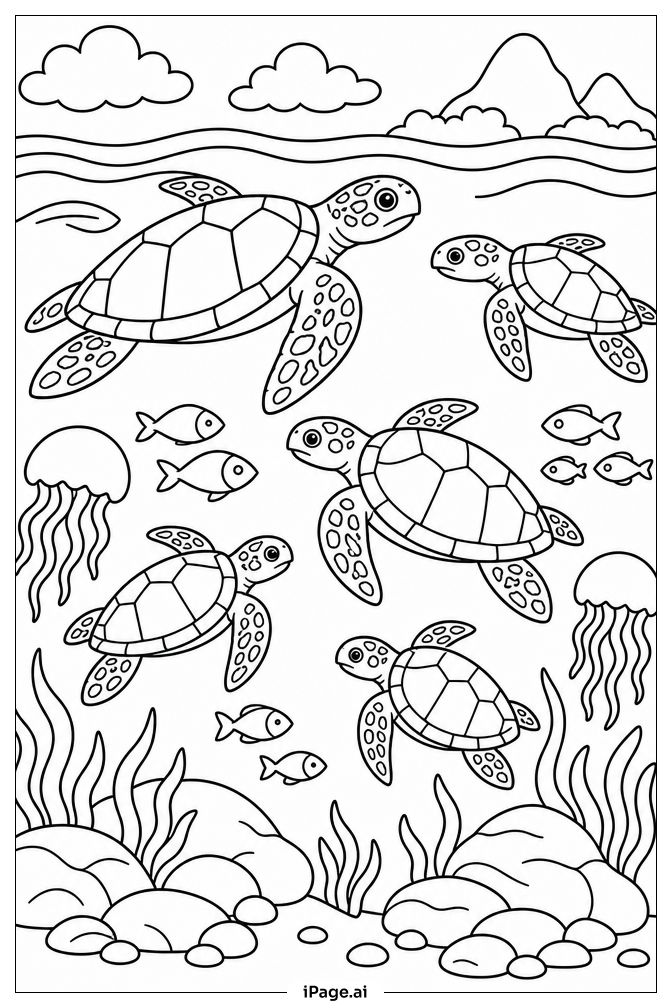
Coloring tips: How to color Sea Turtle Migration Scene coloring page well?
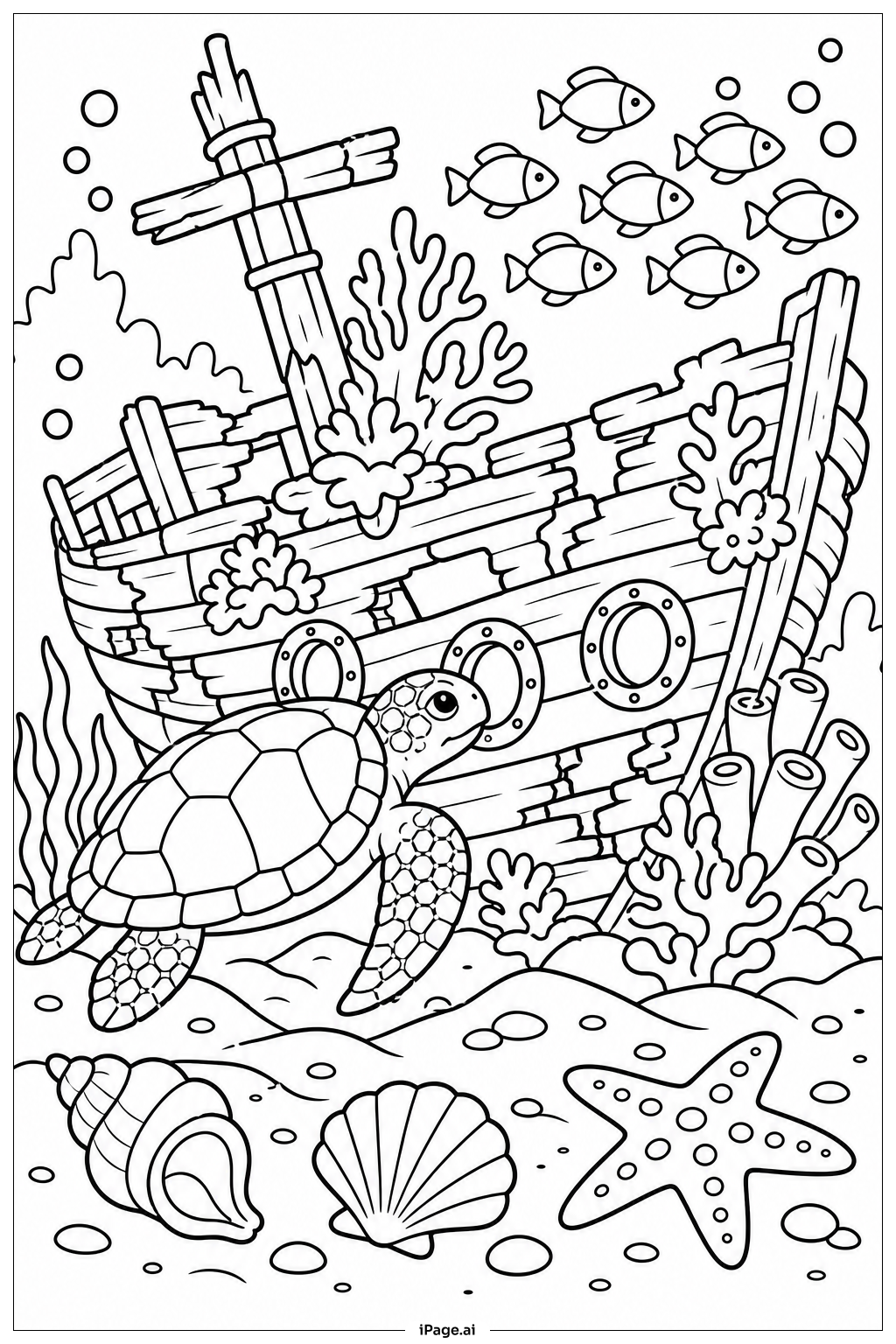
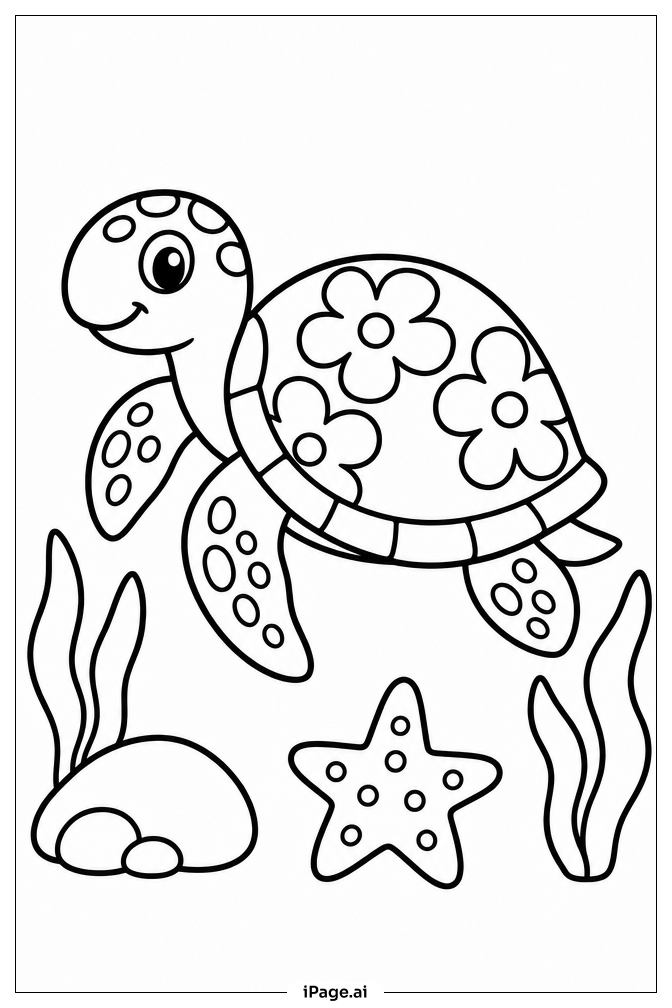
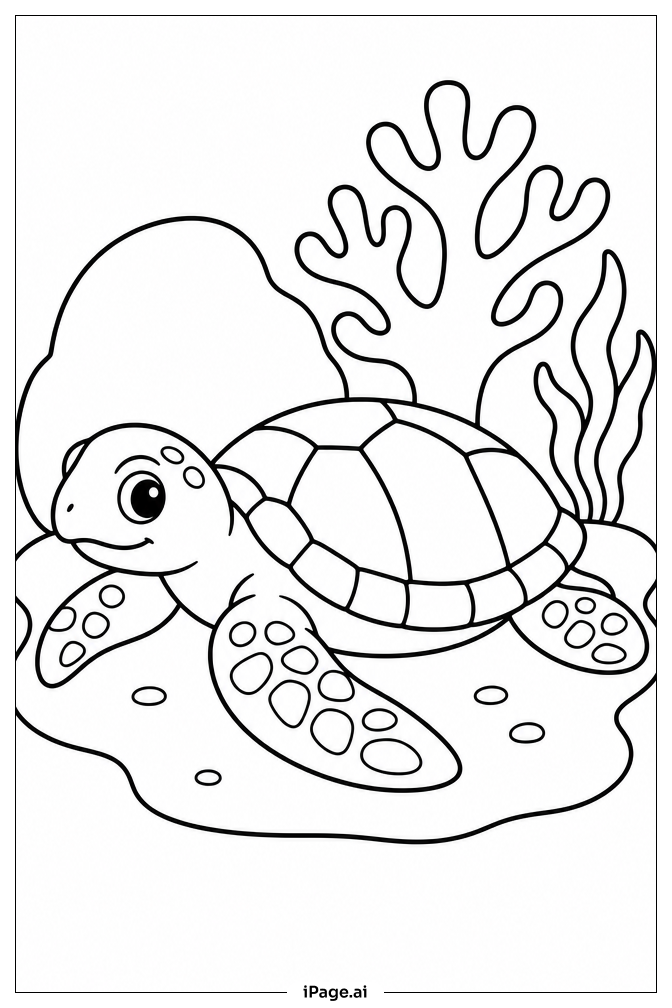
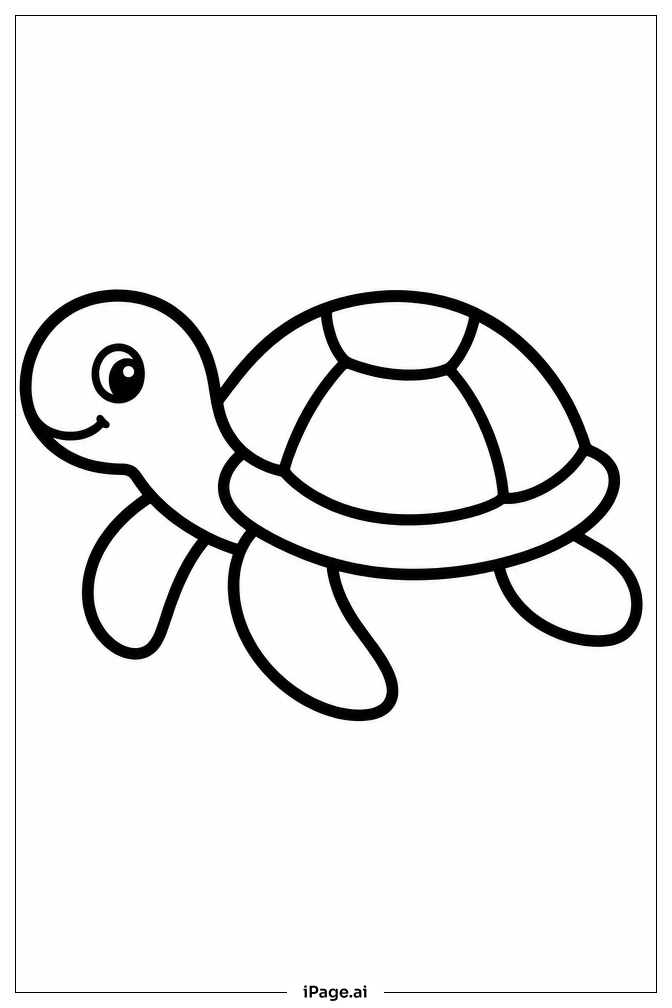
Start with the sea turtle's shell using shades of olive green, dark brown, and warm tan. Use lighter tones near the center of each scale and darker edges to create depth. Color the skin of the flippers and head in grayish-green or olive tones, adding a pale yellow on the underside for contrast. For the ocean background, use deep blues and teals, blending lighter blue near the light rays at the top. The small fish can be colored in bright yellows, oranges, or silvers to make them pop. Use soft greens and purples for the coral and sea plants. The light rays filtering from above can be left very lightly colored or shaded in pale yellow and white to keep a glowing effect. Try blending colors smoothly to give the underwater scene a calm, flowing feeling. This image is great for experimenting with cool color palettes.
Coloring challenges: Which parts are difficult to color and need attention for Sea Turtle Migration Scene coloring page?
• Shell Pattern Complexity: The sea turtle's shell is made up of many individual scutes, each with its own borders and inner details. Carefully coloring each section without going outside the lines takes patience and a steady hand. Using a fine-tipped colored pencil or marker works best for this area.
• Smooth Water Blending: Creating a realistic underwater look means blending multiple shades of blue and teal without harsh edges. Achieving a smooth gradient from deep ocean blue at the bottom to lighter, brighter blue near the surface can be tricky, especially for younger colorists.
• Light Ray Effects: The beams of light filtering down from above need to be handled gently so they do not get lost in the background color. Leaving these areas very lightly shaded or using a white gel pen to add highlights afterward can help preserve the glowing effect.
• Small Detail Work on Fish and Plants: The tiny fish swimming around the turtle and the fine lines of the coral and sea plants require careful attention. Switching to a sharper or thinner coloring tool helps fill in these small spaces neatly and keeps each element looking distinct.
• Layering Depth and Shadow: Making the scene feel three-dimensional involves adding shadow under the turtle's flippers and along the lower edges of the shell. This means layering darker tones gradually without making the overall image look muddy or too dark. Taking time to build color in thin layers gives the best result.
Benefits of coloring books: Advantages of drawing Sea Turtle Migration Scene coloring page
Coloring this Sea Turtle Migration Scene offers a wonderful range of benefits for kids and adults alike. Focusing on the fine details of the turtle's shell and the flowing underwater environment helps sharpen concentration and build patience, skills that carry over into school and daily life. Choosing colors for the ocean, coral, and sea life encourages creative thinking and helps children develop a personal sense of color harmony. The calming nature of the underwater scene makes this a relaxing activity that can reduce stress and anxiety, giving colorists a chance to unwind and enjoy a quiet, focused moment. Working on the intricate shell patterns also strengthens fine motor skills and improves hand-eye coordination, which is especially helpful for younger children. At the same time, the image sparks curiosity about marine life and the natural world. Colorists may become interested in learning about sea turtle migration, ocean ecosystems, and ocean conservation. This makes the coloring session both a creative outlet and an educational experience, connecting art with science in a fun and engaging way.