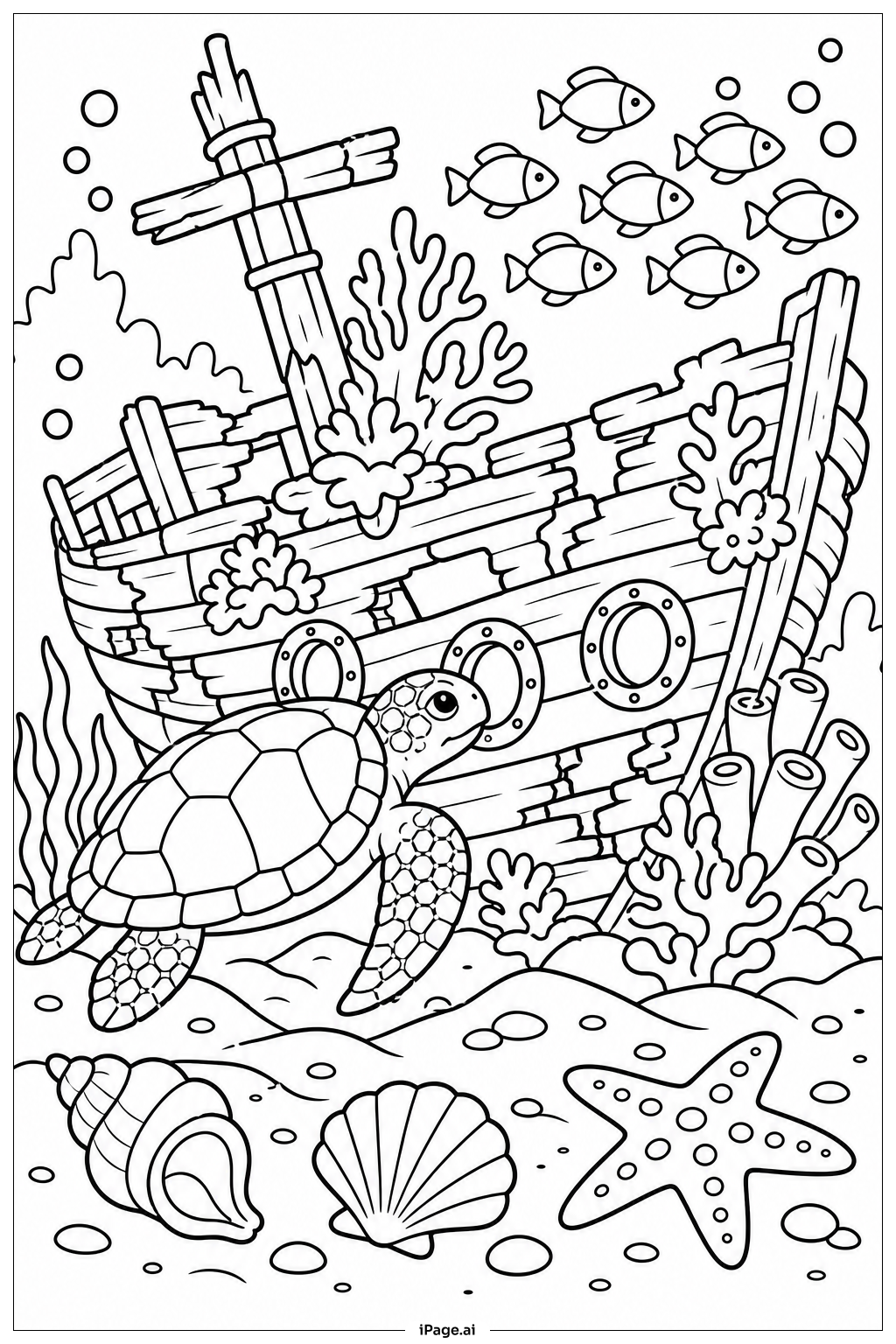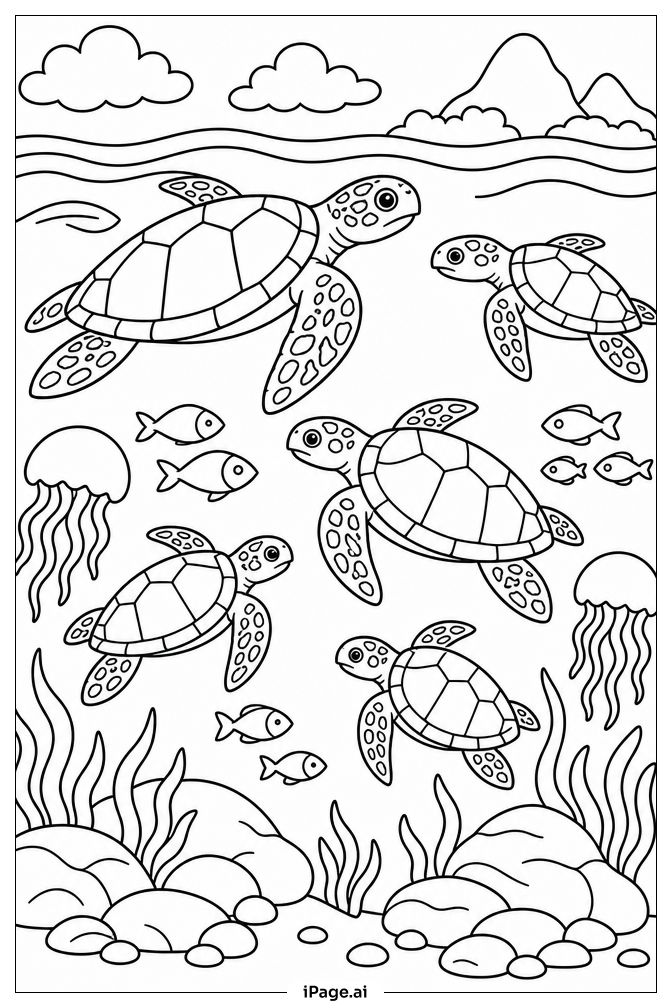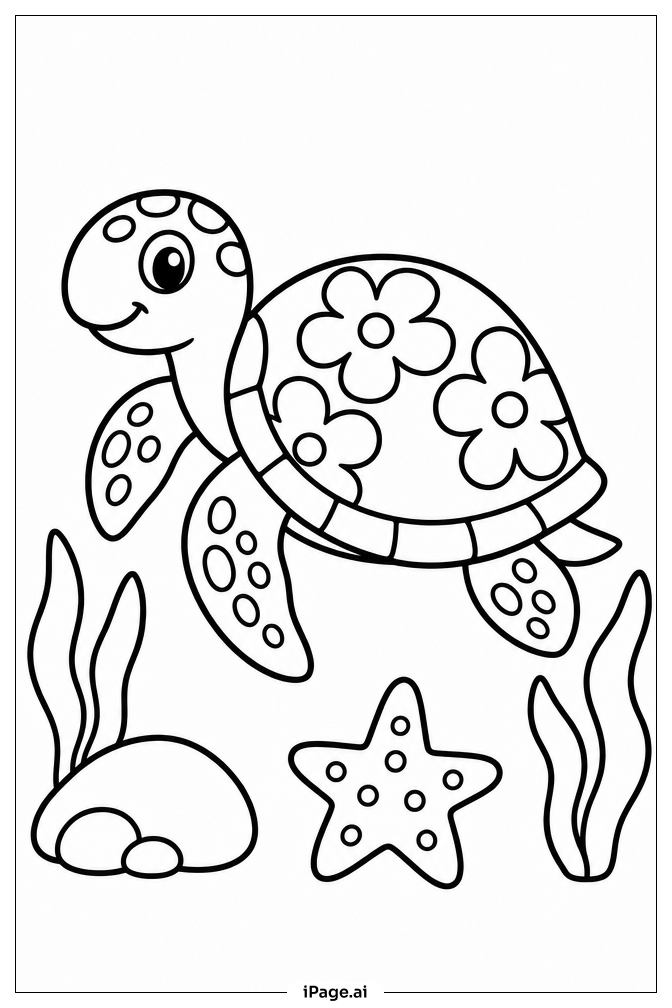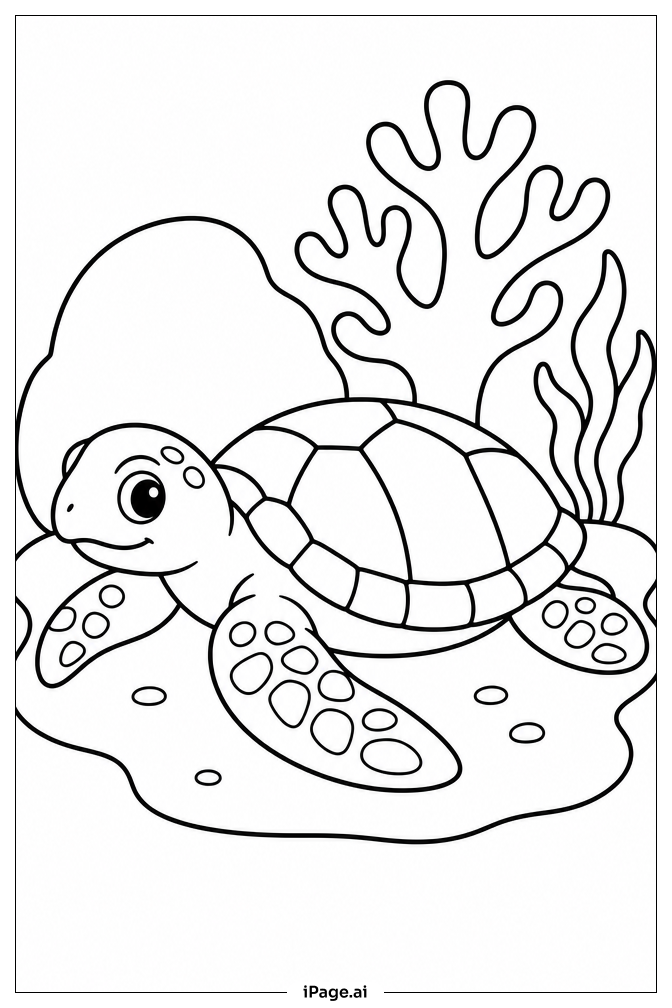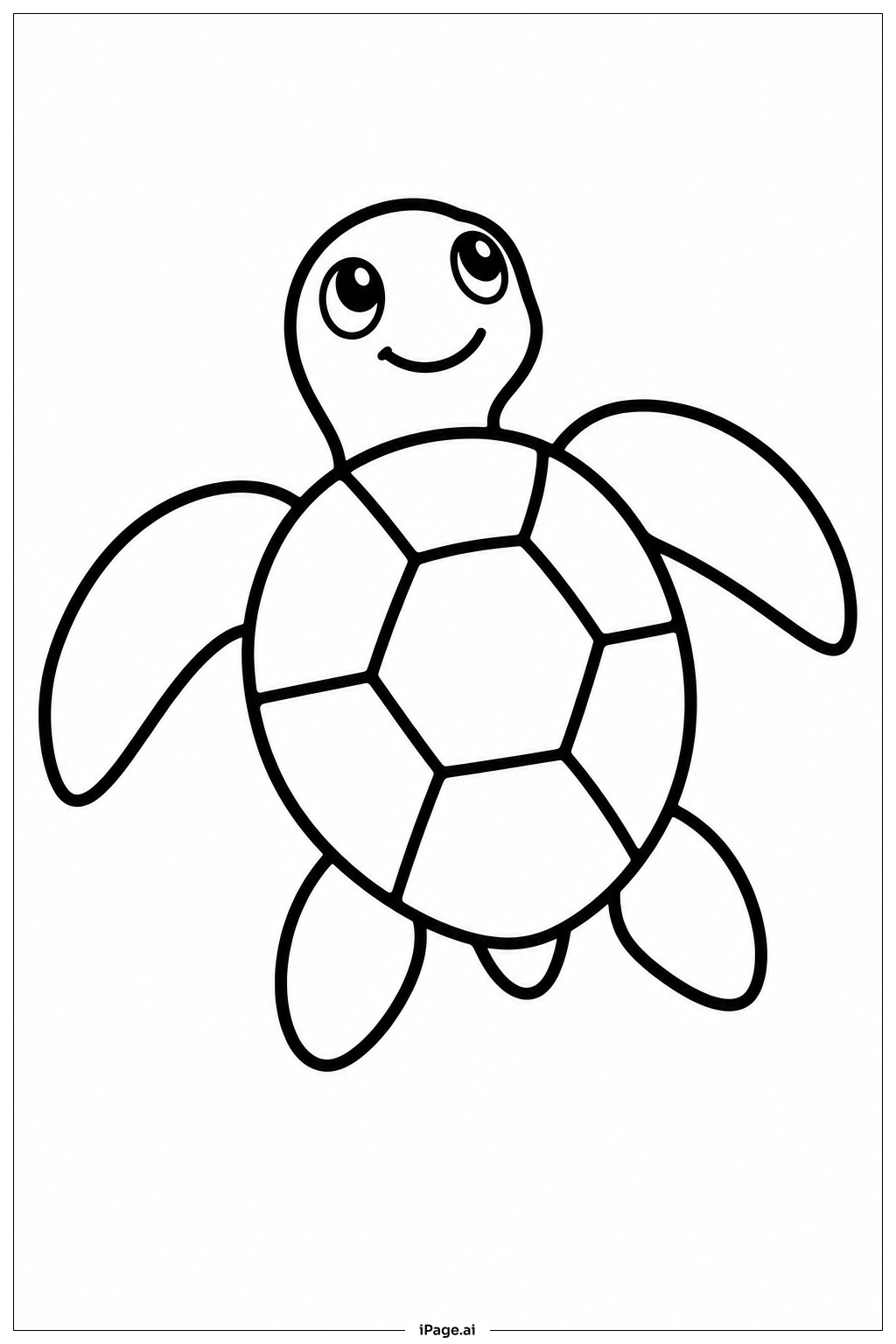
Coloring tips: How to color Sea Turtle Looking Up coloring page well?
Start with the shell. Use dark greens and olive tones for the scute borders, then fill each scute section with slightly lighter shades of green, brown, or yellow-green to create a natural mosaic look. For the head, flippers, and skin areas, use warm olive green or dark teal. Add texture by layering a slightly darker shade along the edges of each flipper and the neck to show depth and shadow. The belly can be colored in a softer cream or pale yellow to contrast with the darker back. For the water around the turtle, use light blues and aqua tones. Color the bubbles in very pale blue or leave them white for a clean, airy look. Boys and Girls of all ages can try blending two shades of green side by side on the shell to make each scute look three-dimensional and realistic.
Coloring challenges: Which parts are difficult to color and need attention for Sea Turtle Looking Up coloring page?
• Shell Scute Patterns: The turtle's shell is divided into many separate scute sections, each with its own shape and border. Carefully coloring inside each small segment without going over the lines takes patience and a fine-tipped tool. Keeping each section a slightly different shade while still looking like one unified shell is a real challenge.\n\n• Skin Texture on Flippers and Head: The skin areas of the sea turtle have a bumpy, scaled texture suggested by small lines and dots. Coloring these areas evenly while still showing the texture requires light pressure and short, careful strokes. Too much color in one spot can flatten the look and hide the detail.\n\n• Smooth Gradients on a Curved Shell: The shell is dome-shaped, and showing that curve with color means gradually shifting from lighter tones at the top to slightly darker ones near the edges. Creating a smooth gradient by hand, especially for younger colorists, can be tricky without blending tools or experience.\n\n• Water and Bubbles: The flowing water lines and small bubbles around the turtle need to stay light and airy. Pressing too hard with a blue pencil can make the background feel heavy and overpower the turtle itself. Keeping the water soft while the turtle stays bold is a balancing act.\n\n• Overall Color Harmony: With so many different sections — shell, skin, water, bubbles — making sure all the colors work together without clashing takes planning. Choosing a consistent color palette before starting helps avoid a result that looks scattered or unfinished.
Benefits of coloring books: Advantages of drawing Sea Turtle Looking Up coloring page
Coloring this Sea Turtle Looking Up page offers a wonderful mix of fun and learning for Boys and Girls ages 4 to 16. Tracing carefully inside the detailed shell scutes helps build fine motor skills and hand-eye coordination, which are important for writing and everyday tasks. Choosing colors for the turtle, the water, and the bubbles encourages creativity and self-expression. Kids also learn about real ocean animals and their natural colors, making this a gentle introduction to marine biology. For older colorists, blending greens and adding shading to the shell teaches basic art techniques like depth and shadow. Focusing on the small sections of the shell also builds concentration and patience — skills that transfer directly to school and everyday challenges. The peaceful underwater theme has a calming effect, making this a great activity for winding down after a busy day. Adults can also enjoy this page as a mindful, stress-relieving exercise. Completing the full image gives a real sense of accomplishment, boosting confidence and motivation to try more complex Coloring Pages. Overall, this page is both an artistic and educational experience that the whole family can enjoy together.