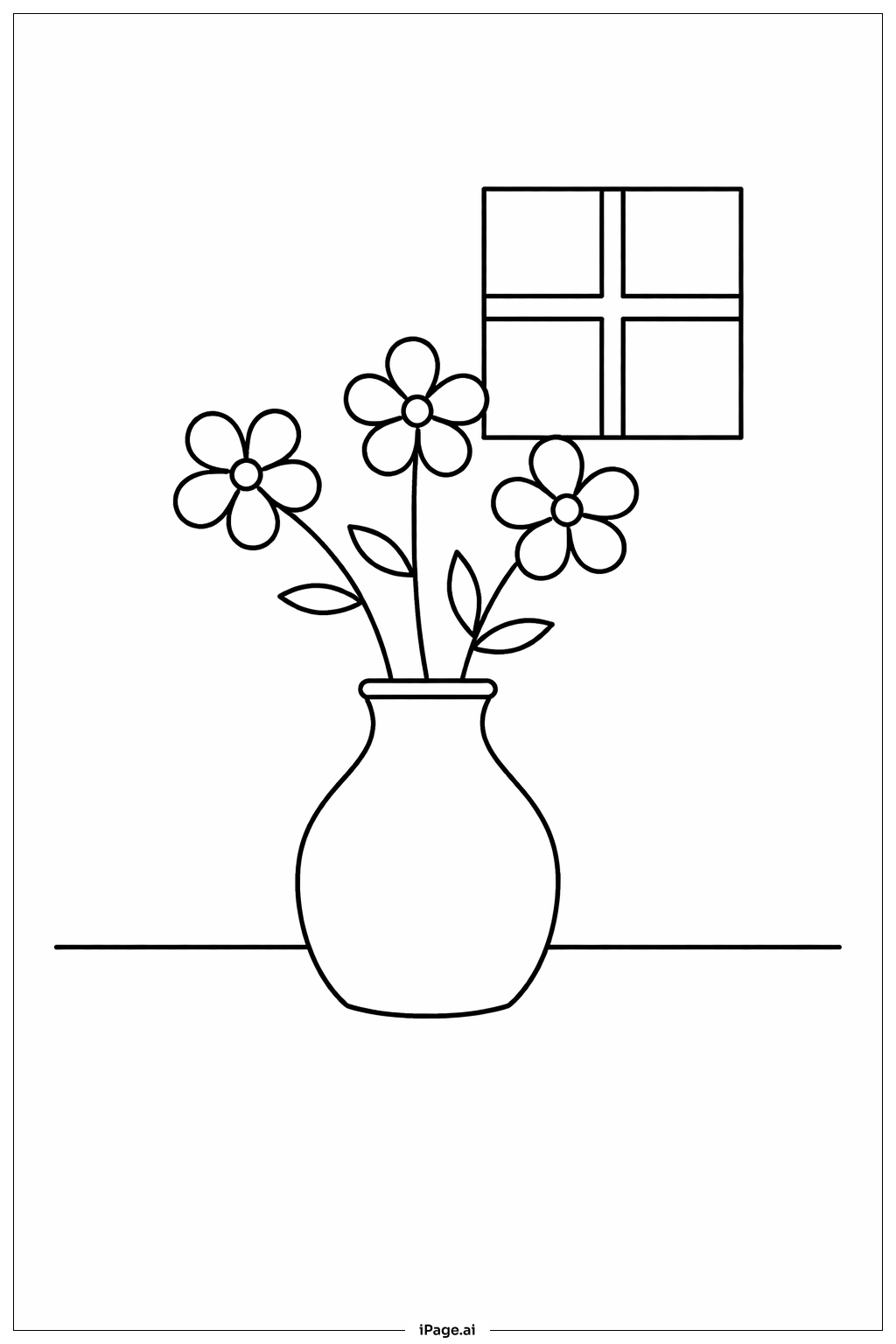
Coloring tips: How to color Vase And Flowers coloring page well?
Start with the vase by choosing soft colors like cream, pale blue, or lavender for the base, then use a contrasting color like red, pink, or purple for the heart decorations. For the flowers, create variety by using different colors for each bloom - try sunny yellows, vibrant oranges, cheerful pinks, bold reds, or soft purples. Color the flower centers with contrasting shades like brown, gold, or deep orange to make them pop. Use different shades of green for the leaves, mixing light and dark greens to add dimension. Consider adding shading around the edges of petals and leaves with darker tones of your chosen colors to create depth. You might also leave some areas lighter to suggest highlights where light hits the flowers and vase.
Coloring challenges: Which parts are difficult to color and need attention for Vase And Flowers coloring page?
• Petal Precision: The overlapping flower petals require careful attention to stay within the lines, especially where multiple petals meet at the flower centers. Young colorists may find it challenging to distinguish between adjacent petals and maintain color consistency within each individual petal without accidentally crossing into neighboring areas.
• Heart Pattern Details: The small heart shapes decorating the vase demand steady hand control and precision. These decorative elements are compact and require careful coloring to keep them neat and distinct from the vase background, which can be tricky for younger children still developing fine motor skills.
• Leaf and Stem Layering: The leaves and stems are positioned at various angles and overlap with both flowers and each other, creating complex intersections. Deciding which elements are in front and which are behind requires spatial awareness, and maintaining consistent coloring through these overlapping sections can be challenging.
• Color Coordination: With multiple flowers in the arrangement, choosing a harmonious color palette that makes each flower distinct yet cohesive requires some planning. Balancing warm and cool colors while ensuring the overall composition looks natural and pleasing takes thoughtful consideration.
• Maintaining Consistency: The repetitive nature of multiple flower petals means colorists must maintain consistent pressure and technique throughout to avoid some petals looking darker or lighter than others within the same flower, which requires sustained concentration and motor control.
Benefits of coloring books: Advantages of drawing Vase And Flowers coloring page
Coloring this floral vase design helps children develop fine motor skills and hand-eye coordination through the precise work of staying within petal boundaries and small decorative details. The variety of shapes and sizes encourages decision-making skills as young artists choose colors and plan their approach. This nature-themed image promotes an appreciation for flowers and beauty in everyday objects, potentially sparking interest in gardening or floral design. The repetitive petal patterns provide a calming, meditative experience that can reduce stress and improve focus. Completing this detailed image builds confidence and a sense of accomplishment. The subject matter is universally appealing and non-threatening, making it suitable for colorists of various ages and skill levels while offering enough complexity to remain engaging throughout the coloring process.