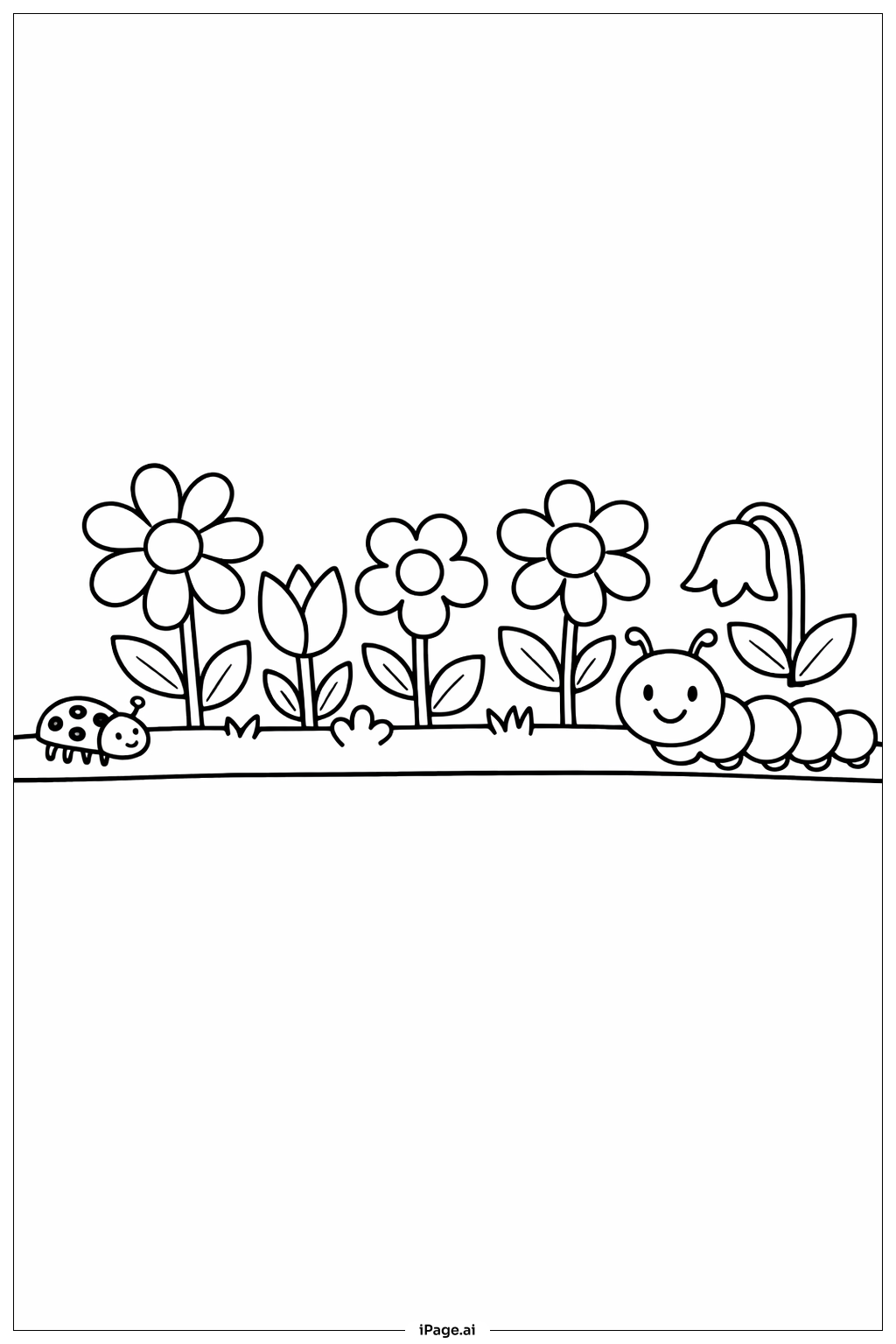
Coloring tips: How to color Garden Friends Flowers coloring page well?
Start with the flowers using bright, cheerful colors like yellow, pink, orange, and purple for the petals. Make each flower center a contrasting shade such as brown or dark yellow to help them stand out. Color the ladybug classic red with black spots, and give the snail a warm brown or tan shell with a lighter body. Use soft greens in varying shades for the leaves and grass to create depth. The butterflies can be as colorful as you like—try rainbow patterns, pastels, or matching them to the flowers. Keep the sky light blue with white or pale gray clouds. Don't forget to add green stems connecting the flowers to the ground, and consider using different shades of the same color to add dimension to larger areas.
Coloring challenges: Which parts are difficult to color and need attention for Garden Friends Flowers coloring page?
• Small Detailed Areas: The ladybug spots, butterfly wing patterns, and flower centers contain tiny spaces that require careful coloring to stay within the lines. Younger children may find these areas challenging and might need a fine-tipped crayon or marker for precision.
• Multiple Overlapping Elements: The composition features flowers, leaves, insects, and butterflies overlapping throughout the scene. Keeping track of which element is in front and choosing colors that make each part distinguishable from its neighbors requires planning and attention.
• Petal and Wing Symmetry: The flowers have multiple petals radiating from centers, and butterflies have symmetrical wings. Coloring each petal or wing section evenly while maintaining symmetry can be tricky, especially when trying to create matching patterns or gradients.
• Background and Foreground Balance: Deciding how to color the sky, clouds, and ground while ensuring the main characters and flowers remain the focal point requires thoughtful color choices. Too much contrast might make the background overwhelming, while too little might make everything blend together.
• Consistent Shading: Adding depth through shading or using multiple tones of the same color family across leaves, petals, and creature bodies requires understanding of light and shadow, which can be advanced for beginners.
Benefits of coloring books: Advantages of drawing Garden Friends Flowers coloring page
Coloring this garden scene helps children develop fine motor skills and hand-eye coordination as they navigate the various shapes and sizes of flowers, insects, and butterflies. The detailed elements encourage focus and concentration, building patience and attention span. Children learn about nature and garden ecosystems while identifying different flowers, insects, and their characteristics. Color recognition and decision-making skills grow as they choose harmonious palettes and experiment with combinations. The friendly characters create an emotional connection that makes the activity enjoyable and stress-relieving. Completing this detailed page builds confidence and provides a sense of accomplishment. The scene also sparks creativity and imagination, encouraging children to think about gardens, nature, and the relationships between plants and creatures. This coloring page offers a perfect balance of challenge and fun for various age groups.