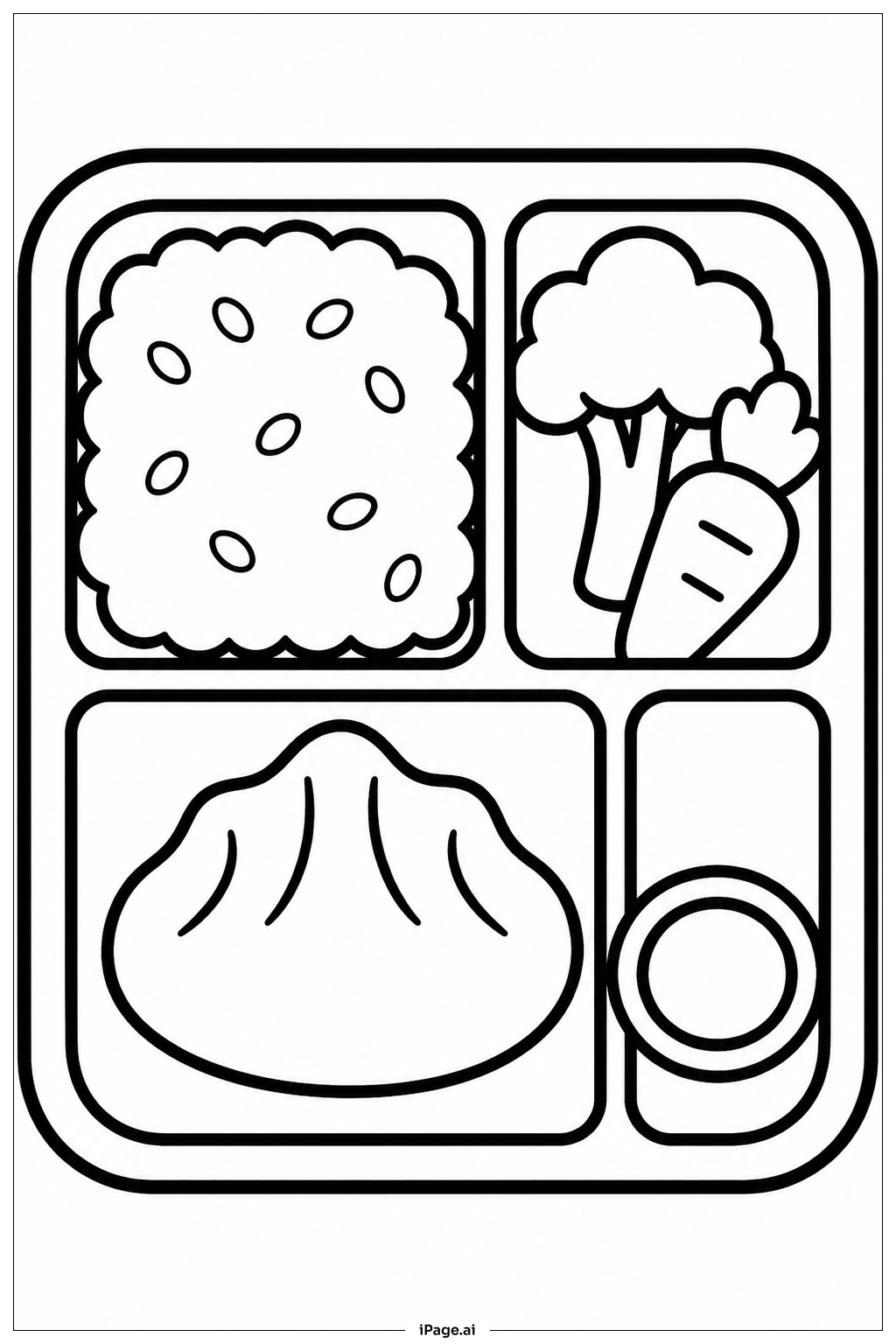
Coloring tips: How to color Dumpling In Bento Box coloring page well?
Start with the dumplings using warm, appetizing colors like pale yellow, cream, or light tan for the dumpling wrappers to create a realistic steamed appearance. Add gentle brown or golden shading along the pleated edges to give depth and make them look freshly cooked. For the bento box, consider traditional colors like red, black, or natural wood tones such as light brown. You could also choose bright, modern colors like blue or green for a playful look. If there are garnishes or vegetables, use vibrant greens for lettuce or herbs, and bright orange for carrots. Add subtle shadows underneath the dumplings using light gray or darker versions of your base colors to make them appear three-dimensional. Consider leaving small white highlights on the dumpling tops to suggest a glossy, freshly steamed surface. The background of the bento box interior could be a lighter shade to make the dumplings stand out prominently.
Coloring challenges: Which parts are difficult to color and need attention for Dumpling In Bento Box coloring page?
• Pleated Edge Details: The most challenging aspect of this coloring page is the intricate pleated folds on top of each dumpling. These delicate lines require careful attention to create realistic texture and depth. Children will need to use light and dark shades alternately on each pleat to show the folds clearly. Staying within the narrow spaces between pleats requires steady hand control and patience, making this an excellent fine motor skill exercise.
• Shading and Dimension: Creating a three-dimensional appearance for round dumplings can be tricky for young colorists. Understanding where to place highlights and shadows requires spatial reasoning. The curved surface of each dumpling needs gradual color transitions from light centers to slightly darker edges. This technique helps the dumplings look plump and realistic rather than flat.
• Consistent Color Application: Maintaining even color pressure across larger areas like the bento box requires practice. Children may struggle with keeping the color uniform without streaks or white patches. The smooth surfaces of the container contrast with the textured dumplings, requiring different coloring approaches within the same image.
• Small Decorative Elements: Any garnishes or small food items present detailed spaces that challenge precision coloring. These tiny areas require careful coloring to avoid going outside the lines while still achieving good color coverage and vibrancy.
Benefits of coloring books: Advantages of drawing Dumpling In Bento Box coloring page
Coloring this dumpling bento box image offers wonderful developmental benefits for children. The intricate pleated details on the dumplings help develop fine motor skills and hand-eye coordination as children carefully color within small spaces. This activity strengthens the small muscles in fingers and hands, which supports writing readiness and improves pencil control. The various shapes and sizes within the image encourage focus and concentration, helping children practice sustained attention on a single task. Choosing colors for different food elements promotes creativity and decision-making skills. Children learn about Asian cuisine and culture through this engaging activity, expanding their knowledge of different foods and traditions around the world. The satisfying nature of completing a detailed food illustration builds confidence and provides a sense of accomplishment. Coloring the realistic food items can also spark conversations about healthy eating, cooking, and family meals, making it both an artistic and educational experience that brings joy and learning together.