Coloring tips: How to color Black History Month Child Building Blocks coloring page well?
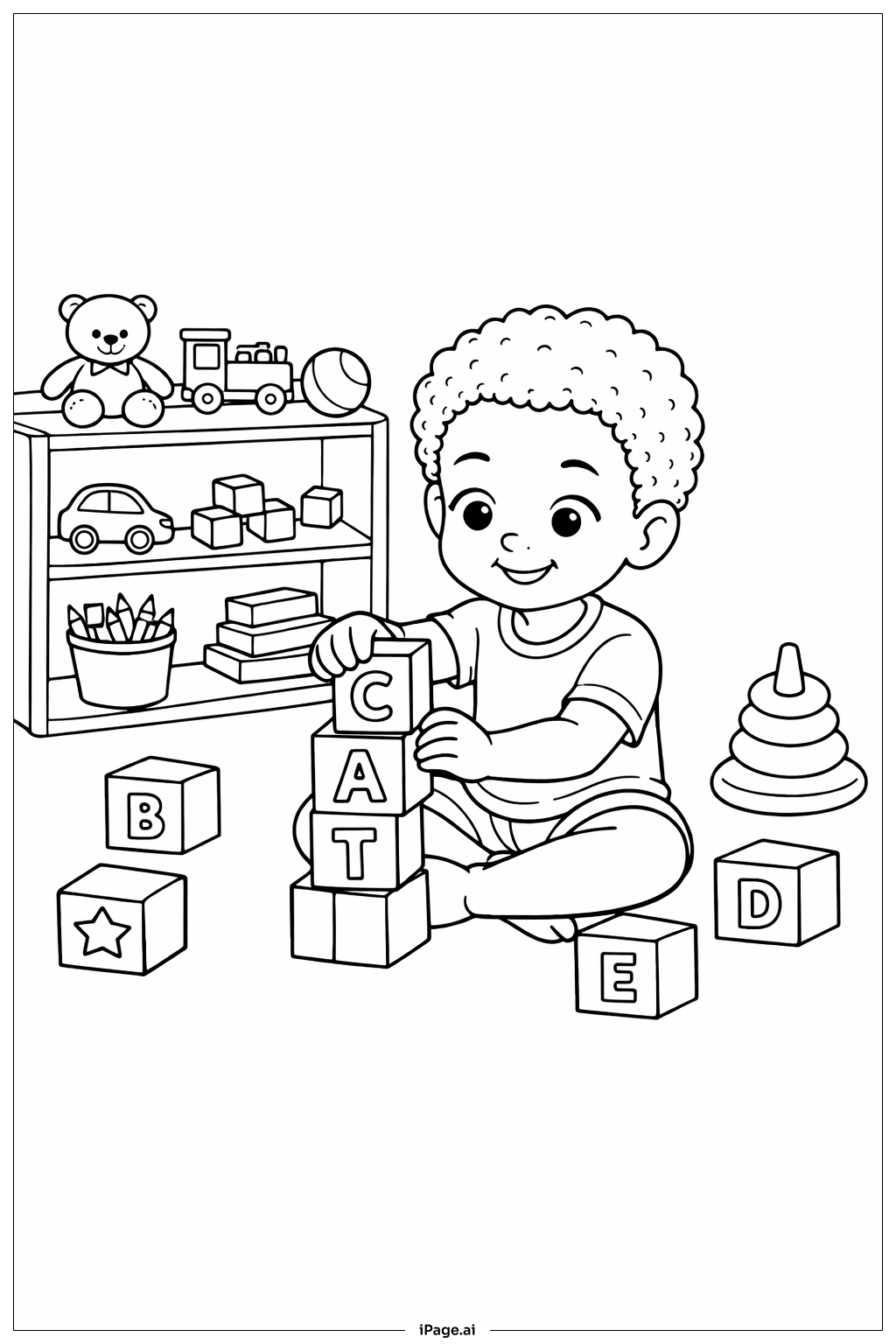
Start with the child's skin using warm browns, tans, or rich caramel tones. For the hair, try deep browns or blacks with highlights to show texture and volume. The shirt can be any bright color like red, blue, yellow, or green. Make the building blocks colorful and varied - use primary colors like red, blue, and yellow mixed with secondary colors like orange, purple, and green to create visual interest. Consider using different shades for each block to make them stand out individually. Add light pink or peach for the lips and palms. Use darker shades around the edges of the hair puffs to create depth and dimension. Keep the background simple with a light color or leave it white to make the child and blocks pop.
Coloring challenges: Which parts are difficult to color and need attention for Black History Month Child Building Blocks coloring page?
• Hair Texture Details: The curly hair puffs contain many small curved lines that represent individual curls and texture. Coloring these areas requires patience and careful attention to stay within the lines. Young colorists may find it challenging to color each curl section without the colors bleeding together, but this is an excellent opportunity to practice fine motor control.
• Multiple Building Blocks: The image contains several building blocks scattered around the child, each with distinct faces and letters. Keeping track of which blocks have been colored and maintaining consistent color schemes can be tricky. Children need to plan their color choices carefully to ensure the blocks look different from each other and create a balanced, appealing composition.
• Hand and Finger Positioning: The child's hands are positioned reaching toward the blocks, with fingers slightly curved and overlapping with the blocks themselves. These small areas between fingers and around the hands require precision coloring, especially for younger children still developing their hand-eye coordination. Using thin crayons or colored pencils can help with these detailed sections.
• Facial Features: The child's smiling face includes details like eyes, nose, mouth, and facial contours that need careful coloring to maintain the joyful expression. Staying within the lines of the smile and eyes while adding appropriate skin tone shading requires concentration and steady hands.
Benefits of coloring books: Advantages of drawing Black History Month Child Building Blocks coloring page
Coloring this image helps children develop fine motor skills and hand-eye coordination through detailed work on the hair texture and small building blocks. It encourages color recognition and planning as they decide which colors to use for each block and clothing item. This coloring page also promotes cultural awareness and celebrates diversity during Black History Month, helping children appreciate different backgrounds and experiences. The building blocks theme reinforces early learning concepts like letters and shapes. Working on the intricate hair details builds patience and concentration. Completing this page gives children a sense of accomplishment while teaching them about the importance of education and growth in all communities. It's a wonderful way to combine creative expression with meaningful cultural celebration.