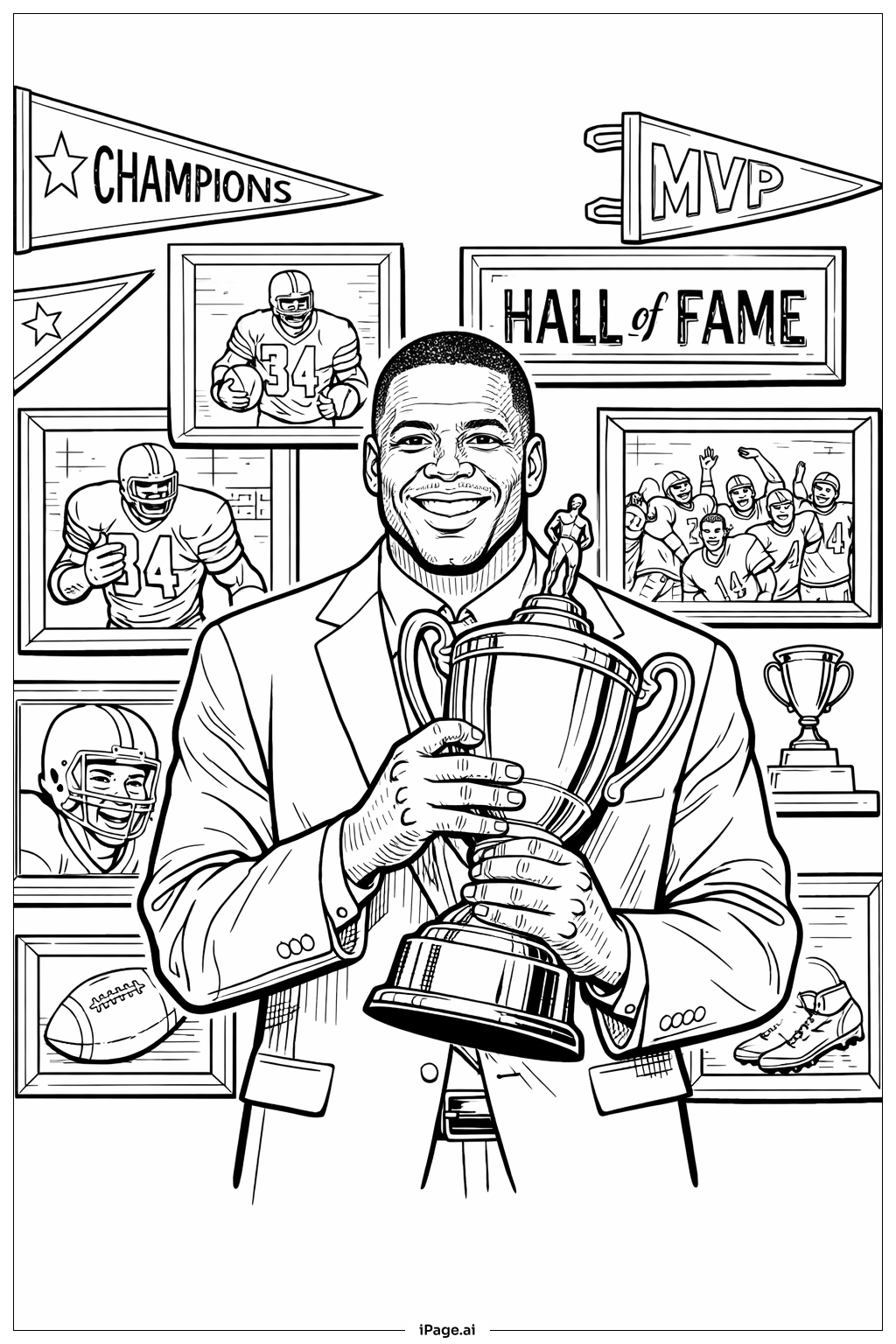
Coloring tips: How to color Black History Month Athlete With Trophy coloring page well?
Start with the athlete's skin tone using browns, ranging from light tan to deep mahogany. For the sports uniform, consider vibrant team colors like red, blue, green, or purple with white accents. The trophy can be colored gold or silver with metallic yellow and gray shades to create shine. Add highlights using lighter yellows or white to make the trophy gleam. The medal can be bronze, silver, or gold depending on your preference. Use darker shades around the edges of clothing and trophy details to add depth. For the background, keep it simple with light blue or soft pastels so the athlete remains the focal point. Encourage children to think about their favorite sports teams when choosing colors, making the page personally meaningful while celebrating athletic achievement.
Coloring challenges: Which parts are difficult to color and need attention for Black History Month Athlete With Trophy coloring page?
• Facial Features and Expression: The athlete's face requires careful attention to capture the joyful, triumphant expression. Children may find it challenging to color around the eyes, nose, and mouth while maintaining the emotion. Staying within the lines of facial details demands patience and fine motor control, especially for younger colorists.
• Trophy Details and Metallic Shine: The trophy contains multiple elements including handles, base, and decorative features that require different shading techniques. Creating a realistic metallic appearance is challenging, as it involves using multiple shades of gold or silver and adding strategic highlights. Children must understand where light would naturally hit the surface to make the trophy look three-dimensional and shiny.
• Uniform Folds and Shadows: The athlete's clothing has natural folds and creases that need darker shading to appear realistic. Identifying where shadows should fall and applying graduated color intensity requires spatial awareness. Younger children may struggle with this concept and might color the entire uniform one flat shade.
• Medal Ribbon and Layering: The medal hanging around the athlete's neck involves overlapping elements where the ribbon crosses in front of the body. Distinguishing these layers and using appropriate colors for the ribbon versus the medal requires careful observation. The ribbon's texture and the way it drapes also present coloring challenges.
• Proportions and Consistency: Maintaining consistent pressure and color saturation across larger areas like the uniform while keeping detailed areas crisp demands concentration. Children must also manage their coloring tools effectively to avoid smudging or bleeding between different sections of the image.
Benefits of coloring books: Advantages of drawing Black History Month Athlete With Trophy coloring page
Coloring this empowering image offers numerous developmental and educational benefits. It helps children improve fine motor skills and hand-eye coordination through detailed work on facial features, trophy elements, and clothing. The page introduces important conversations about Black History Month, celebrating the achievements of Black athletes throughout history and promoting cultural awareness and diversity appreciation. Children learn about perseverance, dedication, and the rewards of hard work as they engage with this victory scene. The activity encourages focus and patience, especially when working on challenging areas like the trophy's metallic shine or facial expressions. It also boosts self-esteem as children complete a meaningful project that honors excellence and achievement. Additionally, this coloring page provides opportunities for parents and educators to discuss inspiring athletes like Jesse Owens, Jackie Robinson, Serena Williams, and Muhammad Ali, connecting art with history and positive role models.