Coloring tips: How to color Black History Month Community Garden Scene coloring page well?
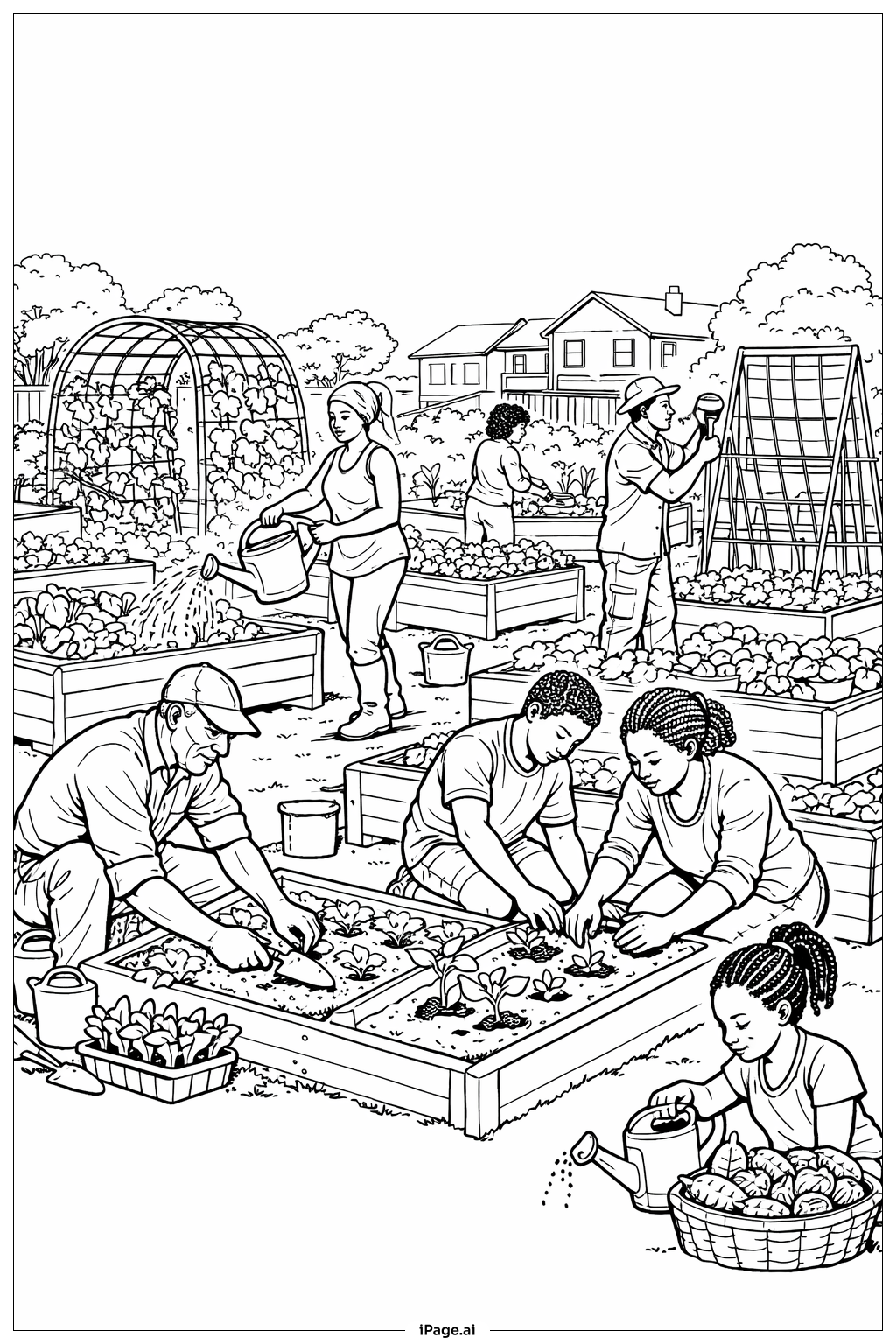
Start with skin tones using browns, tans, and warm beiges to represent the diverse community members. For clothing, choose vibrant colors like reds, yellows, purples, and greens to reflect joy and celebration. Color the raised garden beds in natural wood tones like browns or grays. Fill the plants with various shades of green, from light lime to deep forest green. Add pops of color to vegetables—bright red tomatoes, orange carrots, and purple eggplants. Use yellows, pinks, and oranges for flowers scattered throughout the garden. The background fence can be white, tan, or light gray, while climbing vines should be rich green. Color the sky a soft blue with hints of white for clouds. Ground areas can be brown earth tones mixed with green grass patches. This creates a lively, welcoming community space.
Coloring challenges: Which parts are difficult to color and need attention for Black History Month Community Garden Scene coloring page?
• Multiple Human Figures: The scene contains several people in different positions and poses, each requiring careful attention to skin tones, clothing, and facial features. Maintaining consistency in skin tone across multiple figures while showing natural variation can be challenging. Children need to work carefully around the detailed outlines of hands, arms, and bodies in various positions.
• Dense Garden Elements: The image includes numerous overlapping plants, vegetables, flowers, and leaves throughout the garden beds. Distinguishing between different plant types and keeping colors organized requires patience and planning. The layered vegetation creates many small spaces that need precise coloring to avoid bleeding between sections.
• Raised Bed Structures: The geometric patterns of the raised garden beds, including wooden planks or boards, require steady hands to color within straight lines. Creating a wood grain effect or maintaining consistent shading on the three-dimensional box structures adds complexity for younger colorists.
• Background Details: The fence, climbing vines, trees, and distant elements require depth perception through color choices. Lighter colors for background elements and darker colors for foreground items help create dimension. The intricate vine patterns on the fence demand careful attention to thin, winding lines.
• Tools and Small Objects: Garden tools like watering cans, shovels, rakes, and small containers scattered throughout the scene contain fine details and curved surfaces that need shading to appear realistic and three-dimensional.
Benefits of coloring books: Advantages of drawing Black History Month Community Garden Scene coloring page
Coloring this Black History Month Community Garden Scene offers wonderful educational and developmental benefits. Children learn about community cooperation, gardening, and the historical significance of agricultural contributions by Black Americans to food movements. The scene promotes cultural awareness and appreciation while celebrating diversity. Working with multiple human figures helps develop skills in representing different skin tones respectfully and accurately. The variety of plants and vegetables introduces children to healthy foods and nature appreciation. Fine motor skills improve through careful coloring of detailed garden elements, small tools, and intricate plant leaves. The scene encourages patience and planning as children decide color schemes for clothing, plants, and structures. It also provides opportunities to discuss important topics like community building, environmental stewardship, and food justice. This coloring page combines artistic expression with meaningful cultural education, making it both fun and enriching.