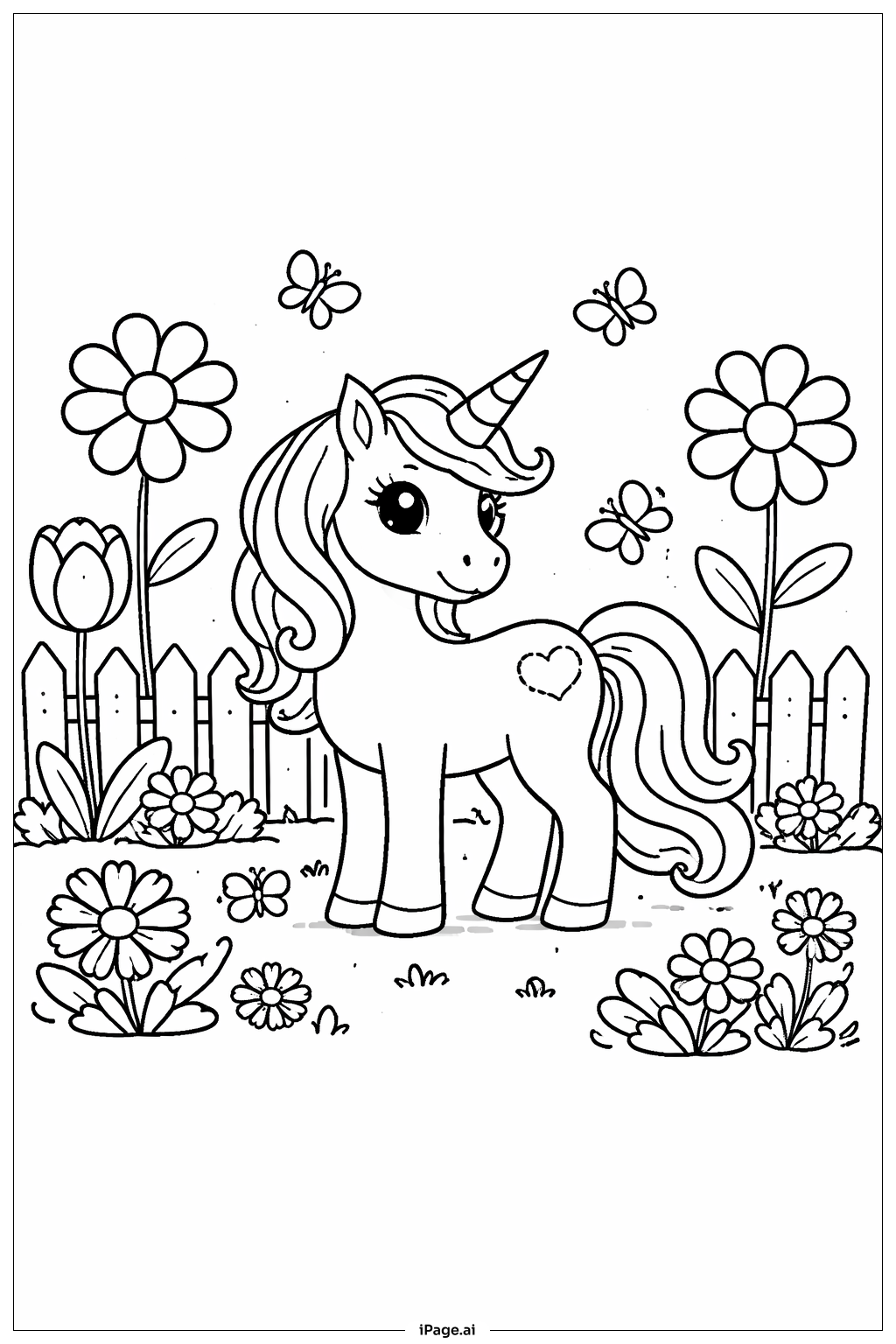
Coloring tips: How to color Unicorn In Flower Garden coloring page well?
Use bright and cheerful colors for the flowers, such as red, yellow, pink, and purple. The unicorn can be painted with soft pastel colors like light pink, lavender, or baby blue for a magical feel. Color the mane and tail in a rainbow pattern or soft shades of different colors to make them look lively. Butterflies can be colorful with spots or stripes to make them stand out. For the fence, use brown or white colors to keep it simple and natural. The grass can be various shades of green to show depth. Don't forget to add a little color to the heart on the unicorn's side to make it special and eye-catching.
Coloring challenges: Which parts are difficult to color and need attention for Unicorn In Flower Garden coloring page?
1. Coloring the unicorn’s mane and tail can be tricky because of the flowing, curved lines. It needs careful coloring to keep the colors neat and clean inside the lines. 2. The small butterflies have tiny wings and details that require precise coloring. Young children might find it hard to stay inside the small shapes. 3. The many flowers in different sizes and shapes need attention to keep each one distinct and neat. This can be challenging to do with many colors without mixing them up. 4. The grass patches and small details on the ground also need delicate coloring to avoid smudging colors onto other parts. 5. The picket fence has thin lines and small spaces that require careful coloring to keep the natural look without making a mess.
Benefits of coloring books: Advantages of drawing Unicorn In Flower Garden coloring page
Coloring this picture helps improve fine motor skills as kids have to carefully color small areas like the butterflies and flowers. It encourages creativity by choosing and mixing colors for the unicorn’s mane and the garden. Coloring a magical unicorn in a happy flower garden can also make children feel calm and joyful. It promotes focus and patience as children need to stay within the lines. Finally, it helps develop color recognition and coordination as kids use different shades and hues for various parts of the picture.