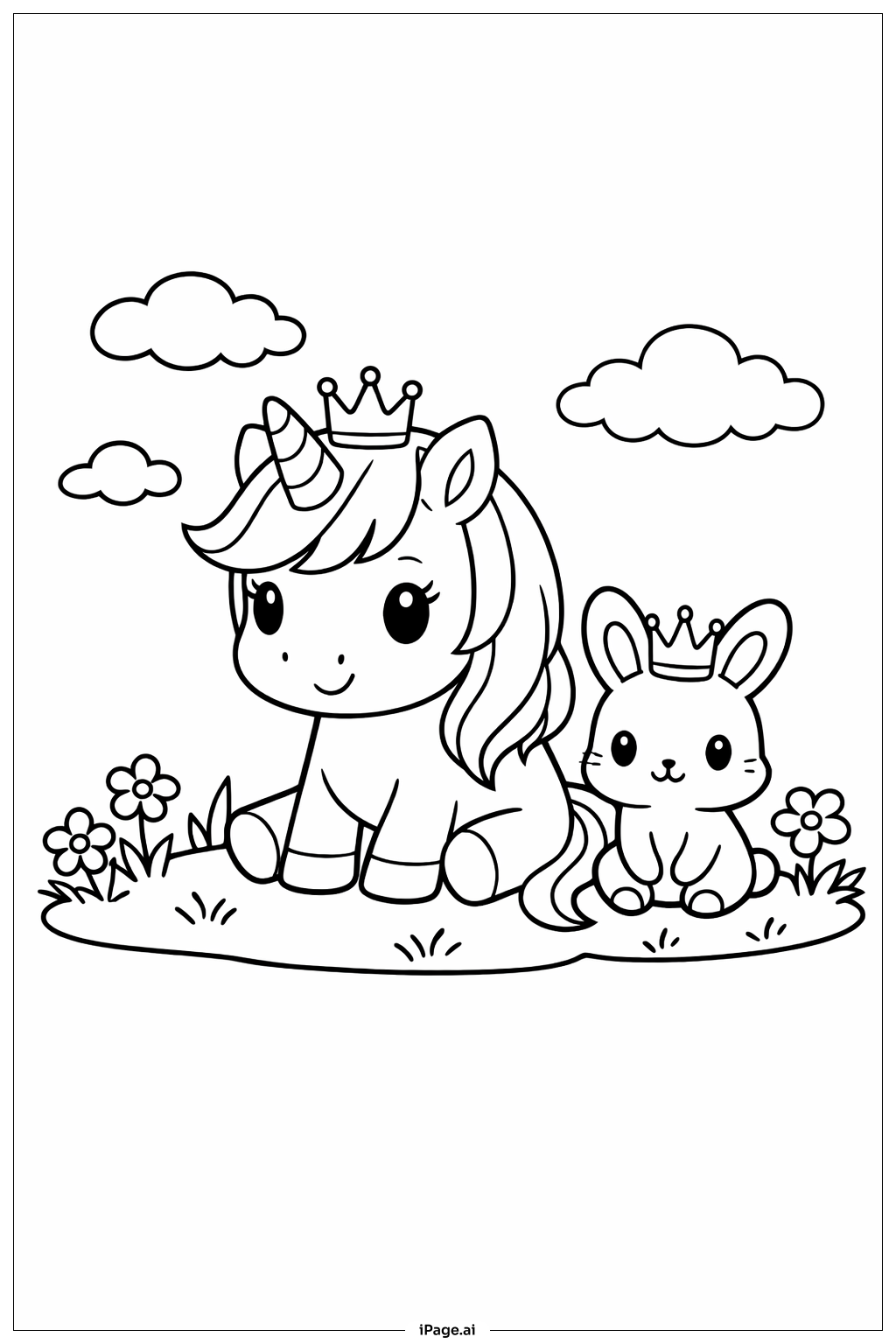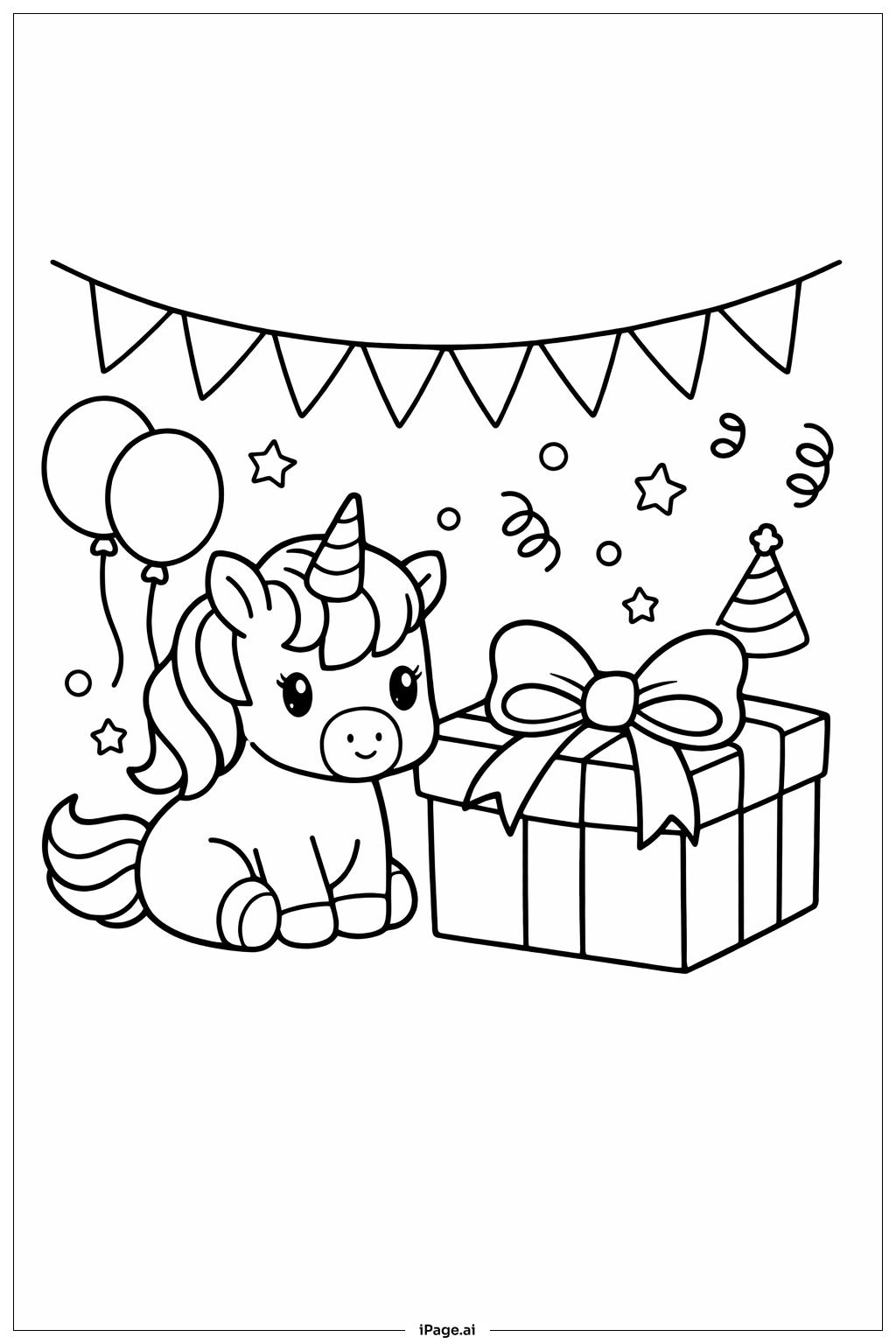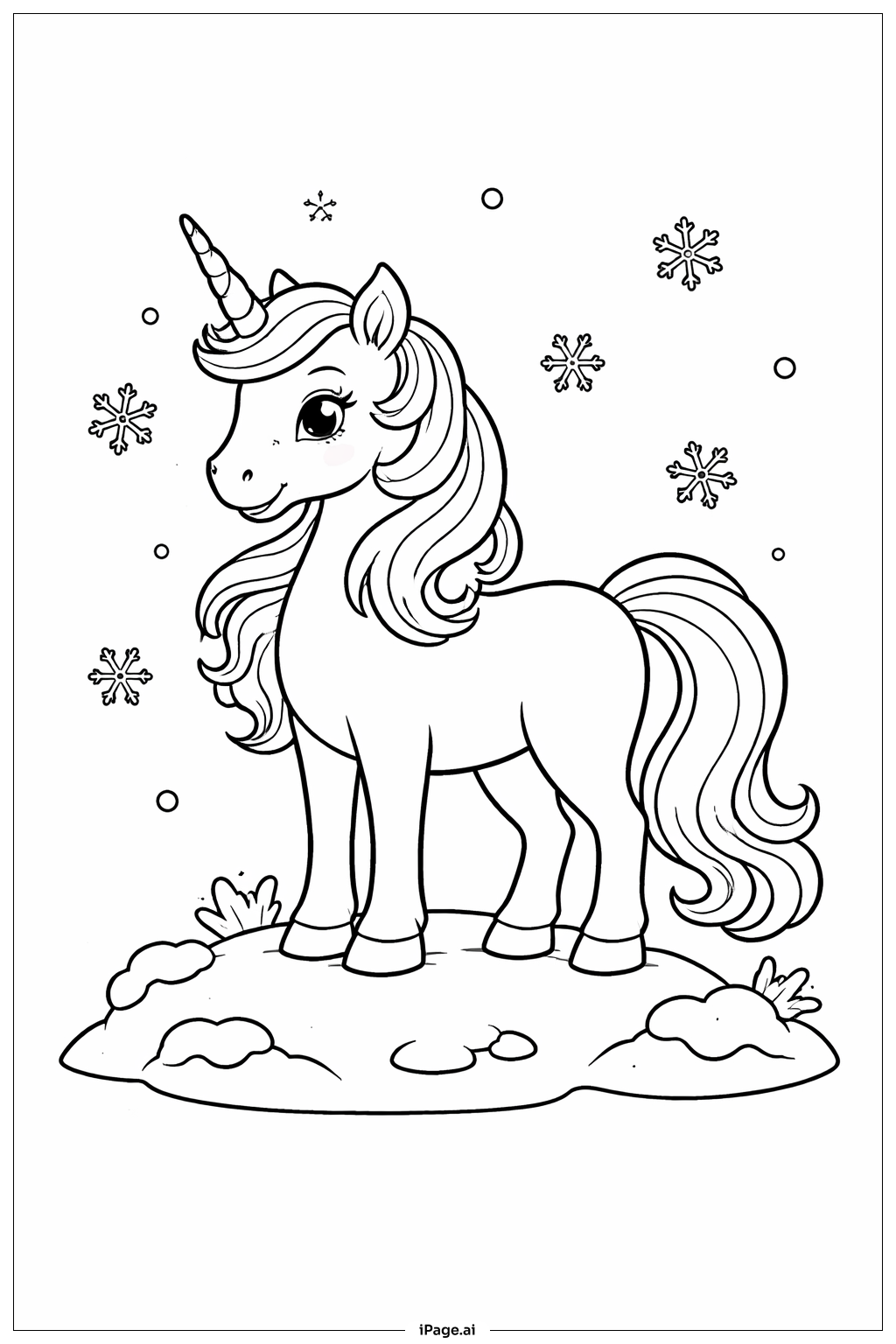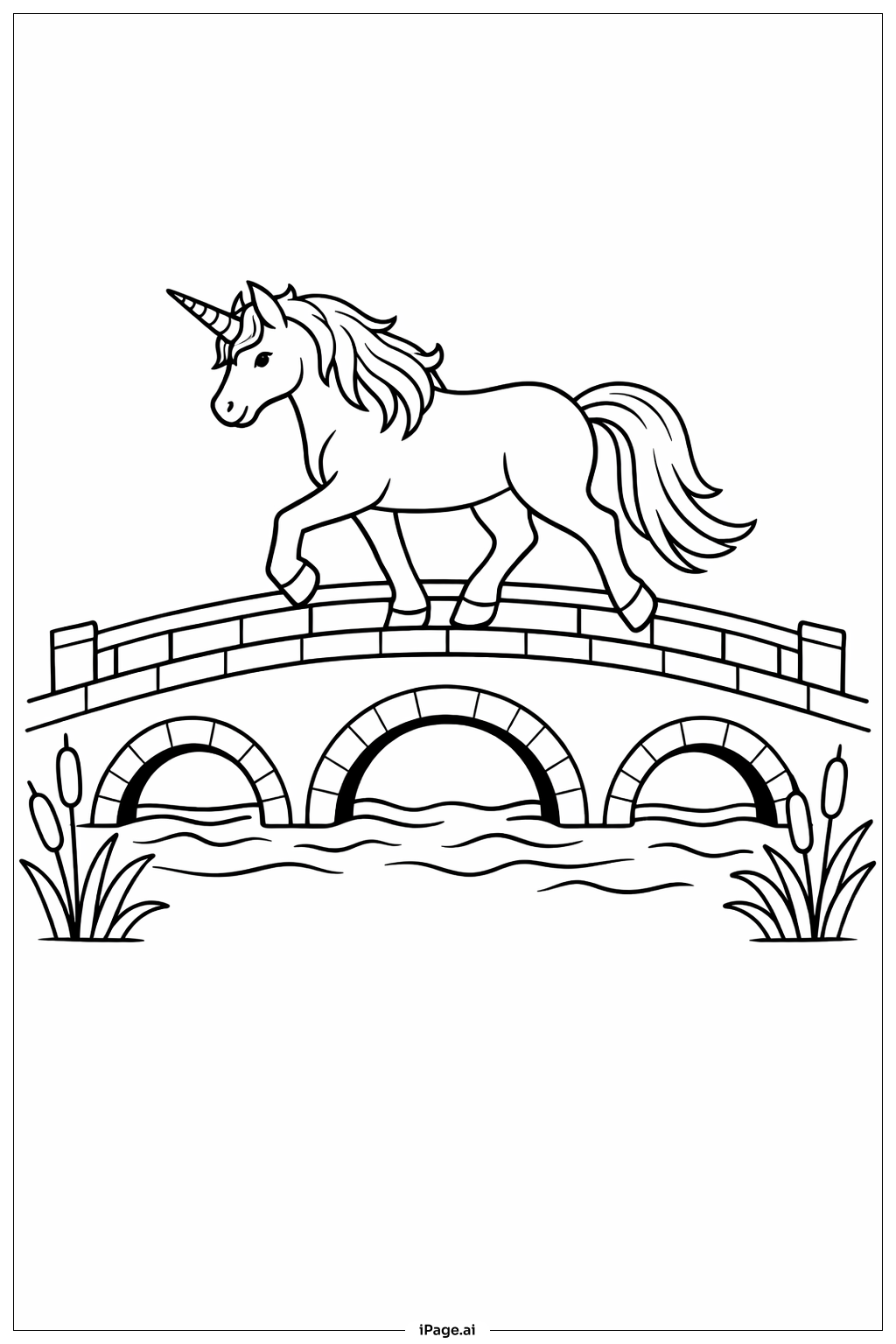
Coloring tips: How to color Unicorn On Bridge coloring page well?
Start with the unicorn's body using soft, light colors like white, cream, or pale pink to keep it looking magical. Use shimmering colors — lavender, sky blue, or rose gold — for the mane and tail to add a fantasy feel. Color the horn with gold or yellow, blending in a little orange at the base for depth. For the wooden bridge, use warm browns and tans. Add darker brown lines along the planks to show wood grain. Paint the water below in light blue or teal, with white highlights for ripples. Use greens for the trees and bushes in the background. Make the lily pads bright green and add tiny pink or white flowers on the water. Feel free to add sparkles or rainbow streaks around the unicorn's horn to make the scene feel extra enchanting!
Coloring challenges: Which parts are difficult to color and need attention for Unicorn On Bridge coloring page?
• Unicorn Mane and Tail Flow: The mane and tail have many overlapping, curving strands. Staying inside each individual strand without smudging neighboring sections can be tricky. Use a fine-tipped marker or a sharpened colored pencil to carefully outline each wave before filling it in with your chosen colors.
• Horn Gradient and Shine: The spiraling horn requires a smooth color transition from a deeper shade at the base to a bright, shiny tip. Blending two or three shades of gold or yellow evenly along a narrow, tapered shape is challenging, especially for younger colorists. Work slowly from dark to light in small strokes.
• Bridge Wood Texture: The bridge planks need realistic wood grain to look convincing. Adding thin, slightly uneven lines in a darker shade over the base brown color creates the texture effect, but keeping those lines neat and consistent across every plank takes patience and a steady hand.
• Water Reflections: The stream beneath the bridge calls for layered, translucent-looking colors to suggest depth and movement. Capturing the look of gentle ripples means blending light and slightly darker blues in curved strokes, which can be difficult without the colors turning muddy.
• Background Foliage Depth: The trees and bushes in the background have many overlapping leaves and branches. Using at least two or three shades of green — light, medium, and dark — helps create a sense of depth, but deciding where each shade begins and ends requires careful observation and planning before you start coloring.
Benefits of coloring books: Advantages of drawing Unicorn On Bridge coloring page
Coloring this unicorn on a bridge scene offers many wonderful benefits for kids and beginners alike. First, it builds fine motor skills. Carefully filling in the unicorn's flowing mane, the narrow horn, and the detailed bridge planks trains the hand muscles and improves pencil control. Second, it encourages creativity. There is no single correct color for a magical unicorn, so children are free to experiment with any combination they love, building confidence in their own artistic choices. Third, it supports focus and patience. This image has many small details — rippling water, wood grain, tiny flowers — that require slow, careful attention, which is great practice for concentration. Fourth, it sparks imagination. The fairy-tale setting naturally invites storytelling. Children may imagine where the unicorn is going or what magical world lies beyond the bridge, which nurtures creative thinking and language development. Finally, coloring is calming. The quiet, repetitive motion of filling in shapes reduces stress and provides a relaxing screen-free activity that kids and Adults can enjoy together.