Coloring tips: How to color Turtle Near Lighthouse coloring page well?
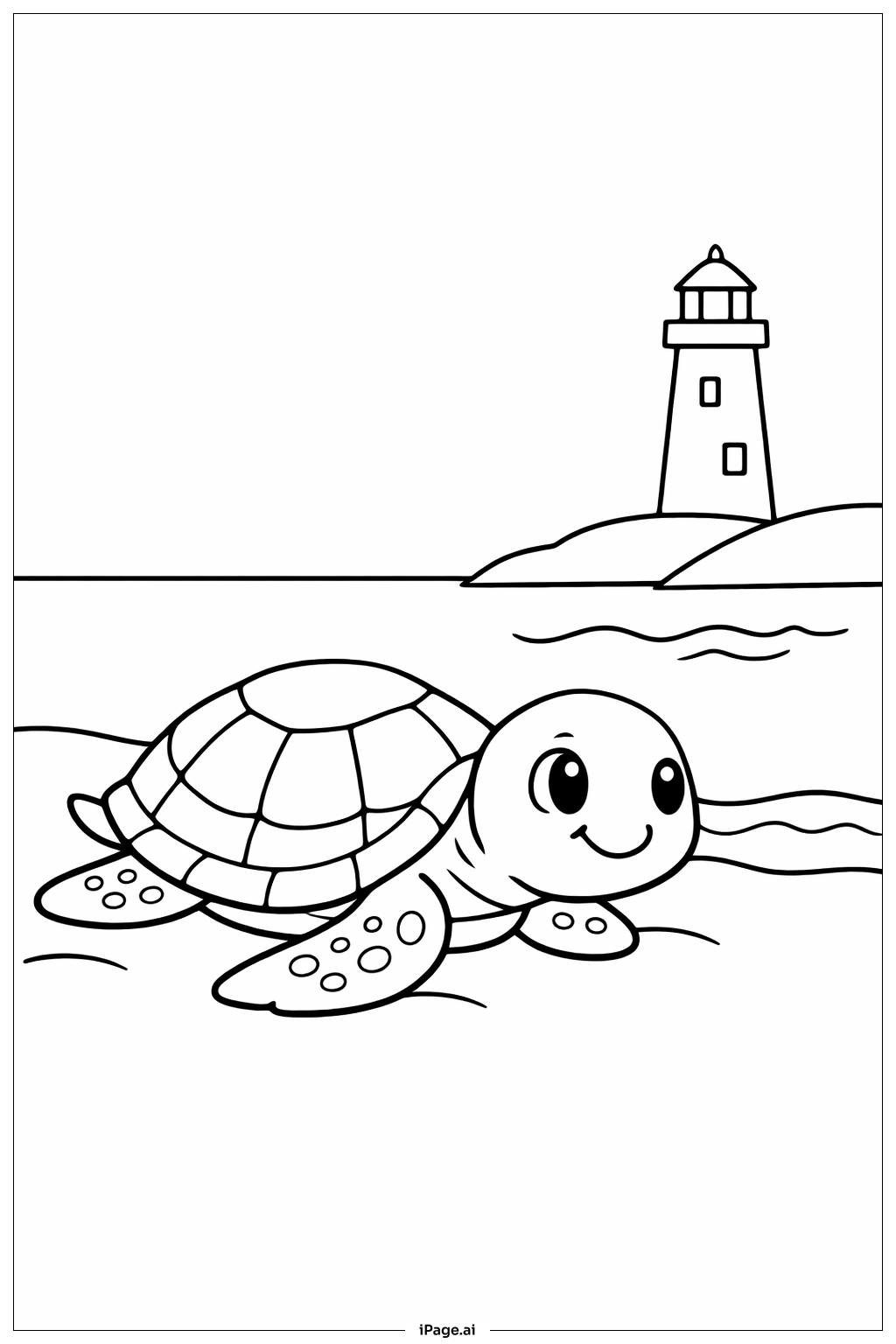
Start with the turtle's shell using shades of green and brown. Use darker tones like olive or forest green for the individual plates, and a lighter yellow-green for the edges. Color the turtle's body and flippers with a soft greenish-gray to give it a natural ocean look. For the lighthouse, try classic red and white stripes on the tower. Use a warm yellow or orange for the glowing light at the top. Color the rocks in shades of gray and brown, and add some blue-gray shadows to make them look solid. Paint the ocean using light and medium blues, adding touches of white to show the foam on the waves. Color the sky with a soft blue, and use light gray or white for the seagulls. Feel free to mix colors and create your own unique version of this peaceful ocean scene.
Coloring challenges: Which parts are difficult to color and need attention for Turtle Near Lighthouse coloring page?
• Turtle Shell Patterns: The turtle's shell is made up of many small, irregular sections called scutes. Coloring each one neatly without going over the lines takes steady hands and patience. Using a fine-tipped colored pencil or marker will help you stay inside the edges and make each section look clean and detailed.
• Lighthouse Stripes: The lighthouse has alternating stripes that wrap around a curved surface. Keeping the stripes even and staying within the curved outlines can be tricky. Work slowly from top to bottom and use a ruler or steady finger as a guide to keep each stripe consistent in width.
• Ocean Waves and Water Texture: The waves in the scene overlap and flow in different directions. Blending multiple shades of blue to create depth and movement requires careful layering. Try using lighter blue at the surface and darker blue in the deeper areas to give the water a realistic and lively feel.
• Rocks and Shadows: The rocks around the lighthouse base have uneven edges and bumpy surfaces. Adding shadows with darker gray or brown tones makes them look three-dimensional. It can be hard to decide where to place shadows, so look at where the lightest part would be and work outward from there.
• Small Background Details: The seagulls in the sky and the small waves in the background are tiny and require careful coloring with a fine tip. Rushing through these small details can cause smudging or color bleeding, so take your time and use a light hand.
Benefits of coloring books: Advantages of drawing Turtle Near Lighthouse coloring page
Coloring this Turtle Near Lighthouse scene offers a wonderful mix of fun and learning for kids of all ages. Here are some of the great benefits:
Builds focus and patience. Carefully coloring the turtle's detailed shell and the lighthouse stripes helps children practice staying on task and working slowly and carefully.
Encourages creativity. Choosing colors for the ocean, sky, and animals lets children express their imagination. There is no single right answer, so every child creates a unique piece of art.
Develops fine motor skills. Holding colored pencils or markers and filling in small, detailed areas strengthens hand muscles and improves hand-eye coordination, which is important for writing and other daily activities.
Introduces nature and science. This scene features a real sea creature and a real coastal structure. Coloring it can spark curiosity about marine life, ocean habitats, and how lighthouses work.
Promotes relaxation and calm. The peaceful ocean setting naturally creates a soothing atmosphere. Coloring can help children wind down, reduce stress, and feel a sense of calm after a busy day.
Builds confidence. Finishing a detailed coloring page gives children a real sense of accomplishment and pride in their own work.