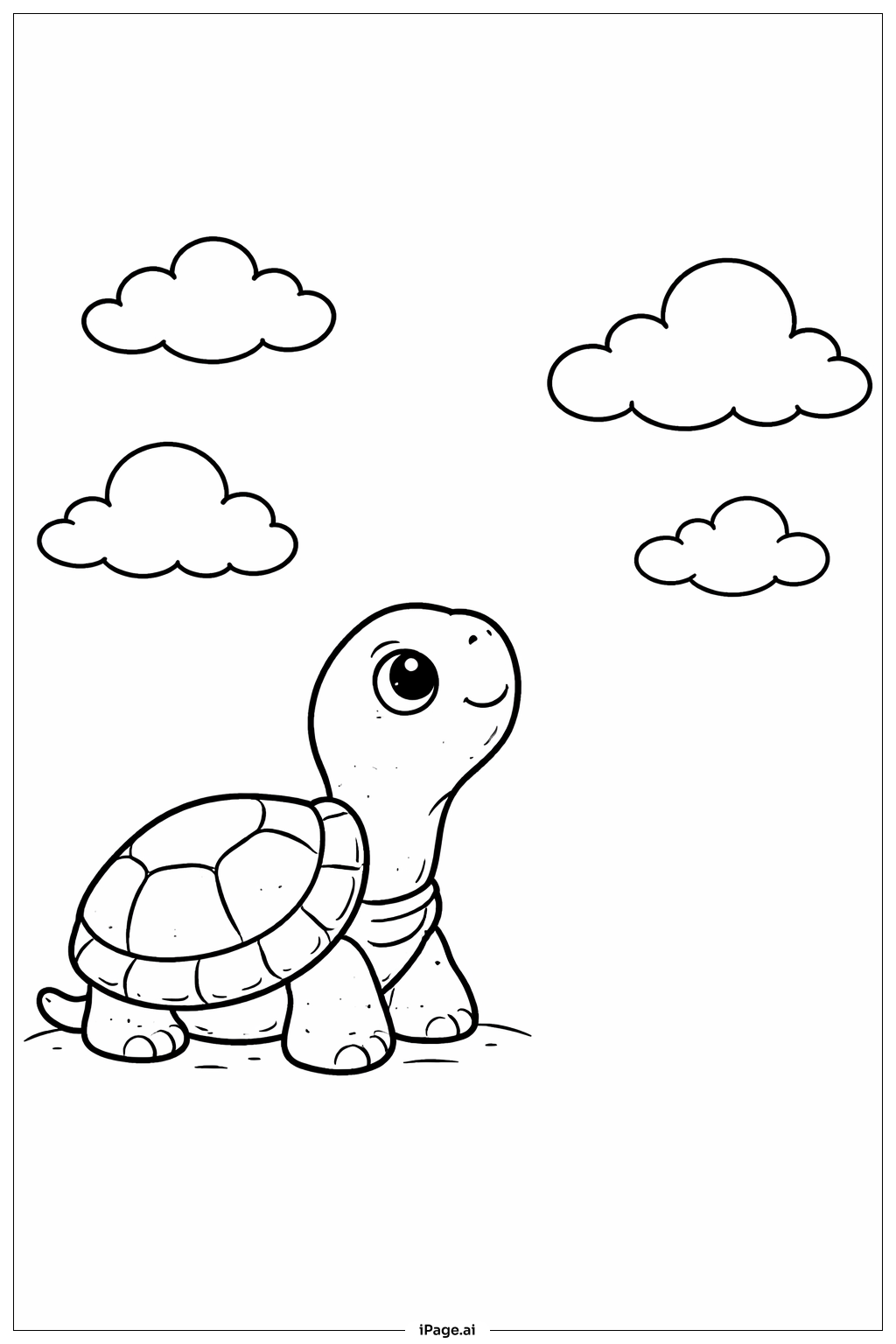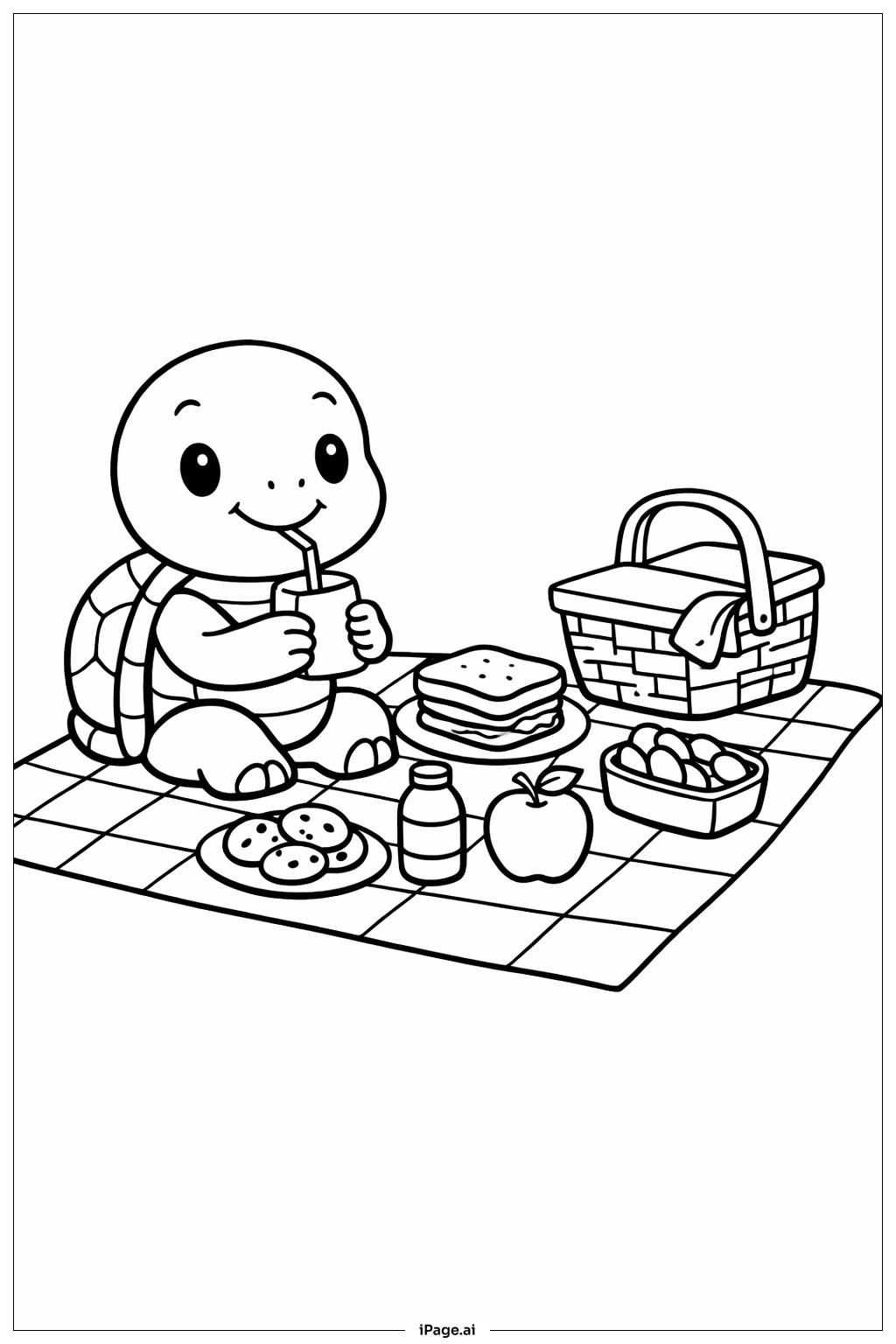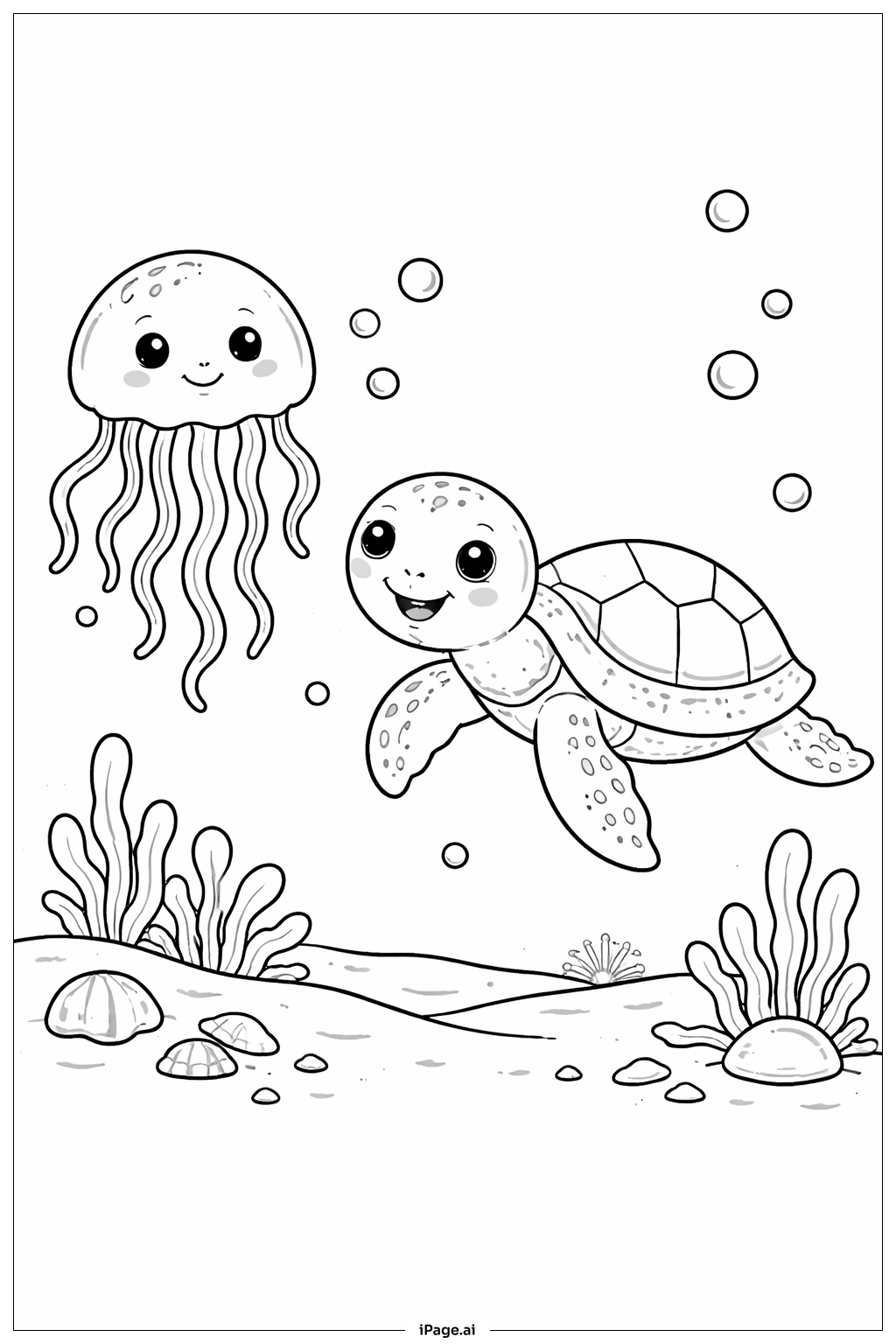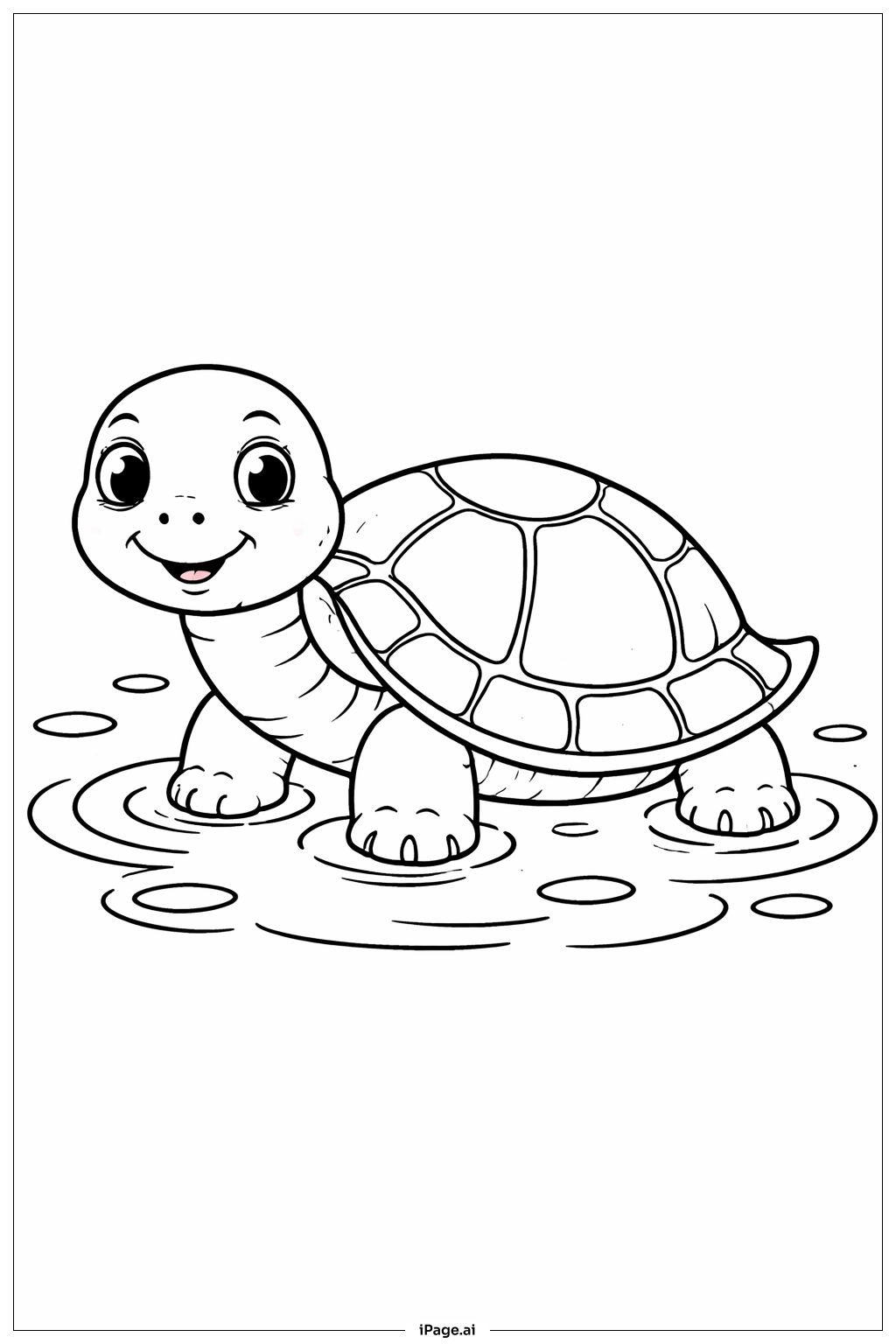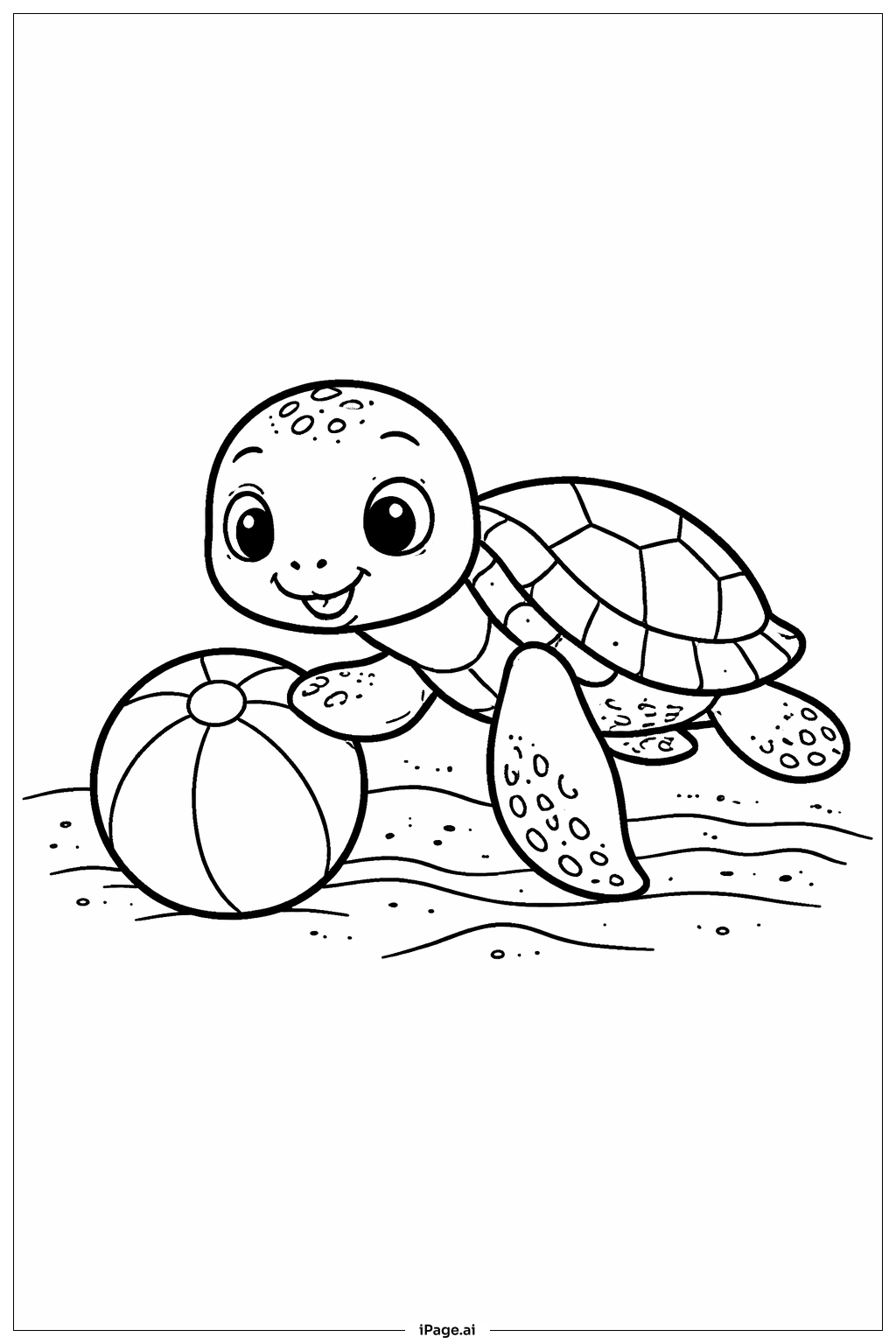
Coloring tips: How to color Turtle Playing With Ball coloring page well?
Start with the turtle's shell. Use shades of green such as olive, forest green, and lime to fill in the hexagonal sections. You can make each section a slightly different shade to give the shell depth and texture. Use a darker green or brown for the outlines between sections. Color the turtle's body and legs with a medium green or teal. Add a lighter tone on the belly area to show softness. For the face, use a warm skin-toned green and add pink or peach to the cheeks to make it look cute and friendly. The ball can be any color you like — try a bright red, blue, or yellow to make it pop against the green turtle. You can even give the ball stripes or spots for extra fun. Keep the background light or leave it white so the turtle stands out. Use colored pencils or crayons for smooth, even coverage on the large shell sections.
Coloring challenges: Which parts are difficult to color and need attention for Turtle Playing With Ball coloring page?
• Shell Pattern Complexity: The turtle's shell is covered in hexagonal sections arranged in a mosaic pattern. Staying inside the lines of each small section requires steady hands and patience. Using a fine-tipped tool first to outline each cell before filling it in can help keep colors neat and separate.
• Consistent Color Shading: Giving the shell a three-dimensional look means using multiple shades of green within each hexagonal panel. Blending light and dark tones smoothly without leaving streaks or patches can be tricky, especially for younger colorists who are still developing their blending skills.
• Small Facial Details: The turtle's face includes tiny features like eyes, a smile, and cheek details. These areas are very small and require careful, controlled coloring. Using a sharpened pencil or a thin marker will help you stay precise and avoid coloring over the lines.
• Leg and Body Transitions: Where the turtle's legs meet the shell and body, the shapes curve and overlap. Deciding where one color ends and another begins in these transition zones can be confusing. Looking at the overall shape before coloring helps you plan a natural-looking gradient.
• Ball Surface Detail: If the ball has curved lines or panels on it, coloring them to suggest a round, three-dimensional shape takes practice. Using a slightly darker shade on one side and a lighter shade on the other can create the illusion of depth and make the ball look realistic and fun.
Benefits of coloring books: Advantages of drawing Turtle Playing With Ball coloring page
Coloring this fun turtle image offers many great benefits for kids and beginners alike. First, it helps build fine motor skills. Carefully coloring inside the lines of the shell's small hexagonal shapes trains hand control and steady movement. This is great practice for writing and drawing.
Second, it encourages creativity. Choosing colors for the turtle's shell, body, and ball lets kids express themselves freely. There are no wrong color choices, which builds confidence.
Third, it teaches patience and focus. Working through the detailed shell pattern one section at a time helps children slow down and concentrate. This kind of focused activity is a great way to practice attention skills in a relaxed setting.
Fourth, coloring is calming. The simple, repetitive motion of filling in shapes can reduce stress and create a sense of peace. It is a healthy screen-free activity that helps kids unwind after a busy day.
Finally, completing the image gives a real sense of achievement. Seeing the finished, colorful turtle is rewarding and encourages kids to keep creating. It is a simple, joyful activity that supports both learning and emotional well-being.