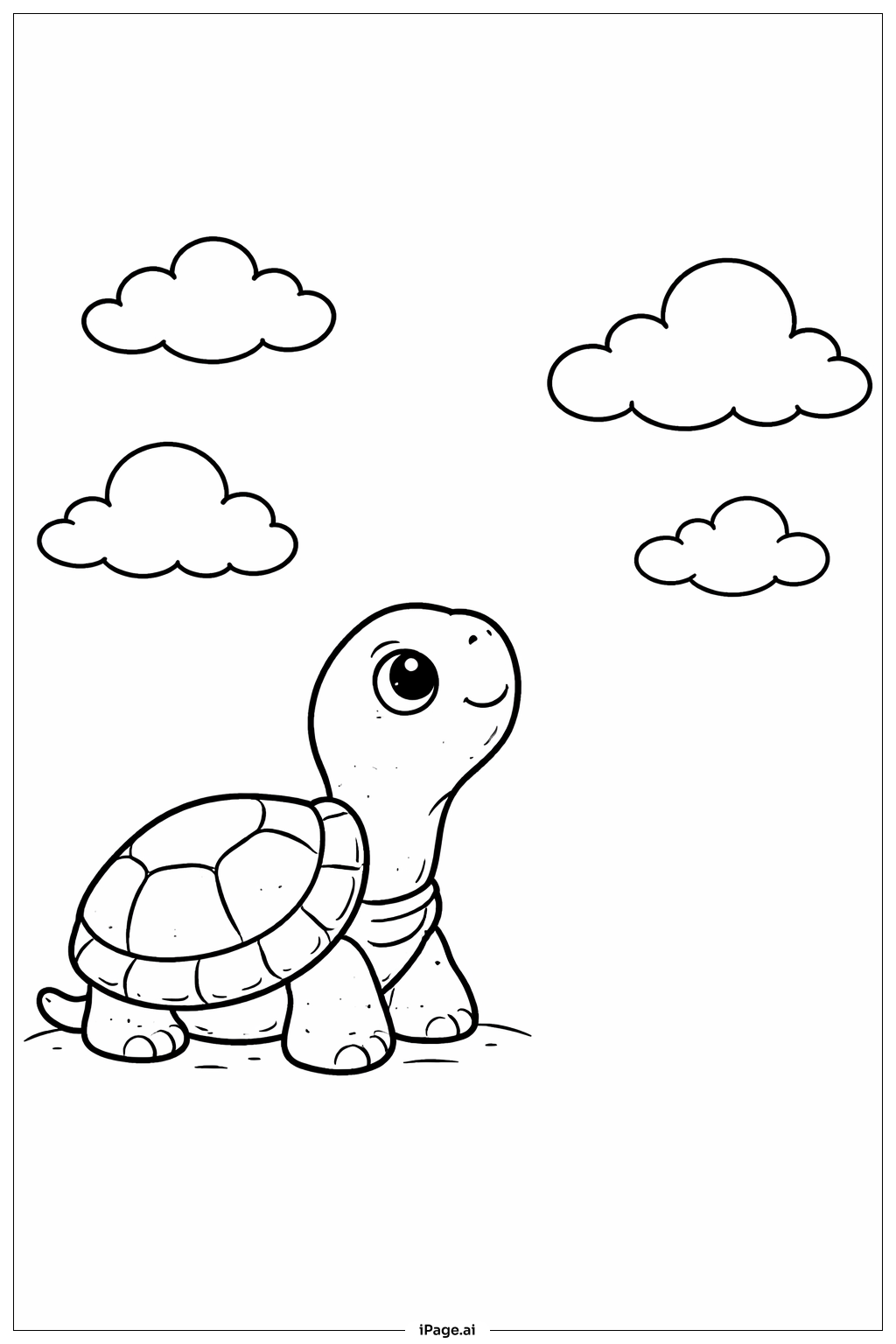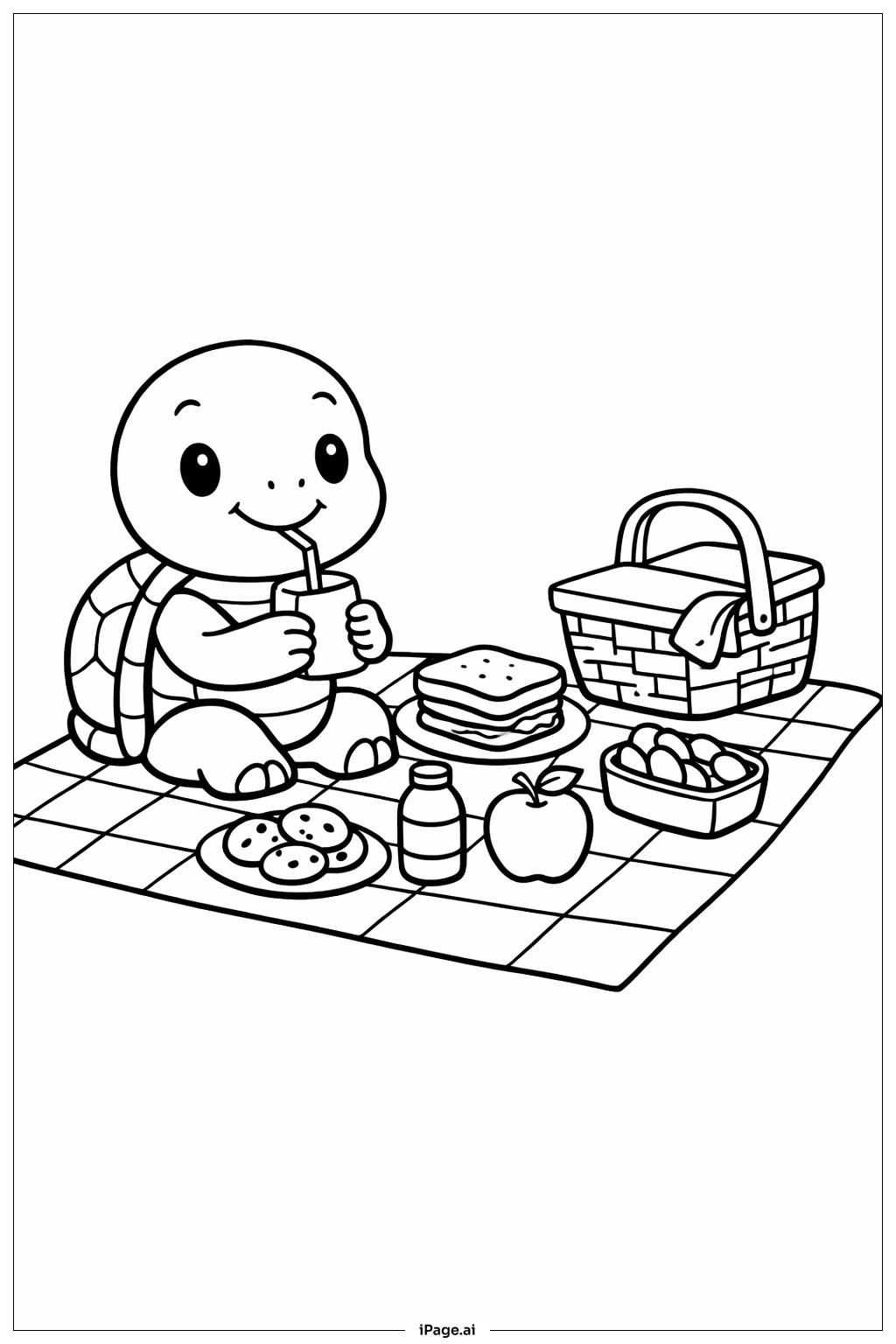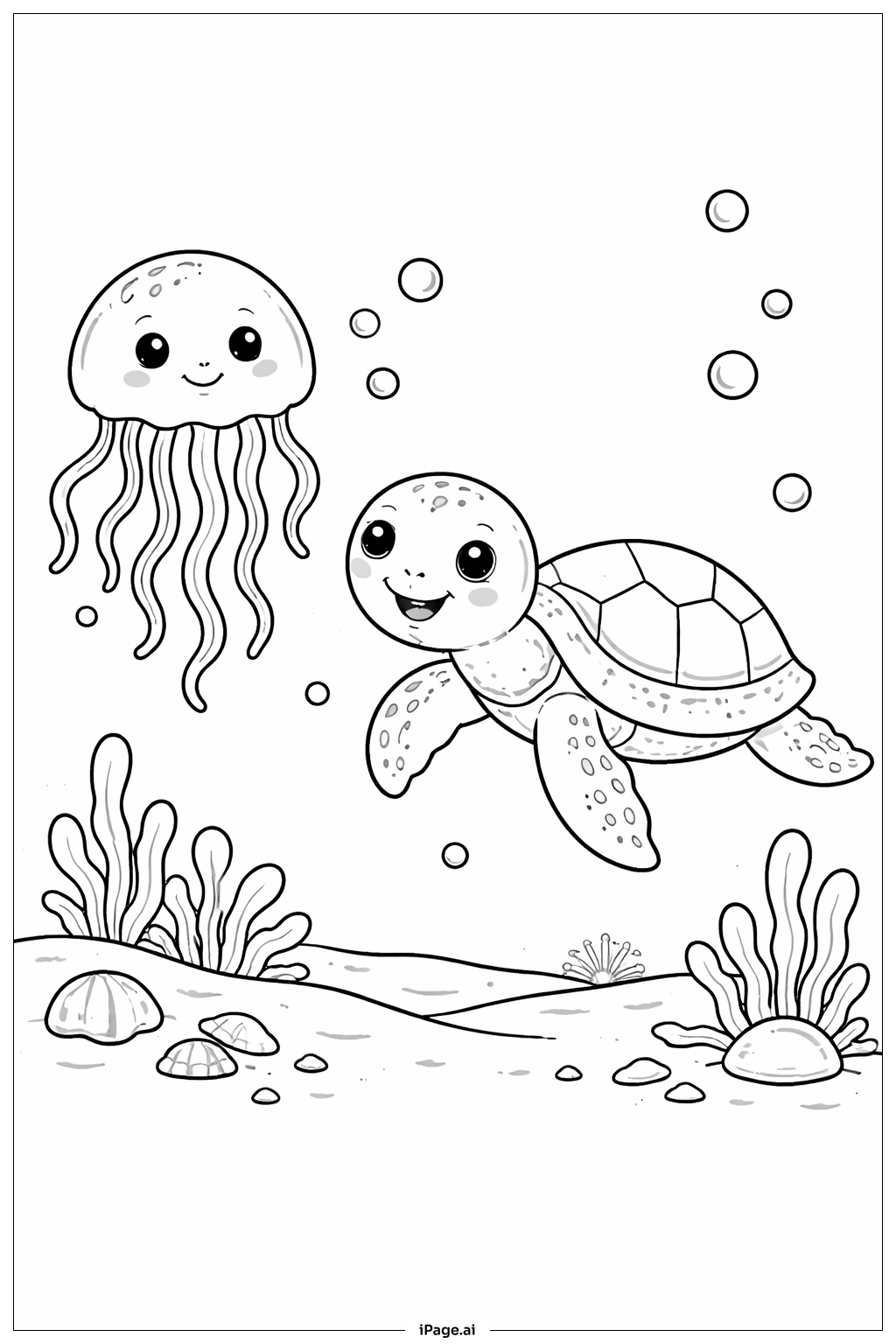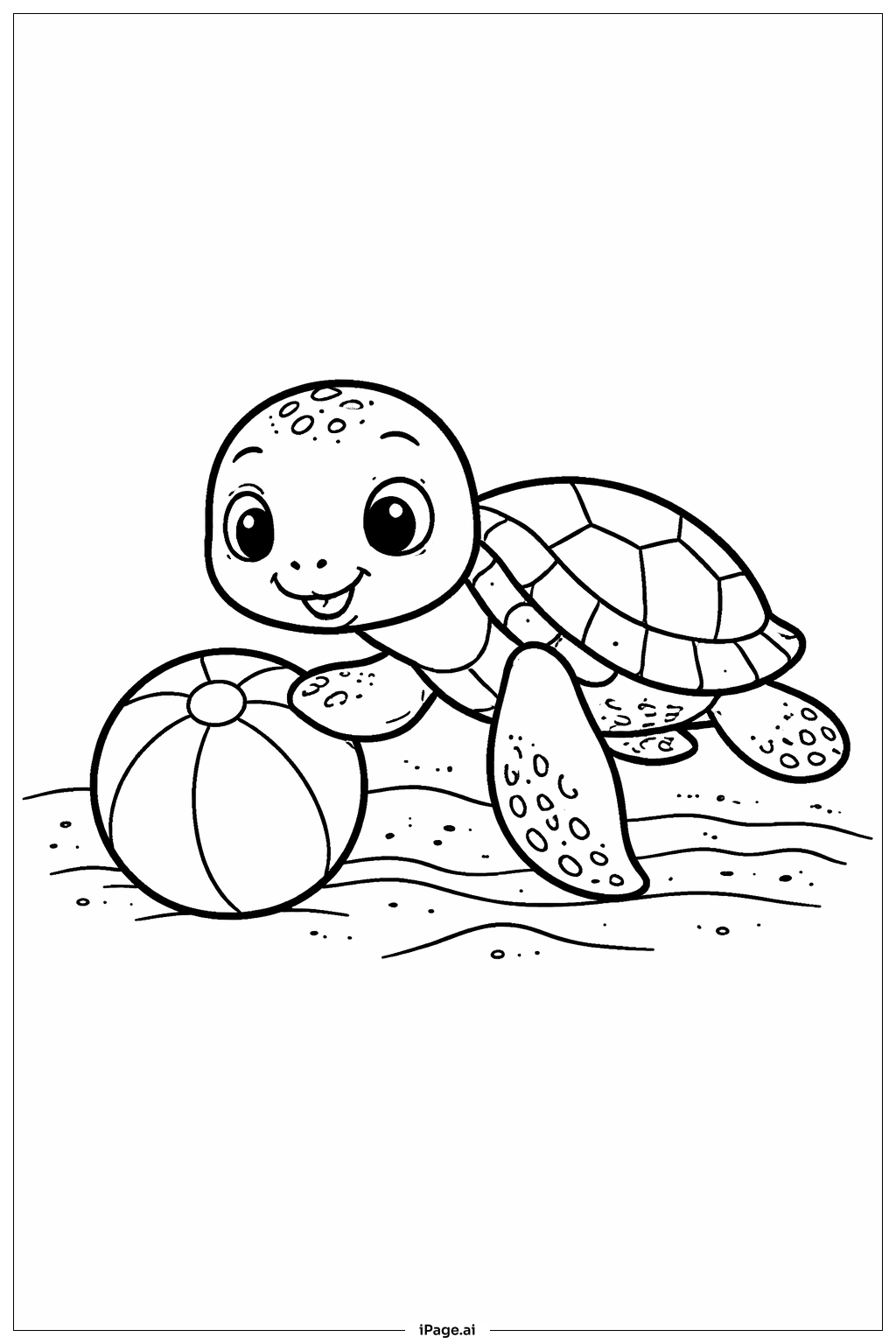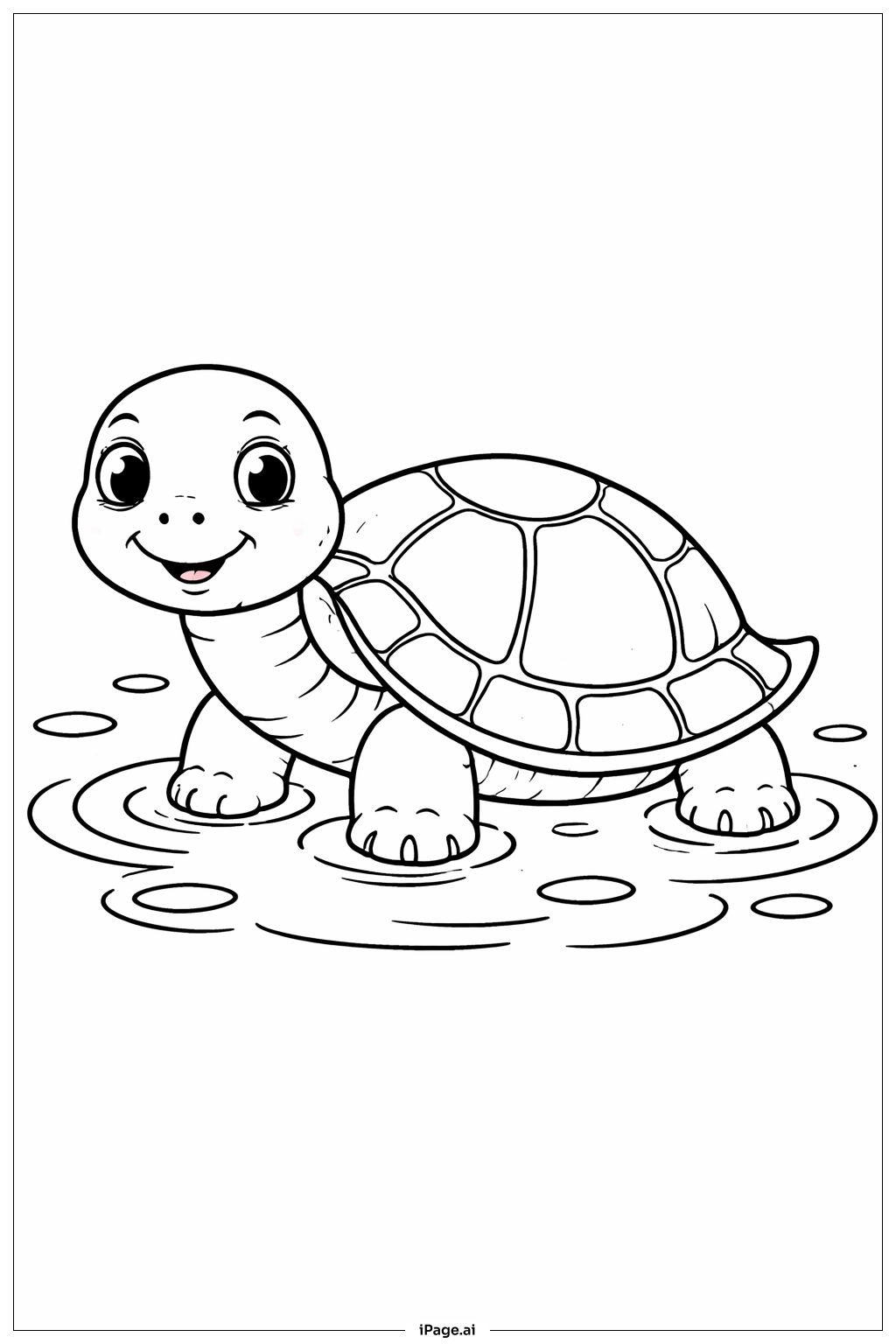
Coloring tips: How to color Turtle In Shallow Water coloring page well?
For the turtle's shell, consider using earthy greens, browns, or olive tones for the main sections, with darker shades for the borders between segments to create depth. The turtle's skin can be colored in lighter greens or yellow-greens, with slightly darker tones for shading under the flippers and neck. The eyes can be dark brown or black with a small white highlight for sparkle. For the water, use light blues, turquoise, or aqua shades, making the ripples slightly darker to show movement. You can add touches of white or very light blue for water reflections and highlights. Consider using colored pencils for gentle blending on the shell patterns, or markers for bold, vibrant colors that make the turtle pop off the page.
Coloring challenges: Which parts are difficult to color and need attention for Turtle In Shallow Water coloring page?
• Shell Pattern Complexity: The turtle's shell contains numerous geometric segments that require careful attention to detail. Each hexagonal and pentagonal section needs individual coloring, and deciding on a color scheme that looks natural yet interesting can be challenging. Children may find it tedious to color each segment separately while maintaining consistent colors and staying within the lines of these smaller spaces.
• Water Ripple Gradients: Creating realistic water effects with the concentric ripple patterns requires understanding of shading and color gradation. The ripples should appear to fade as they move outward, which means using lighter pressure or diluted colors toward the edges. Young colorists may struggle with creating smooth transitions between darker and lighter blue tones to achieve a natural water appearance.
• Texture and Dimension: Adding realistic texture to the turtle's skin and flippers while making the shell appear three-dimensional requires advanced shading techniques. The challenge lies in using different color intensities to show where light hits the turtle and where shadows fall, particularly around the curved shell edges and underneath the body where it meets the water.
• Detail Preservation: The fine lines defining water droplets, facial features, and flipper details are small and require precision. Using markers or crayons in these tight spaces without covering up important details or bleeding into adjacent areas can be difficult, especially for younger children with developing fine motor skills.
Benefits of coloring books: Advantages of drawing Turtle In Shallow Water coloring page
Coloring this turtle scene offers wonderful developmental benefits for children. The intricate shell patterns provide excellent practice for fine motor skills and hand-eye coordination as young artists carefully fill in each small segment. This activity promotes patience and focus, as completing the detailed design requires sustained attention. The geometric patterns on the shell also reinforce shape recognition and spatial awareness. Children can explore color theory by experimenting with complementary colors for the turtle and water, or creating harmonious palettes with analogous shades. The peaceful nature scene encourages mindfulness and relaxation, helping reduce stress and anxiety. Additionally, this coloring page can spark curiosity about marine life and environmental conservation, opening opportunities for learning about turtles, their habitats, and the importance of protecting ocean ecosystems.