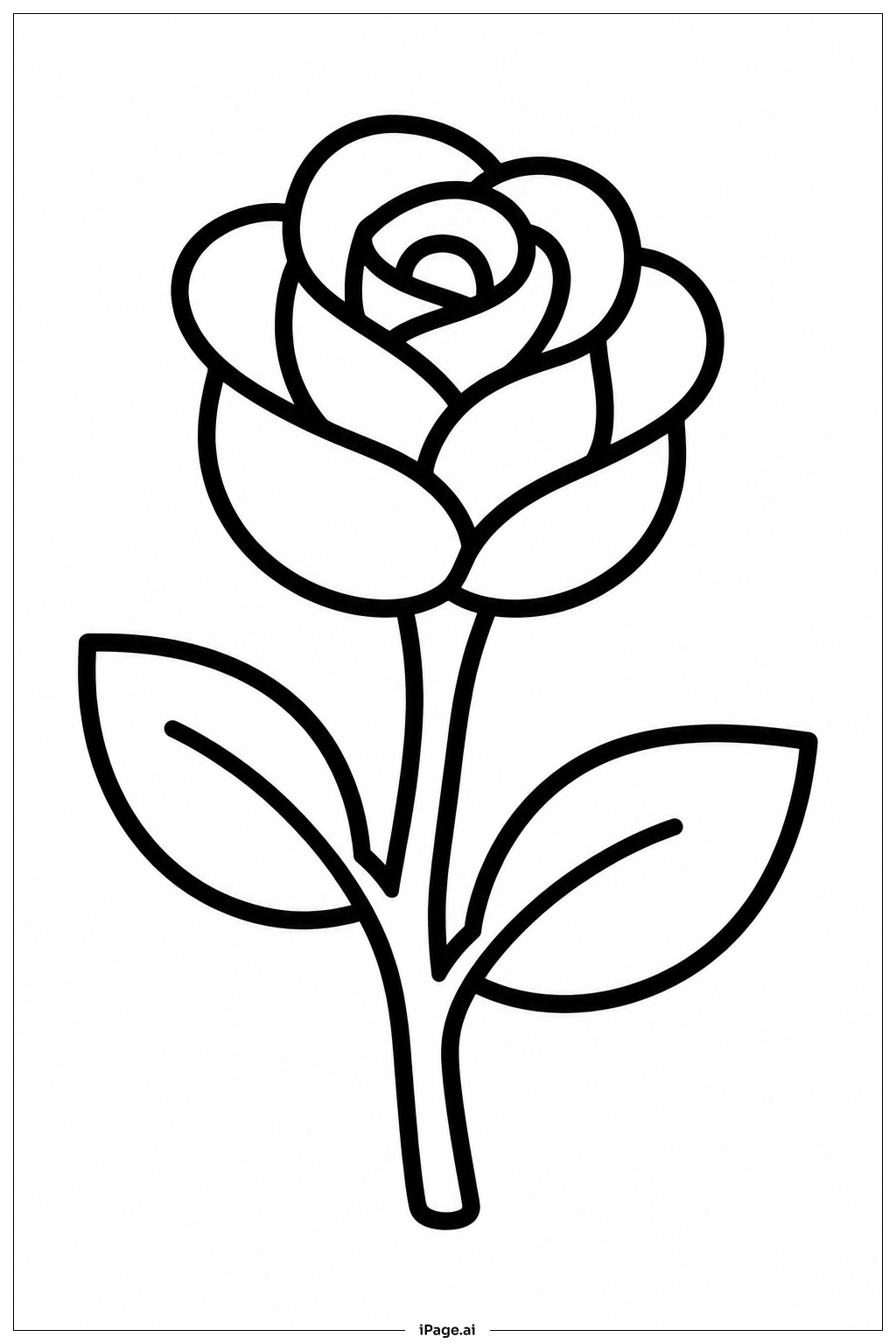
Coloring tips: How to color Rose On Stem coloring page well?
Start with the rose petals at the top. Use shades of red or pink — light pink at the edges and deeper red toward the center to create a natural gradient. You can also try yellow, orange, or white roses for a fun twist. For the stem and leaves, use different shades of green. Use a lighter green for the areas where sunlight would hit and a darker green for the shadows underneath. Color the thorns a slightly darker brown-green to make them stand out. Take your time with each petal. Try blending two colors together to make the flower look soft and real. If you have colored pencils, press lightly first, then layer darker colors on top. This is a great way to practice shading and make your rose look three-dimensional and alive.
Coloring challenges: Which parts are difficult to color and need attention for Rose On Stem coloring page?
• Petal Layering and Depth: The rose has many overlapping petals, each curling in a slightly different direction. Keeping track of which petal sits on top of another can be tricky. You need to color each petal slightly differently so they do not all blend together into one flat shape. Using at least two shades of the same color helps separate each layer clearly.
• Smooth Color Blending: Creating a smooth transition from light to dark within each petal takes patience and practice. If you press too hard with a single color, the petal may look flat. Layering colors gradually from the edges inward gives the bloom a soft, rounded appearance that looks more lifelike.
• Small Thorn Details: The thorns along the stem are small and sharp-edged. Coloring around them neatly without accidentally filling them in or leaving jagged edges requires a fine-tipped tool and a steady hand. Taking it slow in these areas makes a big difference in the final look.
• Leaf Veins and Texture: The leaves have detailed vein lines running through them. Coloring around these fine lines while keeping the overall leaf shading consistent is a challenge. You can leave the veins white or color them a lighter green to make them pop against the darker leaf surface.
• Balancing the Overall Composition: Because the rose sits at the top and the stem and leaves fill the lower half, it can be easy to focus too much color intensity on the flower and leave the rest looking pale. Try to maintain a visual balance by giving the leaves and stem enough depth and richness to complement the rose.
Benefits of coloring books: Advantages of drawing Rose On Stem coloring page
Coloring this rose image offers a wide range of benefits for children and adults alike. For younger kids, it helps build fine motor skills as they carefully color within the petal and leaf outlines. Holding a pencil or crayon steadily and staying inside the lines strengthens the small muscles in the hand, which supports writing development.
For older children and teens, this image is a great way to explore color theory. Experimenting with gradients, shading, and complementary colors on the petals teaches real artistic skills in a fun and low-pressure setting.
For adults, coloring a detailed rose is a calming, meditative activity. Focusing on one petal at a time helps quiet a busy mind and reduce stress. Many people find that creative activities like coloring improve their mood and help them feel more relaxed after a long day.
Working through the layered petals also builds patience and attention to detail — skills that are useful far beyond art. Completing the full image gives a satisfying sense of accomplishment that boosts confidence at any age. Whether you are a beginner or an experienced colorist, this rose makes for a rewarding and enjoyable coloring experience.