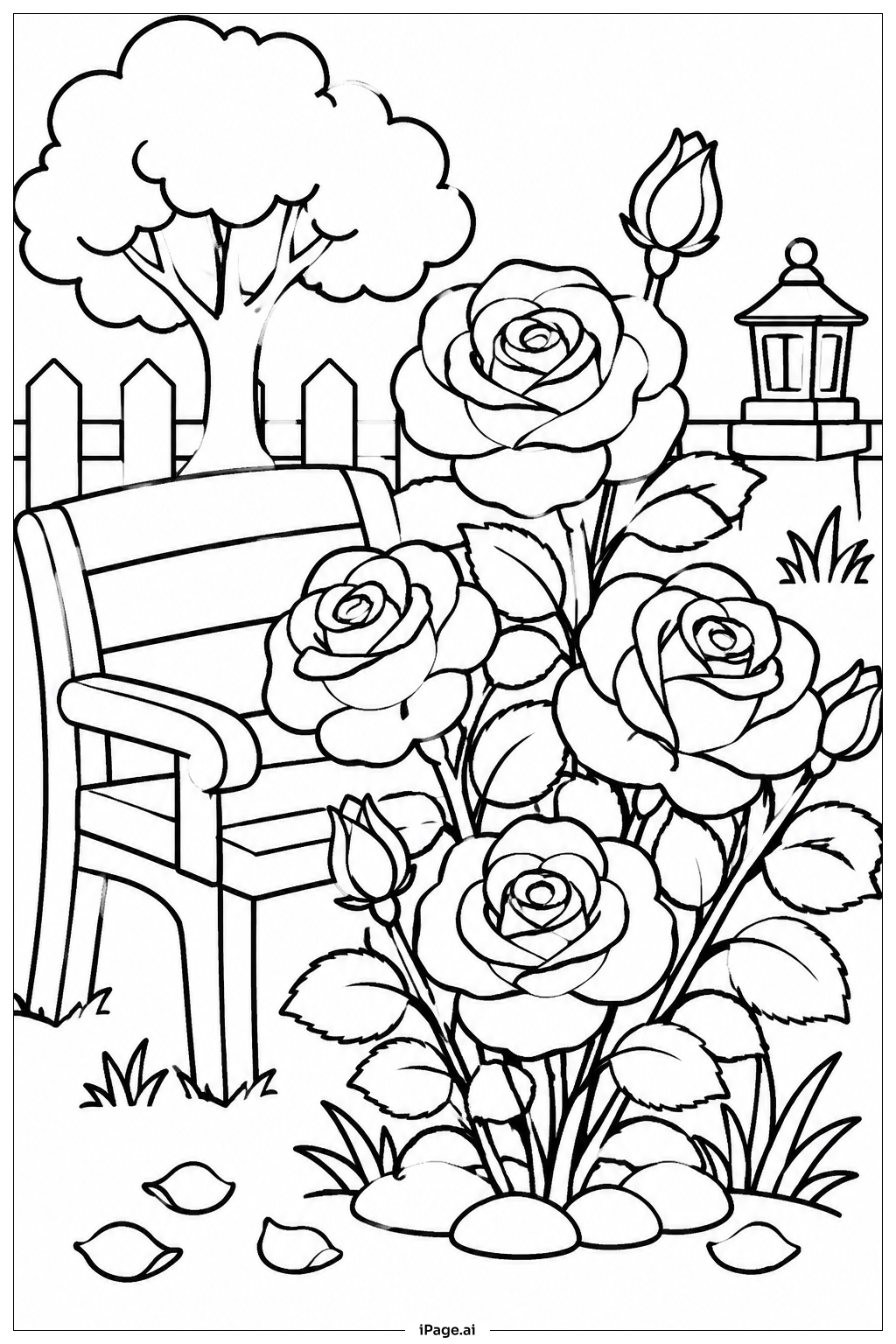
Coloring tips: How to color Rose And Garden Bench coloring page well?
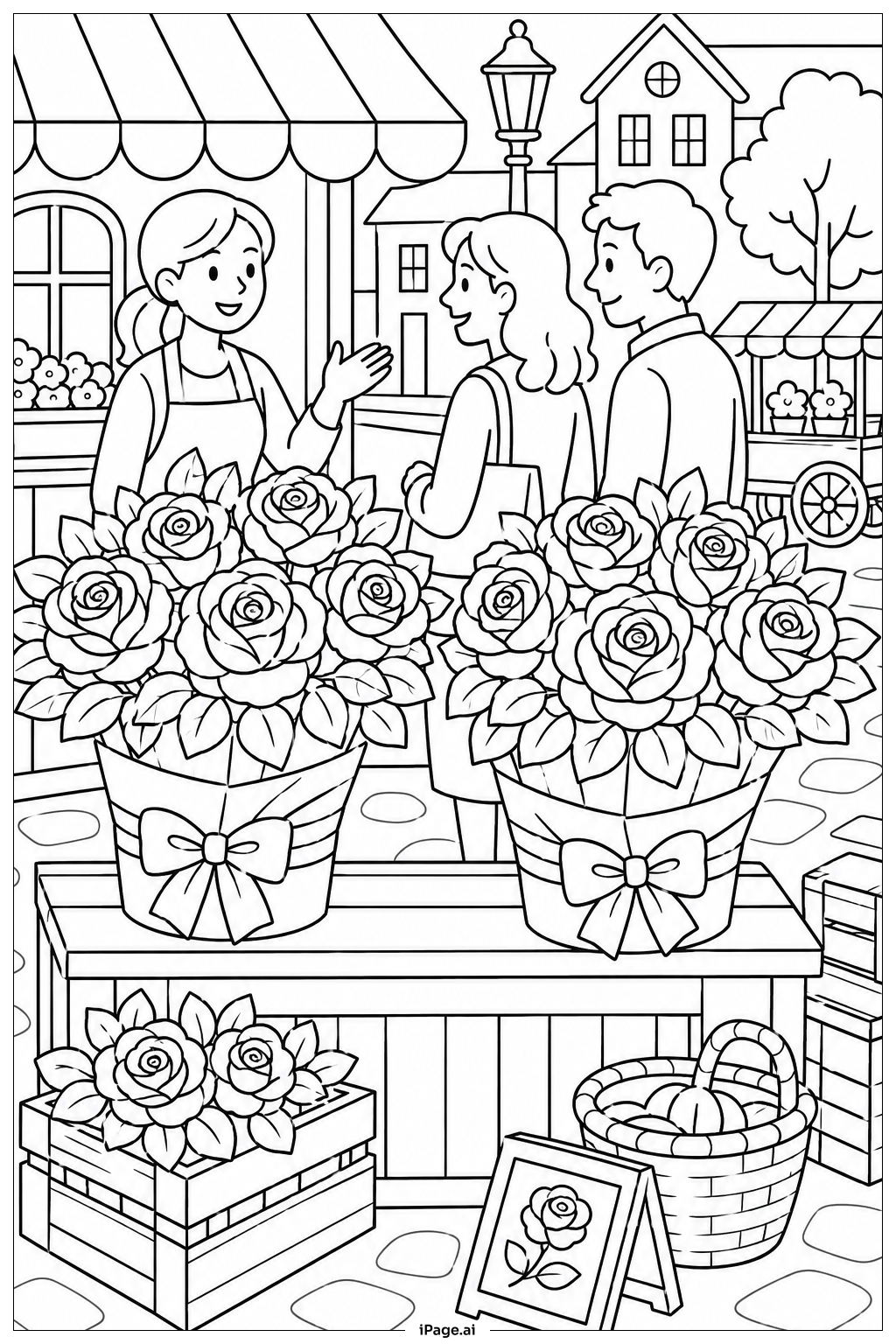
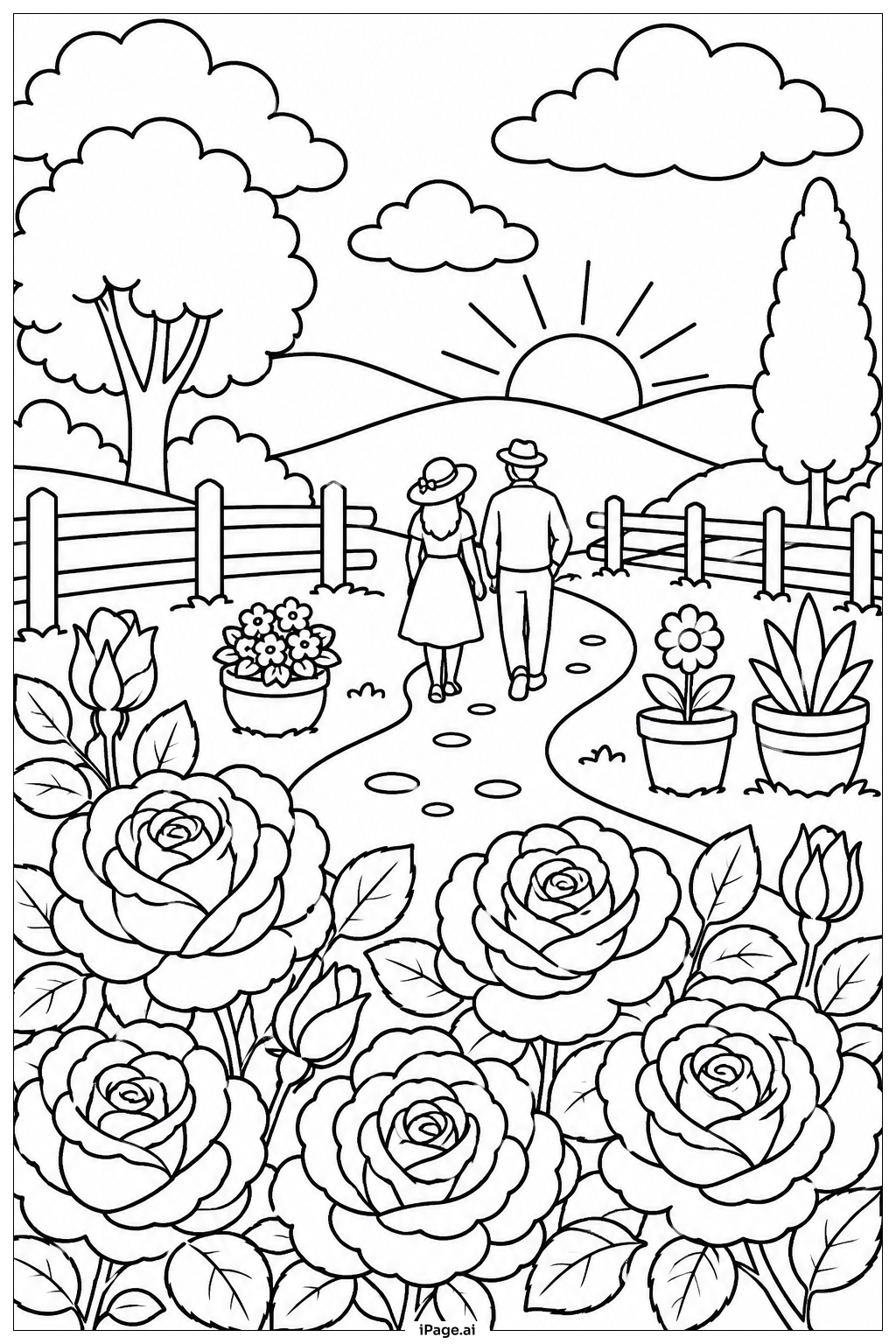
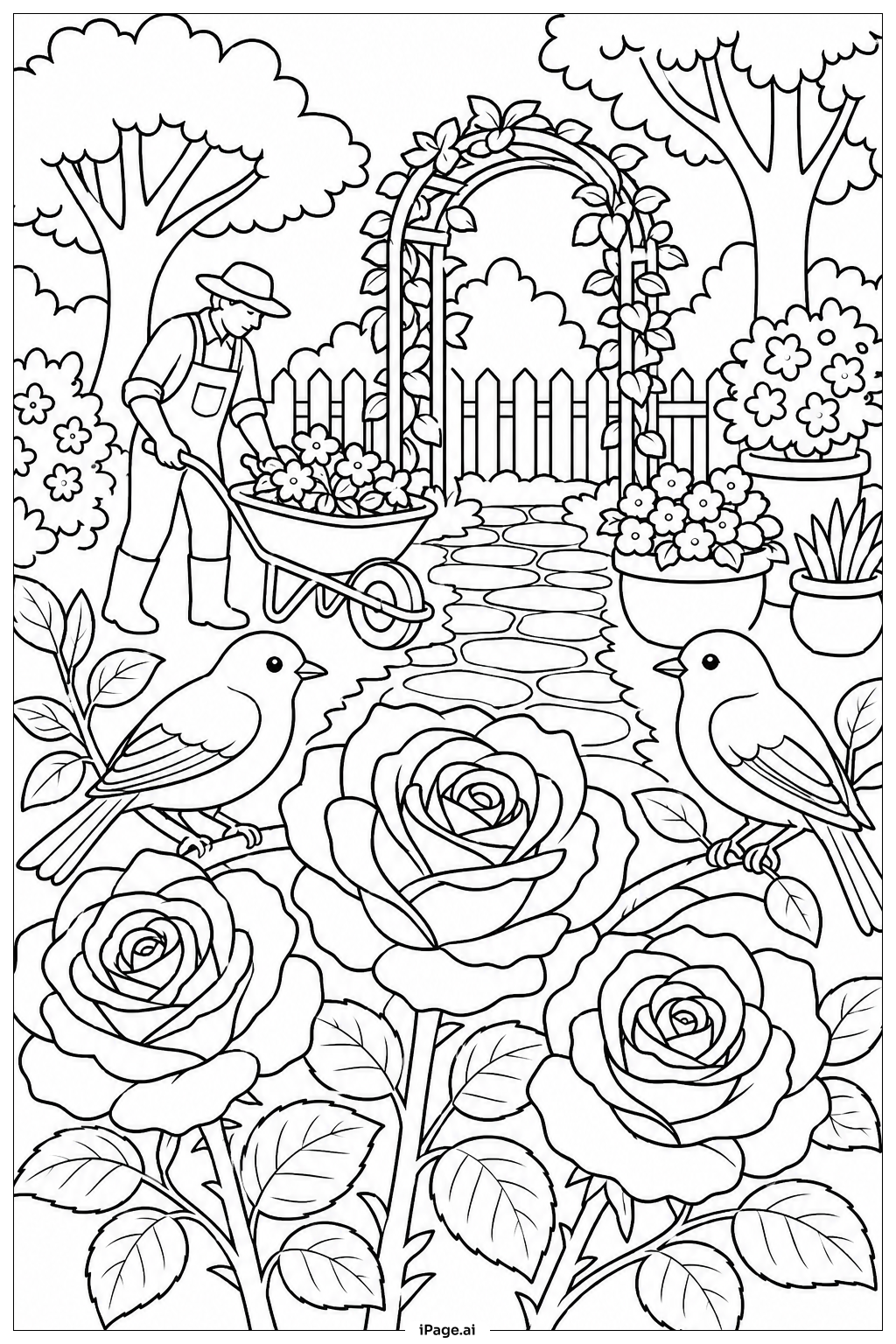
Start with the roses. Use different shades of red, pink, coral, or even yellow to make each bloom feel unique. Add a lighter tint at the center of each flower and a deeper shade near the outer petals to create depth. For the leaves, mix light green and dark green to show variety. Some leaves can have a yellow-green tone to look sun-kissed. Color the wooden bench in warm brown tones. Use a lighter brown for the flat surfaces and a darker brown for the shaded edges and slats to give it a three-dimensional look. The ground can be colored in soft earthy tones like tan or light green for grass. Keep the background simple — soft blues, pale greens, or a light lavender sky will help the roses and bench stand out. Feel free to add your own colors and make this garden truly yours!
Coloring challenges: Which parts are difficult to color and need attention for Rose And Garden Bench coloring page?
• Rose Petal Layers: Each rose in this image has multiple overlapping petals. Coloring each layer while keeping the transitions smooth can be tricky. You need to carefully shade the inner petals darker and the outer petals lighter, or the other way around, to make each flower look full and real. Taking your time with each bloom will make a big difference.
• Wood Grain and Slats on the Bench: The bench has many narrow wooden slats with small gaps between them. Staying inside each slat and adding consistent shading along the edges requires a steady hand and a sharp pencil or fine-tipped marker. Rushing through this area can make the bench look flat or messy.
• Rose Vines and Stems: The climbing vines curl and twist around the bench in many directions. Tracing each vine without accidentally coloring over nearby petals or leaves takes patience and careful control. Using a thin brush or a fine coloring pencil works best here.
• Dense Leaf Coverage: There are many leaves packed closely together throughout the image. Each leaf should look slightly different from its neighbors to avoid a flat, uniform look. Mixing several shades of green and leaving small highlights on each leaf adds richness to the overall scene.
• Balancing the Overall Composition: With so many elements — roses, leaves, vines, and the bench — it is easy for the image to feel overwhelming or too busy. Planning your color palette before you start and keeping the colors balanced across the whole page will help the finished piece look cohesive and beautiful.
Benefits of coloring books: Advantages of drawing Rose And Garden Bench coloring page
Coloring this Rose And Garden Bench page offers many wonderful benefits for kids and adults alike. Working through the intricate rose petals and wooden bench details helps sharpen fine motor skills and improves hand-eye coordination. Choosing colors for the flowers, leaves, and bench encourages creative thinking and personal expression — there is no single right answer, so every colorist can make it their own.
The peaceful garden theme makes this page especially calming. Focusing on the gentle curves of the roses and the quiet bench setting can ease stress and bring a sense of relaxation, much like sitting in a real garden. This makes it a great activity after a busy day.
For younger children, this page builds focus and patience. Staying inside the lines and planning which colors to use next are small but meaningful exercises in concentration. For older kids and adults, the detailed vine patterns and layered petals offer a satisfying challenge that rewards careful, thoughtful work.
Completing a complex and beautiful scene like this also builds confidence. Seeing the finished page — colorful, rich, and personal — gives a real sense of achievement. It is a reminder that taking time with something and doing it carefully leads to something worth being proud of.