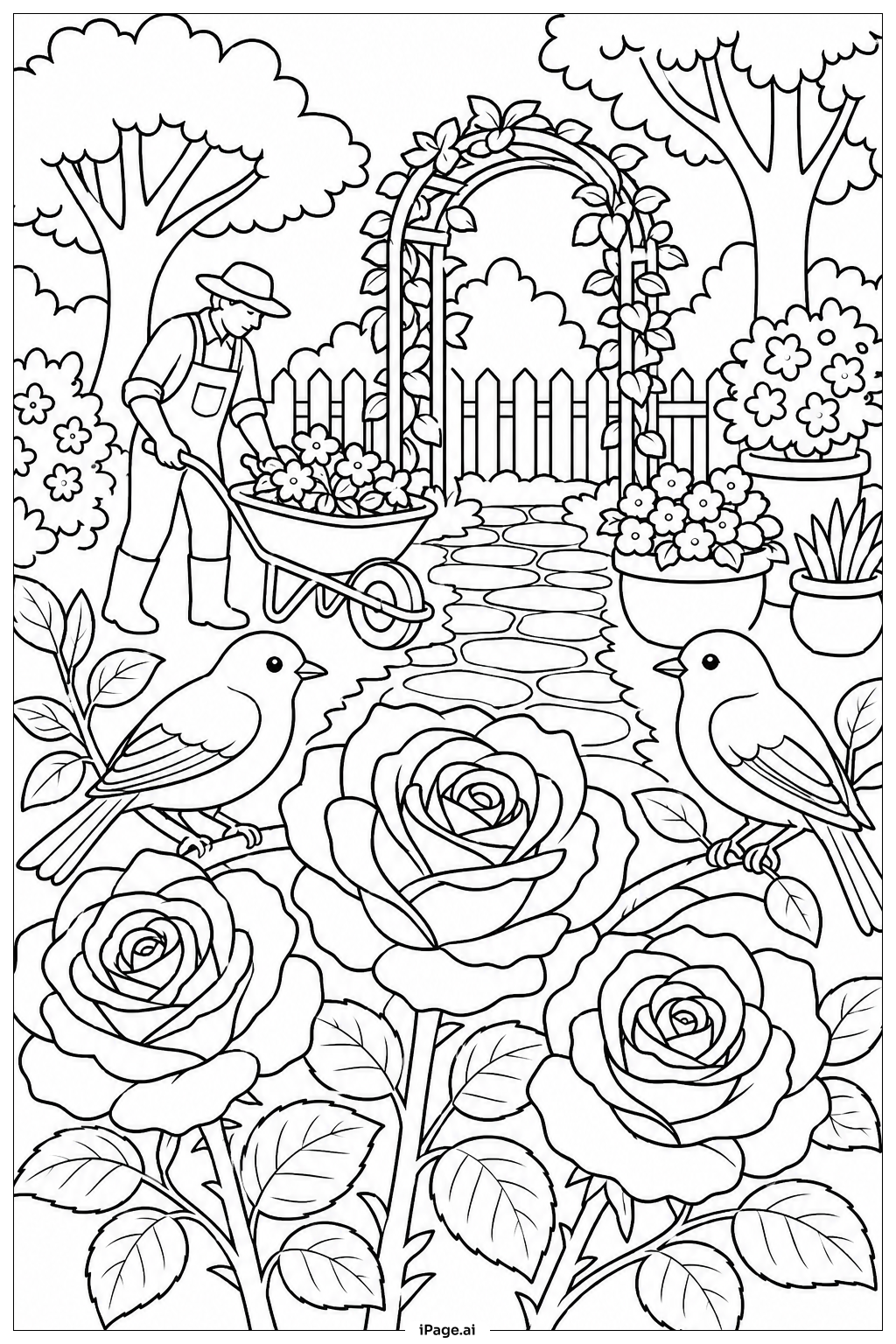
Coloring tips: How to color Roses And Birdsong Scene coloring page well?
Start with the roses by choosing classic reds and pinks, or try something unique like coral, peach, or soft lavender. Use a lighter shade for the inner petals and a deeper tone toward the outer edges to give each bloom a sense of depth. For the leaves and vines, shades of green work beautifully — try mixing yellow-green for young leaves and dark green for older ones. The songbirds can be colored in warm browns, golden yellows, or cheerful blues and reds to make them pop against the floral backdrop. Kids can use bright, bold colors for a fun and playful look, while older colorists may enjoy blending pastels for a softer, more realistic feel. Use a light pencil or thin marker to outline details before filling in larger areas. Leave a tiny white highlight on the rose petals and bird eyes to bring everything to life.
Coloring challenges: Which parts are difficult to color and need attention for Roses And Birdsong Scene coloring page?
• Layered Rose Petals: Each rose is made up of many overlapping petals that curve and fold in different directions. Coloring each layer with slightly different shades of the same color family takes patience and a steady hand. Getting the light and shadow right on curved petals can be tricky, especially for younger colorists just starting out.
• Tiny Bird Details: The songbirds have small, intricate features including fine feathers, tiny beaks, and little clawed feet. These areas require a sharp pencil or fine-tipped marker to fill in neatly without going outside the lines. Keeping the bird colors distinct from the surrounding roses is also a fun challenge.
• Intertwining Vines and Leaves: The curling vines twist and cross over each other throughout the scene. Deciding which vine sits in front and which sits behind — and shading accordingly — adds a layer of complexity. Coloring the leaves in varied greens helps separate them visually from one another.
• Busy Background Areas: The background is packed with overlapping elements including petals, stems, leaves, and birds. It can feel overwhelming to choose colors for each section without the image looking too cluttered. Planning a limited color palette before starting helps keep the finished piece looking balanced and harmonious.
• Maintaining Color Balance: With so many elements competing for attention, keeping the overall scene balanced is a real challenge. Making sure no single area becomes too dark or too bright compared to the rest takes careful observation and gradual layering of color.
Benefits of coloring books: Advantages of drawing Roses And Birdsong Scene coloring page
Coloring this Roses And Birdsong Scene offers a wonderful range of benefits for kids and adults alike. Working through the detailed petals and tiny bird features helps build fine motor skills and steady hand control — great for younger children still developing pencil grip and coordination. Choosing colors for roses, birds, and leaves encourages creative thinking and builds confidence in making artistic decisions. The repetitive, focused nature of filling in each petal and leaf is naturally calming, helping to reduce stress and quiet a busy mind. It's a gentle, screen-free activity that promotes mindfulness and concentration. For children, this scene also sparks curiosity about nature — the different types of roses, how birds perch on branches, and how gardens come to life in spring. Coloring together as a family can become a shared bonding experience, with everyone adding their own creative touch to the scene. Whether used in a classroom, at home, or as a quiet solo activity, this page delivers both creative enjoyment and meaningful developmental benefits for colorists of all ages and skill levels.