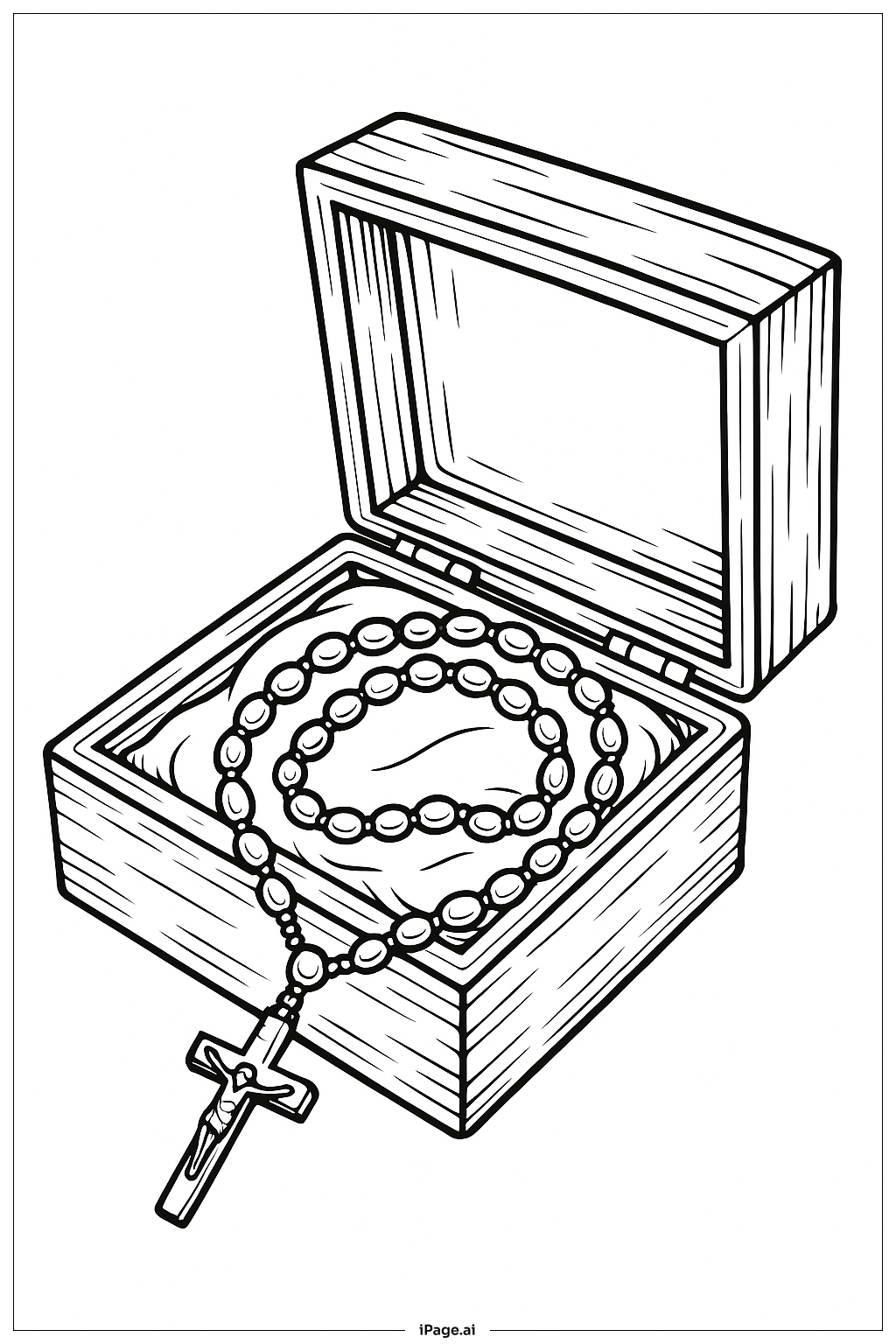
Coloring tips: How to color Rosary In Wooden Box coloring page well?
Choose warm brown tones for the box to emphasize the wood grain, using lighter shades on the inside to suggest a soft lining. For the beads, pick a consistent color or mix gentle pastels, coloring each bead with a light highlight on the top edge and a slightly darker edge on the bottom to create roundness. The metal parts can be silver or gold; add a bright highlight along the top edge to suggest shine. Color the cross pendant with a richer shade than the beads, and add subtle shading along the engraved lines to show depth. Keep the outer lines crisp for a clean look, and consider leaving the background white to make the box and rosary stand out. Younger children may color larger areas first and then fill in the details, while older kids can practice shading to create texture on wood, fabric, and metal.
Coloring challenges: Which parts are difficult to color and need attention for Rosary In Wooden Box coloring page?
- Keeping the box's perspective and wood grain lines neat without crossing outlines.\n- Making the beads look round with even shading on many circular shapes.\n- Detailing the cross and clasp without making tiny spaces too crowded.\n- Adding soft texture to the inner cloth while maintaining clear contrast.\n- Balancing colors so wood, beads, and metal look harmonious rather than competing for attention.
Benefits of coloring books: Advantages of drawing Rosary In Wooden Box coloring page
Coloring this image offers many benefits for young artists. It helps improve focus and fine motor skills as children stay inside the lines of the box, beads, and cross. The large shapes give beginners confidence while the smaller details challenge older children to control pressure and precision. Observing different textures—smooth beads, rough wood grain, soft fabric, and shiny metal—teaches kids how light affects color, shade, and highlights. Planning a color strategy before coloring builds planning and sequencing skills. The rosary scene also invites storytelling about prayer, history, and cultural traditions, expanding curiosity beyond art. Coloring can be calming, providing a mindful break from screen time and promoting quiet concentration. Parents and teachers can use it to discuss symbols, respect for beliefs, and the value of quiet reflection. Overall, this page blends artistic practice with mindfulness, helping children express ideas through color while developing patience and confidence in their own abilities.