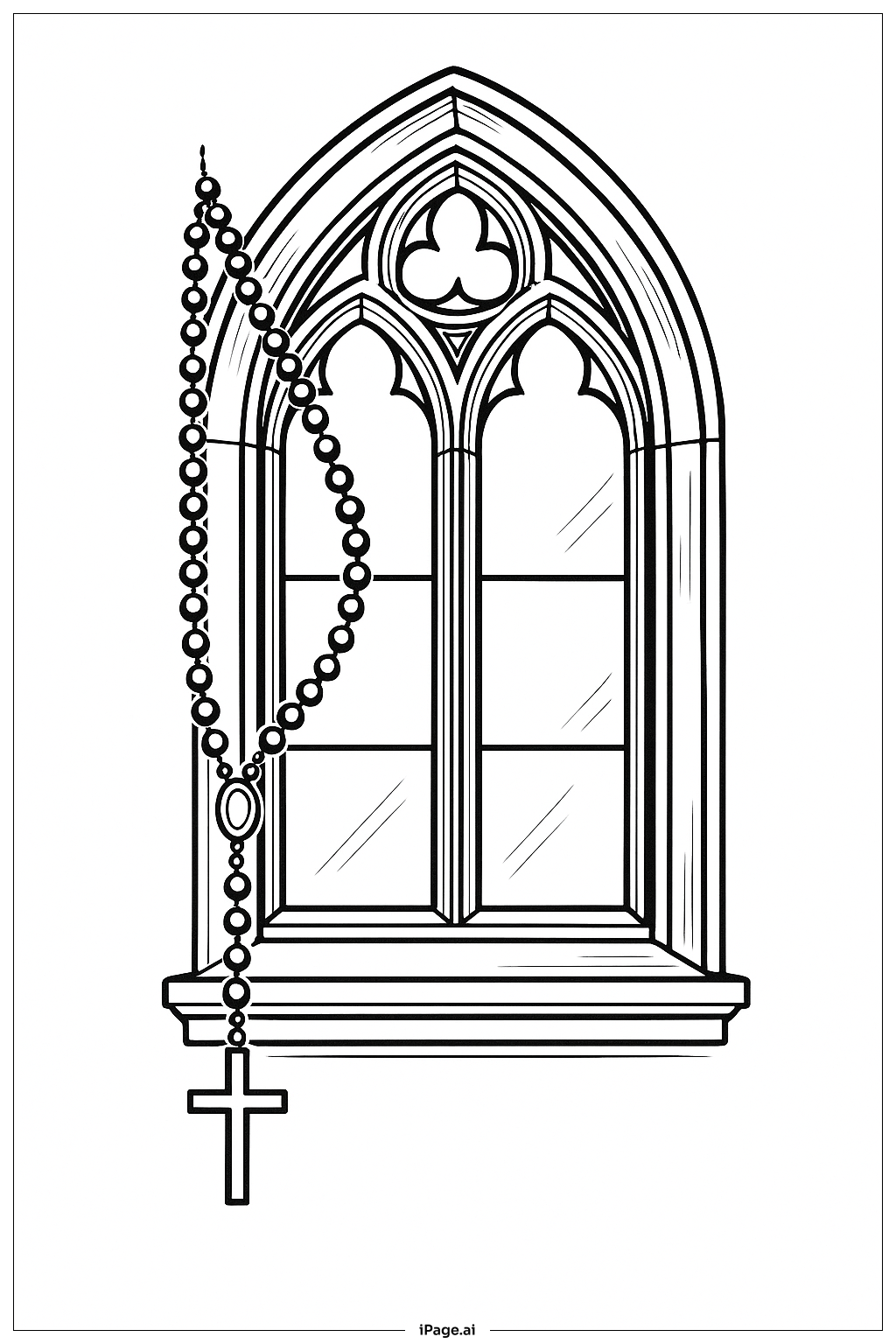
Coloring tips: How to color Rosary By Chapel Window coloring page well?
Color the window with cool grays and soft blues to resemble stained glass or clear glass with sunlight. Use lighter shades on the glass panes to show brightness, and darker tones along the mullions to emphasize depth. The stone frame can be colored with warm browns or cool beiges, using lighter highlights along the top edges to imitate sunlight. For the beads, pick a single color family and vary the shade for each bead to create a glowing chain. The cross at the bottom can be colored in darker gray or brass gold to stand out. Try a gradient on the side arch for a sense of curve. Keep a little white space to keep the page clean.
Coloring challenges: Which parts are difficult to color and need attention for Rosary By Chapel Window coloring page?
1) Intricate spaces and fine lines: The window is divided into several slim panes with delicate tracery and pointed arches. The curves and tiny shapes demand careful coloring. Begin with light, steady strokes to map the spaces, then add darker tones to create depth. Use a sharp colored pencil or fine marker for the narrow borders. If you color outside the lines, gently lift color with an eraser or correction tool. 2) Beads and chain shading: The rosary beads form a long, looping chain with round shapes that should look spherical. Practice even shading to convey roundness: lighter highlights on the top of each bead, with midtones and a darker bottom edge. The spacing between beads helps with rhythm; avoid touching neighboring spaces. For the chain itself, use a continuous brush of color or a light wash, then go back to deepen the darker shadows along the curve where beads overlap. 3) Glass panes and light: The window panes may look flat, but you can show glass by using lighter colors and tiny white highlights. Imagine sunlight coming from the left; shade the right sides and edges of the panes more than the center. You can add a subtle gradient from top to bottom to imitate depth. If you color the glass too dark, the tracery gets lost, so keep contrast gentle. 4) Consistency and practice: The symmetry of the window invites careful balance. Try coloring both sides evenly so the arch looks harmonious. Use the same pressure on both sides of the page, and keep bead shading consistent along the curve. Take breaks to rest your eyes and hands. Clean your tools regularly to avoid muddy colors. This page is a good exercise for patience and fine-motor skills.
Benefits of coloring books: Advantages of drawing Rosary By Chapel Window coloring page
Coloring this page helps children in many ways. It builds fine motor skills as small spaces require control and precision. Repeating careful strokes trains hand-eye coordination and steadier grip. It supports focus and patience, offering a quiet, meditative activity that can reduce stress after a busy day. Colors also boost creativity; choosing hues for the window, beads, and cross encourages imagination. The design invites learning about Gothic architecture and religious symbolism, helping kids appreciate history and culture. Mixing colors to create gentle gradients on glass and beads teaches color theory basics, such as light vs. shade and warmer vs. cooler tones. The image’s symmetry invites spatial awareness and planning, letting children predict how colors will balance across the page. Lastly, completing the rosary scene may provide a sense of accomplishment and confidence, reinforcing the idea that practice leads to neat, satisfying results. With time, kids can experiment with different color palettes to express mood—serene blues for morning light, rich browns for a rustic look, or bright jewel tones for a stained-glass effect.