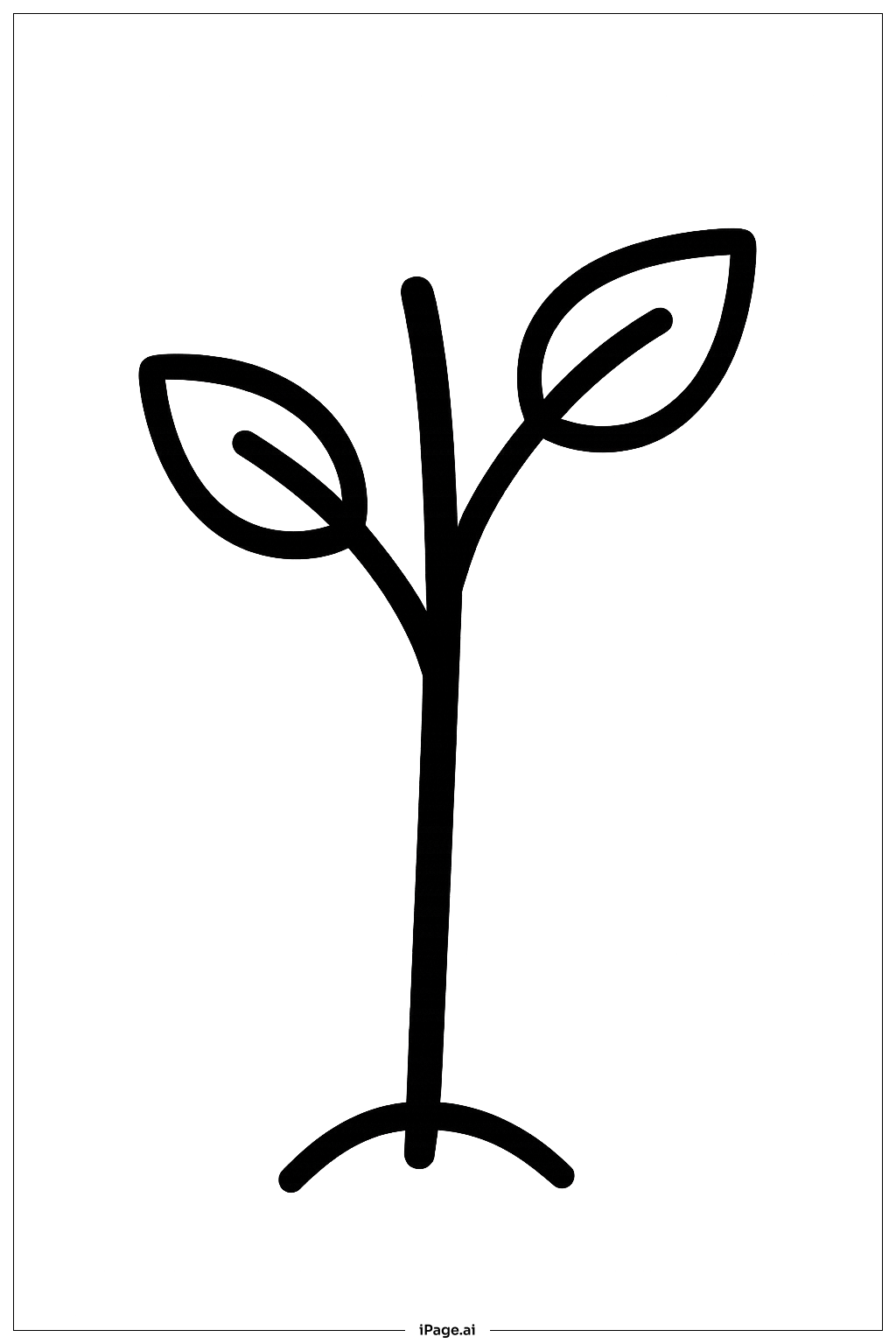
Coloring tips: How to color Photosynthesis Young Sapling coloring page well?
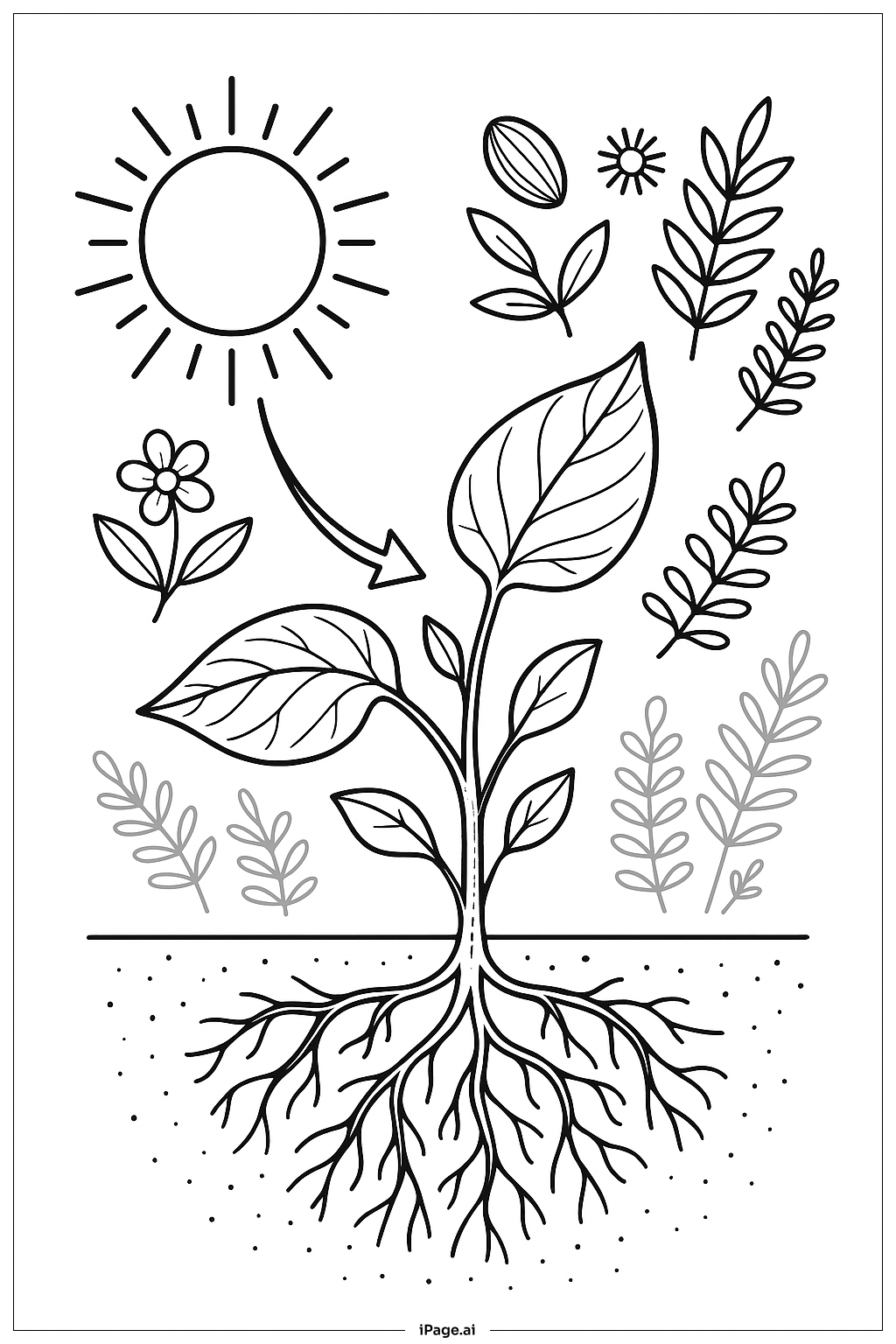
Use different shades of green for the leaves to make them look lively and natural. You can color the main stem in brown or dark green to show its sturdy growth. For the base, use brown or earthy colors to represent soil or roots. Adding light yellow or orange around the leaves can show sunlight. Try blending colors gently to make the sapling look fresh and alive. Avoid using too many colors, so the picture stays clear and neat.
Coloring challenges: Which parts are difficult to color and need attention for Photosynthesis Young Sapling coloring page?
1. Small space inside the leaves may be tricky for younger children to color neatly. 2. Staying within the thin lines of the stem requires careful and steady hand control. 3. Blending different shades of green on the leaves to give a natural look could be challenging. 4. Coloring the base evenly may need attention to avoid overcoloring outside the lines. 5. Adding light effects like sunlight while keeping the image simple might be difficult when trying to balance detail and clarity.
Benefits of coloring books: Advantages of drawing Photosynthesis Young Sapling coloring page
Coloring this young sapling helps children understand how plants grow from small beginnings. It encourages learning about nature and photosynthesis in a simple way. Coloring improves hand-eye coordination, fine motor skills, and attention to detail. It also boosts creativity by letting children choose colors and experiment with blending. Overall, this activity builds patience and concentration while making learning fun.