Coloring tips: How to color Photosynthesis Sunlight Energy Flow coloring page well?
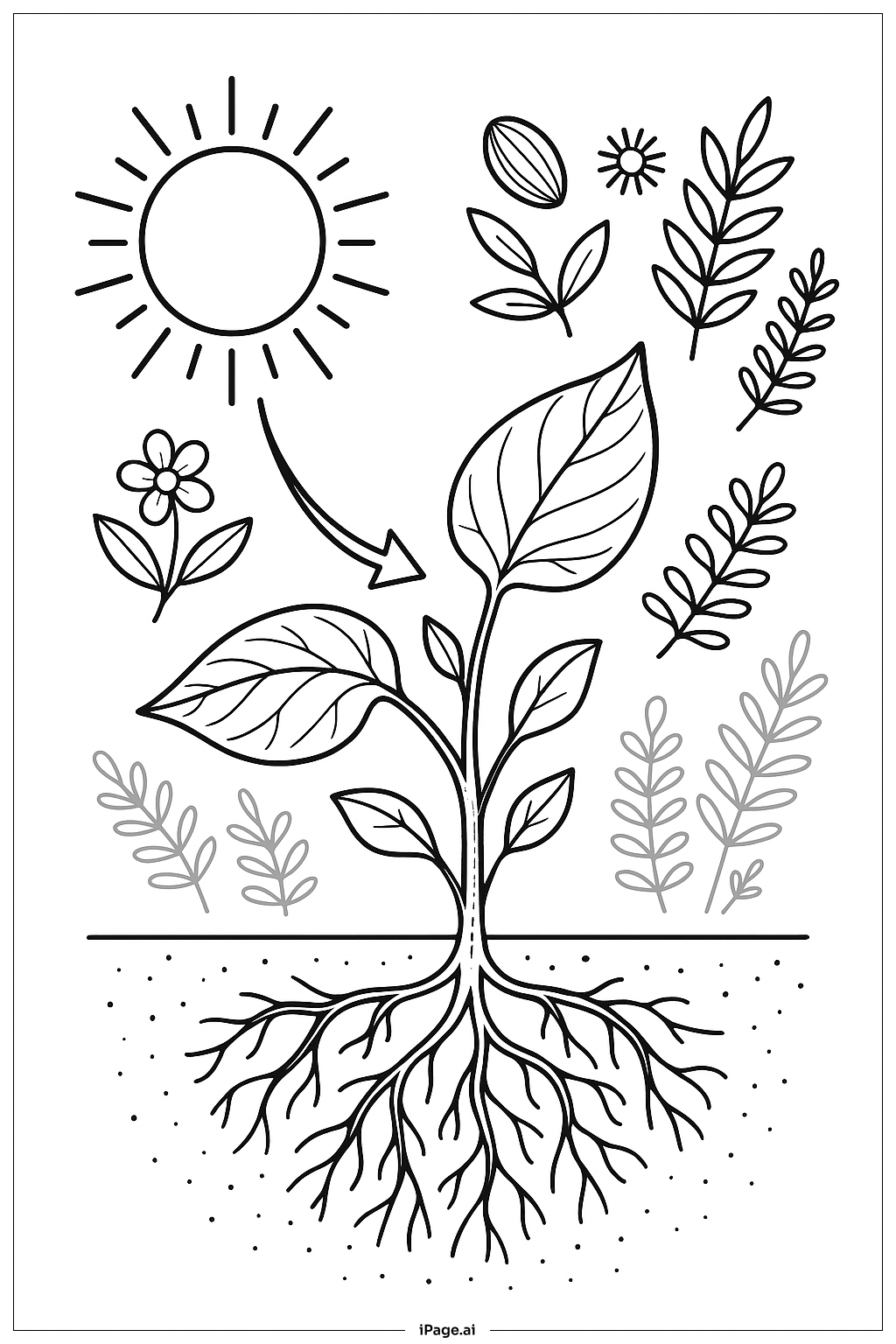
Use different shades of green for the leaves and stem to make the plant look vibrant. Color the sun yellow or orange to show its warmth and energy. Use brown for the soil and dark browns or blacks for the roots underground. For the smaller leaves and the flower, use bright colors like light green, pink, or red to add contrast. Try to use lighter colors for the background to keep the focus on the main plant and sun.
Coloring challenges: Which parts are difficult to color and need attention for Photosynthesis Sunlight Energy Flow coloring page?
1. The thin roots can be tricky to color carefully since they are narrow and detailed. You need a fine-tipped coloring tool to avoid coloring outside the lines. 2. The multiple small leaves around the plant add many small spaces to fill with color, which needs patience. 3. Coloring the flow of sunlight using the arrow needs smooth, even coloring to highlight the energy transfer clearly. 4. Choosing different shades for leaves and surrounding parts without mixing colors can be a challenge. 5. Keeping the colors bright and clean while filling small details requires careful attention.
Benefits of coloring books: Advantages of drawing Photosynthesis Sunlight Energy Flow coloring page
Coloring this page helps children learn about plants and how the sun helps them grow. It improves fine motor skills as they color roots, leaves, and small details. The image encourages observation of nature and promotes understanding of scientific concepts like photosynthesis. It also lets children use their creativity in choosing colors and blending shades. This activity boosts focus, patience, and helps children connect with the natural world.