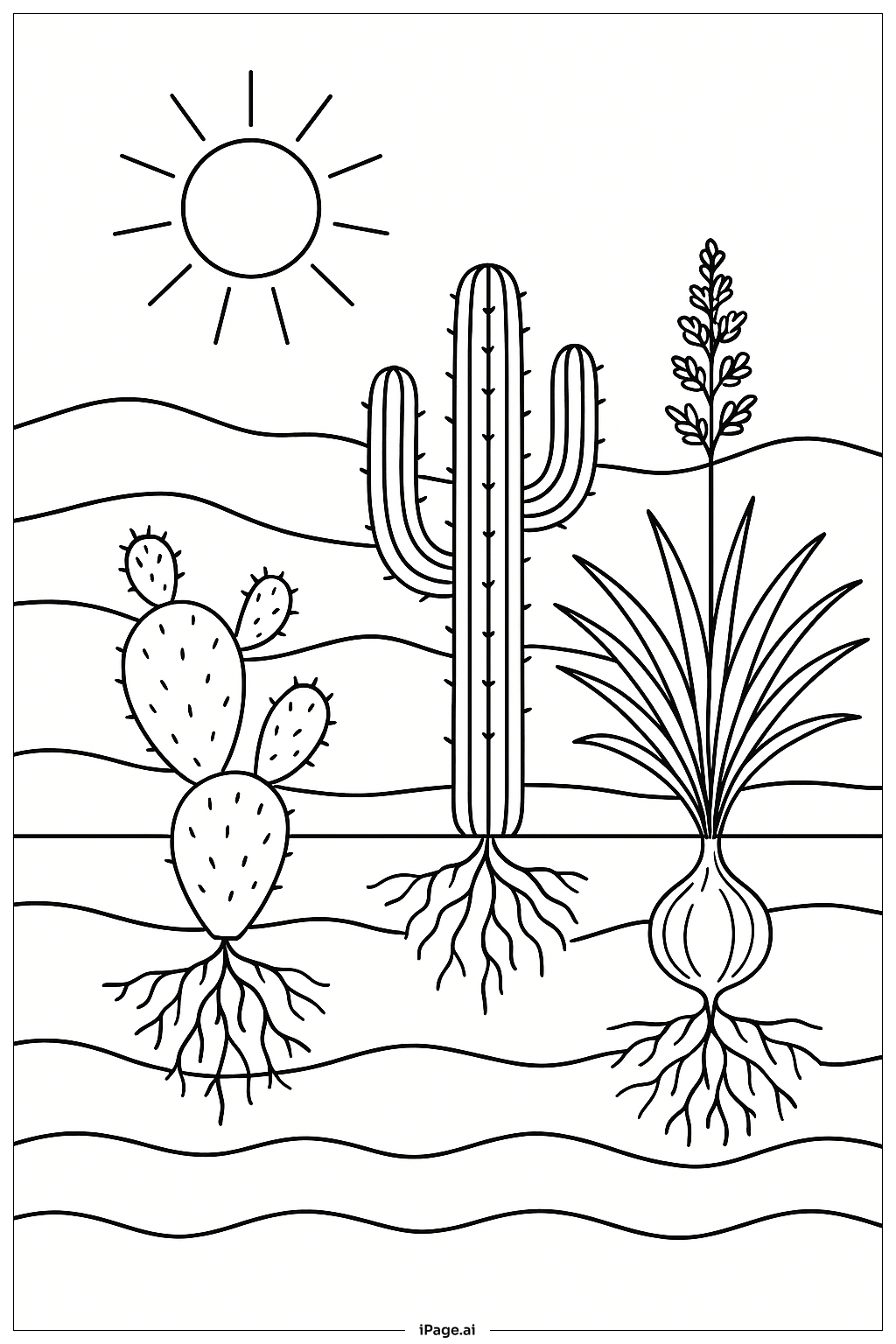
Coloring tips: How to color Photosynthesis Desert Plant Adaptation coloring page well?
Use shades of green for the cacti, such as light green and dark green to show different parts. Color the spines in light brown or gray to make them stand out. For the desert lily, use green for the leaves and yellow or orange for the flowers. The desert ground and dunes can be colored in warm sandy tones like light brown, beige, or yellow. The sun should be bright yellow or orange. Use blue or light blue for the sky to make the scene lively and natural.
Coloring challenges: Which parts are difficult to color and need attention for Photosynthesis Desert Plant Adaptation coloring page?
1. Coloring the spines of the cacti can be tricky because they are small and need careful coloring to avoid going outside the lines. 2. The roots are thin and detailed, which requires patience and a steady hand to color neatly. 3. The desert dunes have wavy lines, and blending sandy colors smoothly can be difficult for beginners. 4. Keeping the colors vibrant while showing the different textures of plants like the flat prickly pear pads versus the tall cactus arms may be challenging. 5. Coloring the small flower petals on the desert lily precisely might need extra attention.
Benefits of coloring books: Advantages of drawing Photosynthesis Desert Plant Adaptation coloring page
Coloring this page helps children learn about desert plants and how they adapt to survive. It improves fine motor skills by requiring careful coloring of small parts like spines and roots. The image encourages creativity in choosing colors for natural elements like plants, sand, and the sky. It also teaches patience and focus, especially when dealing with detailed areas. Overall, coloring this desert scene makes learning about nature fun and engaging.