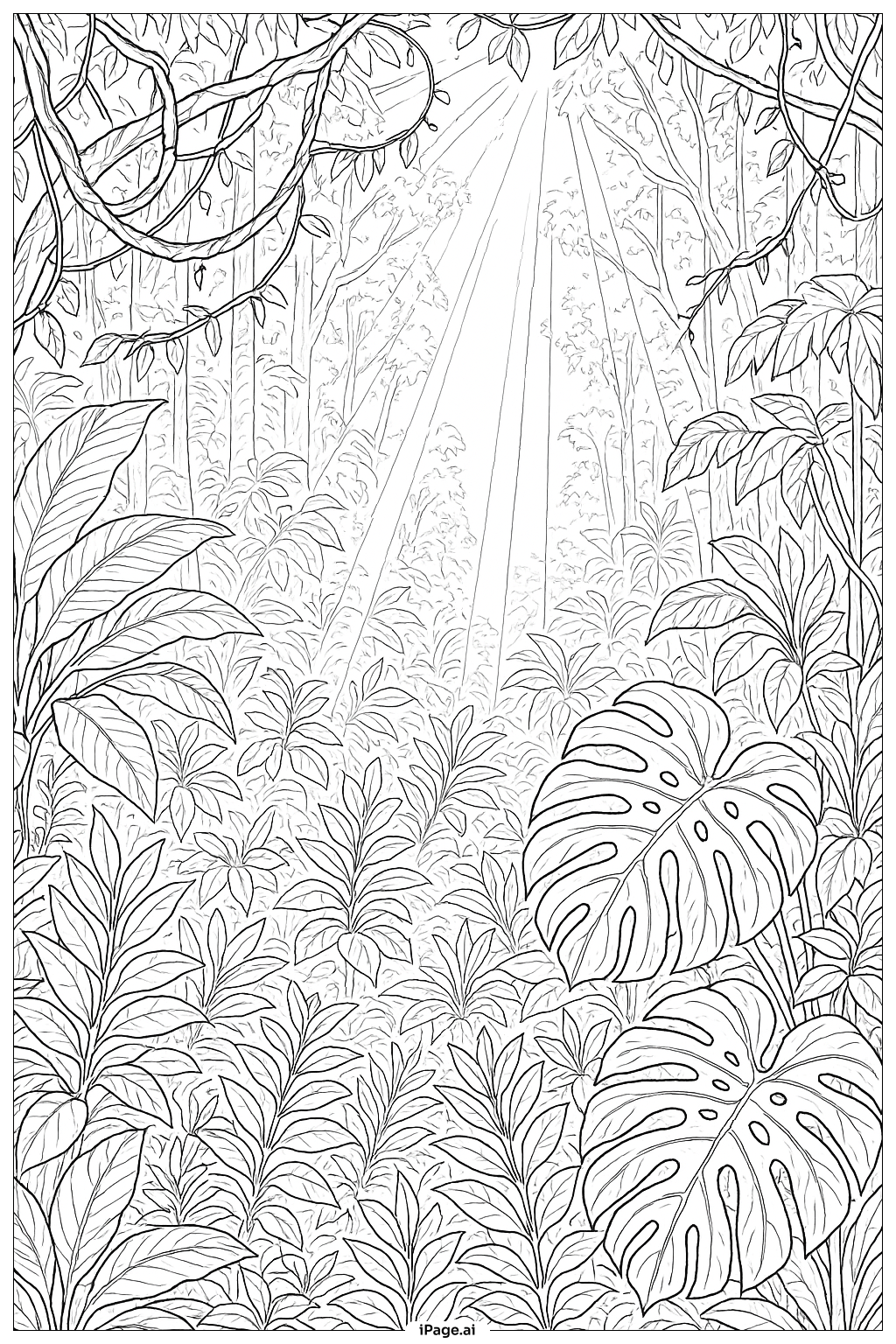
Coloring tips: How to color Photosynthesis Rainforest Understory coloring page well?
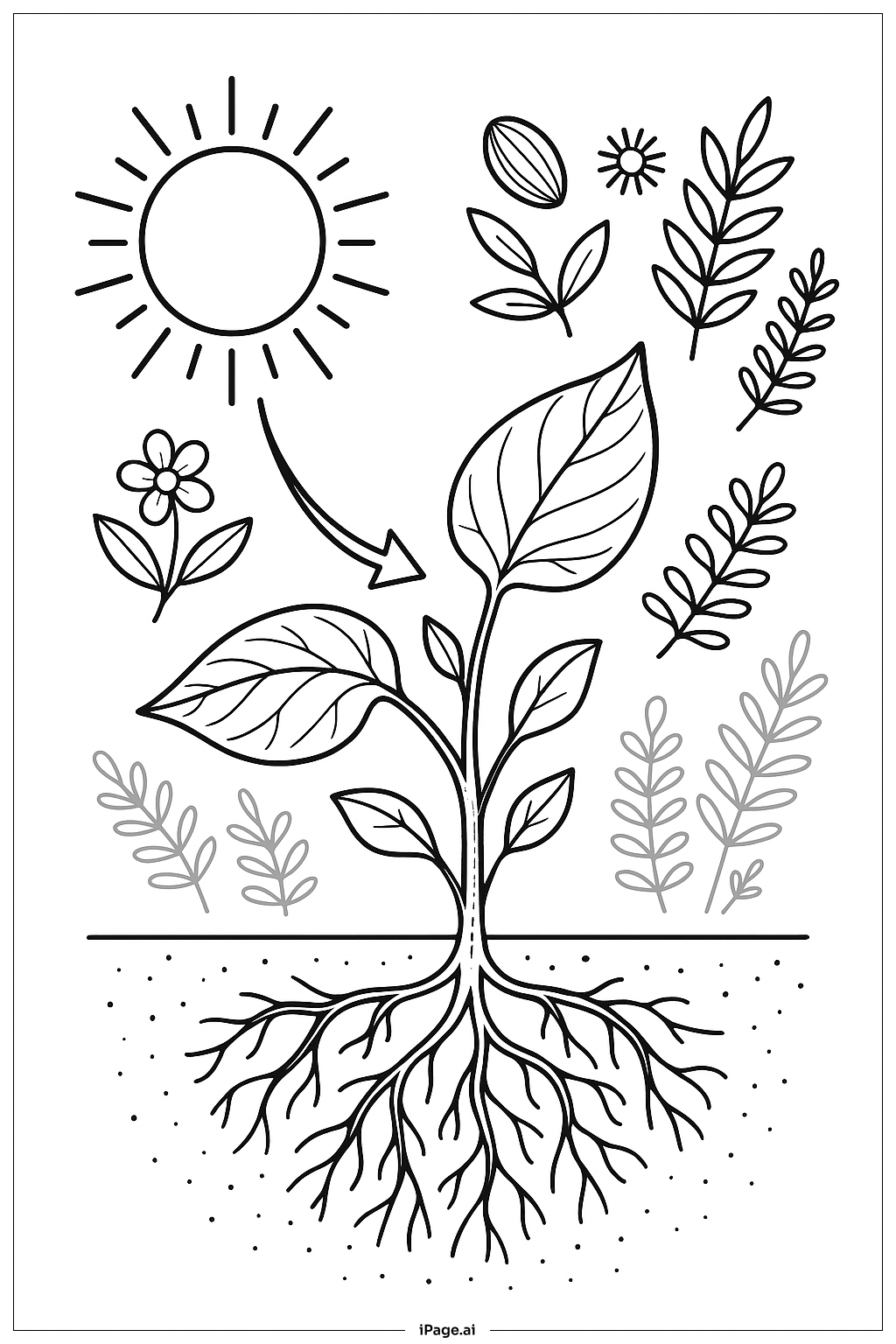
Start with the largest leaves using various shades of green, from deep forest green in shadowed areas to lighter lime green where sunlight breaks through. Layer different green tones to create depth and show how plants at different heights receive varying amounts of light. Use yellow-green for new growth and younger leaves that are most active in photosynthesis. Add touches of brown and gray for tree bark and exposed roots. Consider using purple or red undertones on some leaves to show anthocyanin pigments. For the background, use soft blues and pale greens to suggest filtered light. Add small pops of color with hidden flowers in pink, orange, or yellow. Use darker shades near the ground to show the dimmer conditions of the forest floor.
Coloring challenges: Which parts are difficult to color and need attention for Photosynthesis Rainforest Understory coloring page?
• Leaf Layering and Depth: The overlapping foliage creates complex layers where leaves intersect and overlap at various angles. Distinguishing between foreground and background vegetation requires careful color gradation and shading techniques. You will need to decide which leaves catch more light and which remain in shadow, using lighter and darker green variations to create realistic depth and dimension throughout the understory scene.
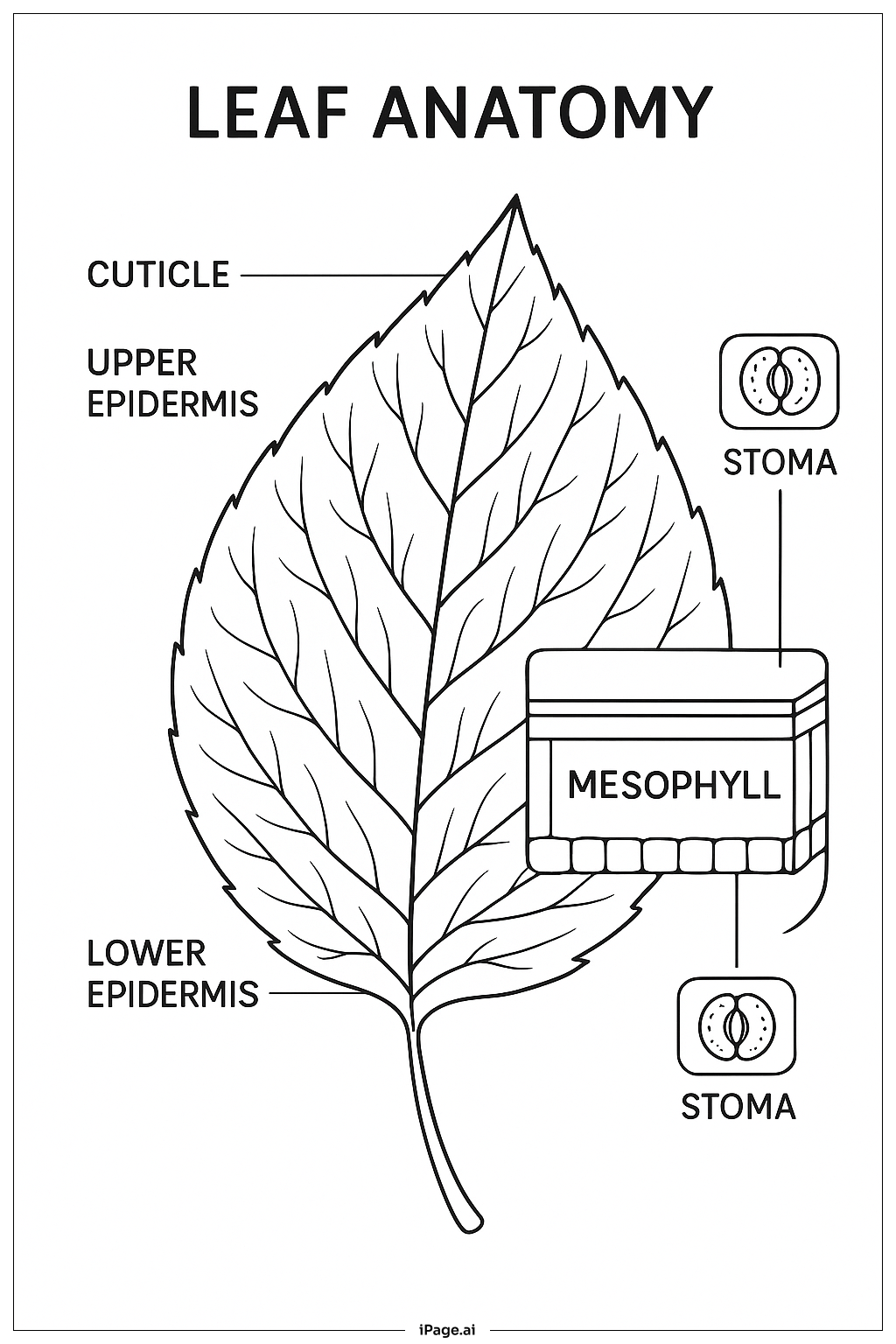
• Intricate Vein Patterns: The detailed leaf veins that transport water and nutrients require precision coloring within very fine lines. These delicate networks branch throughout each leaf and demand steady hand control to color without crossing boundaries. Choosing whether to color veins lighter or darker than the surrounding leaf tissue adds another layer of decision-making to accurately represent how these structures facilitate photosynthesis.
• Texture Differentiation: The scene includes various plant types with different textures, from smooth broad leaves to feathery ferns to rough bark. Each surface requires a distinct coloring approach to convey its unique texture. Ferns need delicate, repetitive coloring of tiny leaflets, while bark benefits from irregular strokes and varied browns, and smooth leaves need even application with strategic highlights to show their waxy surfaces.
• Light and Shadow Balance: Capturing the dappled light effect of the understory is challenging, as you must show how limited sunlight filters through the canopy above. This requires blending techniques to create gradual transitions between illuminated and shaded areas, and understanding where light would realistically penetrate to create bright spots while maintaining overall dimmer conditions that characterize this forest layer.
Benefits of coloring books: Advantages of drawing Photosynthesis Rainforest Understory coloring page
Coloring this rainforest understory scene offers wonderful educational benefits, teaching children about photosynthesis and how plants capture energy from sunlight even in shaded environments. It encourages observation of plant structures like leaves, veins, and roots, fostering curiosity about nature and ecosystems. The intricate details improve fine motor skills and hand-eye coordination through precise coloring within detailed lines. Working with various shades of green develops color discrimination skills and understanding of light and shadow. The layered composition challenges spatial reasoning as children determine which elements are in front or behind. This peaceful forest scene also promotes relaxation and mindfulness, reducing stress while encouraging patience and focus. Completing this detailed page builds confidence and provides a sense of accomplishment while connecting young artists to the natural world.