Coloring tips: How to color Photosynthesis Agricultural Field Study coloring page well?
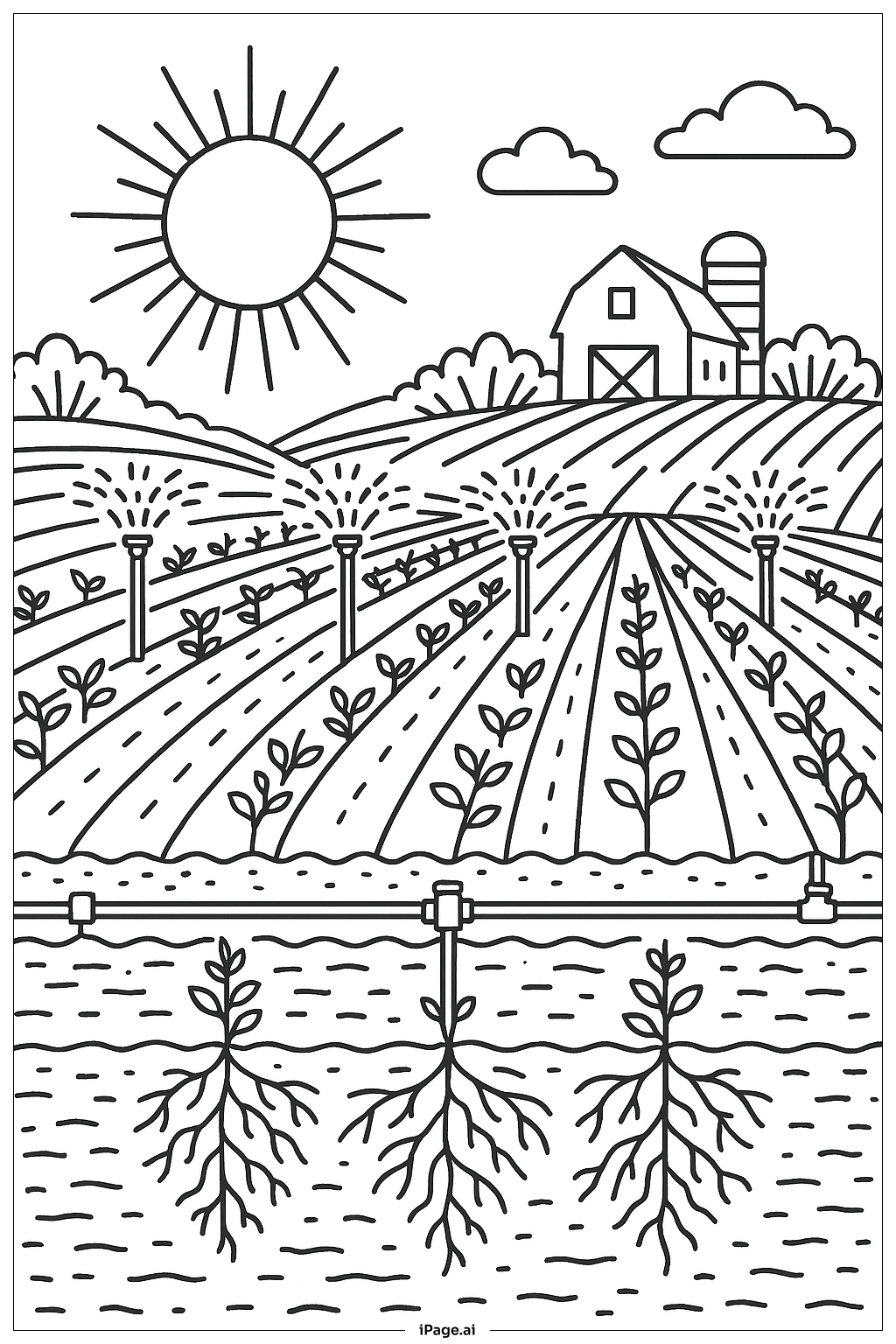
Use green shades to color the plants and leaves, from light to dark to show their growth. Color the sun yellow or orange to show its bright light. The sky can be soft blue with light gray or white clouds. The sprinklers can be gray or silver with a little blue to show water drops. Use brown tones for the soil and roots underground, with some dark brown or black for the roots. The barn can be red or brown with a white or gray roof, and the bushes green. Use blue or turquoise for the water pipes and water around the roots to show freshness and life.
Coloring challenges: Which parts are difficult to color and need attention for Photosynthesis Agricultural Field Study coloring page?
1. The small leaves and plants need careful coloring inside their shapes without going outside the lines. 2. The many different parts like sprinklers, sun rays, roots, and water pipes require switching colors often. 3. Coloring the roots underground needs patience because the lines are thin and detailed. 4. Blending colors smoothly in the sky and sun rays can be challenging for young artists. 5. Keeping the coloring neat around tiny areas like the water drops and sprinkler heads requires focus.
Benefits of coloring books: Advantages of drawing Photosynthesis Agricultural Field Study coloring page
Coloring this picture helps children learn about farming and photosynthesis in a fun way. It improves their fine motor skills by coloring small details like leaves and roots. The picture encourages creativity with many different objects and colors. Children can practice color recognition and shading. Coloring also fosters patience and attention to detail, which are important skills for school and life.